
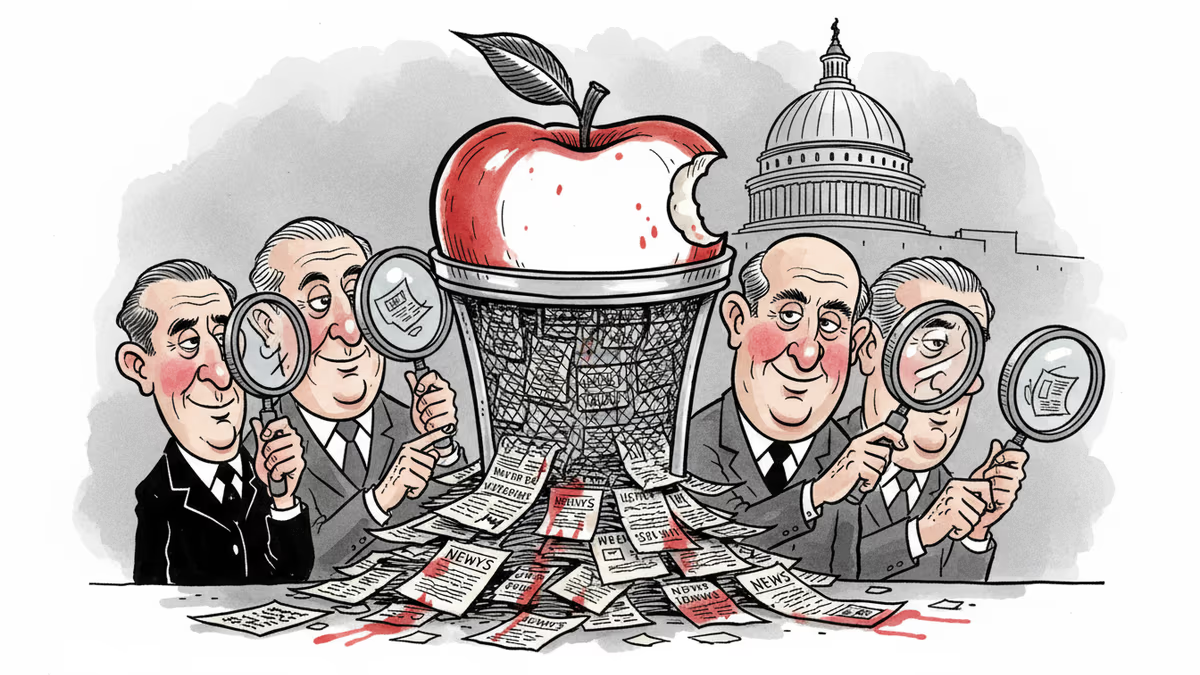
When News Curation Becomes Political Warfare
FTC investigates Apple News for alleged conservative censorship as Trump administration targets Big Tech editorial decisions. What defines fair news curation?
The Curator's Dilemma
Apple curates millions of news articles daily for 120 million users. Now the Federal Trade Commission wants to know: Is that curation or censorship?
FTC Chair Andrew Ferguson fired off a letter to Tim Cook this week, citing allegations that Apple News systematically excludes conservative outlets from its top 20 featured articles. The complaint, originating from the right-leaning Media Research Center, has thrust Apple into the crosshairs of the Trump administration's broader war on Big Tech editorial decisions.
The Government's Case
Ferguson's letter doesn't mince words: "I abhor and condemn any attempt to censor content for ideological reasons." The FTC chair, a Trump appointee known for his Big Tech skepticism, argues that if Apple's curation practices contradict its terms of service or "reasonable consumer expectations," they may violate federal trade law.
The timing isn't coincidental. President Trump amplified the Media Research Center report on Truth Social just one day before the FTC letter arrived. Brendan Carr, Trump's pick to lead the Federal Communications Commission, quickly backed Ferguson's stance, declaring that "Apple has no right to suppress conservative viewpoints."
This represents a significant escalation. While the FTC acknowledges it can't force Apple to adopt specific political positions, it's essentially arguing that editorial consistency—not political neutrality—should be the legal standard.
Apple's Balancing Act

Apple finds itself in an increasingly familiar predicament: satisfying both algorithmic efficiency and political expectations. The company's relationship with the Trump administration has been a diplomatic rollercoaster—criticism over Chinese manufacturing followed by praise after Cook pledged $600 billion in domestic investment over four years.
That investment commitment, along with Apple's successful lobbying to avoid smartphone tariffs, had seemingly stabilized relations. Now the company faces a different challenge: defending its editorial algorithms against political interference.
Apple hasn't responded to requests for comment, but the company's historical position has been that its curation reflects user engagement metrics rather than ideological preferences. The question is whether that technical explanation will satisfy political scrutiny.
The Broader Stakes
This isn't just about Apple. The FTC launched a broader investigation into "censorship by tech platforms" last year, seeking public input from users who felt silenced for their political beliefs. Ferguson framed it as protecting Americans' right to "speak their minds" without corporate intimidation.
But the investigation reveals a fundamental tension in how we define platform responsibility. Should tech companies be neutral pipes for information, active curators of quality content, or something in between?
Major platforms have already begun rolling back content moderation policies implemented during Trump's first presidency, anticipating regulatory pressure. The Apple News investigation suggests that even algorithmic curation—traditionally seen as more neutral than human editorial decisions—isn't immune from political oversight.
The International Perspective
European regulators are watching closely. The EU's Digital Services Act requires platforms to explain their content recommendation systems, but stops short of mandating specific editorial approaches. The American approach—using consumer protection law to challenge curation practices—represents a novel regulatory strategy.
For global tech companies, this creates a complex compliance puzzle: How do you satisfy American political expectations, European transparency requirements, and diverse international user preferences simultaneously?
Authors
Related Articles
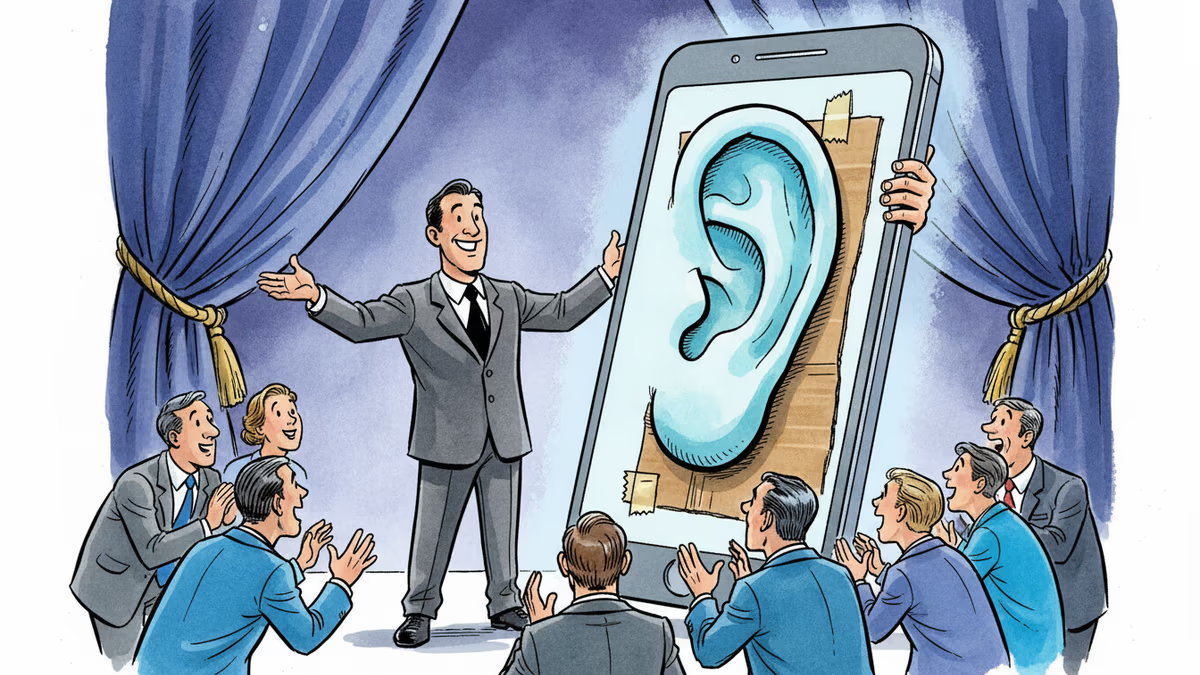
The FTC fined Cox Media and two ad firms $930,000 — not for actually eavesdropping on users, but for falsely claiming they could. The case raises uncomfortable questions about surveillance capitalism.
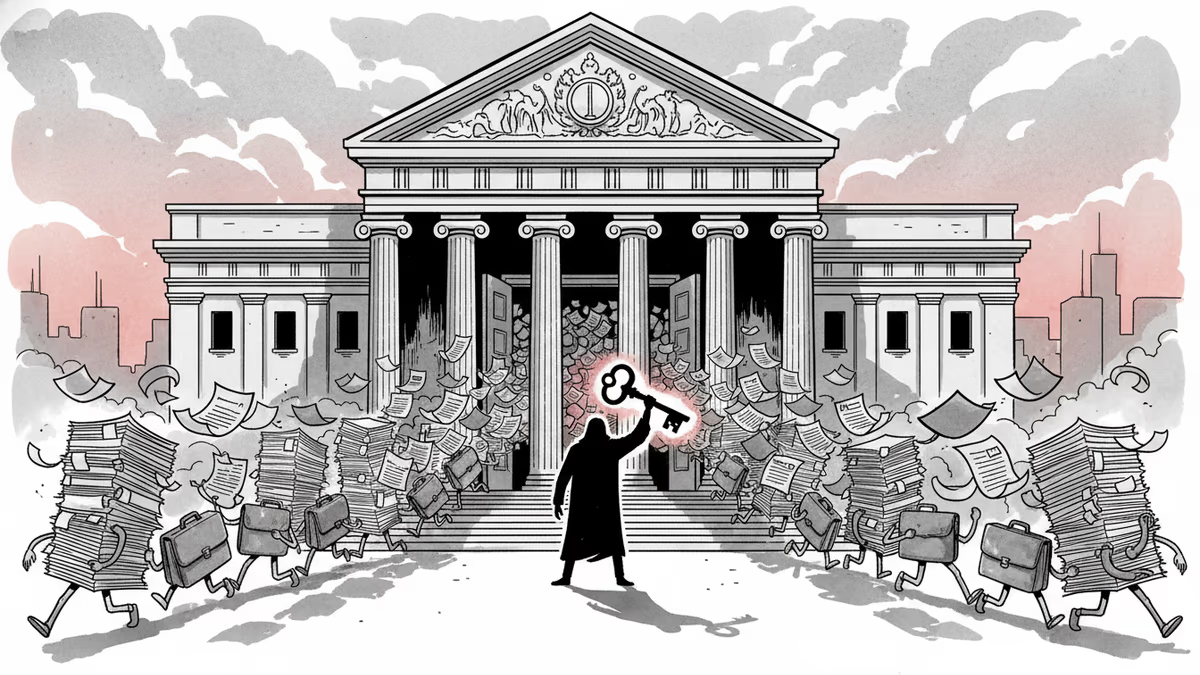
The Trump administration has gutted the DOJ's Voting Section, pushing out two dozen experienced lawyers and replacing them with loyalists. With 2026 midterms approaching, what does this mean for American democracy?
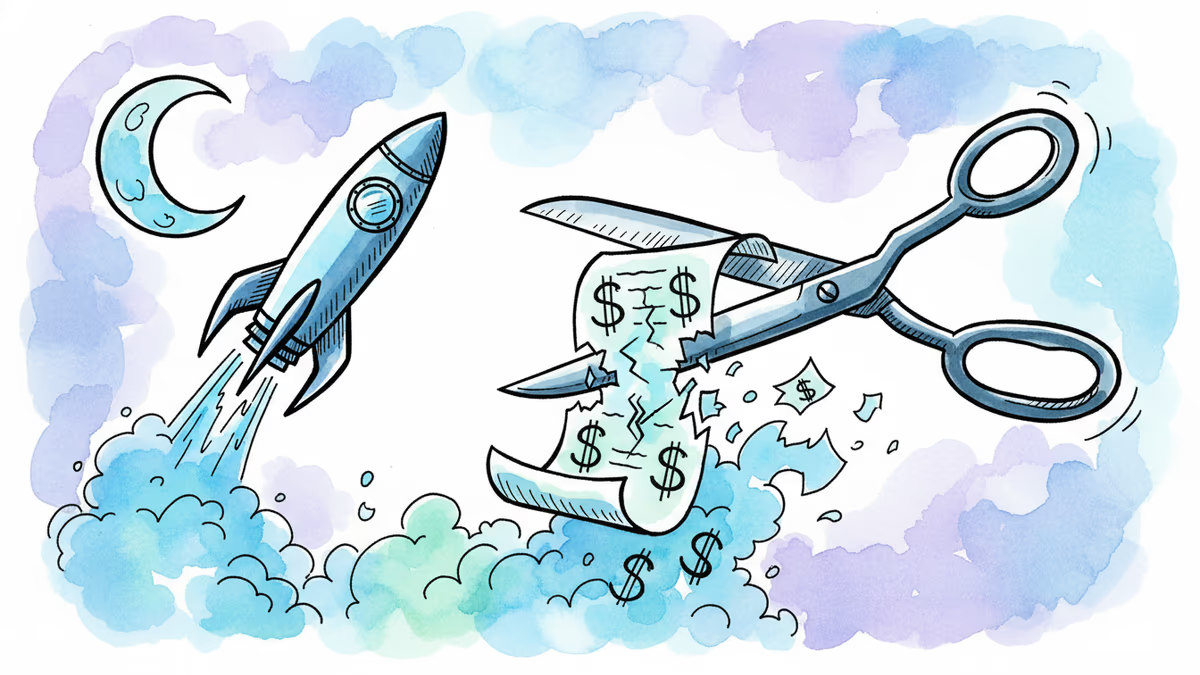
Two days after launching the first crewed lunar mission in over 50 years, the Trump administration proposed cutting NASA's budget by 23%. What does this mean for the future of space exploration?
A humanoid robot walked the White House red carpet with Melania Trump. It's a preview of an ed-tech vision that could reshape — or fracture — how children learn.
The FTC fined Cox Media and two ad firms $930,000 — not for actually eavesdropping on users, but for falsely claiming they could. The case raises uncomfortable questions about surveillance capitalism.
The Trump administration has gutted the DOJ's Voting Section, pushing out two dozen experienced lawyers and replacing them with loyalists. With 2026 midterms approaching, what does this mean for American democracy?
Two days after launching the first crewed lunar mission in over 50 years, the Trump administration proposed cutting NASA's budget by 23%. What does this mean for the future of space exploration?
A humanoid robot walked the White House red carpet with Melania Trump. It's a preview of an ed-tech vision that could reshape — or fracture — how children learn.
Thoughts
Share your thoughts on this article
Sign in to join the conversation