

True Ventures Jon Callaghan Smartphone Prediction: The End of iPhone by 2030
True Ventures co-founder Jon Callaghan predicts the end of the smartphone era by 2030. Explore his investment thesis on Sandbar and the future of human-computer interaction.
Your smartphone has barely 10 years left. Jon Callaghan, co-founder of True Ventures, doesn't think we'll be using smartphones the way we do now in five years—and maybe not at all in ten. This isn't just armchair theorizing; it's the core thesis of a firm that managed $6 billion across multiple funds and successfully backed outliers like Fitbit and Ring long before they became household names.
The Efficiency Gap in Current Interfaces
Callaghan's argument is straightforward: our phones are actually lousy at being the interface between humans and intelligence. He describes the act of pulling out a device to confirm a text or write an email as "super inefficient" and prone to disrupting normal life. While the smartphone market stagnates with a 2% annual growth rate, wearables and voice-enabled devices are expanding at double-digit rates, signaling a massive shift in consumer behavior.

We’re not going to be using iPhones in 10 years. The way we take them out right now is a terrible interface—prone to error and disruption.
Sandbar: Betting on the Post-Mobile Behavior
The latest manifestation of this thesis is Sandbar, a voice-activated ring worn on the index finger. Described as a "thought companion," its sole purpose is capturing and organizing voice notes. Unlike multi-purpose gadgets, it focuses on one fundamental human need. Founded by alumni of CTRL-Labs (acquired by Meta), Sandbar represents a philosophy where the interface disappears, and the behavior takes center stage.
Authors
Related Articles
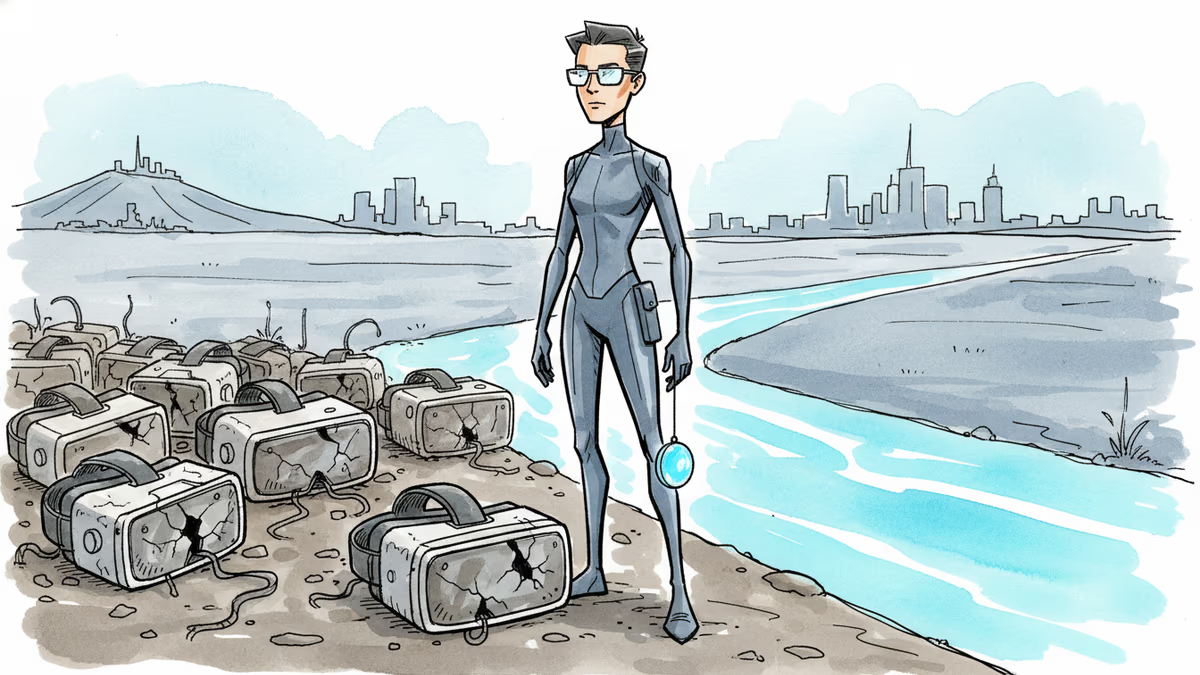
Xreal's Project Aura debuted at Google I/O with OLED displays, hand tracking, and an IPO on the horizon. The industry has burned billions for a decade. So why does it feel like something has actually shifted?
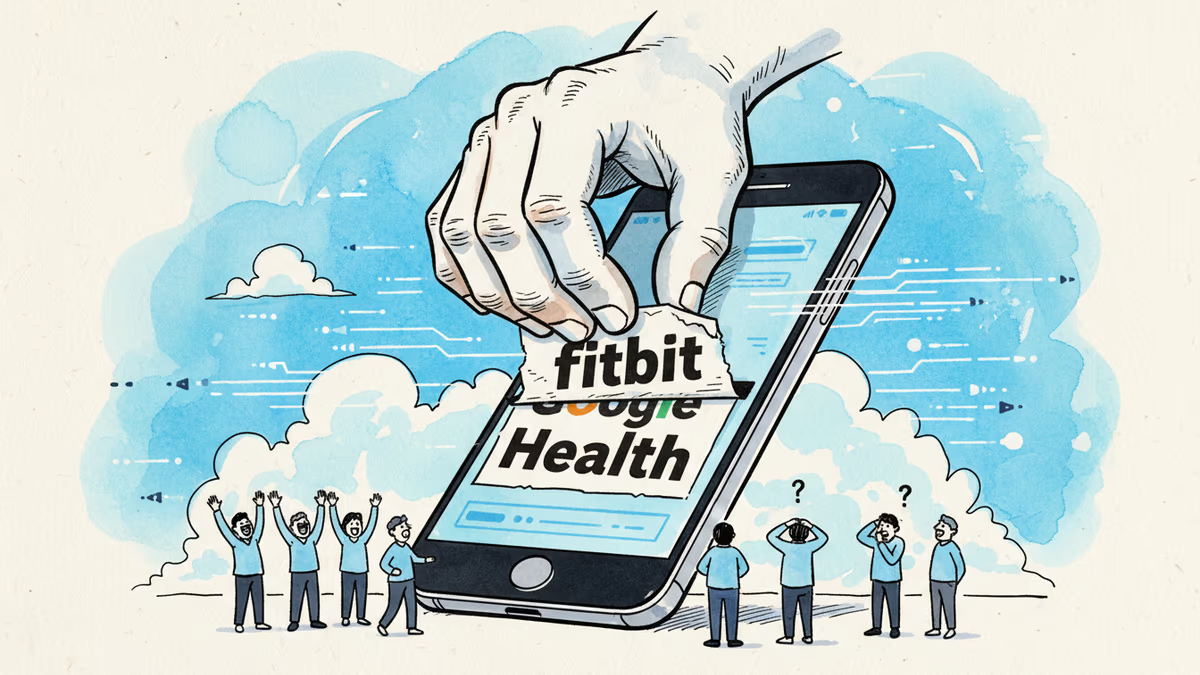
Google is rebranding the Fitbit app as Google Health on May 19, launching an AI Health Coach powered by Gemini. What does this mean for your data, your doctor, and Apple?
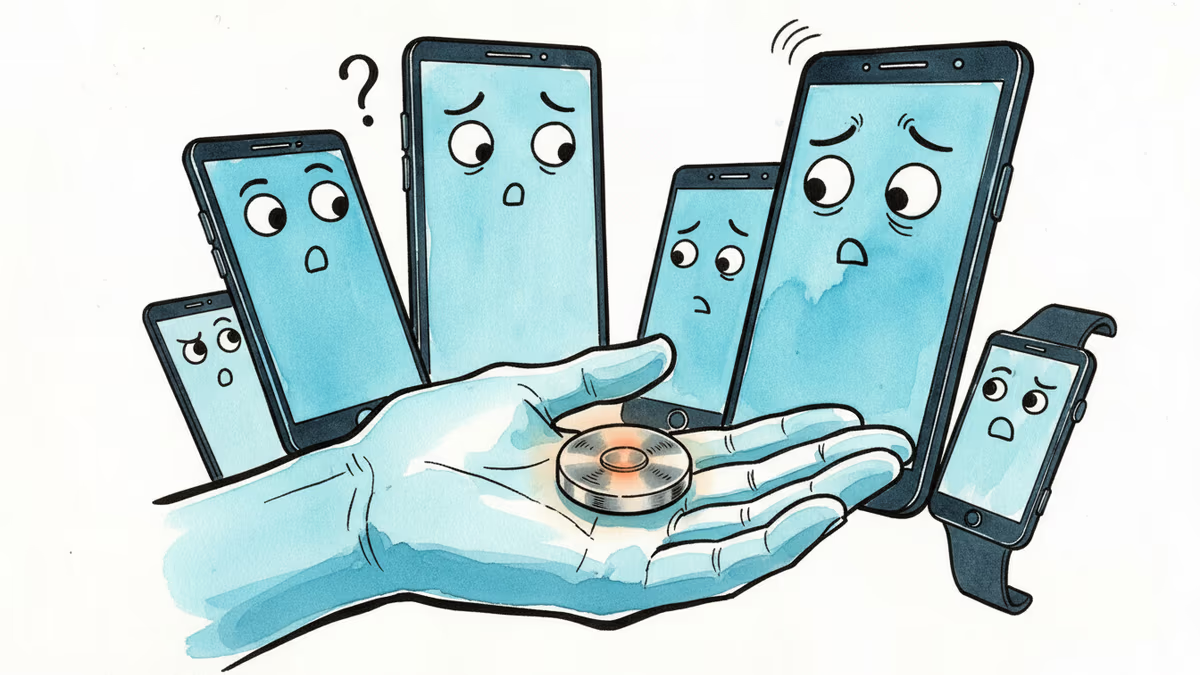
Two ex-Apple engineers built an AI puck that only listens when you press it. At $179, Button is a deliberate bet that dedicated AI hardware beats the Swiss Army knife approach of smartphones.
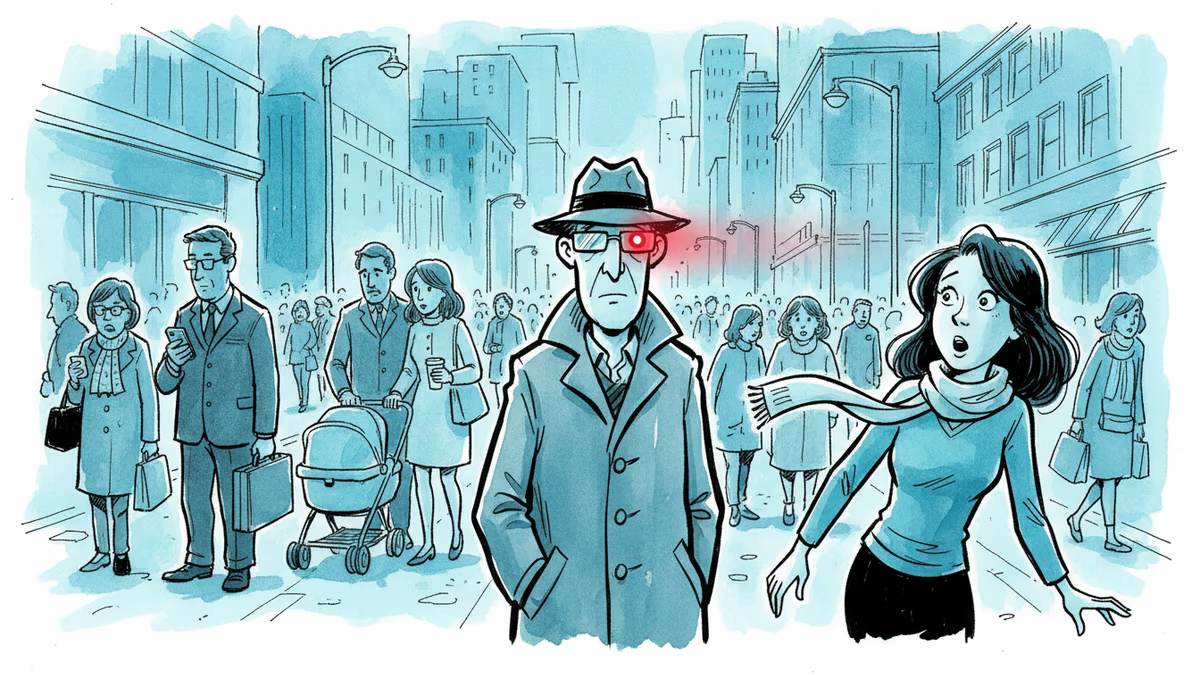
Meta Ray-Ban smart glasses sold 8 million units in 2025 alone. Now a black market for disabling their recording indicator lights is thriving—and lawmakers are alarmed about what comes next.
Xreal's Project Aura debuted at Google I/O with OLED displays, hand tracking, and an IPO on the horizon. The industry has burned billions for a decade. So why does it feel like something has actually shifted?
Google is rebranding the Fitbit app as Google Health on May 19, launching an AI Health Coach powered by Gemini. What does this mean for your data, your doctor, and Apple?
Two ex-Apple engineers built an AI puck that only listens when you press it. At $179, Button is a deliberate bet that dedicated AI hardware beats the Swiss Army knife approach of smartphones.
Meta Ray-Ban smart glasses sold 8 million units in 2025 alone. Now a black market for disabling their recording indicator lights is thriving—and lawmakers are alarmed about what comes next.
Thoughts
Share your thoughts on this article
Sign in to join the conversation