
Your Phone's AI Just Learned to Use Apps for You
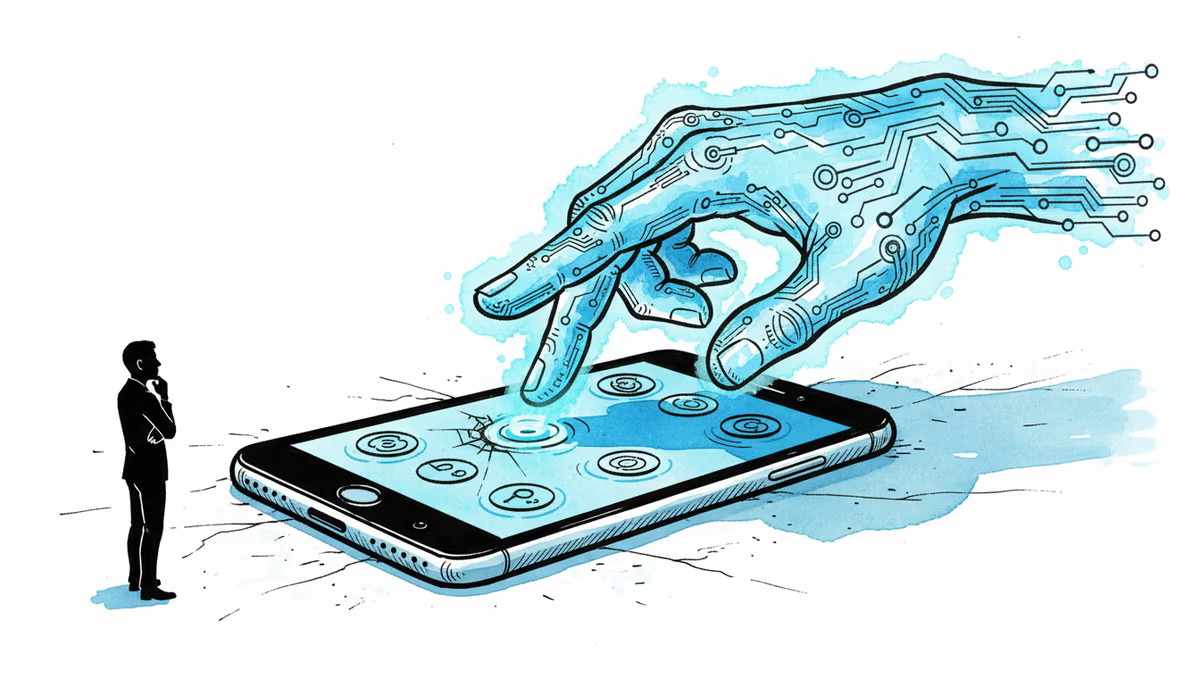
Google Gemini's new task automation on the Pixel 10 Pro and Galaxy S26 Ultra lets AI operate apps on your behalf. It's slow, limited, and beta — but it's the first real agentic AI on a consumer phone.
For years, 'AI assistant' meant a voice that answered questions. Today, on two flagship phones, it means something closer to a co-pilot that actually touches the screen for you.
Google has rolled out task automation inside Gemini for the Pixel 10 Pro and Galaxy S26 Ultra — letting the AI open apps, navigate menus, and complete actions like ordering food or booking a ride, without the user lifting a finger. It's in beta, limited to a small set of food delivery and rideshare apps, and by all accounts it's slow and occasionally clumsy. But it works. Not in a demo. Not on a stage. On a real phone, in the real world.
That matters more than the feature itself.
What's Actually Happening Here
This is the first mainstream example of what the AI industry calls agentic AI — systems that don't just respond to queries but take autonomous action in the world. Previous assistants, from Siri to early Gemini, were sophisticated lookup tools. They fetched. They answered. They set timers. What they didn't do was navigate a UI, make sequential decisions, and execute a multi-step task inside a third-party app.
According to hands-on testing by The Verge, the experience is real but imperfect. The AI can handle a food order end-to-end, but it doesn't do it faster than you would. It doesn't solve a problem you had. What it does is demonstrate something that couldn't be demonstrated six months ago: an AI agent operating independently inside a consumer device, without a human guiding each step.
The scope is deliberately narrow right now — a handful of supported apps, a controlled environment. Google is clearly stress-testing the architecture before expanding it. But the architecture itself is the news.

Three Stakeholders, Three Very Different Reactions
For consumers, the immediate pitch is convenience. Less friction between wanting something and getting it. But there's a quieter implication: an AI that operates your apps is an AI that observes your apps. Every food order, every destination, every hesitation in a checkout flow becomes a data point. The privacy calculus here is genuinely unclear, and neither Google nor device manufacturers have been forthcoming about what's collected, retained, or used to improve the model.
For app developers and platforms, this is a structural shift worth watching closely. If Gemini becomes the primary interface through which users interact with apps, the app itself gets disintermediated. A user who never opens your app's UI — because the AI handles it — is a user you can't nudge with notifications, promotions, or redesigned layouts. The platforms that get native Gemini integration early gain a visibility advantage. Those that don't risk becoming invisible in an AI-first interaction model.
*For Samsung*** specifically, the dynamic is layered. The Galaxy S26 Ultra being among the first devices to support this feature signals a deepening partnership with Google. But Samsung has spent years building its own AI stack — Galaxy AI, Gauss, Bixby. As AI moves from answering questions to controlling the phone itself, the question of who owns the intelligence layer becomes commercially significant. Hardware margins are thin. Software and AI services are where the long-term value accumulates.
The Bigger Pattern
This isn't an isolated product update. Apple is pushing deeper Siri integration with third-party apps. Microsoft is embedding Copilot into Windows at the OS level. OpenAI is developing operator-style agents for desktop and mobile. The direction is consistent across every major platform: AI is moving from the chat window into the operating layer of our devices.
The current limitations — slow, beta, narrow app support — are engineering problems. Engineering problems get solved. The more durable questions are about design, trust, and power: Who decides what the AI optimizes for when it acts on your behalf? What happens when its judgment and yours diverge?
Authors
Related Articles

Samsung and SK unveiled a chip and AI investment package worth thousands of trillions of won on June 29. The headline number swings wildly by outlet, but the real contest isn't capital — it's water and power.

Viral videos show 2026 graduates jeering executives who praise AI at commencement ceremonies. It's not just rudeness — it's a signal about who pays for technological optimism.

Filipino virtual assistants using AI to ghost-manage LinkedIn profiles for executives is now a structured industry. 30 comments a day, fake engagement rings, and a platform struggling to tell real from fabricated.
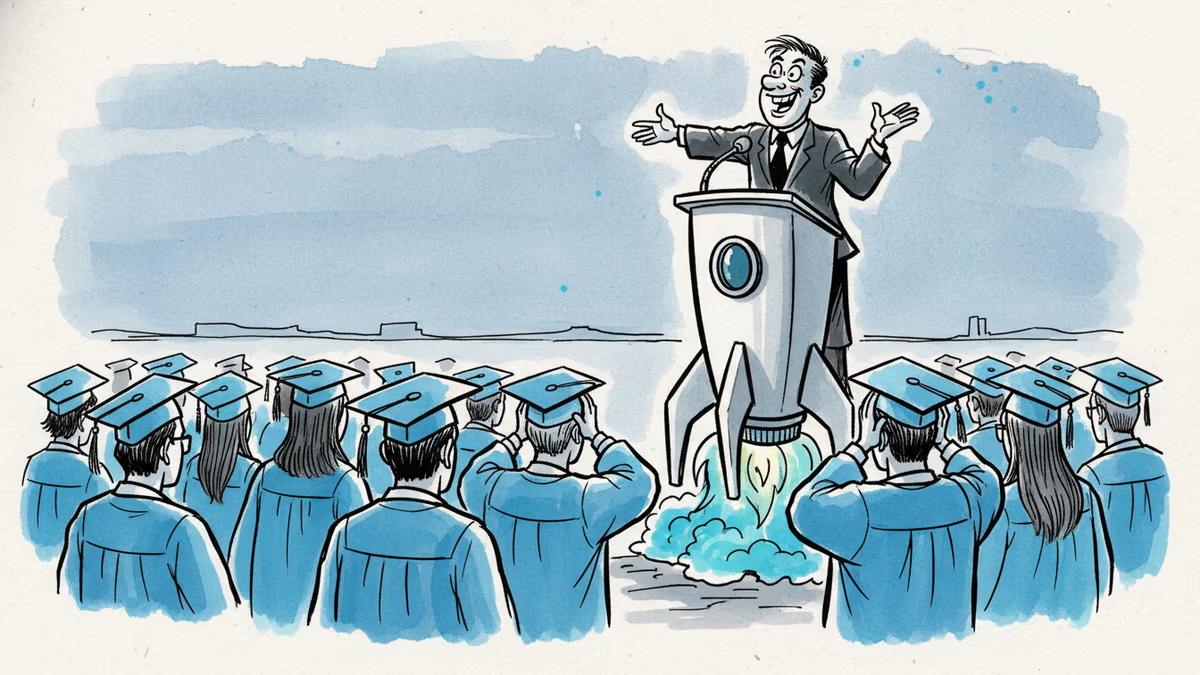
Two commencement speakers learned the hard way that AI enthusiasm doesn't land well with today's graduates. The backlash reveals a widening gap between tech optimism and Gen Z's economic reality.
Samsung and SK unveiled a chip and AI investment package worth thousands of trillions of won on June 29. The headline number swings wildly by outlet, but the real contest isn't capital — it's water and power.
Viral videos show 2026 graduates jeering executives who praise AI at commencement ceremonies. It's not just rudeness — it's a signal about who pays for technological optimism.
Filipino virtual assistants using AI to ghost-manage LinkedIn profiles for executives is now a structured industry. 30 comments a day, fake engagement rings, and a platform struggling to tell real from fabricated.
Two commencement speakers learned the hard way that AI enthusiasm doesn't land well with today's graduates. The backlash reveals a widening gap between tech optimism and Gen Z's economic reality.
Thoughts
Share your thoughts on this article
Sign in to join the conversation