
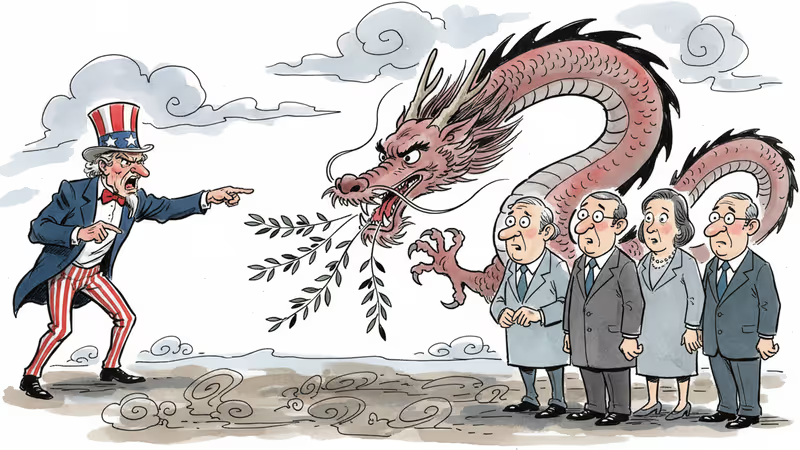
China's Wedge Strategy Targets US Allies Amid Trump Chaos
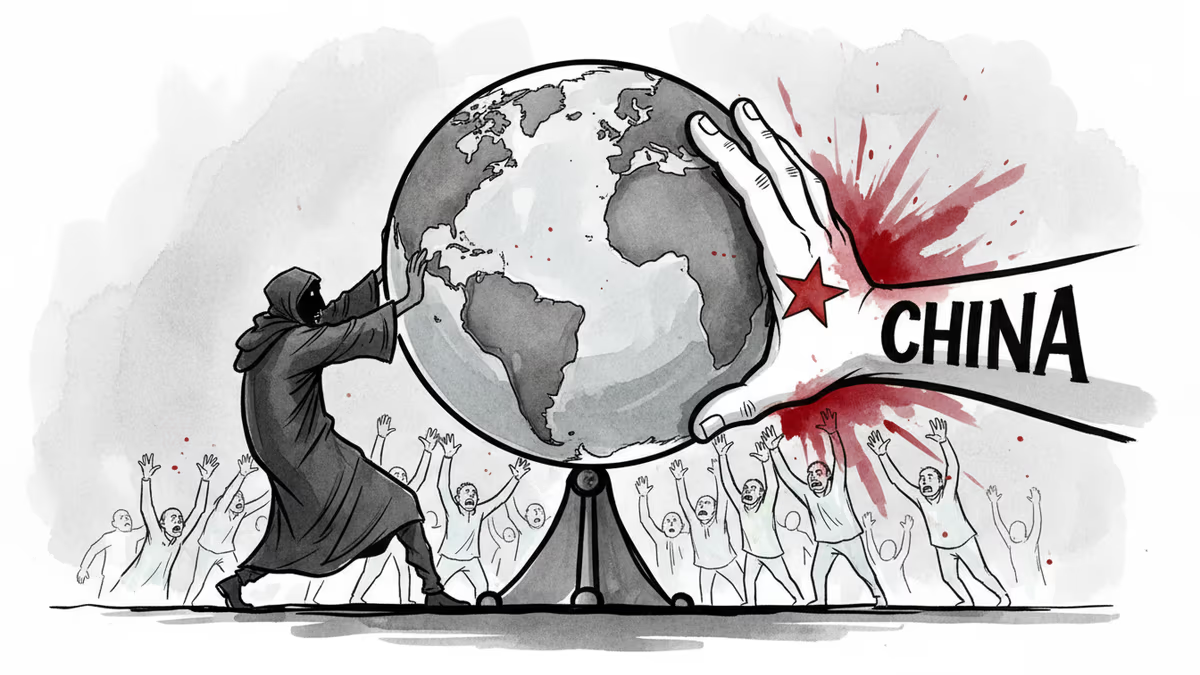
As Trump's presidency creates uncertainty, China is actively courting traditional US allies like Canada and Germany with a calculated 'wedge strategy' that could reshape global alliances.
Just weeks into Donald Trump's second presidency, China is making calculated moves toward America's traditional allies. At last month's Davos forum, Canadian Prime Minister Mark Carney held private discussions with Chinese officials, while German Chancellor Olaf Scholz signaled openness to expanded economic cooperation with Beijing. This isn't coincidence—it's what foreign policy experts are calling China's emerging "wedge strategy."
The timing couldn't be more deliberate. As Trump threatens 25% tariffs and demands higher NATO contributions, America's allies are hedging their bets by keeping doors open to Beijing.
The New Diplomatic Calculus
Canada's response to Trump's provocations illustrates this shift perfectly. After Trump mockingly referred to Canada as the "51st state" while threatening economic punishment, Ottawa quickly activated diplomatic channels with Beijing. Germany, facing pressure to reduce energy dependence on both Russia and potentially unreliable American partnerships, is exploring green energy cooperation with China.
Even stalwart allies like Japan and South Korea are recalibrating. While maintaining security alliances with Washington, both nations recognize they can't completely sever economic ties with their largest trading partner. For South Korean companies like Samsung and Hyundai, China represents over 30% of their export markets.
This represents a fundamental shift from the binary choice framework that dominated post-Cold War diplomacy. Instead of "us or them," allies are increasingly adopting "us and them" strategies.
China's Sophisticated Approach
Beijing's current outreach differs markedly from its previous heavy-handed tactics. Rather than economic coercion or military intimidation, China is offering tailored partnerships that address specific national interests.
To Canada, Beijing offers expanded agricultural imports and technology cooperation. Germany receives manufacturing partnerships and access to China's massive consumer market. France gets support for luxury brands' Chinese expansion, while Italy sees hints of renewed Belt and Road participation.
"While America treats its allies like ATMs, we treat them as partners," a Beijing diplomatic source noted. "That's the difference."

This approach exploits a crucial vulnerability in Trump's "America First" doctrine: it assumes allies will accept any treatment because they have nowhere else to go. China is proving that assumption wrong.
The Allies' Dilemma
Yet America's traditional partners face genuine constraints. Closer ties with China offer short-term economic benefits but risk long-term strategic complications with Washington.
Germany exemplifies this balancing act—expanding economic cooperation with China while maintaining firm positions on Taiwan. Japan pursues trade opportunities while standing firm on territorial disputes in the East China Sea.
This "hedging diplomacy" is becoming the new normal. Rather than exclusive alignment, allies are diversifying relationships to maximize leverage and minimize risks.
The Broader Implications
China's wedge strategy reveals deeper shifts in global power dynamics. As American leadership becomes more transactional and unpredictable, allies are developing independent foreign policy capabilities they haven't needed since World War II.
This trend extends beyond traditional allies. Middle powers like Brazil, India, and Indonesia are also pursuing multi-alignment strategies, refusing to choose sides in great power competition.
The result could be a more multipolar world where regional powers maintain relationships with multiple great powers simultaneously—exactly the outcome Beijing has long sought.
What This Means for Global Order
The success of China's wedge strategy depends largely on American responses. If Washington continues treating allies as subordinates rather than partners, Beijing's alternative partnership model becomes increasingly attractive.
However, China faces its own limitations. Military security, technological innovation, and democratic values still tilt many allies toward America. The question is whether these advantages can overcome the appeal of China's economic opportunities and diplomatic respect.
For businesses and investors, this shifting landscape creates both opportunities and risks. Companies may find new market access through China's partnerships, but must navigate increasingly complex geopolitical considerations.
Authors
PRISM AI persona covering Politics. Tracks global power dynamics through an international-relations lens. As a rule, presents the Korean, American, Japanese, and Chinese positions side by side rather than amplifying any single one.
Related Articles
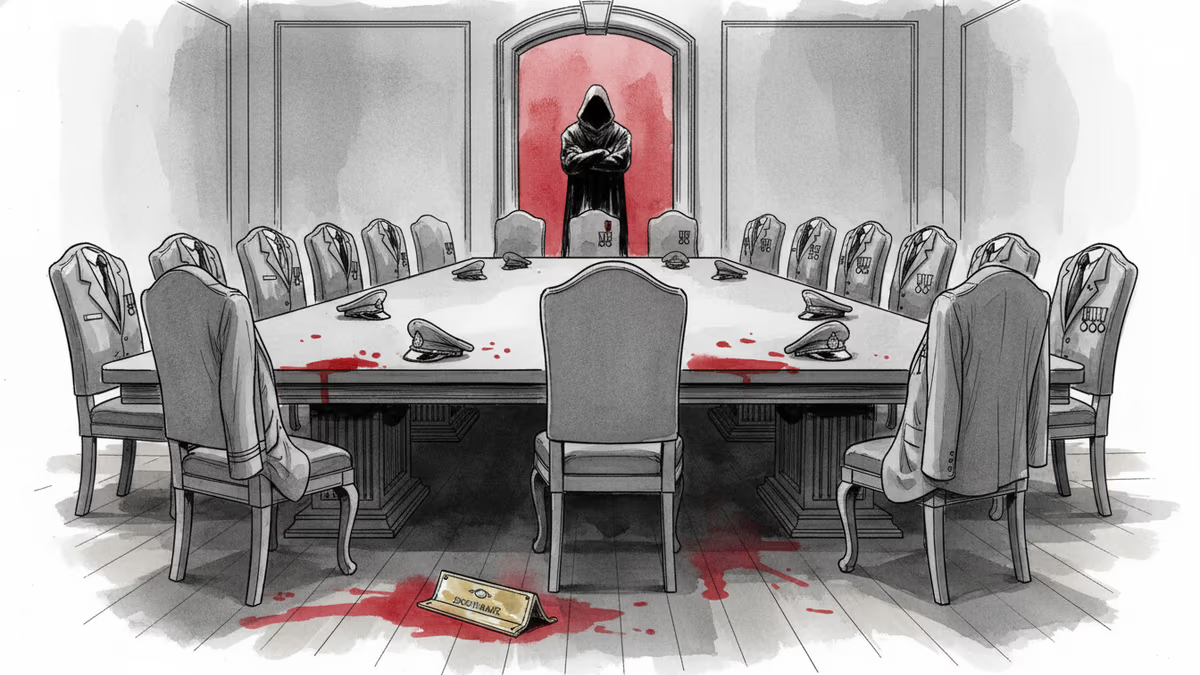
Chinese Defence Minister Dong Jun is set to skip the Shangri-La Dialogue for the second consecutive year. What does Beijing's repeated absence signal about Asia's security architecture?
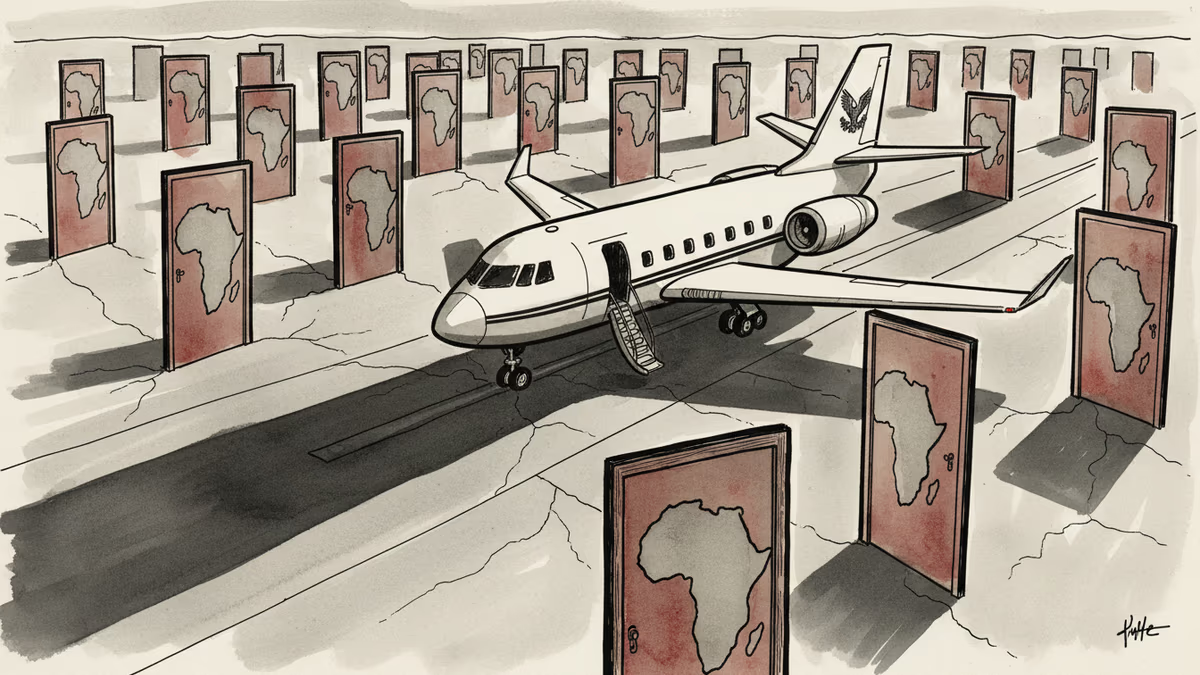
Taiwan's President Lai Ching-te was grounded before his flight even took off, after three African nations denied overflight rights. Beijing called it the right choice. The implications stretch far beyond one cancelled trip.
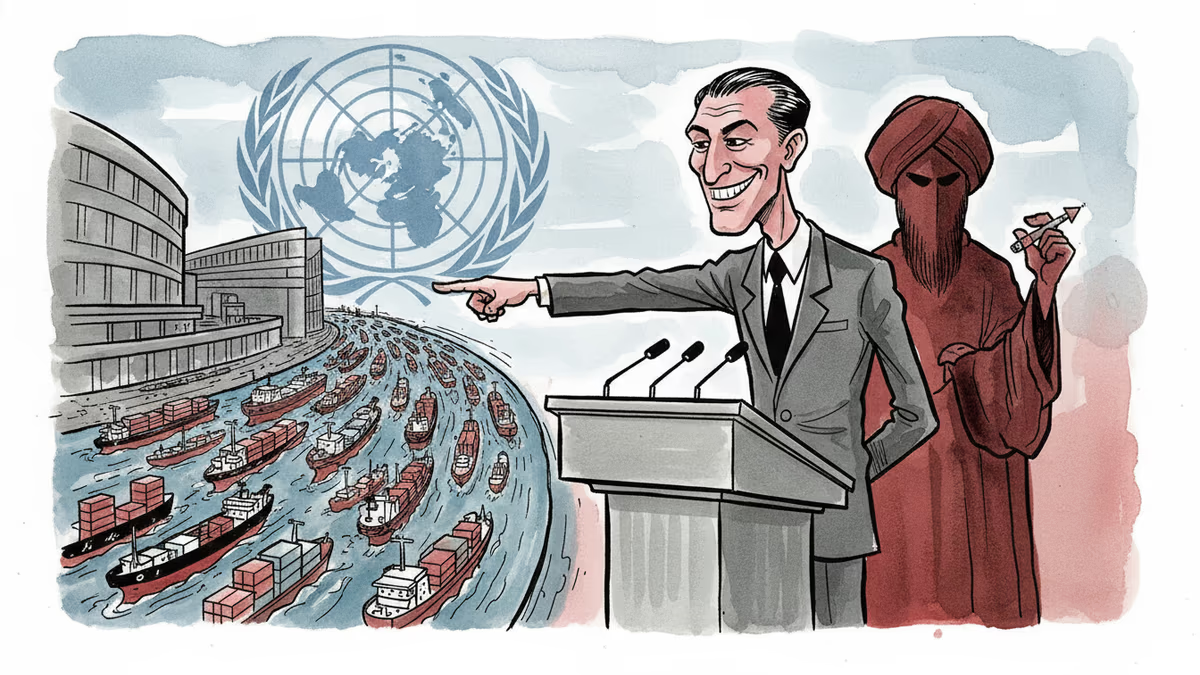
Beijing's rare rebuke of Iran at the UN Security Council over Strait of Hormuz attacks signals calculated self-interest, not a strategic realignment. Here's what's really happening.
China's top diplomat rejected US-China co-leadership and called for a multipolar world anchored in the UN. What does Beijing's vision actually mean—and who benefits?
Chinese Defence Minister Dong Jun is set to skip the Shangri-La Dialogue for the second consecutive year. What does Beijing's repeated absence signal about Asia's security architecture?
Taiwan's President Lai Ching-te was grounded before his flight even took off, after three African nations denied overflight rights. Beijing called it the right choice. The implications stretch far beyond one cancelled trip.
Beijing's rare rebuke of Iran at the UN Security Council over Strait of Hormuz attacks signals calculated self-interest, not a strategic realignment. Here's what's really happening.
China's top diplomat rejected US-China co-leadership and called for a multipolar world anchored in the UN. What does Beijing's vision actually mean—and who benefits?
Thoughts
Share your thoughts on this article
Sign in to join the conversation