
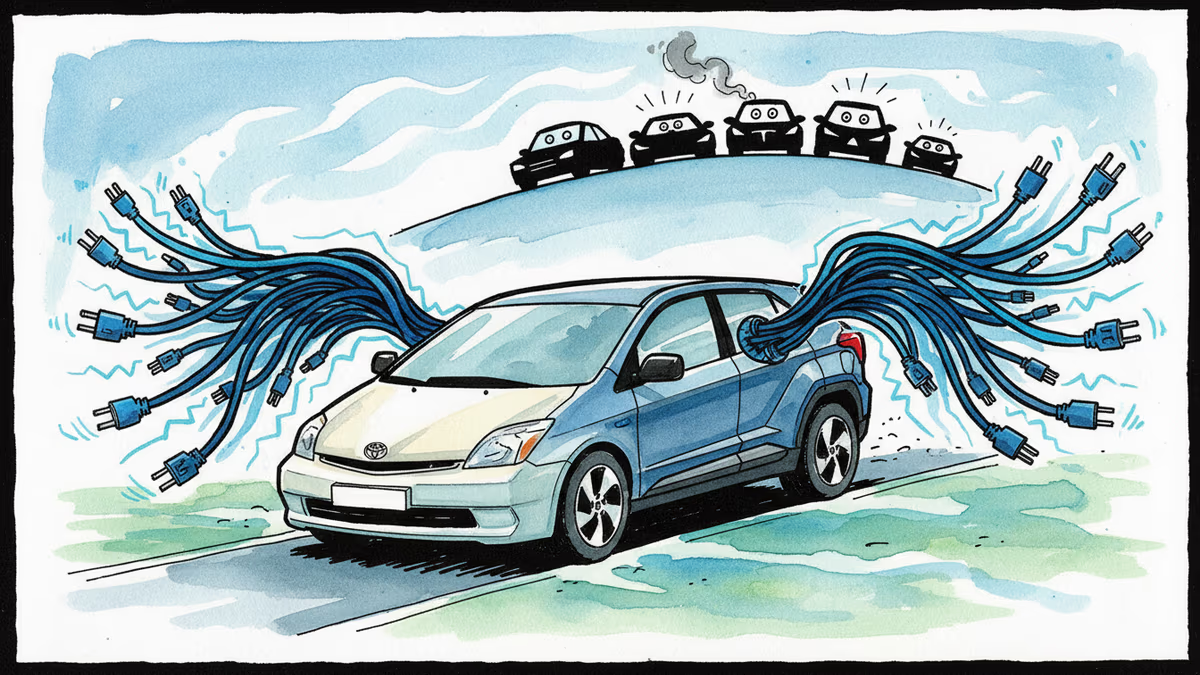
Toyota's Electric Gamble: Why the 2027 Highlander Could Change Everything
Toyota launches its first US-made electric SUV amid strategic pivot. Can the hybrid king conquer the EV market with familiar branding and American manufacturing?
The Hybrid King's Electric Awakening
After two decades of betting against pure electric vehicles, Toyota just dropped its biggest EV bombshell yet. The 2027 Highlander isn't just another electric SUV—it's Toyota's first three-row EV for America and the first Toyota electric vehicle to roll off US assembly lines. For a company that's spent years defending hybrids while Tesla conquered headlines, this feels less like evolution and more like capitulation.
But timing, as they say, is everything. Toyota's announcement comes as the EV market shows signs of cooling, Tesla's growth slows, and consumers increasingly demand the exact type of vehicle Toyota's betting on: a familiar, family-friendly SUV with an electric heart.
The Strategy Behind the Familiar Face
Toyota's choice to electrify the Highlander name rather than create a new EV brand reveals something crucial about their strategy. The Highlander has been a reliable seller for over 20 years, building trust among American families who need three rows and dependable transportation. By keeping the name, Toyota's essentially saying: "This isn't scary new technology—it's your trusted Highlander, just better."
This approach contrasts sharply with competitors who've launched entirely new electric brands (Genesis GV70, Cadillac Lyriq) or given EVs completely different names. Toyota's betting that brand familiarity trumps electric novelty—a calculated risk in a market where EV adoption still hovers around 7% of total US sales.

The American manufacturing angle adds another layer. While Tesla dominates EV headlines, most of their vehicles still carry the "made in China" or "made in Germany" stigma for some US buyers. Toyota's promising American-made electric SUVs at a time when "Buy American" sentiment intersects with environmental consciousness.
The Competitive Landscape Shift
Toyota's timing coincides with a fascinating market inflection point. Tesla's Model Y growth has plateaued, Ford paused F-150 Lightning production expansion, and GM delayed several EV launches. Meanwhile, three-row electric SUVs remain remarkably scarce—Rivian's R1S targets adventure seekers, BMW's iX costs luxury prices, and most other options feel either too experimental or too expensive for mainstream families.
The 2027 Highlander could hit a sweet spot: proven Toyota reliability, familiar SUV practicality, and electric efficiency. But it also faces a crucial question—will American families in 2027 still want three-row SUVs, or will changing demographics and urban planning push them toward smaller, more efficient vehicles?
The Hybrid Strategy Reversal
Perhaps most intriguingly, this launch represents Toyota's quiet acknowledgment that their hybrid-first strategy may have run its course. For years, Toyota executives argued that hybrids offered better real-world emissions reductions than pure EVs, especially considering America's coal-heavy electrical grid. They weren't entirely wrong—Prius hybrids probably prevented more emissions than early Tesla Roadsters.
But regulatory winds have shifted. California's 2035 gas car ban, the federal EV tax credit structure, and corporate fleet requirements all favor pure electric vehicles over hybrids. Toyota's 2027 timeline suggests they're finally accepting that regulatory reality, not just market demand, will drive the transition.
Authors
Related Articles
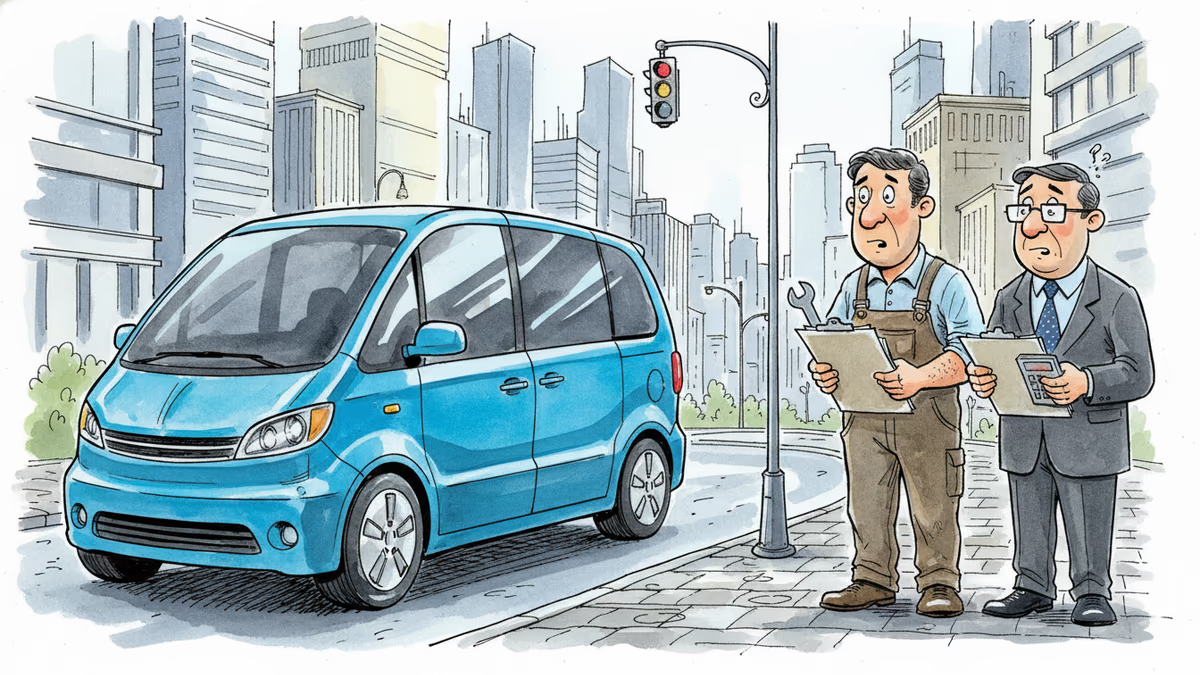
Waymo's new Ojai robotaxi isn't just a vehicle upgrade. It's the company's most serious attempt yet at cracking the cost problem that has kept autonomous vehicles from scaling. Here's what's really at stake.
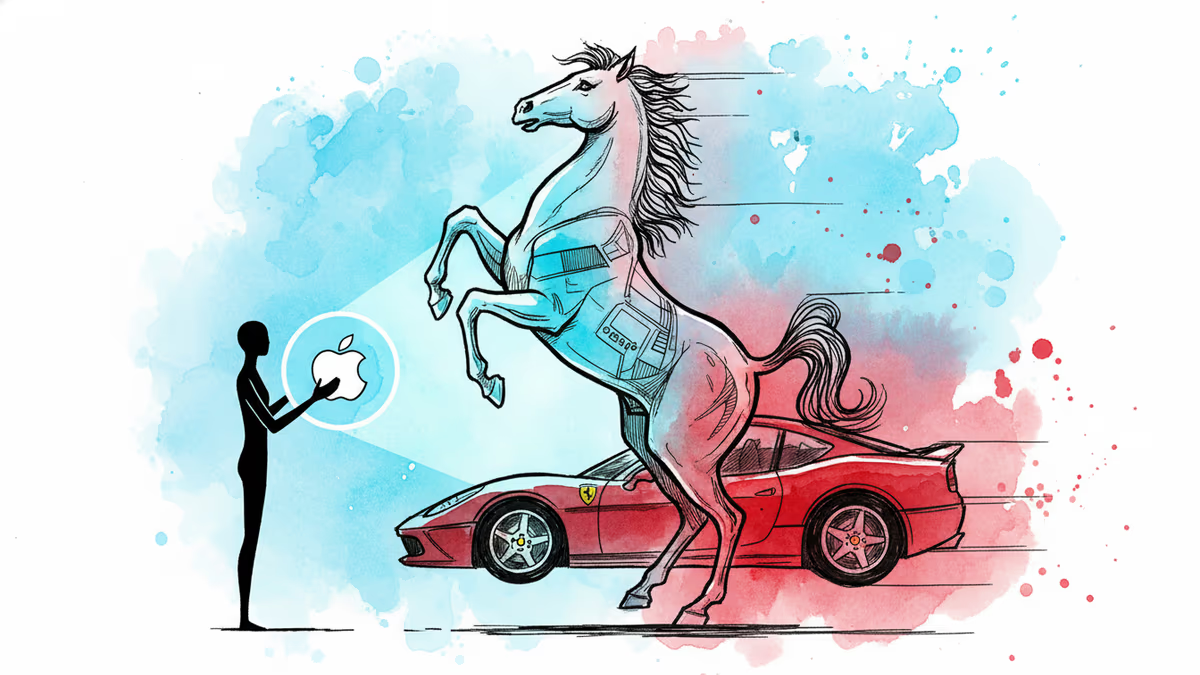
The Ferrari Luce is finally here — 1,000 hp, a 122 kWh battery, and an interior designed by the team behind the iPhone. But the real story is what Ferrari risked to build it.
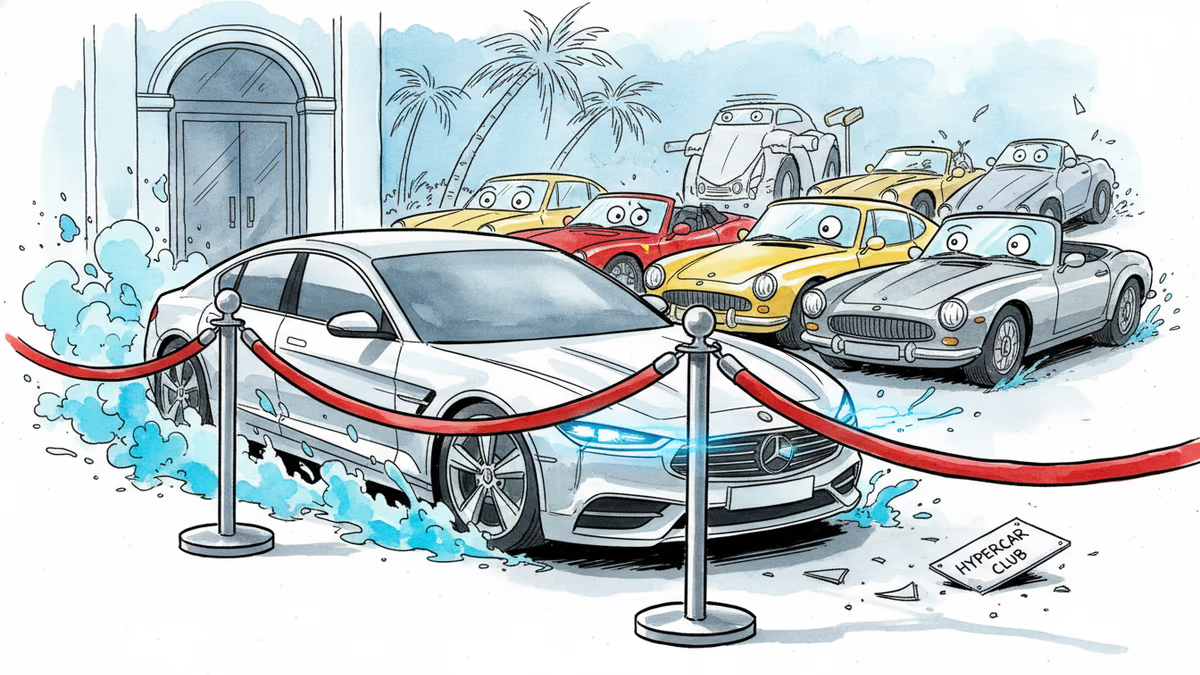
Mercedes-AMG's new GT 4-door coupe packs three YASA axial flux motors producing 1,153 hp and 1,475 lb-ft of torque. Here's what it means for the EV performance race—and who actually wins.
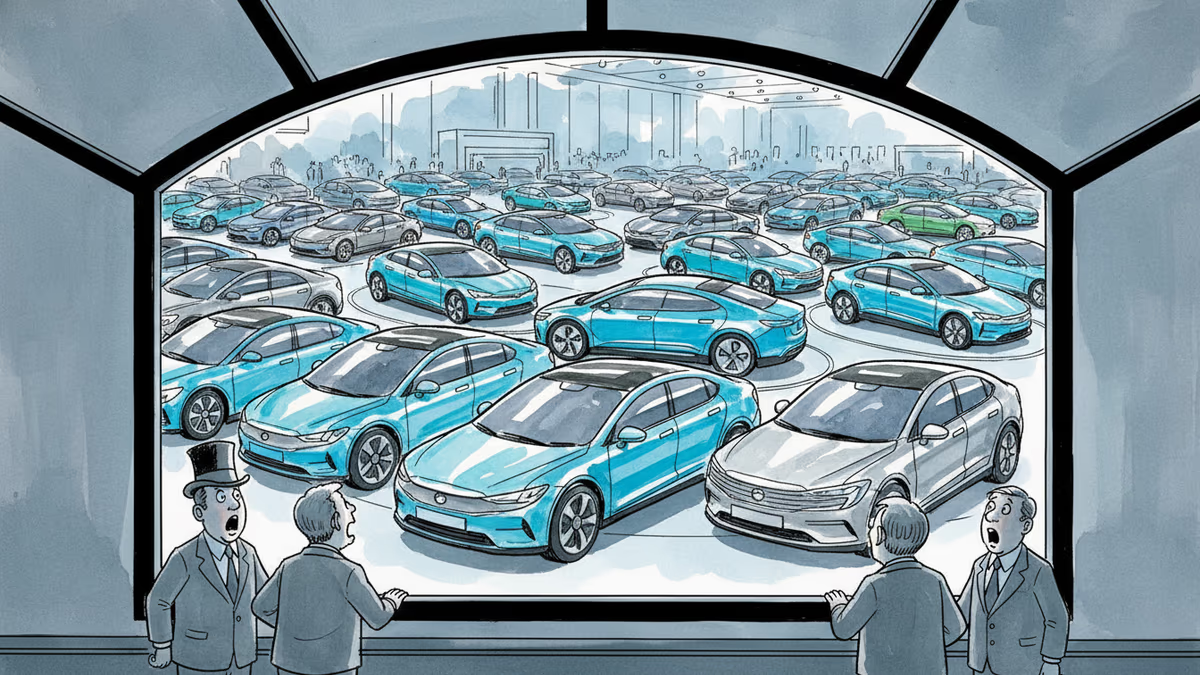
Auto China 2026 set records with 1,451 vehicles and 181 world premieres. But the real story isn't the size—it's how Chinese automakers stopped competing on price and started competing on brains.
Waymo's new Ojai robotaxi isn't just a vehicle upgrade. It's the company's most serious attempt yet at cracking the cost problem that has kept autonomous vehicles from scaling. Here's what's really at stake.
The Ferrari Luce is finally here — 1,000 hp, a 122 kWh battery, and an interior designed by the team behind the iPhone. But the real story is what Ferrari risked to build it.
Mercedes-AMG's new GT 4-door coupe packs three YASA axial flux motors producing 1,153 hp and 1,475 lb-ft of torque. Here's what it means for the EV performance race—and who actually wins.
Auto China 2026 set records with 1,451 vehicles and 181 world premieres. But the real story isn't the size—it's how Chinese automakers stopped competing on price and started competing on brains.
Thoughts
Share your thoughts on this article
Sign in to join the conversation