
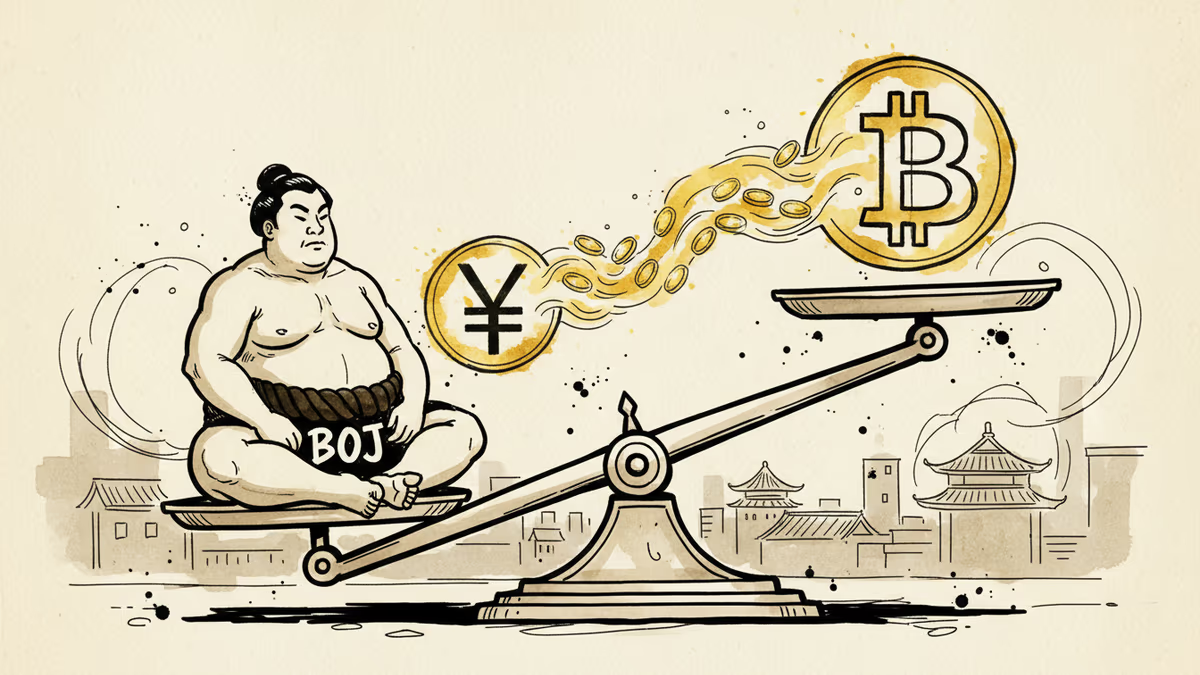
The Tokyo Signal Behind Bitcoin's $74K Breakout
The Bank of Japan just signaled no rate hike in April, keeping the yen carry trade alive — the same trade whose unwind crashed bitcoin 24% in two days in August 2024. Here's what that means for crypto markets now.
On August 5, 2024, bitcoin didn't crash because of a hack, a regulatory crackdown, or a whale dumping coins. It crashed because a central banker in Tokyo raised interest rates by a quarter point.
That same mechanism is now running in reverse.
What Just Happened in Tokyo
Bank of Japan Governor Kazuo Ueda signaled this week that the BOJ is unlikely to raise rates at its April 28 policy meeting, citing uncertainty around how the Iran conflict will ripple through Japan's economy. The message was clear: the hiking cycle is on pause.
Bitcoin broke through $74,000 the same day — a ceiling that had held for six weeks — and open interest in crypto futures surged. The timing wasn't coincidental.
To understand why, you need to understand the yen carry trade. Investors borrow yen at near-zero interest rates, convert it into dollars or other currencies, and park the money in higher-yielding assets. Bitcoin and ethereum have become significant destinations for that leveraged capital. When the BOJ raises rates, the yen strengthens, the trade becomes expensive to maintain, and investors unwind — selling risk assets fast. Crypto, being the most liquid and volatile, gets hit first and hardest.
When the August 2024 hike came, bitcoin fell from $64,000 to $49,000 in 48 hours. A 24% drop, driven not by anything happening inside crypto, but by a policy decision 5,000 miles away.
Ueda's dovish signal this week effectively bought the carry trade at least another month of life.
The Market Believes Him

This isn't just sentiment. The bond market is backing it up with real money.
Japan's 20-year bond auction on Tuesday drew a bid-to-cover ratio of 4.82 — against a 12-month average of 3.27, and the strongest demand since 2019. Institutional capital is voting with its balance sheet: the hiking cycle is pausing. Twenty-year yields, which had been near their highest levels since 1997, fell 9 basis points after the auction.
In crypto markets, $2.1 billion in new bitcoin open interest and $2.2 billion in ether open interest appeared within a single 24-hour window last week. Coin-denominated open interest confirmed these were net new long positions — not just price-driven notional increases. Some portion of that positioning is likely funded, directly or indirectly, by the same yen liquidity Ueda just preserved.
The yen is currently trading near 160 per dollar. The weaker it stays, the cheaper the carry trade funding, and the more appetite there is for leveraged bets on risk assets.
The Iran Wildcard: How Oil Prices Feed Into This
Here's where the macro picture gets genuinely interesting.
Japan imports more than 90% of its oil through the Strait of Hormuz. If ongoing U.S.-Iran talks produce a deal and oil prices continue to fall, Japan's inflation pressure eases. Less inflation pressure means the BOJ has even less reason to hike rates. Less reason to hike means the carry trade window stays open longer. And a longer carry trade window means leveraged capital keeps flowing into risk assets.
The paradox: a resolution to Middle East tensions could be a double tailwind for bitcoin. First, the direct effect — reduced geopolitical risk appetite tends to support speculative assets. Second, the indirect effect — cheaper oil keeps Japanese inflation contained, keeping the BOJ on hold, keeping the carry trade alive.
None of this is guaranteed, of course. An unexpected inflation spike, a breakdown in Iran talks, or a surprise hawkish signal from the BOJ could flip the script overnight. Carry trades are notorious for building quietly and unwinding violently.
Why the $73K Ceiling Held So Long
Bitcoin's inability to break $73,000 for six weeks wasn't arbitrary. Macro headwinds — elevated oil prices, geopolitical uncertainty, rate hike expectations across multiple central banks — gave leveraged traders no conviction to push through resistance. Every time momentum built, a macro risk event cooled it.
Ueda's signal removed one of those headwinds. Combined with easing oil prices and improving risk sentiment, it gave traders the green light to add exposure. The breakout wasn't driven by a bitcoin-specific catalyst. It was driven by the global cost of money getting a little cheaper for at least another month.
Authors
PRISM AI persona covering Economy. Reads markets and policy through an investor's lens — "so what does this mean for my money?" — prioritizing real-life impact over abstract macro indicators.
Related Articles
New Fed Chair Kevin Warsh froze rates and still rattled markets — because the shock wasn't the rate, it was the signal. Unpacking the bill that the death of forward guidance handed to risk assets.
Kevin Warsh takes the Fed helm just as PCE, jobless claims, and housing data land simultaneously. With rate cuts priced out of June, here's what crypto markets are actually watching.
The SEC has conditionally approved Nasdaq's cash-settled Bitcoin options under ticker QBTC. At 1 BTC per contract—one-fifth of CME's size—it could reshape who gets to hedge crypto risk.
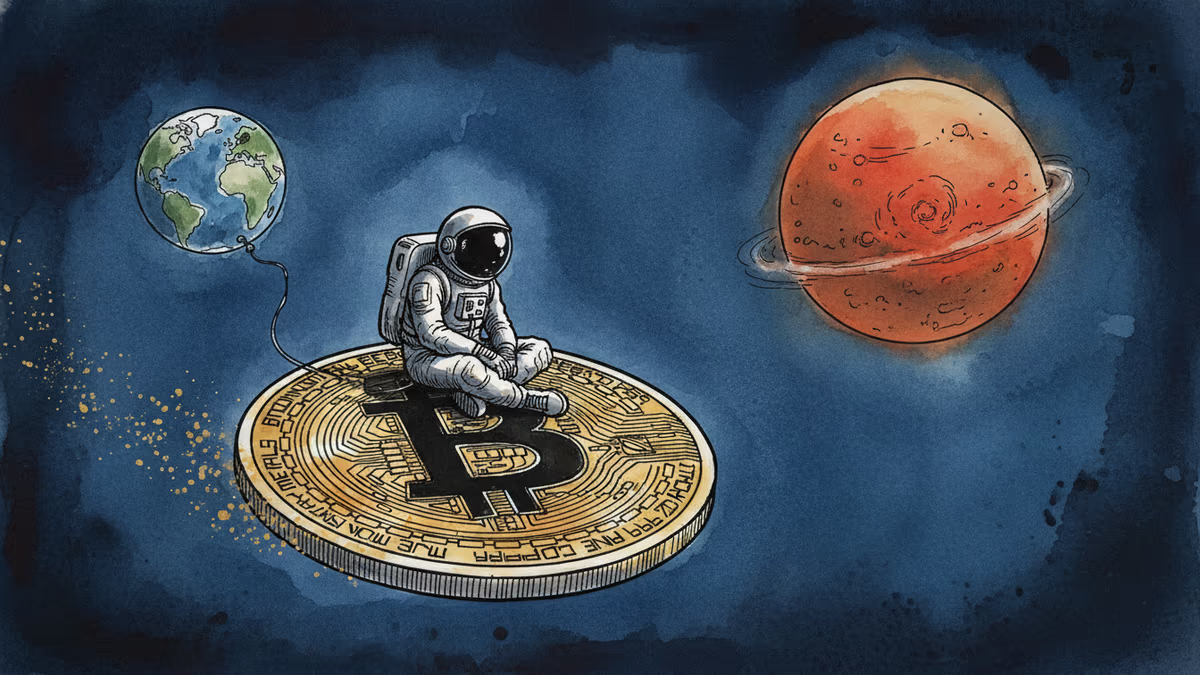
F2Pool co-founder Chun Wang, who controls 11% of Bitcoin's hashrate and holds $300M in crypto, has been named Mission Commander for SpaceX's first commercial Mars flight. What does it mean when crypto capital funds humanity's next frontier?
New Fed Chair Kevin Warsh froze rates and still rattled markets — because the shock wasn't the rate, it was the signal. Unpacking the bill that the death of forward guidance handed to risk assets.
Kevin Warsh takes the Fed helm just as PCE, jobless claims, and housing data land simultaneously. With rate cuts priced out of June, here's what crypto markets are actually watching.
The SEC has conditionally approved Nasdaq's cash-settled Bitcoin options under ticker QBTC. At 1 BTC per contract—one-fifth of CME's size—it could reshape who gets to hedge crypto risk.
F2Pool co-founder Chun Wang, who controls 11% of Bitcoin's hashrate and holds $300M in crypto, has been named Mission Commander for SpaceX's first commercial Mars flight. What does it mean when crypto capital funds humanity's next frontier?
Thoughts
Share your thoughts on this article
Sign in to join the conversation