
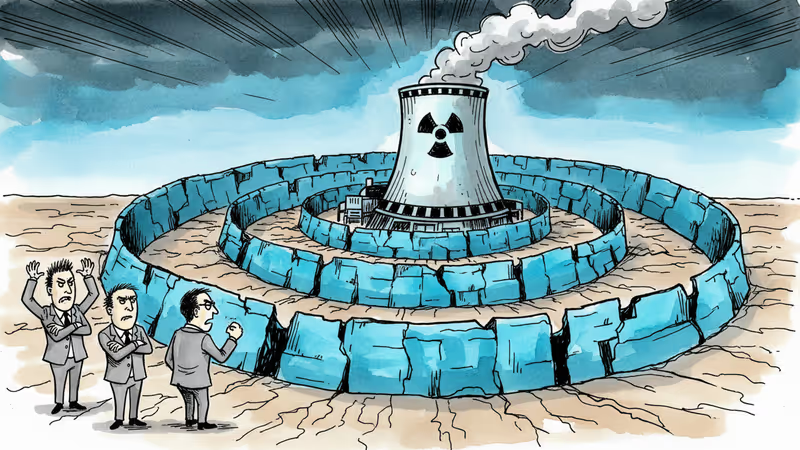
Next-Gen Nuclear Hits Reality Check on Fuel, Safety, and Cost
HALEU fuel monopoly, safety deregulation concerns, and persistent cost challenges reveal the gap between nuclear ambitions and reality.
As AI data centers drive unprecedented power demand, next-generation nuclear reactors have become the darling of tech executives and energy planners. But beneath the hype lies a sobering reality: critical fuel supplies controlled by Russia, safety regulations being quietly rolled back, and construction costs that remain stubbornly high.
Russia's Stranglehold on Nuclear Fuel
The biggest bottleneck isn't technology—it's fuel. Many next-generation reactors require HALEU (high-assay low-enriched uranium), a specialized fuel that Russia essentially monopolizes today.
HALEU contains 5-20% enriched uranium-235, compared to conventional fuel's under 5%. While the production technology is the same, geopolitics complicates everything. The US banned Russian nuclear fuel imports through 2040 in 2024, and Europe is working to reduce energy dependence on Russia.
This leaves companies scrambling. The US Department of Energy is doling out HALEU from its stockpile to support demonstration projects, but that's a temporary fix. Long-term success requires building independent supply chains—a process that could take years and billions of dollars.
The irony is stark: the technology meant to reduce dependence on fossil fuels now depends entirely on a geopolitical adversary for its most critical component.
Safety Regulations Under Pressure

Next-generation reactors do offer potential safety improvements. Alternative coolants eliminate high-pressure operations, and passive safety systems automatically shut down reactors during power failures, reducing meltdown risks.
But regulatory oversight is moving in a concerning direction. An NPR investigation revealed that the Trump administration secretly rewrote nuclear rules, stripping environmental protections and loosening safety measures. These new rules were shared with companies in experimental reactor programs but hidden from public view.
MIT'sKoroush Shirvan captured the concern during a recent talk: "I've seen disturbing trends where words like 'rubber-stamping nuclear projects' are being said." He emphasized that nuclear power's excellent safety record exists "because of stringent regulatory oversight"—not despite it.
The tension is real: companies want faster approvals to compete with renewables, but safety shortcuts could undermine public trust that took decades to rebuild.
The Economics Still Don't Add Up
Cost remains nuclear power's Achilles' heel. Georgia's Plant Vogtle Units 3 and 4, which came online in 2023-2024, cost $15,000 per kilowatt after inflation adjustments. While that reflects first-of-a-kind inefficiencies, it's a sobering benchmark.
Next-generation plants are projected to cost $6,000-$10,000 per kilowatt initially, potentially dropping 40% with mass production. That's better than Vogtle but still expensive compared to natural gas plants at just $1,600/kW.
The nuclear industry argues that operating costs are low and plants run for 60+ years, providing stable baseload power that renewables can't match. But with wind and solar costs plummeting, the economic case becomes harder to make purely on cost.
What nuclear offers isn't necessarily cheaper power—it's reliable power that doesn't depend on weather or time of day. In an AI-driven economy where data centers need 24/7 electricity, that reliability premium might justify the higher costs.
Authors
Related Articles
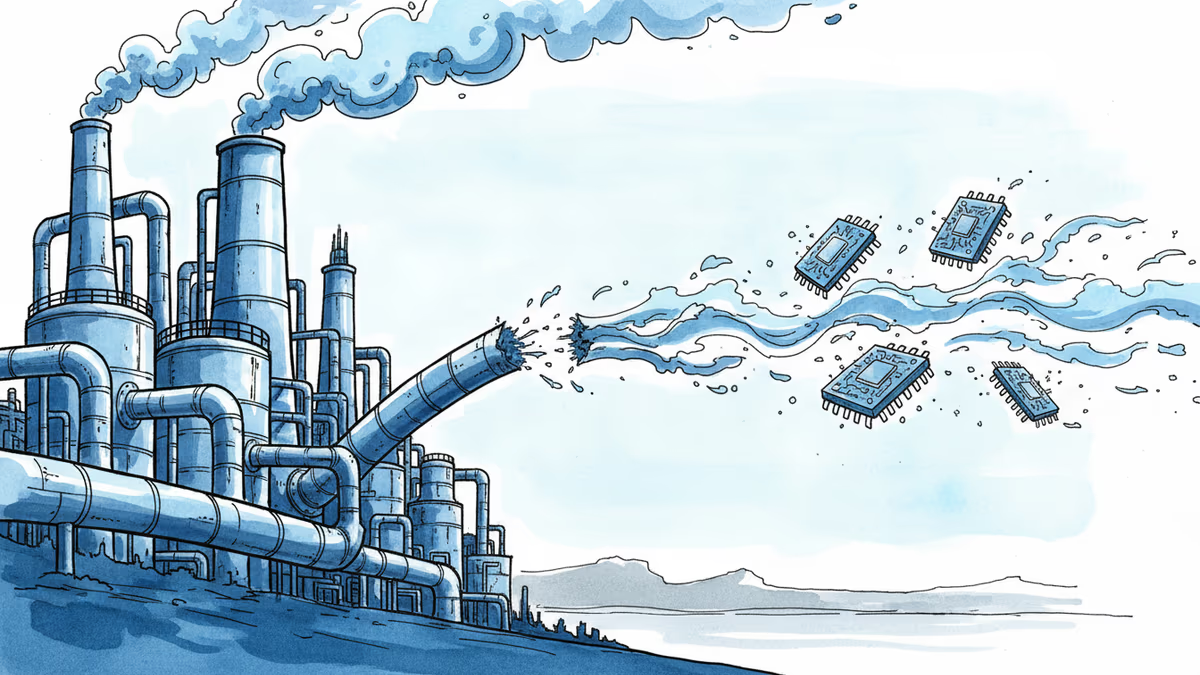
Qatar's gas production halt threatens global semiconductor supply chains as the Middle East conflict disrupts critical materials. Samsung and SK Hynix face potential production slowdowns in a market already stretched by AI demand.
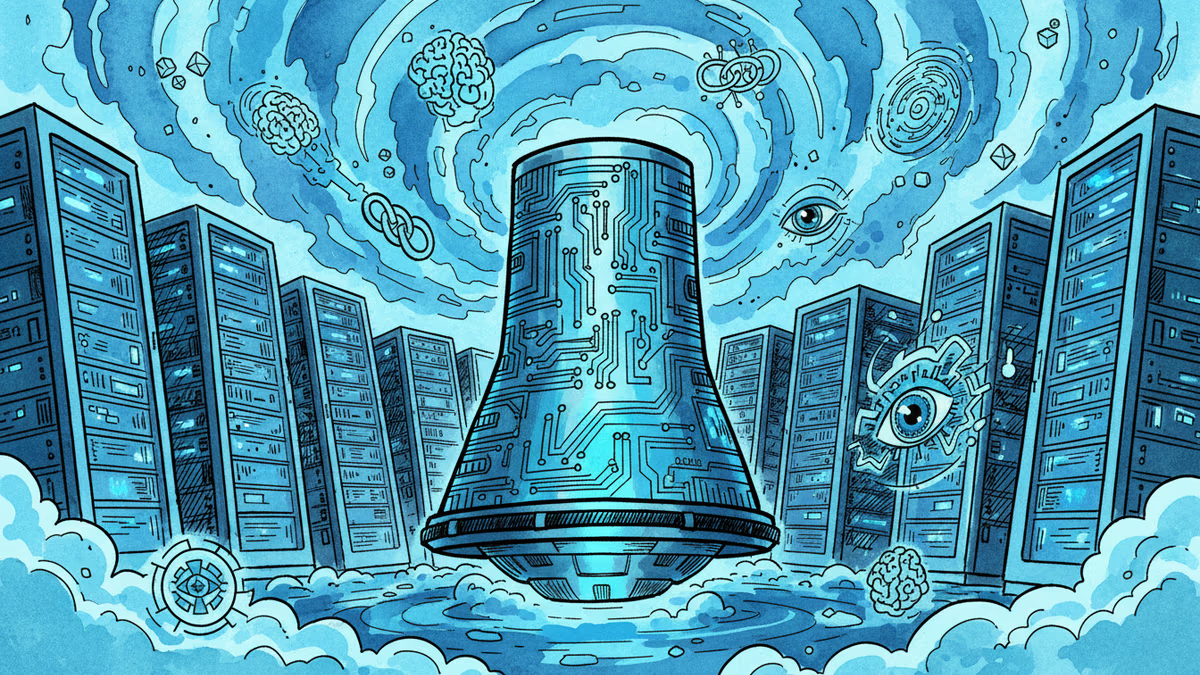
TerraPower receives groundbreaking approval to build America's first next-generation nuclear plant, targeting 2030 completion as AI data centers strain the grid
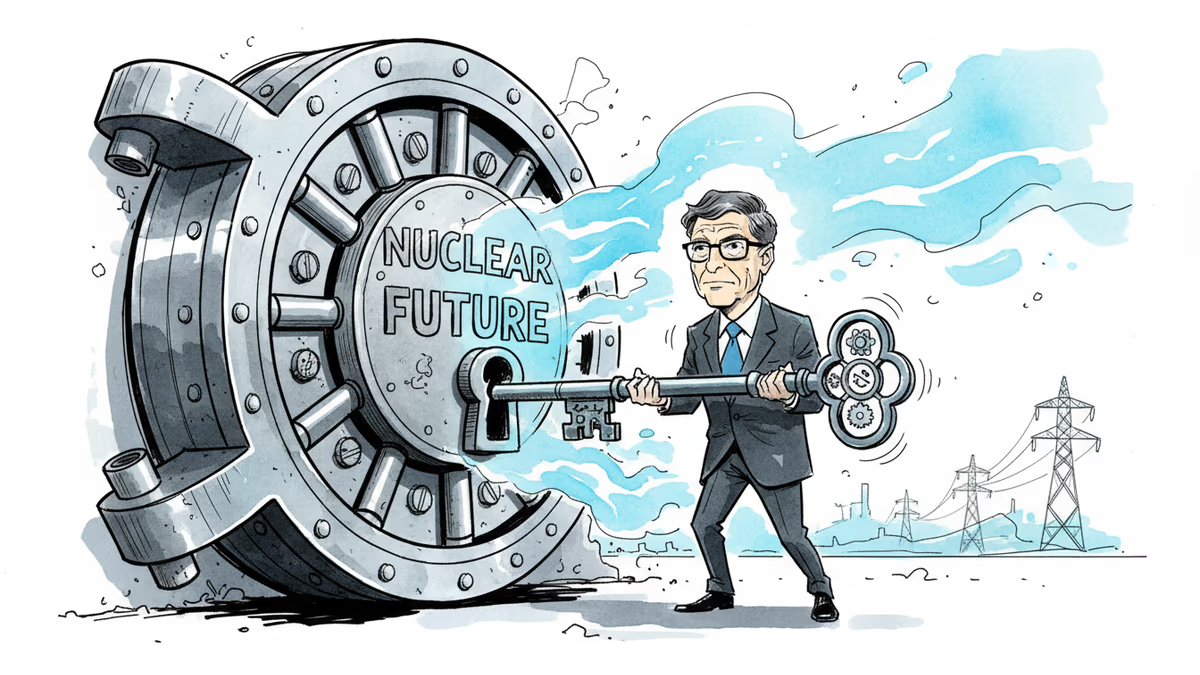
The US approves its first nuclear reactor construction in nearly a decade. Can TerraPower's radical sodium-cooled design reshape America's energy future?
Trump promised to remove Vietnam from export control lists just weeks after the country broke ground on its first chip factory. A strategic pivot 70 years in the making could reshape global semiconductor supply chains.
Qatar's gas production halt threatens global semiconductor supply chains as the Middle East conflict disrupts critical materials. Samsung and SK Hynix face potential production slowdowns in a market already stretched by AI demand.
TerraPower receives groundbreaking approval to build America's first next-generation nuclear plant, targeting 2030 completion as AI data centers strain the grid
The US approves its first nuclear reactor construction in nearly a decade. Can TerraPower's radical sodium-cooled design reshape America's energy future?
Trump promised to remove Vietnam from export control lists just weeks after the country broke ground on its first chip factory. A strategic pivot 70 years in the making could reshape global semiconductor supply chains.
Thoughts
Share your thoughts on this article
Sign in to join the conversation