
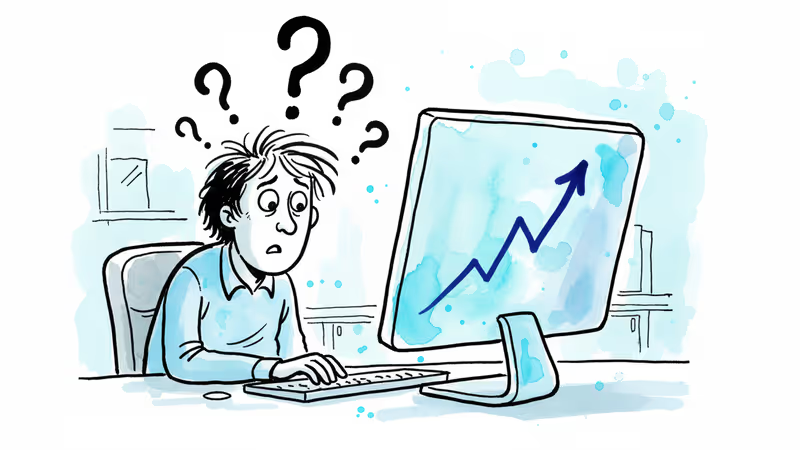
The Most Misunderstood Graph in AI Isn't What It Seems
METR's AI capability graph shows exponential growth, but the reality behind Claude 4.5's 5-hour task completion is far more complex than the dramatic headlines suggest.
Every time OpenAI, Google, or Anthropic releases a new frontier large language model, the AI community collectively holds its breath. It doesn't exhale until METR—a nonprofit whose name stands for Model Evaluation & Threat Research—updates a graph that has become the unofficial scorecard of AI progress.
This graph suggests AI capabilities are developing at an exponential rate, and recent models have consistently outperformed even those impressive projections. The latest case in point: Claude Opus 4.5, released in late November, which METR announced could independently complete tasks that would take humans about five hours—a vast improvement over what the exponential trend predicted.
But here's the thing: the dramatic reactions to these announcements tell only part of the story.
The Benchmark Paradox
AI evaluation faces a fundamental challenge that rarely makes headlines. Benchmark tests, by their very nature, operate in controlled environments that may not reflect real-world complexity. When we say an AI model can "independently complete" a five-hour human task, what does that actually mean?
The devil is in the details. "Independent completion" could mean the AI worked entirely without human intervention, or it could mean it completed a pre-structured task with carefully crafted prompts. The difference matters enormously for practical applications.
Consider this: if Claude 4.5 succeeds at this task 1 out of 100 times versus 9 out of 10 times, both scenarios might technically qualify as "capable," but they represent vastly different levels of reliability for real-world deployment.

The Investment Reality Check
For investors and tech leaders watching these capability announcements, the gap between benchmark performance and market readiness is crucial. Microsoft's$13 billion investment in OpenAI and Google's massive AI infrastructure spending aren't just bets on impressive test scores—they're wagers on consistent, scalable performance.
The enterprise software market is particularly sensitive to this distinction. Companies like Salesforce and ServiceNow are integrating AI capabilities, but they need reliability rates closer to 99%, not the inconsistent performance that might still technically "pass" a benchmark test.
What Regulators Are Really Watching
While the AI community celebrates exponential capability growth, regulators are asking different questions. The EU's AI Act and proposed US legislation focus less on benchmark scores and more on real-world impact and safety margins.
METR's evaluations include safety assessments, but the public discourse often focuses on the capability improvements while glossing over the safety implications. When an AI can complete complex tasks independently, it also means it can potentially cause harm independently.
The Measurement Problem
Perhaps the most significant issue with AI capability graphs is what they don't show. These evaluations typically measure narrow, specific tasks rather than general intelligence or practical utility. An AI might excel at coding challenges but struggle with basic common sense reasoning, or vice versa.
This creates a distorted picture of progress. The exponential curve might represent genuine advancement in certain domains while masking stagnation or even regression in others. For consumers and businesses trying to understand what these AI advances mean for their daily lives, the graph can be misleading.
Authors
Related Articles
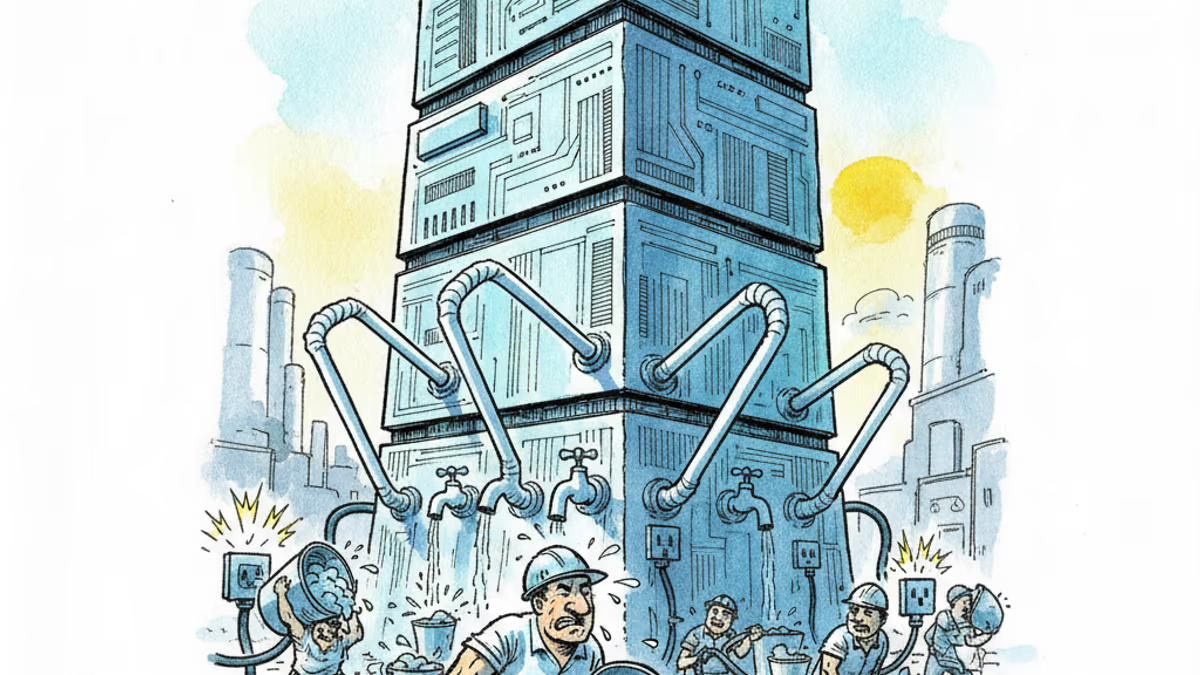
Samsung and SK unveiled a chip and AI investment package worth thousands of trillions of won on June 29. The headline number swings wildly by outlet, but the real contest isn't capital — it's water and power.
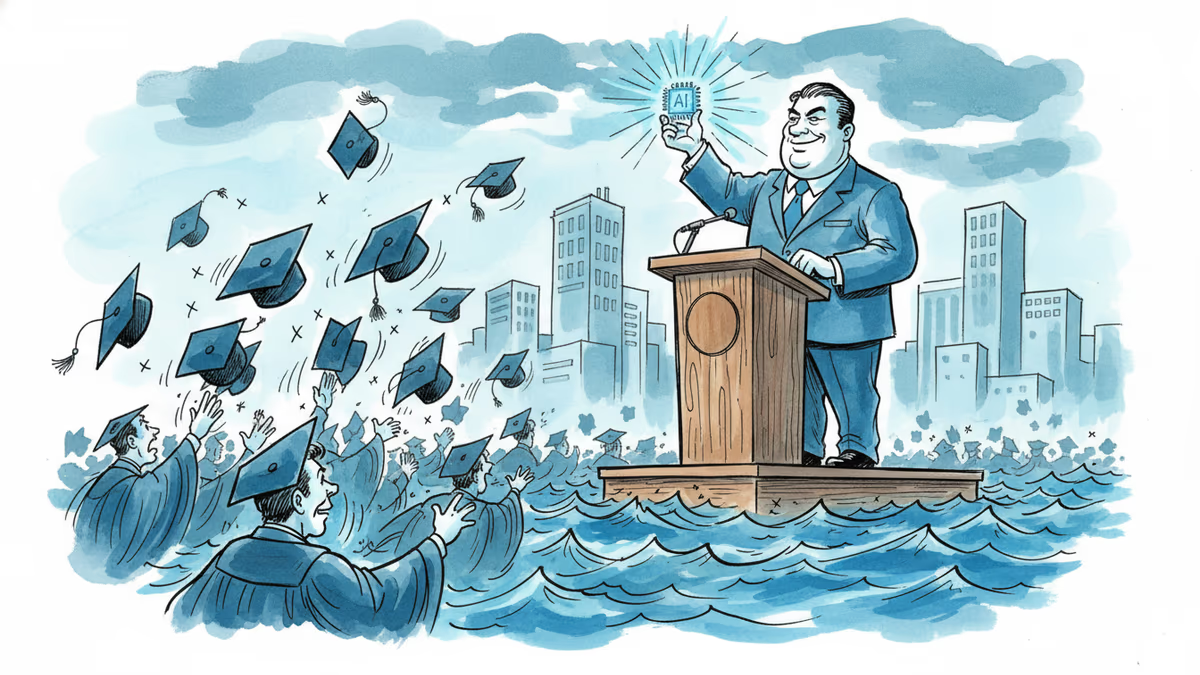
Viral videos show 2026 graduates jeering executives who praise AI at commencement ceremonies. It's not just rudeness — it's a signal about who pays for technological optimism.
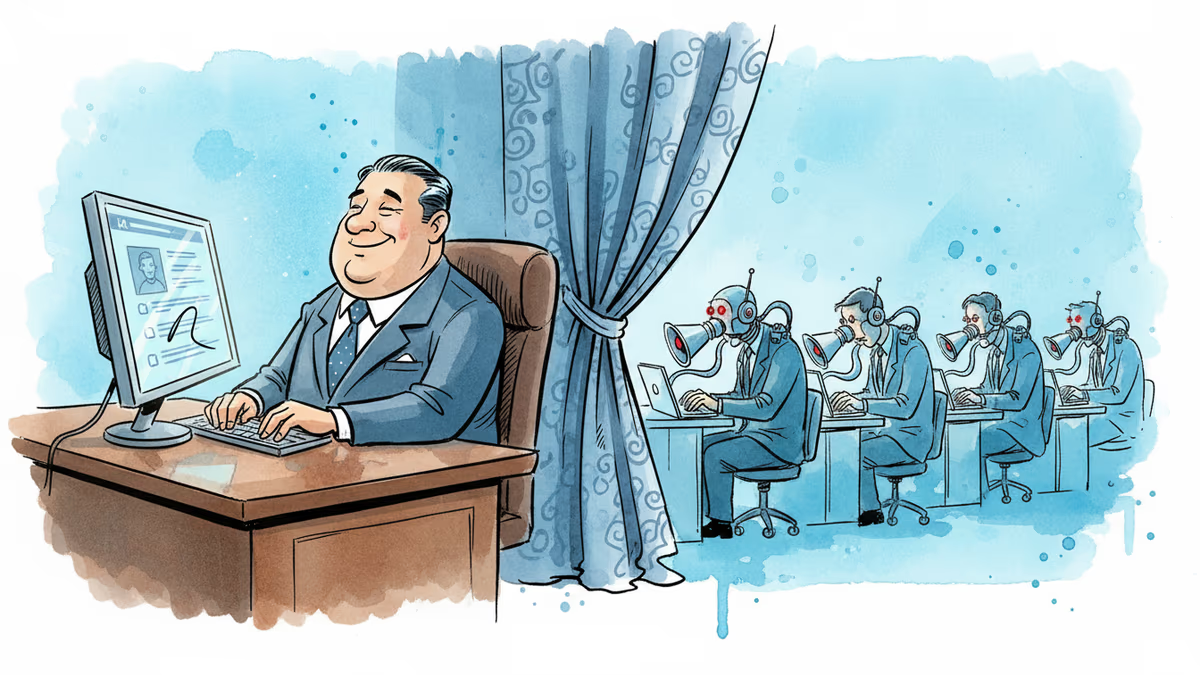
Filipino virtual assistants using AI to ghost-manage LinkedIn profiles for executives is now a structured industry. 30 comments a day, fake engagement rings, and a platform struggling to tell real from fabricated.
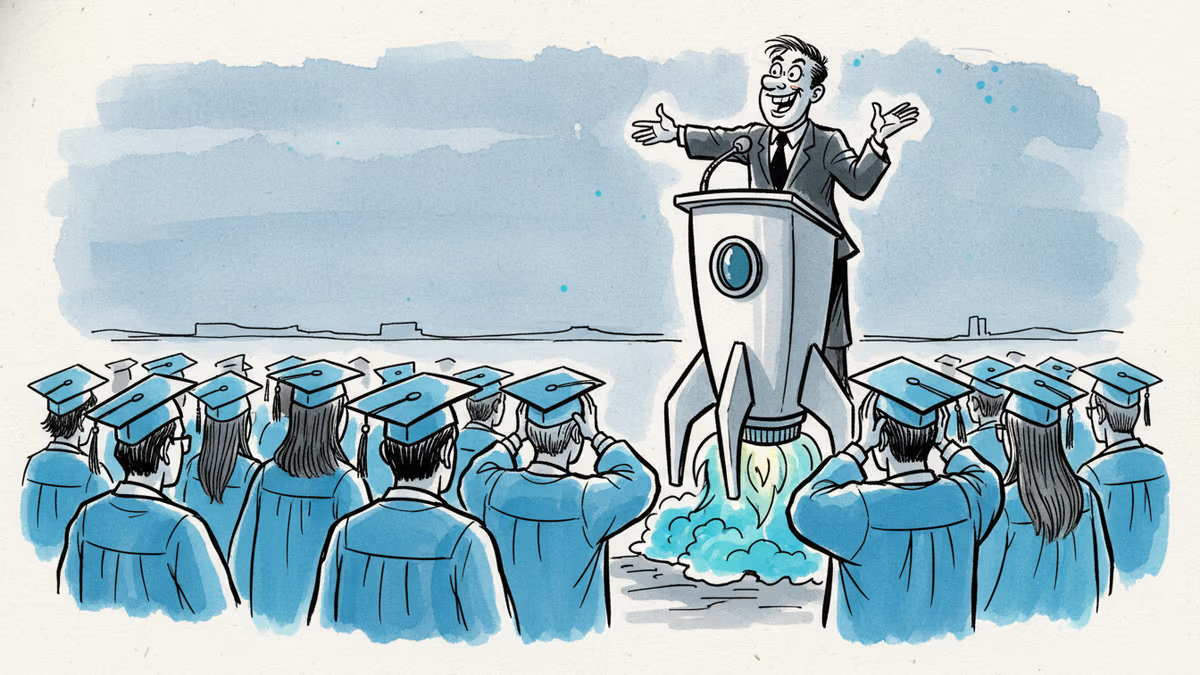
Two commencement speakers learned the hard way that AI enthusiasm doesn't land well with today's graduates. The backlash reveals a widening gap between tech optimism and Gen Z's economic reality.
Samsung and SK unveiled a chip and AI investment package worth thousands of trillions of won on June 29. The headline number swings wildly by outlet, but the real contest isn't capital — it's water and power.
Viral videos show 2026 graduates jeering executives who praise AI at commencement ceremonies. It's not just rudeness — it's a signal about who pays for technological optimism.
Filipino virtual assistants using AI to ghost-manage LinkedIn profiles for executives is now a structured industry. 30 comments a day, fake engagement rings, and a platform struggling to tell real from fabricated.
Two commencement speakers learned the hard way that AI enthusiasm doesn't land well with today's graduates. The backlash reveals a widening gap between tech optimism and Gen Z's economic reality.
Thoughts
Share your thoughts on this article
Sign in to join the conversation