
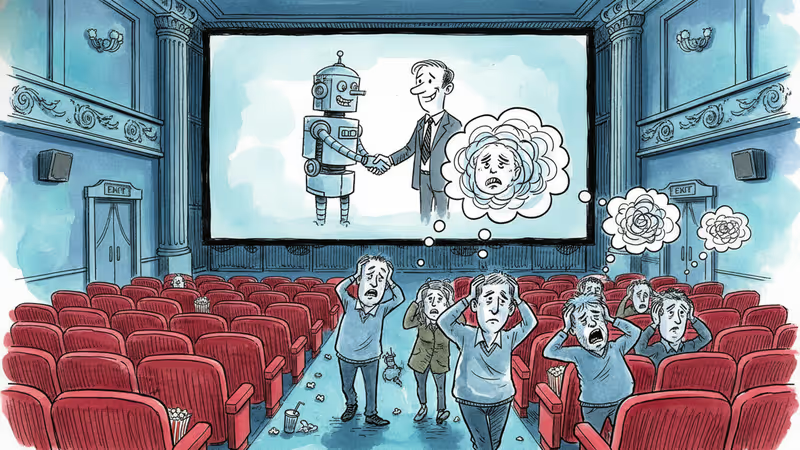
Why Hollywood's AI Movies Keep Bombing at the Box Office
From M3GAN's sequel flop to Mercy's critical disaster, AI-themed movies are failing spectacularly. What's behind audiences' growing fatigue with artificial intelligence narratives?
One week after ChatGPT launched in 2022, an AI horror flick called M3GAN became a surprise box office smash. Fast-forward to its 2024 sequel, and the result was a critical and commercial disaster.
Hollywood's love affair with artificial intelligence as a movie theme is turning into a one-sided relationship. Audiences are increasingly walking away from AI-centered narratives, and the latest casualty is Mercy, starring Chris Pratt as an LAPD detective who has 90 minutes to prove his innocence to a stern AI judge—or face instant execution.
One reviewer has already declared it "the worst movie of 2026," and judging by its mediocre ticket sales, many moviegoers decided as much from the trailer alone.
The Formula That's Wearing Thin
What's striking about recent AI movies isn't just their commercial failure—it's their predictable narrative arc. Mercy follows the same tired pattern: scary AI at first, but secretly good underneath. Pratt's character and the AI ultimately team up, with the bot showing "unrobotic emotion and doubt" before delivering a cringe-worthy speech about how "Human or AI, we all make mistakes. And we learn."
This naive belief in AI's progress toward enlightenment feels dated on arrival, especially when contrasted with genuinely prescient films like Paul Verhoeven's RoboCop, which offered pitch-black satire about cybernetic fascism nearly 40 years ago.
Mission: Impossible—Dead Reckoning introduced "The Entity" as a rogue AI adversary, but neither it nor its sequel The Final Reckoning justified their massive budgets. Even Disney's Tron: Ares, an attempt to leverage old IP for the era of large language models, crashed and burned.
When AI Makes Art (Badly)

The backlash extends beyond fictional narratives to actual AI-generated content. Time Studios' web series On This Day...1776, executive produced by acclaimed director Darren Aronofsky, uses Google DeepMind to recreate the American Revolution with real actors providing voiceovers.
The YouTube comments are brutal. "If I was a professional director and I released this I would be suicidal," reads a top-voted response. Viewers noted the uncanny faces and dead glossy eyes of the founding fathers, constant quick cuts to hide visual errors, and glaring mistakes like rendering "America" as "Aamereedd."
Time Studios limited engagement to channel subscribers only, but commenters claimed they subscribed specifically to condemn the "slop" they were watching.
The Deepfake Disaster
Existing entertainment isn't safe either. An Xfinity commercial directed by Taika Waititi for the Super Bowl creepily de-ages Jurassic Park stars Sam Neill, Laura Dern, and Jeff Goldblum for gags about perfect Wi-Fi preventing dinosaur chaos.
The irony is hard to miss: appropriating a film that was technologically astounding for its time and adding a layer of ugly deepfakery. "That 'de-aging' technology just makes them look like melting wax figures," wrote a horrified user on X.
The ad also represents extreme media consolidation at work—Xfinity (owned by Comcast) using Jurassic Park (owned by NBCUniversal, also owned by Comcast) during the Super Bowl (broadcast on NBC, yes, also Comcast). It's a necrotic ode to brand synergy.
The Reality Gap
Perhaps the most telling aspect of this AI movie backlash is its timing. While Hollywood churns out sanitized stories about benevolent artificial intelligence, real-world AI is denying health insurance claims and making consequential decisions about people's lives.
Audiences seem increasingly uninterested in fictional software programs that might spare a life when actual algorithms are already determining their fate in healthcare, employment, and criminal justice systems.
Authors
Related Articles

Samsung and SK unveiled a chip and AI investment package worth thousands of trillions of won on June 29. The headline number swings wildly by outlet, but the real contest isn't capital — it's water and power.
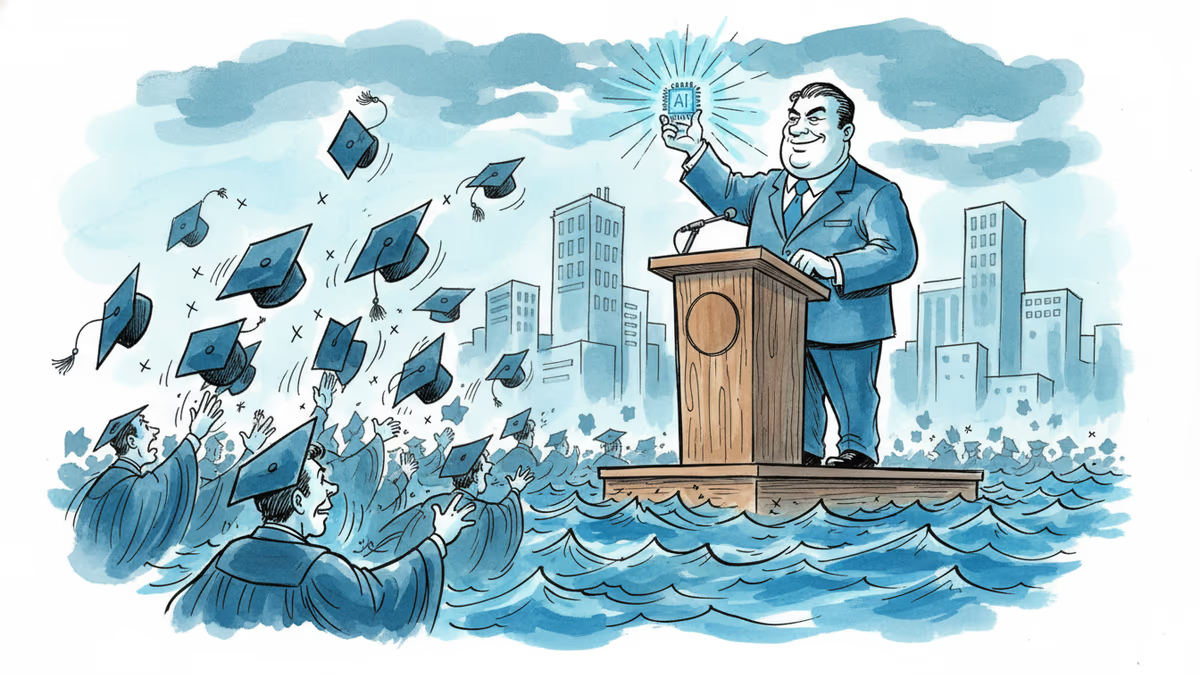
Viral videos show 2026 graduates jeering executives who praise AI at commencement ceremonies. It's not just rudeness — it's a signal about who pays for technological optimism.
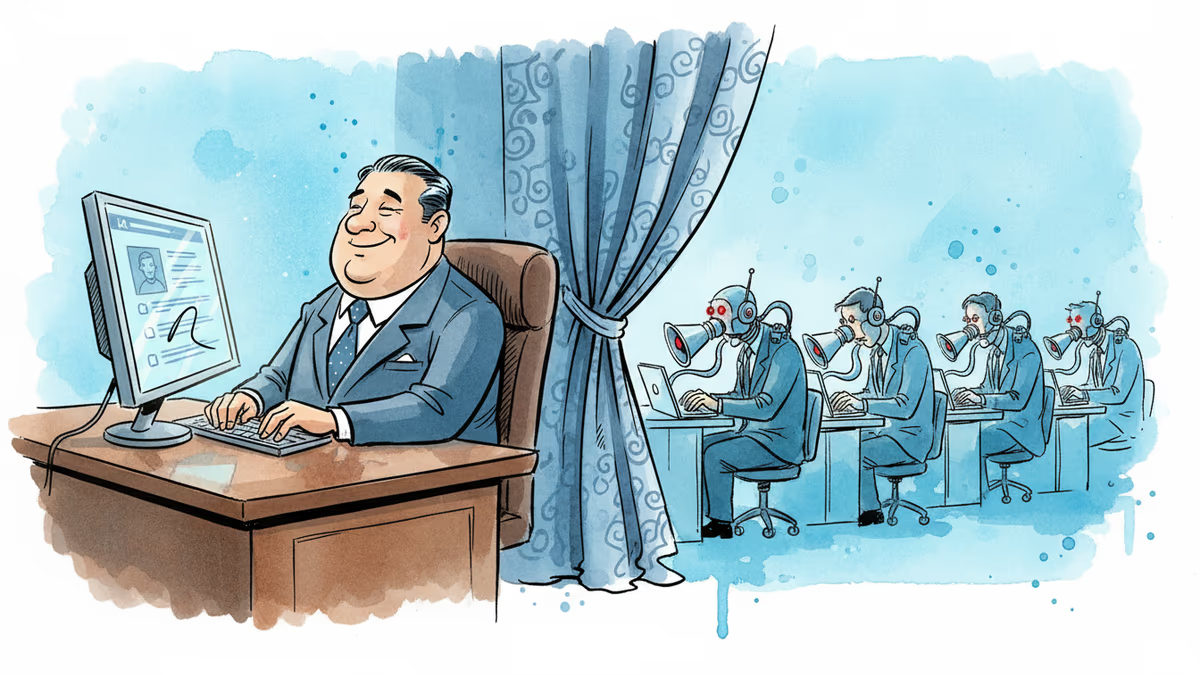
Filipino virtual assistants using AI to ghost-manage LinkedIn profiles for executives is now a structured industry. 30 comments a day, fake engagement rings, and a platform struggling to tell real from fabricated.
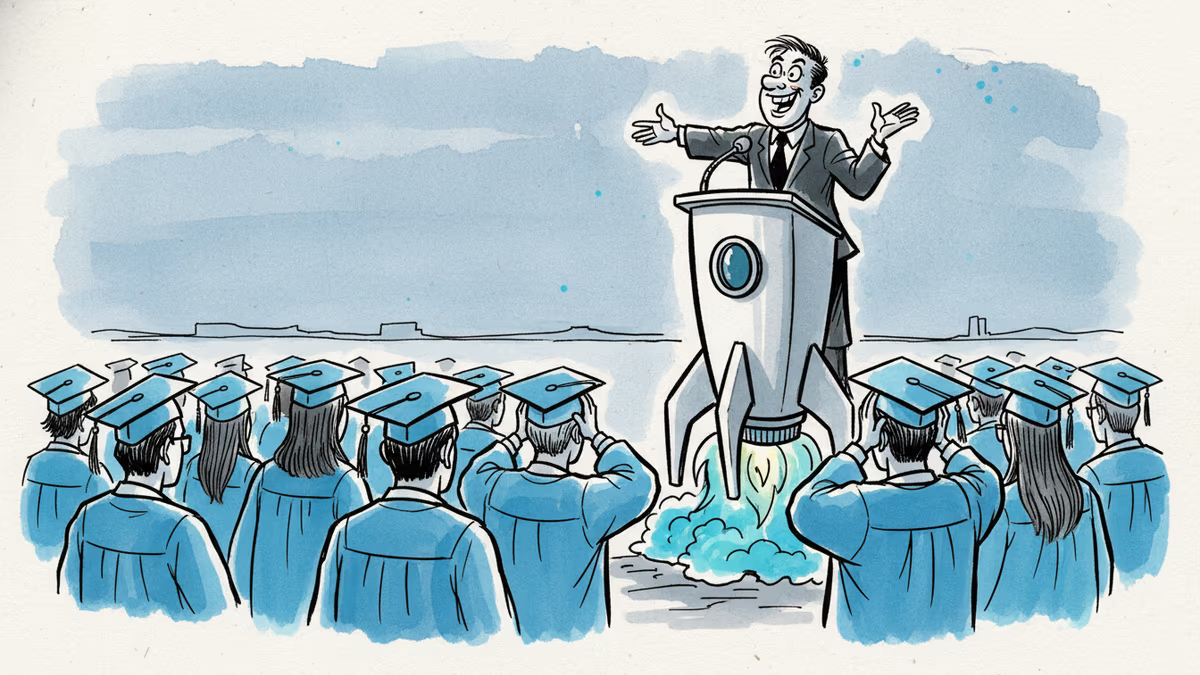
Two commencement speakers learned the hard way that AI enthusiasm doesn't land well with today's graduates. The backlash reveals a widening gap between tech optimism and Gen Z's economic reality.
Samsung and SK unveiled a chip and AI investment package worth thousands of trillions of won on June 29. The headline number swings wildly by outlet, but the real contest isn't capital — it's water and power.
Viral videos show 2026 graduates jeering executives who praise AI at commencement ceremonies. It's not just rudeness — it's a signal about who pays for technological optimism.
Filipino virtual assistants using AI to ghost-manage LinkedIn profiles for executives is now a structured industry. 30 comments a day, fake engagement rings, and a platform struggling to tell real from fabricated.
Two commencement speakers learned the hard way that AI enthusiasm doesn't land well with today's graduates. The backlash reveals a widening gap between tech optimism and Gen Z's economic reality.
Thoughts
Share your thoughts on this article
Sign in to join the conversation