
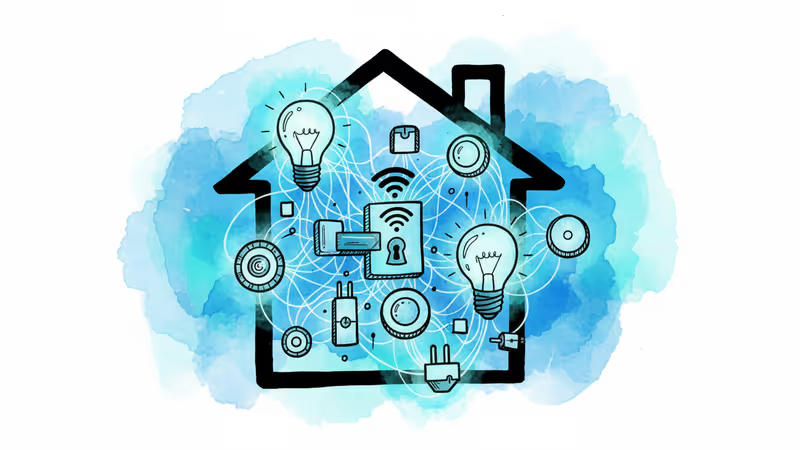
Your Smart Home Devices Are Finally Learning to Talk to Each Other
Thread protocol is reshaping the smart home landscape by enabling seamless device communication across manufacturers. Here's what it means for consumers and the industry.
The days of juggling multiple apps to control your smart doorbell, thermostat, and lights are numbered. A wireless protocol called Thread is quietly revolutionizing how smart home devices communicate, promising to end the fragmentation that has plagued the industry for over a decade.
The Real Problem Thread Solves
Smart home adoption has been hampered by a fundamental issue: devices from different manufacturers rarely play well together. Your Philips Hue lights need one app, your August smart lock needs another, and your Ring doorbell requires yet another. Each creates its own isolated ecosystem, forcing users to become digital jugglers.
Thread changes this dynamic entirely. Built on IEEE 802.15.4 radio technology, it creates a mesh network where devices can communicate directly with each other, regardless of manufacturer. Unlike Wi-Fi, which can drain battery-powered devices within weeks, Thread uses up to 80% less power while maintaining low latency for instant responses.
The protocol's "self-healing" capability is perhaps its most impressive feature. When one device goes offline or moves out of range, the network automatically reroutes connections through other devices. It's like having a road system that instantly creates new routes when one path gets blocked.
Why Timing Matters Now
Thread isn't new—Google's Nest division has been developing it since 2011. But 2024 marked a turning point with the release of Thread 1.4, which introduced credential sharing. This allows devices from different ecosystems (Apple HomeKit, Google Home, Amazon Alexa) to form a single unified mesh network instead of separate, competing networks.
Major tech companies are now racing to integrate Thread support. Amazon's latest Echo devices, Google's Nest Hubs, Apple's HomePods, and even Samsung's Smart TVs now function as Thread Border Routers—the bridges that connect Thread networks to the internet.

This convergence timing coincides with growing consumer frustration over smart home complexity and rising energy costs, making Thread's power efficiency increasingly attractive.
The Industry Shift
For manufacturers, Thread represents both opportunity and disruption. Companies can no longer rely on proprietary ecosystems to lock in customers. Instead, they must compete on device quality, features, and price rather than platform exclusivity.
This shift particularly impacts smaller IoT companies that previously struggled to gain market share against tech giants with established ecosystems. With Thread, a startup's innovative door sensor can seamlessly integrate with Apple's HomeKit or Google's smart home platform without requiring users to switch their entire setup.
The protocol also enables new business models. Instead of selling expensive hubs, companies can focus on creating specialized devices that add value to existing networks. Aqara, for instance, has pivoted from hub-centric to Thread-native devices, reducing costs while improving user experience.
What's Still Missing
Thread isn't a silver bullet. High-bandwidth devices like security cameras still require Wi-Fi due to Thread's intentionally limited data capacity. The protocol prioritizes power efficiency over speed, making it unsuitable for video streaming or frequent large file transfers.
The biggest challenge remains adoption fragmentation. While Thread 1.4 promises universal compatibility, most existing devices run older versions that can't always be upgraded. This creates a transitional period where consumers must carefully check compatibility before purchasing new devices.
There's also the Border Router requirement. While many smart speakers now include this functionality, users without compatible devices must purchase additional hardware to bridge their Thread network to the internet.
Authors
Related Articles
A security researcher discovered he could access 7,000 DJI robot vacuums and peek into strangers' homes. This Valentine's Day revelation exposes the hidden privacy risks of our smart home obsession.
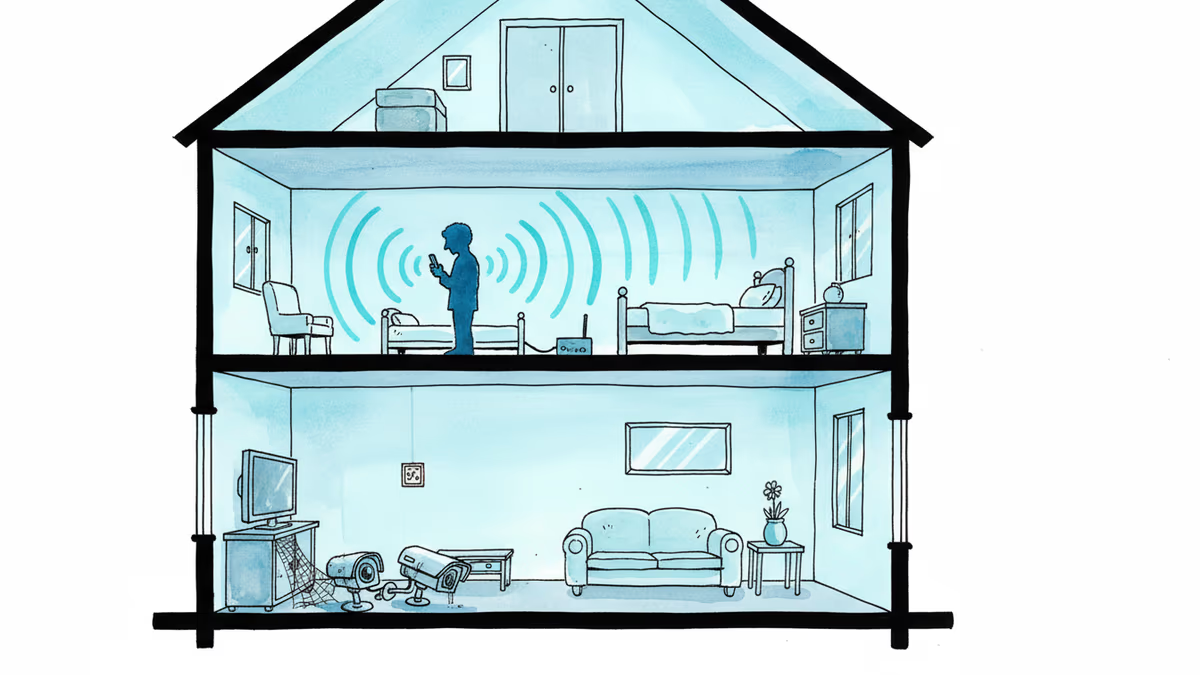
ADT acquires Origin Wireless to detect human movement through Wi-Fi signals without cameras. A game-changer for home security or privacy nightmare?
A pandemic hobby becomes assistive technology as Home Assistant users recreate Star Trek's LCARS interface while managing executive dysfunction. Exploring the deeper implications of customizable smart homes.

IKEA's new Matter-compatible smart home lineup promises universal compatibility at budget prices, but connection issues reveal the gap between smart home promises and reality.
A security researcher discovered he could access 7,000 DJI robot vacuums and peek into strangers' homes. This Valentine's Day revelation exposes the hidden privacy risks of our smart home obsession.
ADT acquires Origin Wireless to detect human movement through Wi-Fi signals without cameras. A game-changer for home security or privacy nightmare?
A pandemic hobby becomes assistive technology as Home Assistant users recreate Star Trek's LCARS interface while managing executive dysfunction. Exploring the deeper implications of customizable smart homes.
IKEA's new Matter-compatible smart home lineup promises universal compatibility at budget prices, but connection issues reveal the gap between smart home promises and reality.
Thoughts
Share your thoughts on this article
Sign in to join the conversation