
Spotify Wants to Sell You Physical Books Now
Spotify partners with Bookshop.org to sell physical books and launches Page Match feature, blending digital audio with traditional reading in 2026.
15 million Americans bought their first audiobook in 2023. Now Spotify wants to sell them the physical version too.
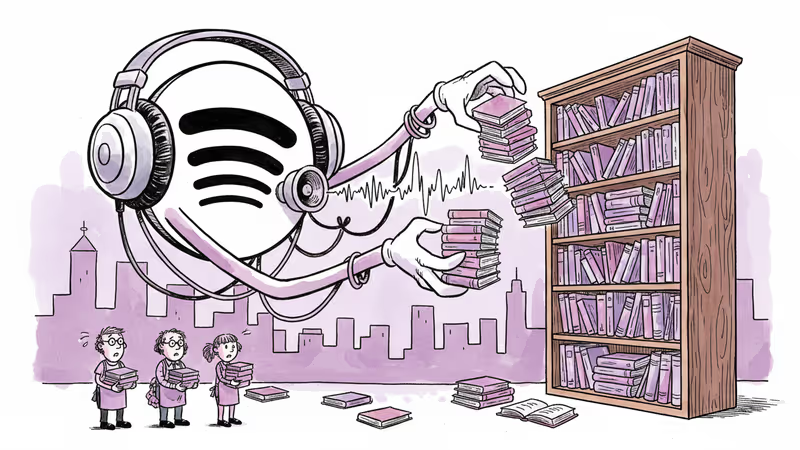
The streaming giant announced a partnership with Bookshop.org launching this spring, allowing users to purchase physical copies of audiobooks directly through the Spotify app. The move comes alongside Page Match, a camera-powered feature that syncs physical books and ebooks with audiobooks, creating what the company calls a "seamless reading experience."
The Mechanics of Spotify's Book Strategy
When the partnership goes live in the US and UK, audiobook pages will feature a "get a copy for your bookshelf" button. Clicking redirects users to Bookshop.org to complete purchases, with proceeds supporting local independent bookstores rather than major chains.
Page Match represents the technical centerpiece of this strategy. Users can photograph pages from physical books or ebooks, and the app automatically syncs to the corresponding audio position. It's essentially Shazam for books – identifying where you are in the text and jumping to that exact moment in the audiobook.
The timing isn't coincidental. Spotify has been aggressively expanding beyond music since 2019, acquiring podcast networks and launching audiobook subscriptions. The company now offers over 200,000 audiobook titles to premium subscribers, positioning itself as a comprehensive audio entertainment platform.
Why Books, Why Now?

Spotify's move into physical book sales reflects a broader trend of digital platforms seeking tangible touchpoints with consumers. The audiobook market grew 25% in 2023, while physical book sales remained surprisingly resilient, declining only 2.5% despite predictions of collapse.
The partnership with Bookshop.org is strategically clever. Rather than competing directly with Amazon, Spotify positions itself as supporting local businesses – a narrative that resonates with consumers increasingly wary of big tech dominance. Bookshop.org has already distributed over $30 million to independent bookstores since its 2020 launch.
For publishers, this creates an intriguing dynamic. Spotify essentially becomes a discovery engine that drives sales across multiple formats. A user might discover a book through its audiobook version, then purchase both digital and physical copies – maximizing revenue per title.
The Independent Bookstore Gamble
Independent bookstore owners are watching this development with cautious optimism. Sarah Chen, who owns three bookshops in Portland, sees potential benefits: "If Spotify can drive customers to discover books they wouldn't otherwise find, that helps everyone."
But questions remain about execution. Will users actually complete purchases after being redirected out of the Spotify app? Mobile commerce conversion rates typically drop 70% when users leave their original platform. Spotify's success will depend on making this transition seamless.
The partnership also raises questions about data sharing. Spotify knows what you listen to and when you stop listening. Combined with purchase data from Bookshop.org, this creates unprecedented insights into reading behavior across formats – information that could prove valuable for publishers and advertisers.
Authors
Related Articles
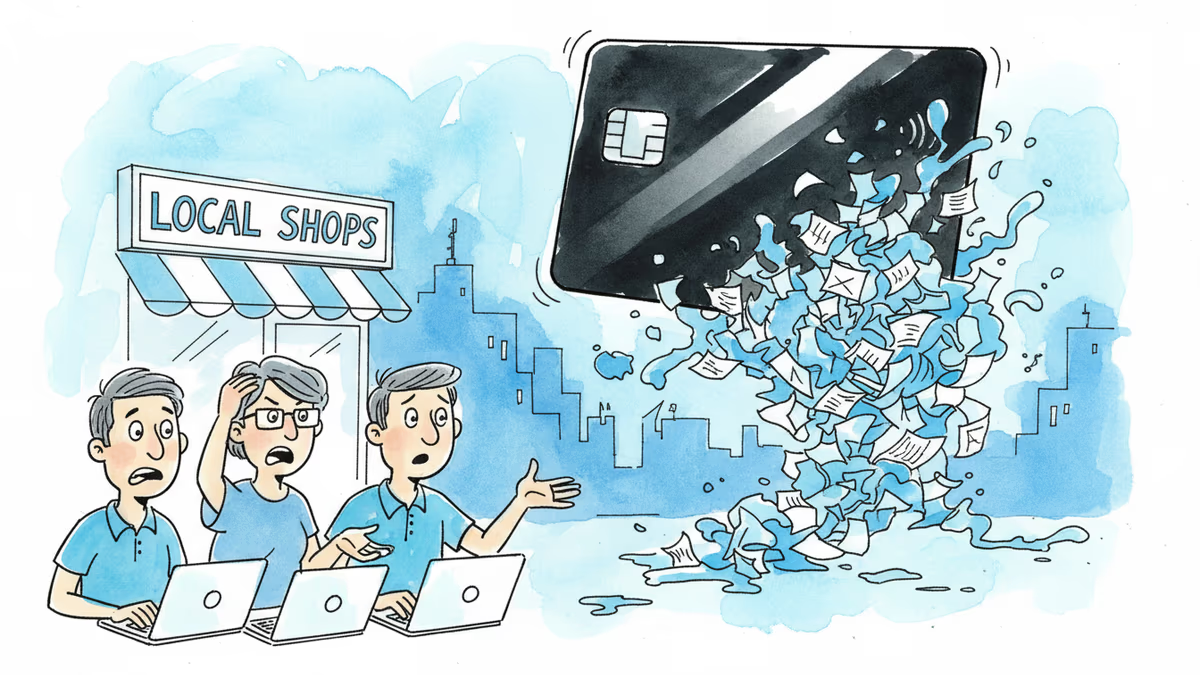
E-commerce fintech Parker filed for Chapter 7 bankruptcy on May 7, despite raising over $200M. The YC-backed startup's abrupt shutdown left small business customers scrambling—and exposed the fragility of vertical fintech models.
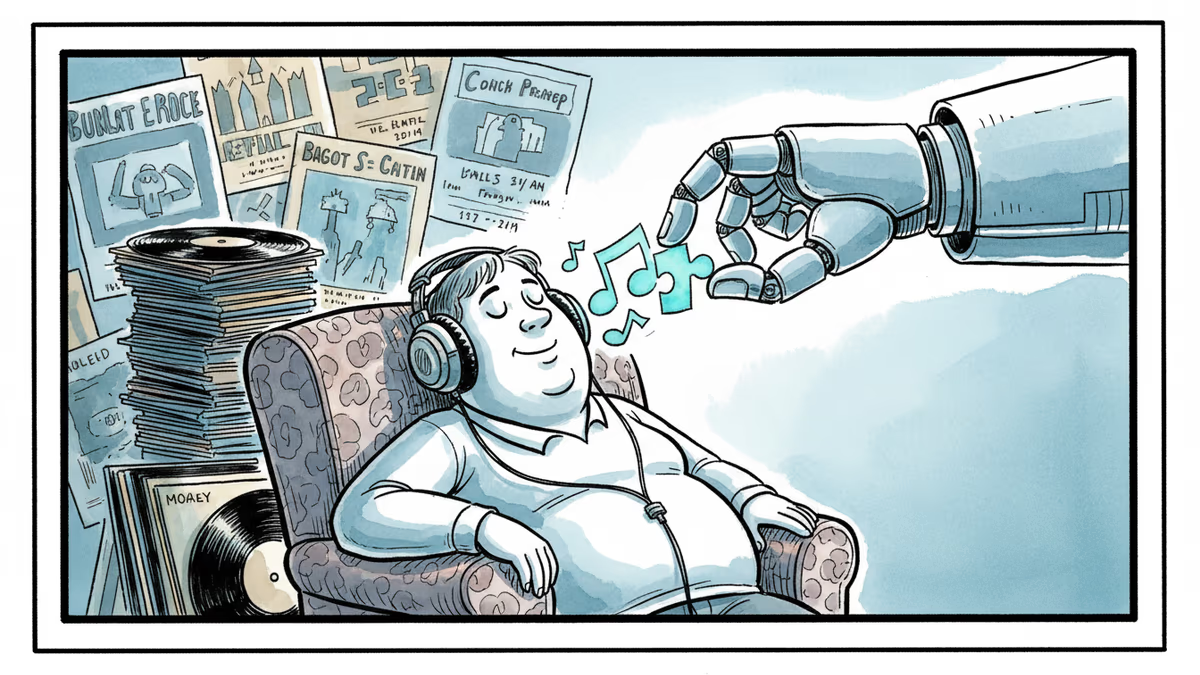
iOS 26.4 brings AI-generated playlists to Apple Music. It's convenient, but it raises real questions about taste, discovery, and who controls what you hear.
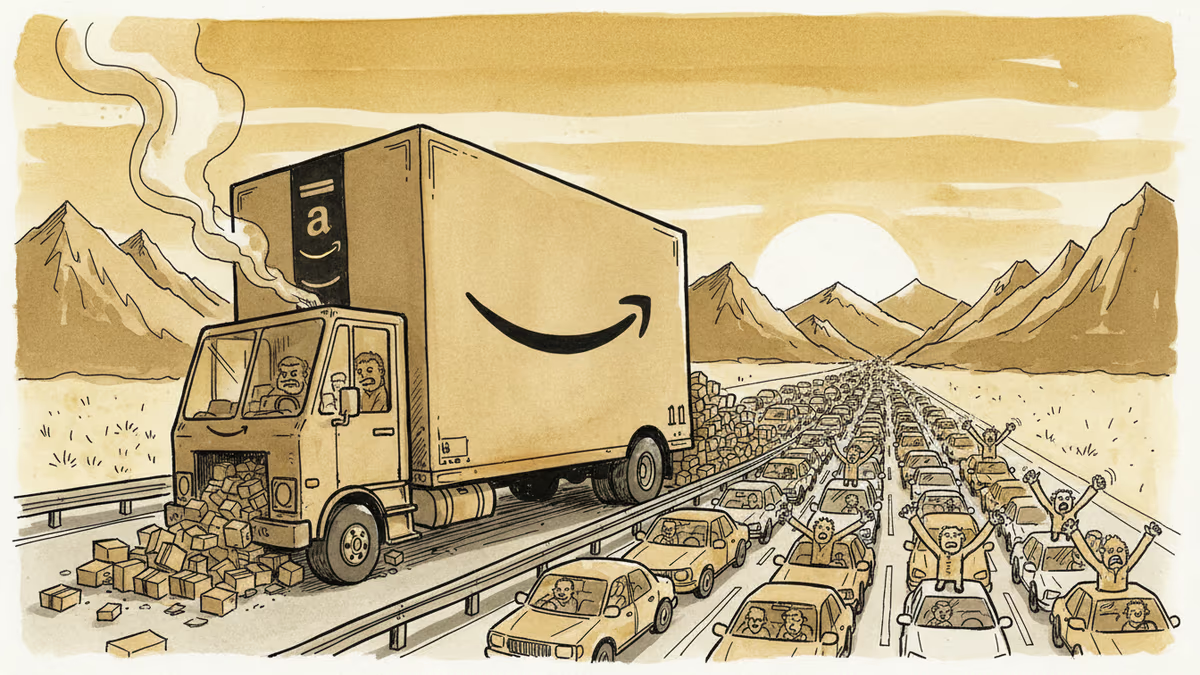
Over 20,000 reports flood in as Amazon suffers major service disruption, highlighting dangerous over-reliance on single platforms in modern e-commerce.
Spotify's AI-powered Prompted Playlists expand globally, letting users create custom playlists with natural language. What happens when algorithms know us better than we know ourselves?
E-commerce fintech Parker filed for Chapter 7 bankruptcy on May 7, despite raising over $200M. The YC-backed startup's abrupt shutdown left small business customers scrambling—and exposed the fragility of vertical fintech models.
iOS 26.4 brings AI-generated playlists to Apple Music. It's convenient, but it raises real questions about taste, discovery, and who controls what you hear.
Over 20,000 reports flood in as Amazon suffers major service disruption, highlighting dangerous over-reliance on single platforms in modern e-commerce.
Spotify's AI-powered Prompted Playlists expand globally, letting users create custom playlists with natural language. What happens when algorithms know us better than we know ourselves?
Thoughts
Share your thoughts on this article
Sign in to join the conversation