
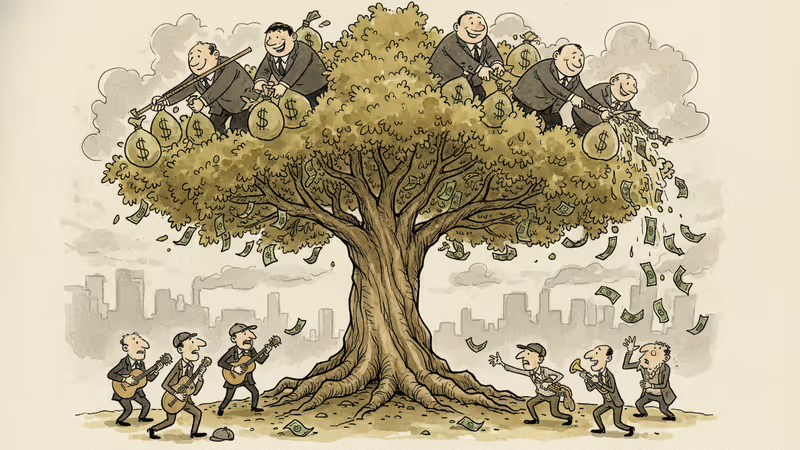
Spotify's $11B Payout Sounds Impressive, But Who's Really Getting Paid?
Spotify announced paying $11 billion to the music industry in 2025, but this eye-catching figure reveals the complex economics of streaming that may not benefit everyone equally.
$11 billion. That's how much Spotify claims it paid to the music industry in 2025—a full $1 billion more than the previous year. The streaming giant says this represents roughly 30% of the entire recording industry's revenue.
But before we applaud this seemingly generous figure, let's dig into what these numbers actually mean and who's really benefiting from streaming's continued growth.
The Fine Print Behind the Big Number
Spotify's$11 billion figure comes with important caveats. This amount covers only music royalties—it excludes merchandise sales, concert tickets, audiobook royalties, and podcasting deals. In other words, it's just one slice of the music industry's revenue pie.
This distinction matters because it highlights how fragmented music industry economics have become. While streaming platforms celebrate their growing payouts, many artists still struggle to make a living from streaming alone, relying heavily on live performances and merchandise sales that fall outside these calculations.
The 30% share of industry revenue also raises questions about market concentration. When a single platform controls nearly a third of an entire industry's income flow, it wields enormous influence over how music gets discovered, promoted, and monetized.
The Trickle-Down Reality
Here's where the $11 billion story gets complicated: very little of this money goes directly to artists. The streaming economy operates through a complex web of intermediaries—record labels, distributors, publishers, and collection societies—each taking their cut before artists see a penny.

For most musicians, Spotify pays between $0.003 and $0.005 per stream. To put this in perspective, an artist needs roughly 250,000 to 300,000 streams to earn what they used to make from selling just 1,000 physical albums. The math simply doesn't work for mid-tier and emerging artists.
Meanwhile, superstar artists and major labels capture the lion's share of streaming revenue. This creates a winner-take-all economy where the top 1% of artists might earn substantial streaming income, while the remaining 99% struggle to break even.
The Platform Power Play
Spotify's announcement isn't just about celebrating success—it's strategic positioning amid growing scrutiny from artists, regulators, and competitors. The company faces mounting pressure to increase artist payouts while simultaneously trying to achieve profitability after years of losses.
The timing is particularly significant as several countries consider legislation to ensure fairer streaming payouts. The UK, France, and other markets are exploring ways to reform streaming economics, potentially forcing platforms to restructure their payment models.
For investors, Spotify's$11 billion payout represents both an opportunity and a risk. While it demonstrates the platform's central role in music distribution, it also highlights the ongoing tension between growth and profitability in the streaming business model.
The Consumer Paradox
From a consumer perspective, streaming offers unprecedented value—access to millions of songs for less than the cost of a single album per month. But this convenience comes with hidden costs that most listeners never consider.
The shift from ownership to access has fundamentally changed how we value music. When songs become infinitely available and virtually free to consume, their individual worth diminishes. This devaluation ripples through the entire creative economy, affecting not just musicians but also songwriters, producers, and other industry professionals.
The question becomes: is this sustainable? Can an industry built on near-zero marginal costs continue to support the diverse ecosystem of creators that makes music culture vibrant and innovative?
Authors
Related Articles
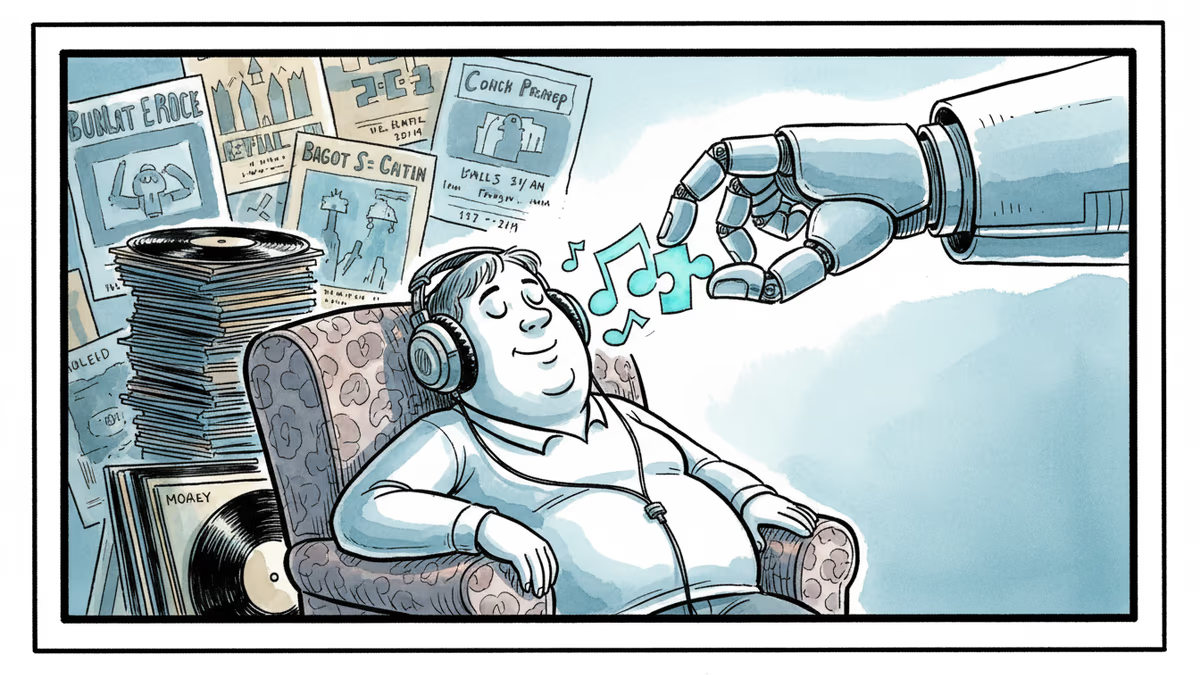
iOS 26.4 brings AI-generated playlists to Apple Music. It's convenient, but it raises real questions about taste, discovery, and who controls what you hear.
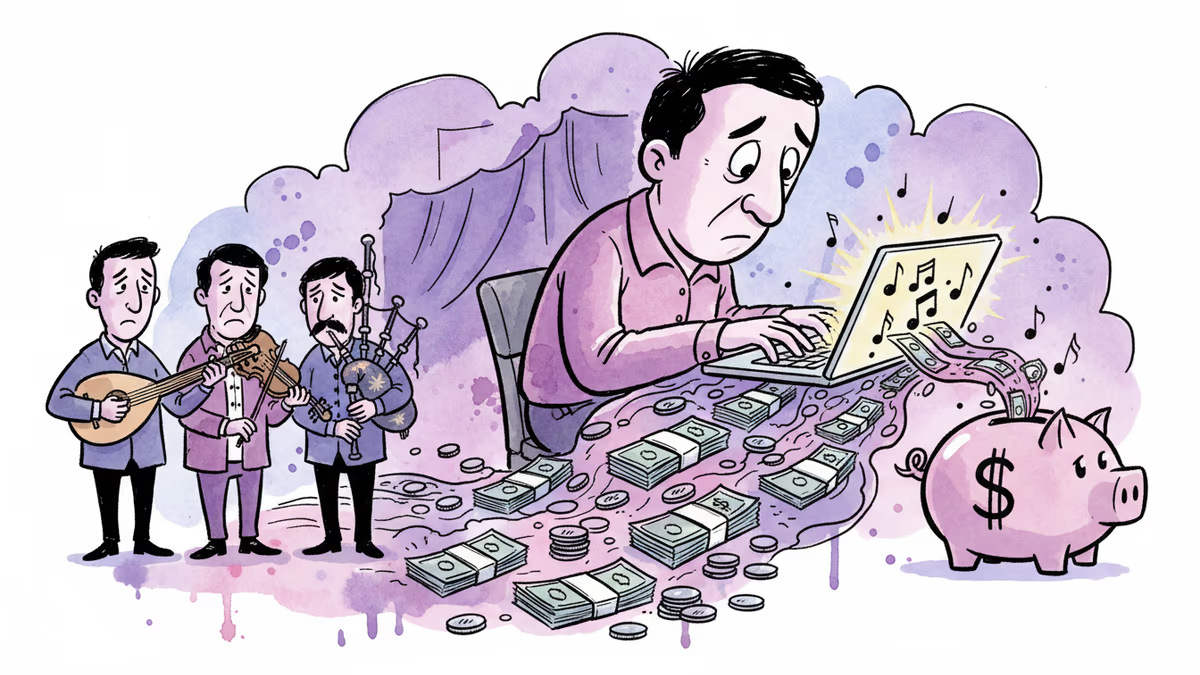
AI music generator Suno reaches 2M paid subscribers and $300M annual revenue, marking a pivotal moment in the democratization of music creation.
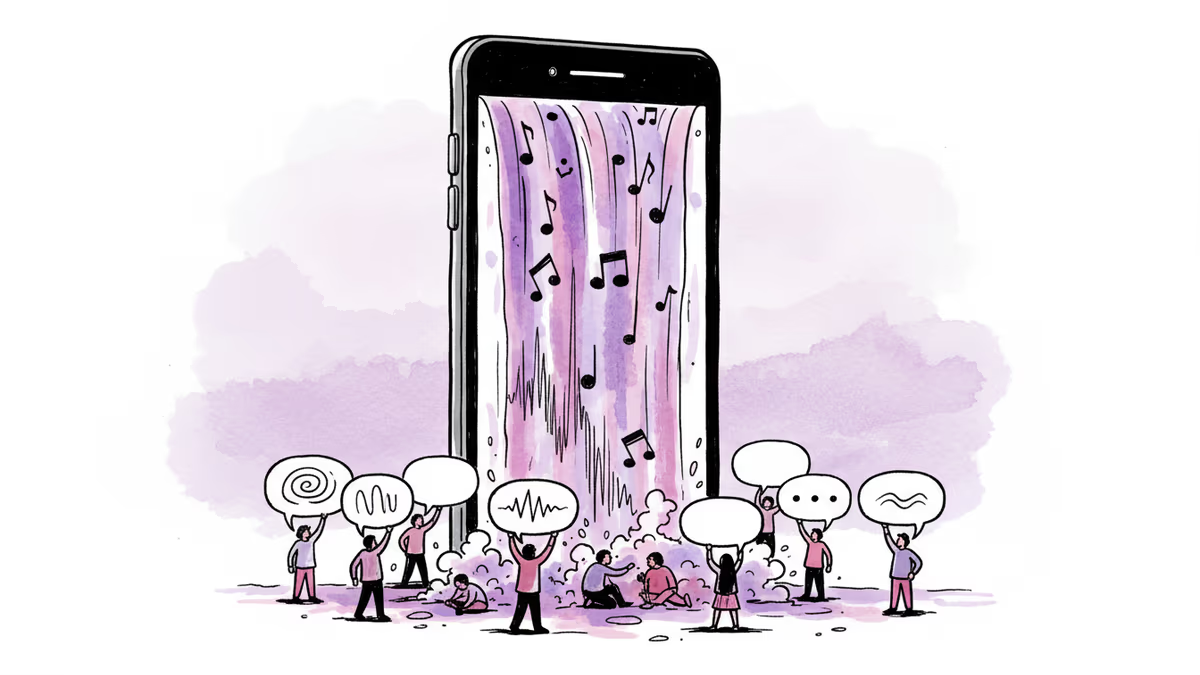
Spotify's AI-powered Prompted Playlists expand globally, letting users create custom playlists with natural language. What happens when algorithms know us better than we know ourselves?
iOS 26.4 beta introduces AI playlist generation and Creator Studio tools. Analyzing the shift in music industry power dynamics and content creation.
iOS 26.4 brings AI-generated playlists to Apple Music. It's convenient, but it raises real questions about taste, discovery, and who controls what you hear.
AI music generator Suno reaches 2M paid subscribers and $300M annual revenue, marking a pivotal moment in the democratization of music creation.
Spotify's AI-powered Prompted Playlists expand globally, letting users create custom playlists with natural language. What happens when algorithms know us better than we know ourselves?
iOS 26.4 beta introduces AI playlist generation and Creator Studio tools. Analyzing the shift in music industry power dynamics and content creation.
Thoughts
Share your thoughts on this article
Sign in to join the conversation