
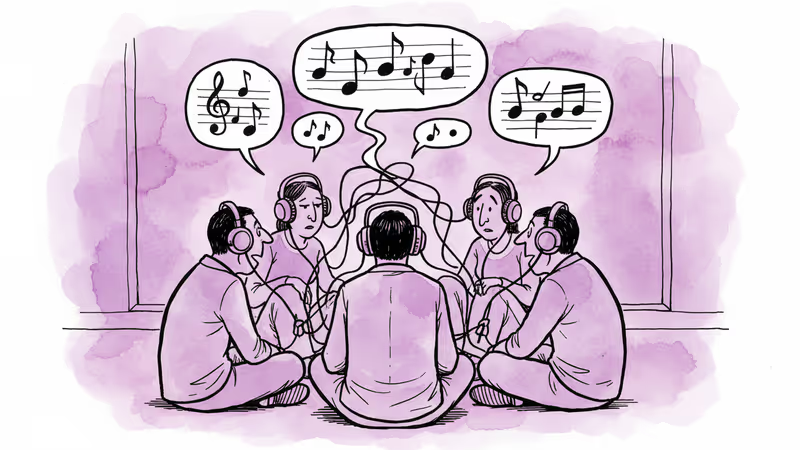
Spotify's Group Chat Gamble: When Music Platforms Become Social Networks
Spotify launches group messaging for up to 10 users, expanding beyond music streaming into social territory. We examine what this means for the platform's future and user behavior.
What if listening to music wasn't a solitary experience anymore? Spotify just launched group messaging for up to 10 users, pushing the boundaries of what we expect from music streaming platforms.
From Solo to Social: The Evolution of Music Sharing
Spotify introduced one-on-one messaging last August, and now they're scaling it up. Users can create group chats to discuss their latest favorite song, podcast, or audiobook with friends and family—all without leaving the app.
Here's the catch: you can only add people you've already connected with through Spotify's other social features. Think Jam sessions, Collaborative Playlists, or Blends. It's not an open invitation system—it's built on existing musical relationships.
Alongside group chats, Spotify rolled out Listening Activity, letting you see what your friends are playing in real-time. It's like Instagram Stories, but for your music taste.
The Strategic Shift: Why Spotify Wants You to Chat
With 480 million users globally, Spotify isn't hurting for scale. But user engagement and retention? That's the real battleground. The music streaming market has matured, and differentiation now comes from experience, not just catalog size.
Social features serve a dual purpose: they increase time spent in-app and create switching costs. When your playlists, friend connections, and conversations all live in one place, leaving becomes much harder. It's the classic platform strategy—build an ecosystem, not just a product.

For Gen Z and millennials, music isn't just entertainment—it's identity expression and social currency. Spotify is betting that facilitating these conversations will deepen user investment in their platform.
The Messaging App Dilemma: Do We Need Another Chat Platform?
But here's the question: do we really need Spotify to become a messaging app? We already juggle WhatsApp, iMessage, Discord, Instagram DMs, and countless other communication channels. Adding another feels like platform overreach.
The success of social features on music platforms has been mixed. Remember Apple Music's Connect feature? It quietly disappeared. Even Spotify's own social features have had varying adoption rates.
Yet there's something different about music-centric messaging. When you're discussing a song, having the ability to instantly play, share, and reference it within the same interface creates a seamless experience that external messaging apps can't match.
The Bigger Picture: Platform Consolidation vs. Specialization
Spotify's move reflects a broader trend in tech: platforms trying to become everything to everyone. Instagram added shopping, LinkedIn became a content platform, and now Spotify wants to be your music messenger.
This strategy works when it enhances the core experience. But it fails when it feels forced or redundant. The key question isn't whether Spotify can build messaging features—it's whether users will actually prefer them over existing solutions.
Competitors like Apple Music, YouTube Music, and Amazon Music are watching closely. If group messaging drives meaningful engagement, expect rapid imitation across the industry.
Authors
Related Articles
iOS 26.4 brings AI-generated playlists to Apple Music. It's convenient, but it raises real questions about taste, discovery, and who controls what you hear.
Spotify's AI-powered Prompted Playlists expand globally, letting users create custom playlists with natural language. What happens when algorithms know us better than we know ourselves?
Spotify partners with SeatGeek for seamless ticket buying. Can this challenge Ticketmaster's venue monopoly or just create new platform dependencies?
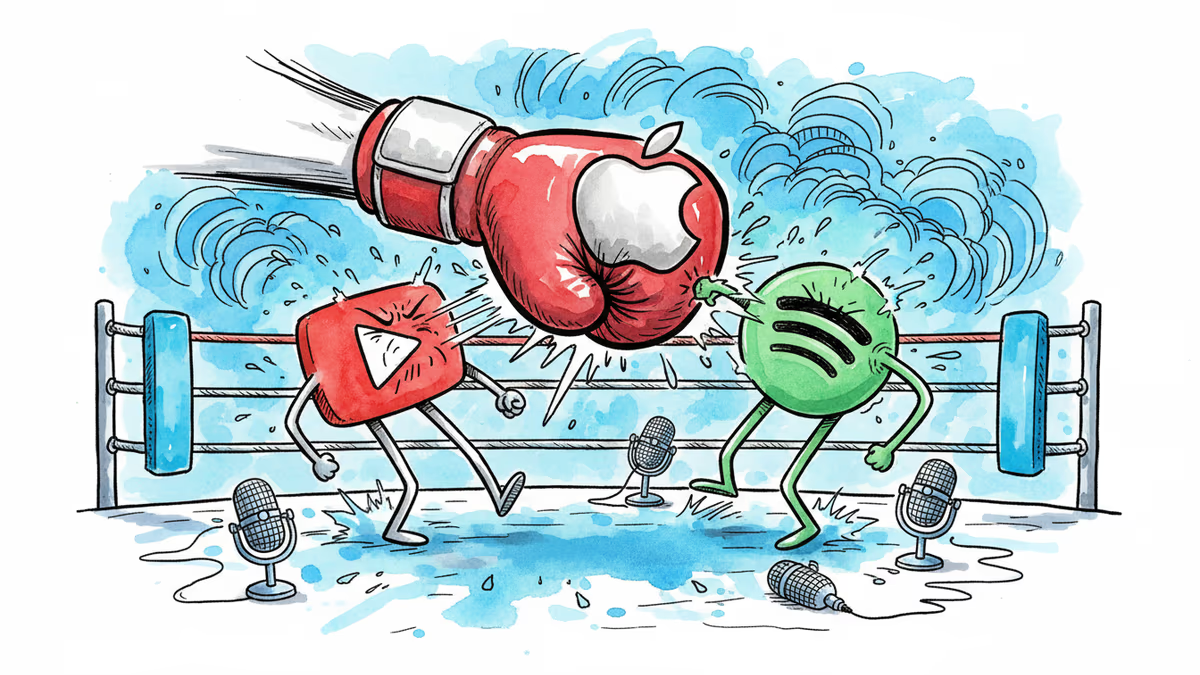
Apple's spring video podcast launch isn't just a feature update. It's a strategic play for the **$51 billion** podcasting market that could reshape how creators monetize content.
iOS 26.4 brings AI-generated playlists to Apple Music. It's convenient, but it raises real questions about taste, discovery, and who controls what you hear.
Spotify's AI-powered Prompted Playlists expand globally, letting users create custom playlists with natural language. What happens when algorithms know us better than we know ourselves?
Spotify partners with SeatGeek for seamless ticket buying. Can this challenge Ticketmaster's venue monopoly or just create new platform dependencies?
Apple's spring video podcast launch isn't just a feature update. It's a strategic play for the **$51 billion** podcasting market that could reshape how creators monetize content.
Thoughts
Share your thoughts on this article
Sign in to join the conversation