
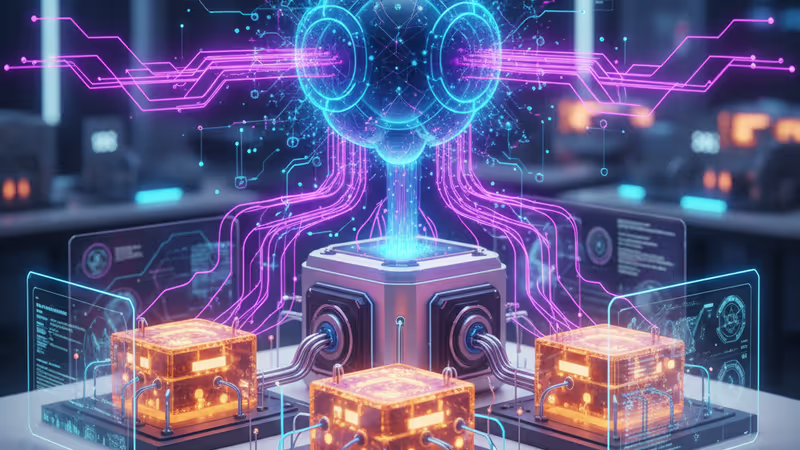
MIT 10 Breakthrough Technologies 2026: Why Sodium Batteries and Next-Gen Nuclear Are Reclaiming the Climate Agenda
Explore the climate-focused highlights of the MIT 10 Breakthrough Technologies 2026 list, featuring sodium-ion batteries, next-gen nuclear, and AI's energy impact.
The year hasn't truly started until the MIT Technology Review drops its definitive list. For 25 years, this selection has signaled the future, and the 2026 edition makes it clear: climate tech is no longer just about potential—it's about massive scale.
Key Highlights: MIT 10 Breakthrough Technologies 2026 Climate
- 1st: Sodium-ion Batteries (Mass production started in 2025 by CATL)
- 2nd: Next-generation Nuclear (First US approval for Kairos Power)
- 3rd: Hyperscale AI Data Centers (Requiring 1 gigawatt or more per facility)
Sodium: The New Rival to Lithium's Crown

Researchers have finally hit a breakout moment for sodium-ion batteries. While lithium remains scarce and volatile, sodium is abundant and cheaper. They don't pack as much energy, but for grid storage and small EVs, they're a game-changer. CATL reported scaling production in 2025, proving the tech is ready for the real world.
Nuclear's New Blueprint and the AI Power Hunger
Traditional nuclear projects often go way over budget, but next-generation reactors offer a faster, cheaper path. Kairos Power is leading the charge in the US, while China emerges as a global development hub. This shift is urgent as hyperscale data centers—the backbone of the AI boom—now demand upwards of 1GW of power, equivalent to the output of an entire conventional nuclear plant.
Authors
Related Articles
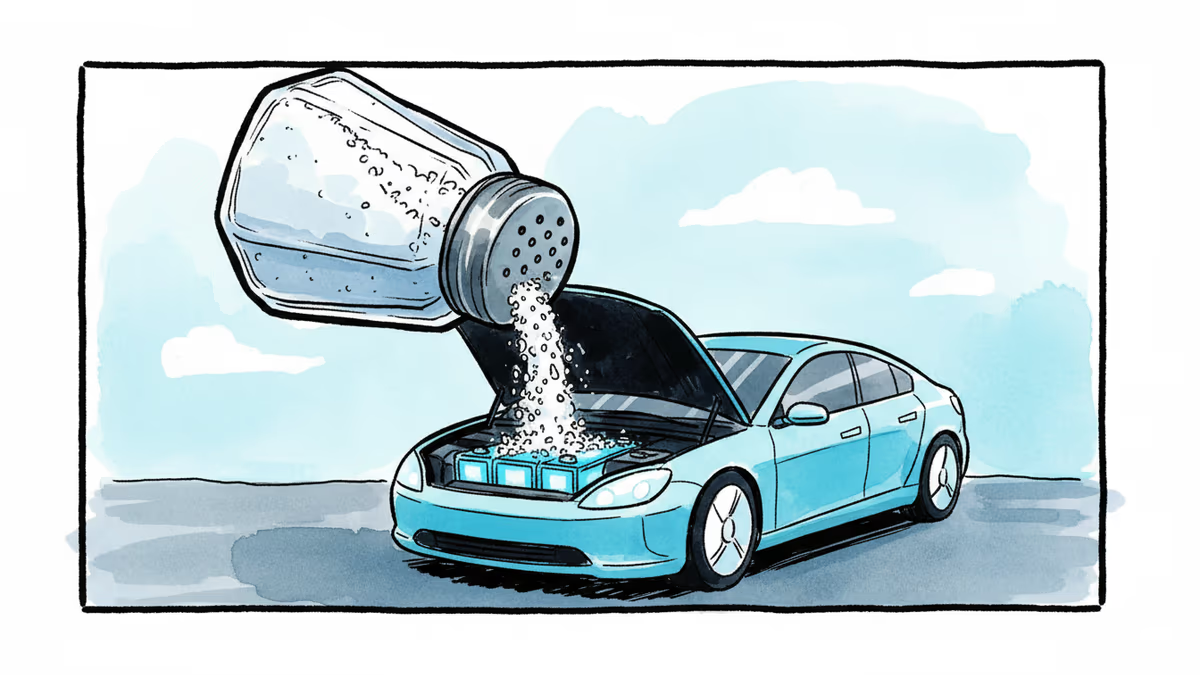
Sodium-ion batteries emerge as cheaper, safer alternatives to lithium, entering EVs and grid storage. MIT Technology Review names it a 2026 breakthrough technology.
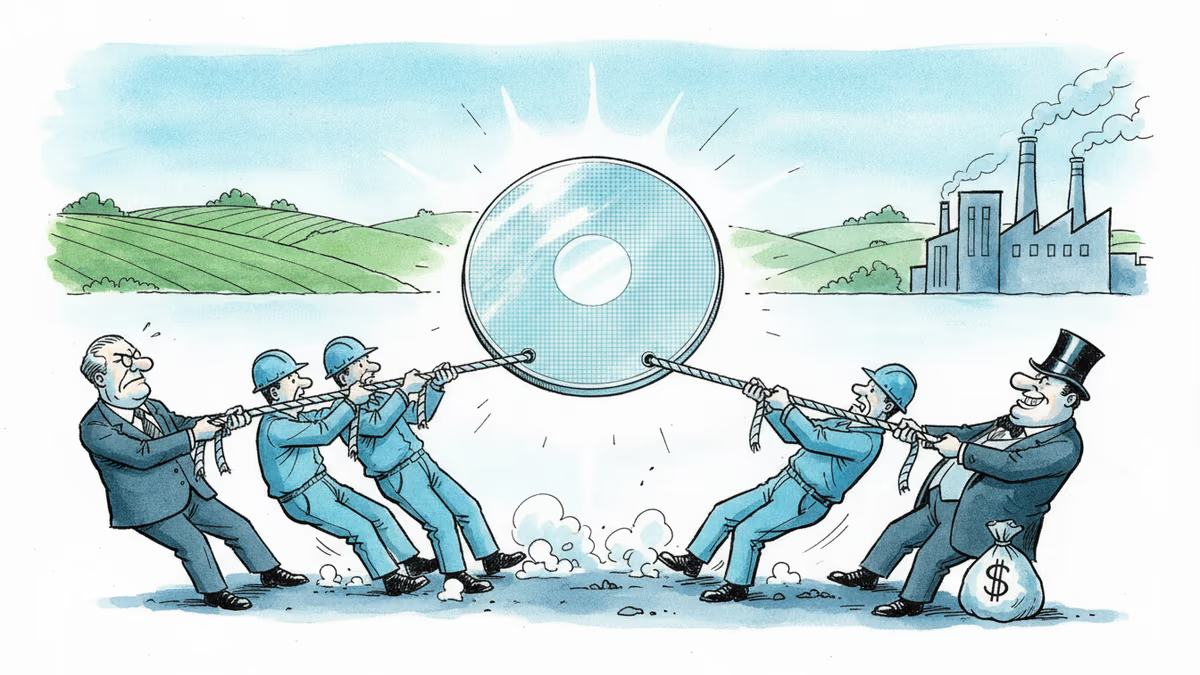
Samsung Electronics' union branch revealed that 84% of survey respondents oppose the government's roughly $290 billion (₩400 trillion) semiconductor megaproject in Gwangju. Government, management, the union and shareholders are all reading the same national project in sharply different ways.
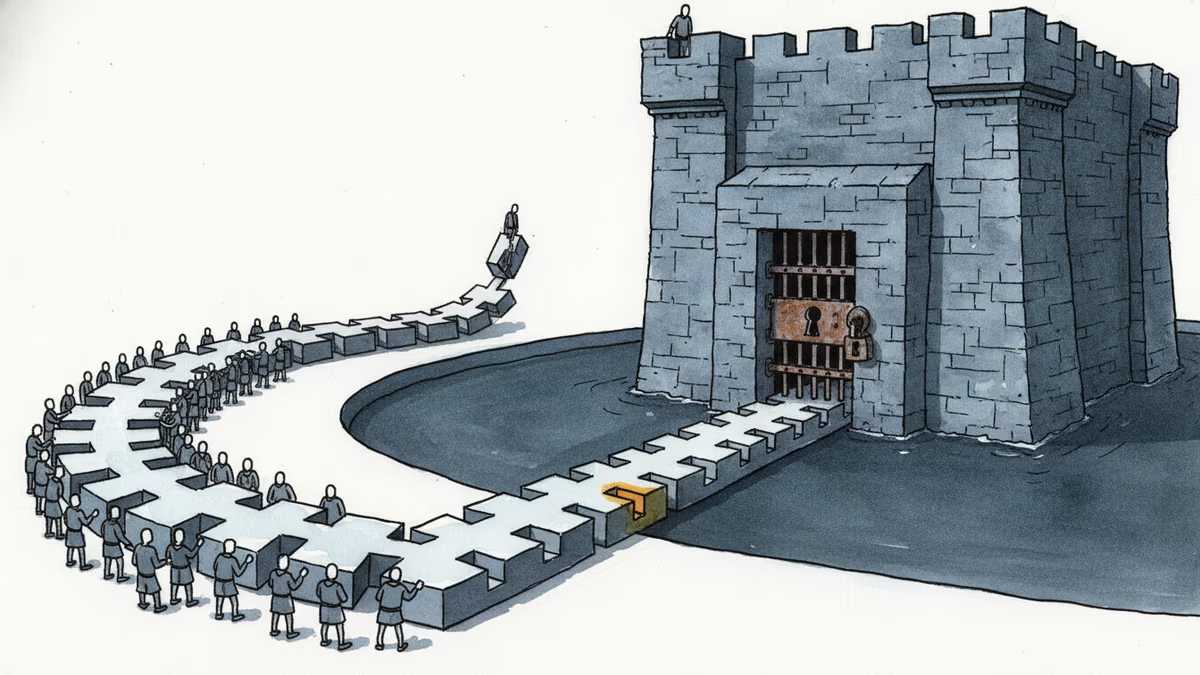
Nvidia shipped roughly a billion RISC-V cores in 2024, then announced it would run CUDA on the open standard. We break down how royalty-free instruction sets and open software stacks are trying to route around CUDA's lock-in. Part 2 of the Semiconductor Sovereignty series.
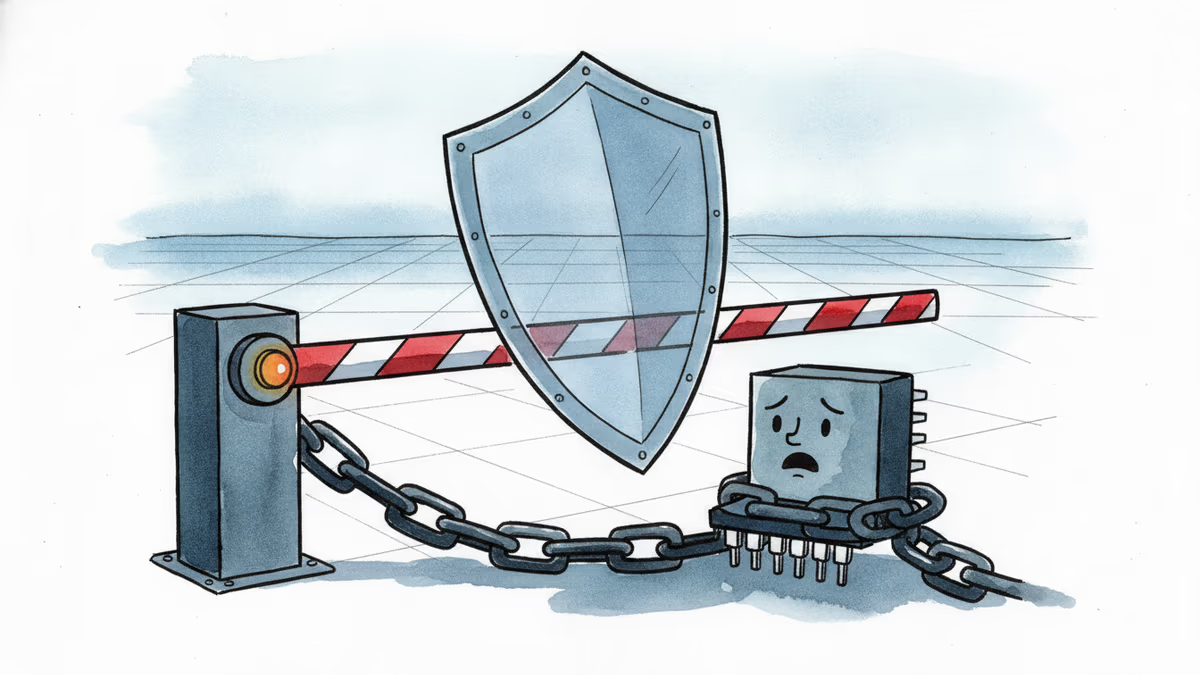
US AI-chip export controls split into three layers in the first half of 2026 — January easing, a May crackdown on circumvention, and a pending bill. Nvidia erased China from its guidance and still posted a record $81.6 billion quarter. A look at the export policy that both shields and cages it.
Sodium-ion batteries emerge as cheaper, safer alternatives to lithium, entering EVs and grid storage. MIT Technology Review names it a 2026 breakthrough technology.
Samsung Electronics' union branch revealed that 84% of survey respondents oppose the government's roughly $290 billion (₩400 trillion) semiconductor megaproject in Gwangju. Government, management, the union and shareholders are all reading the same national project in sharply different ways.
Nvidia shipped roughly a billion RISC-V cores in 2024, then announced it would run CUDA on the open standard. We break down how royalty-free instruction sets and open software stacks are trying to route around CUDA's lock-in. Part 2 of the Semiconductor Sovereignty series.
US AI-chip export controls split into three layers in the first half of 2026 — January easing, a May crackdown on circumvention, and a pending bill. Nvidia erased China from its guidance and still posted a record $81.6 billion quarter. A look at the export policy that both shields and cages it.
Thoughts
Share your thoughts on this article
Sign in to join the conversation