
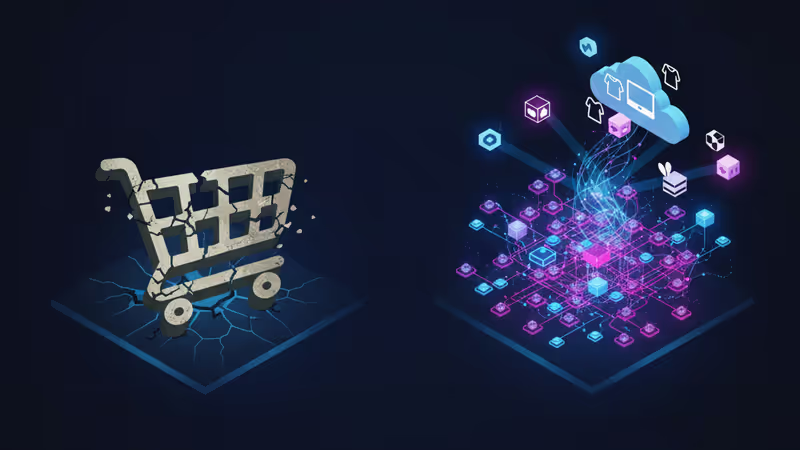
The Shopping Cart is Dead: Visa's AI Agents Signal the Dawn of Autonomous Commerce
Visa's AI agent pilot isn't just a tech demo; it's the start of a new era of autonomous commerce. PRISM analyzes the death of the checkout process.
The Lede: Beyond the Hype
Visa’s successful pilot of AI-powered transactions isn't just another incremental tech update. It’s a seismic tremor signaling the beginning of the end for the traditional e-commerce journey. For decades, the digital shopping cart and checkout form have been the bedrock of online retail. Now, the world’s largest payment network is laying the groundwork to dismantle them. This isn't about making checkout faster; it's about making it invisible. For any leader in retail, finance, or tech, the era of Autonomous Commerce has officially begun, and the strategic implications are profound.
Why It Matters: The Great Unbundling of Retail
The rise of AI shopping agents represents a fundamental shift in the power dynamics of digital commerce. The point of purchase is becoming decentralized, moving away from retailer websites and apps into conversational interfaces and background daemons.
- The New Storefront is an API: Your meticulously designed e-commerce website is about to be bypassed. The new battleground for customer acquisition won't be fought over user experience (UX) on a screen, but over the quality and accessibility of your APIs to trusted AI agents.
- From Clicks to Delegation: The entire digital advertising model, built on capturing eyeballs and clicks, is threatened. When a consumer delegates a purchase to an AI (e.g., “buy my usual brand of coffee when I’m running low”), the human browsing and discovery process is eliminated. Value shifts from capturing attention to earning algorithmic trust.
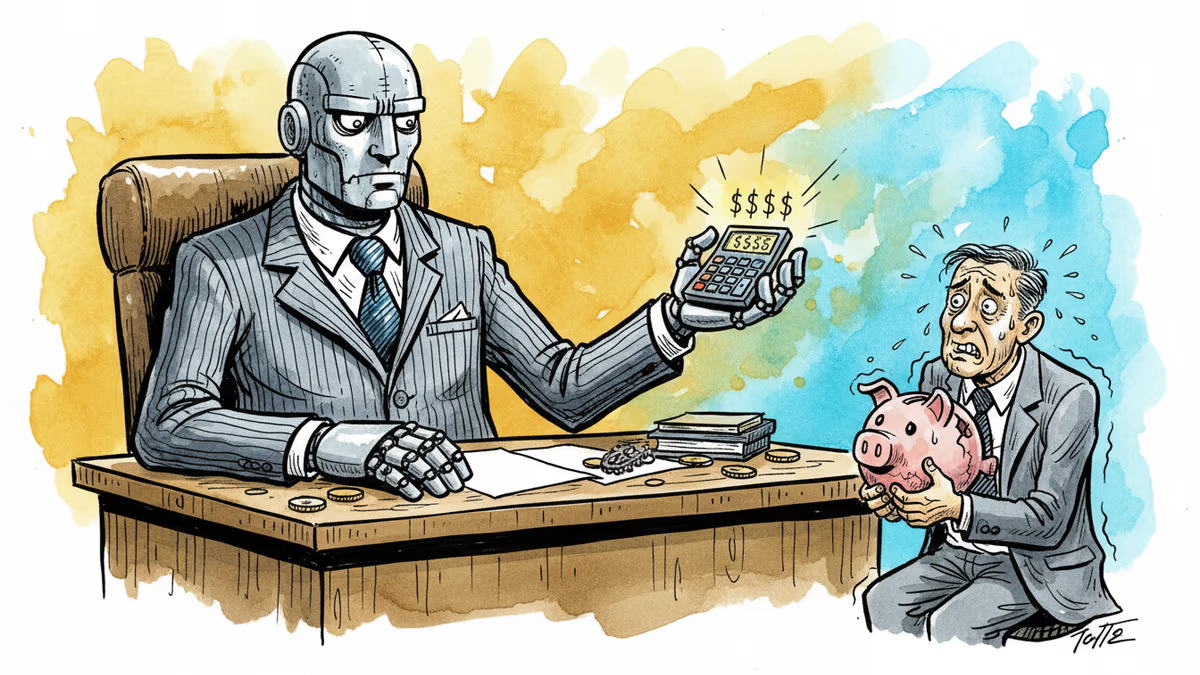
- The Trust-and-Security Nexus: This new paradigm introduces complex challenges. Who is liable if an AI agent buys the wrong item, pays too much, or falls for a scam? Establishing robust digital identity, security, and dispute-resolution frameworks for non-human agents will be the critical hurdle to mass adoption.

The Analysis: An Inevitable Evolution
This is not a sudden revolution but the logical conclusion of a 25-year trend of reducing friction in commerce. We went from manually typing 16-digit card numbers to Amazon’s 1-Click checkout, then to embedded “Buy Now” buttons from PayPal and Shopify. Each step removed a layer of human effort. Autonomous agents are the final step: removing the human from the immediate execution of the transaction entirely.
Visa’s move, along with Mastercard’s “Agent Pay” and Amazon's “Buy For Me,” is a critical power play. The payment networks are in a race against Big Tech and AI-native challengers like Perplexity. The core question is: who will own the trusted financial layer for these agents? If Visa and Mastercard don't become the default, secure middleware for AI-driven commerce, they risk being relegated to the status of “dumb pipes,” with companies like Apple or Google controlling the entire value chain from user intent to final purchase.
PRISM's Take: The New Contract of Trust
Visa’s pilot is a brilliant strategic maneuver—both defensive and offensive. It defends its core transaction business from being disintermediated by tech giants, while simultaneously positioning itself as the essential financial backbone for the agentic economy. While the technology is rapidly maturing, the ultimate barrier to success is not technical; it's psychological.
For a generation, we have been conditioned to trust a padlock icon in a browser. The new challenge is to build a paradigm where consumers trust an algorithm not just with their payment details, but with their purchasing autonomy. The companies that solve this trust equation will not just lead the next wave of e-commerce; they will fundamentally redefine our relationship with commerce itself.
Authors
Related Articles
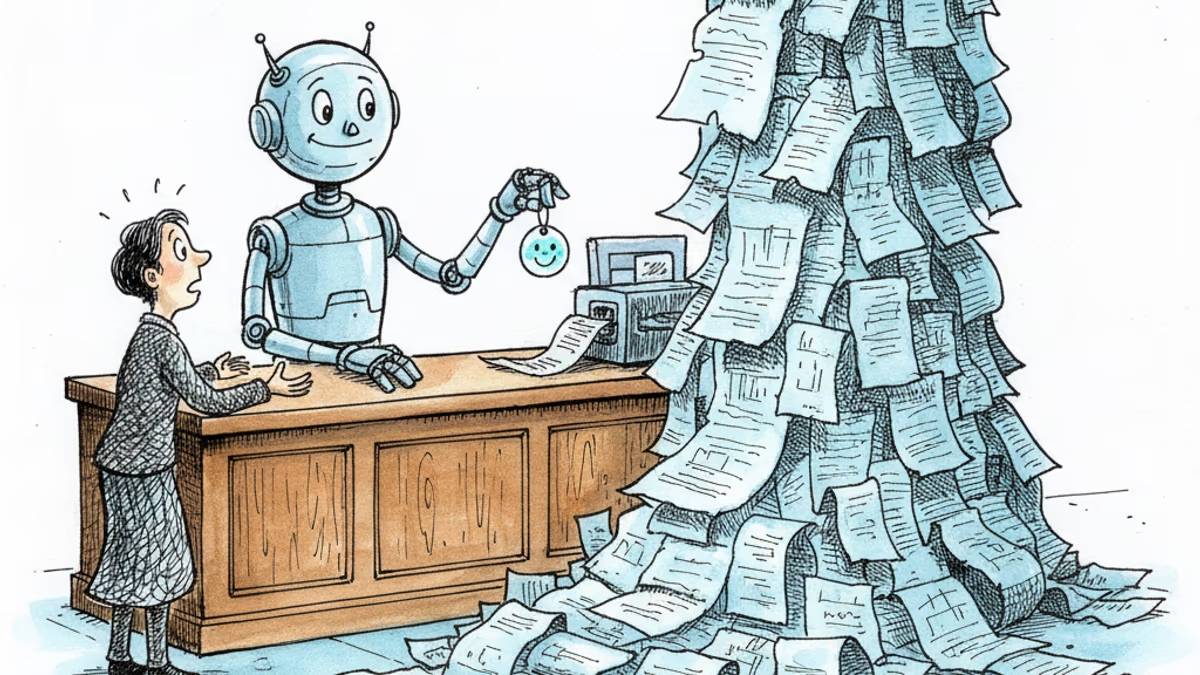
Anthropic shipped Claude Sonnet 5, its mid-tier agent model, on June 30. Behind the 'Opus-class power, budget price' headline sits a tokenizer catch and a three-horse race that's only half real. Here's what developers should actually run the numbers on.
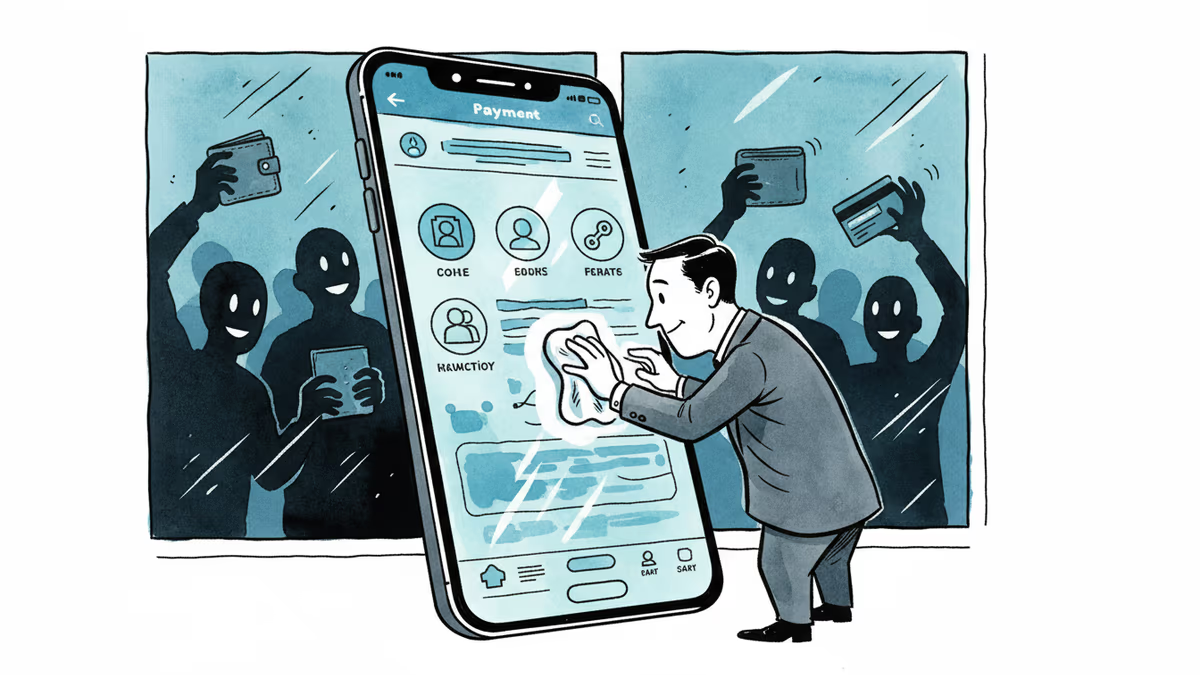
Venmo's biggest redesign since 2021 adds social features, personalized offers, and a revamped feed. But the timing — amid PayPal's restructuring and Stripe's reported interest — raises a harder question about who this update is really for.
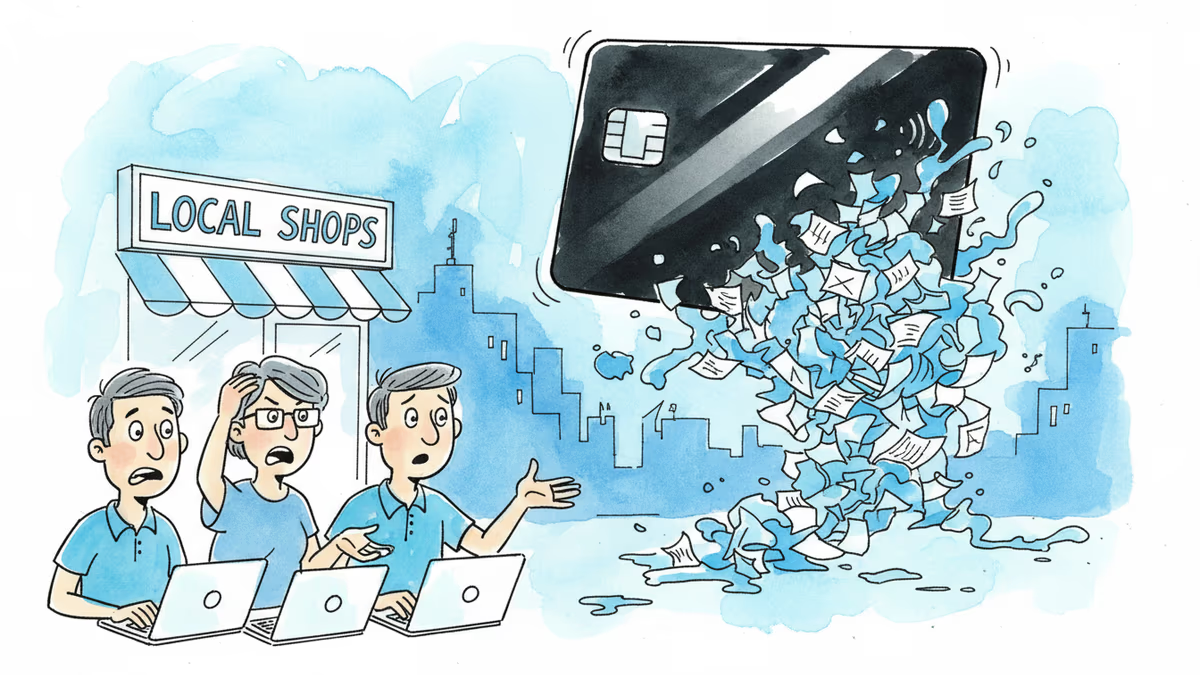
E-commerce fintech Parker filed for Chapter 7 bankruptcy on May 7, despite raising over $200M. The YC-backed startup's abrupt shutdown left small business customers scrambling—and exposed the fragility of vertical fintech models.
OpenAI acquired Hiro Finance, an AI-powered personal finance startup. Is this just a talent grab, or is the ChatGPT maker quietly building a financial services empire?
Anthropic shipped Claude Sonnet 5, its mid-tier agent model, on June 30. Behind the 'Opus-class power, budget price' headline sits a tokenizer catch and a three-horse race that's only half real. Here's what developers should actually run the numbers on.
Venmo's biggest redesign since 2021 adds social features, personalized offers, and a revamped feed. But the timing — amid PayPal's restructuring and Stripe's reported interest — raises a harder question about who this update is really for.
E-commerce fintech Parker filed for Chapter 7 bankruptcy on May 7, despite raising over $200M. The YC-backed startup's abrupt shutdown left small business customers scrambling—and exposed the fragility of vertical fintech models.
OpenAI acquired Hiro Finance, an AI-powered personal finance startup. Is this just a talent grab, or is the ChatGPT maker quietly building a financial services empire?
Thoughts
Share your thoughts on this article
Sign in to join the conversation