

The Great Re-Hiring: Why Google's AI 'Boomerangs' Signal a Decisive Power Shift in Tech
Google is rehiring ex-employees for AI roles. PRISM analyzes why this 'boomerang' trend signals a major power shift towards companies with massive compute.
The Lede
Google’s strategy for winning the AI war isn't just about building new models; it's about winning back its own veterans. The revelation that one in five of its new AI software engineers are returning 'boomerang' employees is far more than a quirky HR statistic. It’s a critical signal that the talent war's center of gravity is shifting from startup agility to hyperscale infrastructure. For executives and strategists, this trend reveals a fundamental truth: in the generative AI era, access to massive, proprietary computation is becoming the ultimate, non-negotiable currency for top talent.
Why It Matters
This isn't just a recruiting story; it's a strategic realignment with second-order effects across the industry:
- For AI Talent: The career calculus has been reset. The allure of pre-IPO equity at nimble startups like OpenAI or Anthropic is now being weighed against the tangible, career-defining advantage of working with Google's planetary-scale compute and proprietary datasets. The 'boomerang' phenomenon suggests many top engineers have concluded that true cutting-edge work is impossible without it.
- For Competitors: This is a direct assault on the startup mystique. Google is weaponizing its deepest moat—infrastructure—to lure back talent. Smaller players can no longer compete solely on culture or a faster pace. They now face a talent market where their primary constraint isn't just capital, but a fundamental inability to match the computational firepower of the incumbents.
- For Google: This is both a vindication and a course correction. It validates the company's long-term, multi-billion dollar investment in custom silicon (TPUs) and infrastructure. However, it's also a tacit admission that the 2023 mass layoffs, which created this talent pool in the first place, may have been a strategic overcorrection that bled critical expertise.
The Analysis

The Layoff Paradox and the Flight to Scale
The tech industry's history is defined by talent wars—from the browser wars of the 90s to the mobile showdown between Apple and Google. The current AI conflict, however, has a unique dynamic. Google, through its largest-ever layoffs in 2023, inadvertently created a class of highly-skilled AI 'free agents.' These engineers effectively went on a tour of duty across the AI ecosystem, experiencing life at competitors and startups firsthand.
Their return is telling. It signals a 'flight to scale.' While startups offered speed and focus, they could not offer the one thing required to train and deploy next-generation foundation models: virtually unlimited computational resources. As Google's head of compensation noted, the company's deep pockets and infrastructure are the primary draw. Engineers who left for the promise of a revolution are returning to the place that owns the factories where that revolution is actually built.
PRISM Insight
Trend Foreacst: The Great Consolidation of AI Talent
The boomerang trend is the leading indicator of a broader industry consolidation. The era where a small, scrappy team could build a truly frontier-level AI model is closing rapidly. The future of foundational AI development will likely be an oligopoly controlled by the handful of companies that own the end-to-end infrastructure stack: Google (TPUs, Cloud), Microsoft/OpenAI (Azure), Amazon (AWS), and Meta. This concentration of power and talent will have profound implications for venture capital, innovation, and competition. Startups will be forced to pivot from building base models to building applications on top of the giants' platforms, fundamentally altering the venture investment thesis in AI.
PRISM's Take
Don't misinterpret Google's rehiring push as a sign of desperation. It is a calculated, strategic flex of its most powerful and defensible asset. While OpenAI and others captured the early narrative with slick product launches, Google is playing a longer, more expensive game predicated on infrastructure supremacy. The return of its own alumni is the first tangible evidence that this strategy is paying dividends. It proves that for the world's best AI minds, the initial excitement of the startup gold rush is giving way to the sober reality that in this new technological age, scale isn't just an advantage—it's the entire game.
Authors
Related Articles
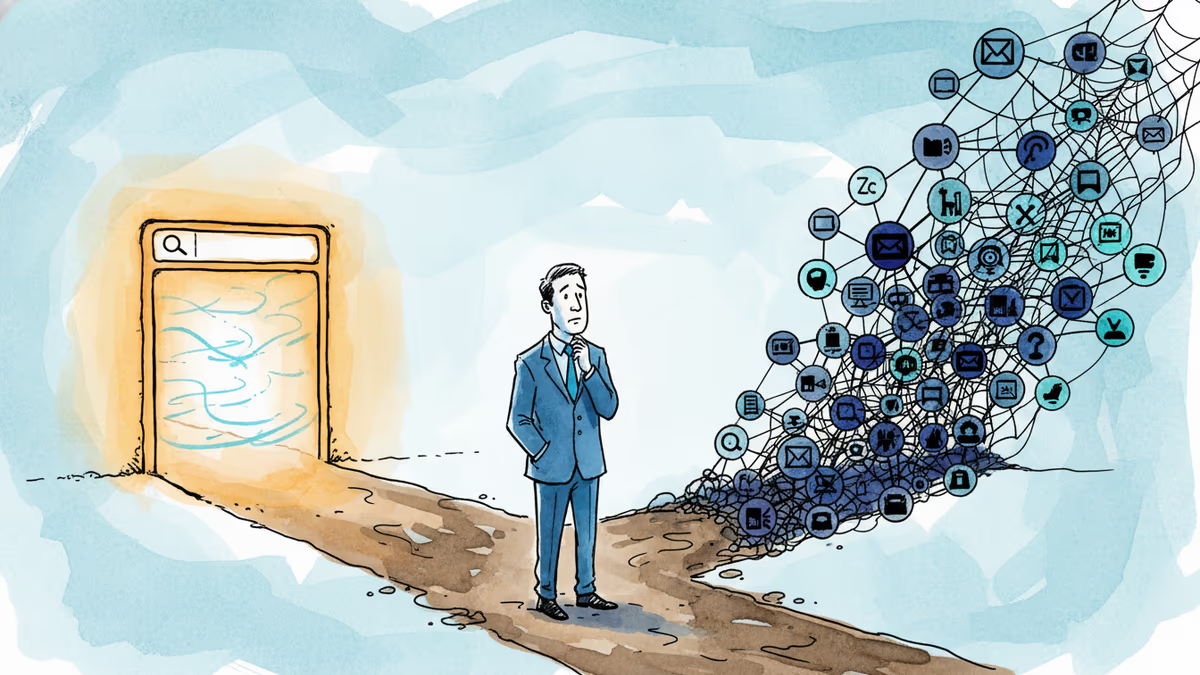
In a post-Google I/O interview, Sundar Pichai acknowledged flawed search results, real AI anxiety, and an AGI timeline that makes the label irrelevant. Here's what he said — and what it means.
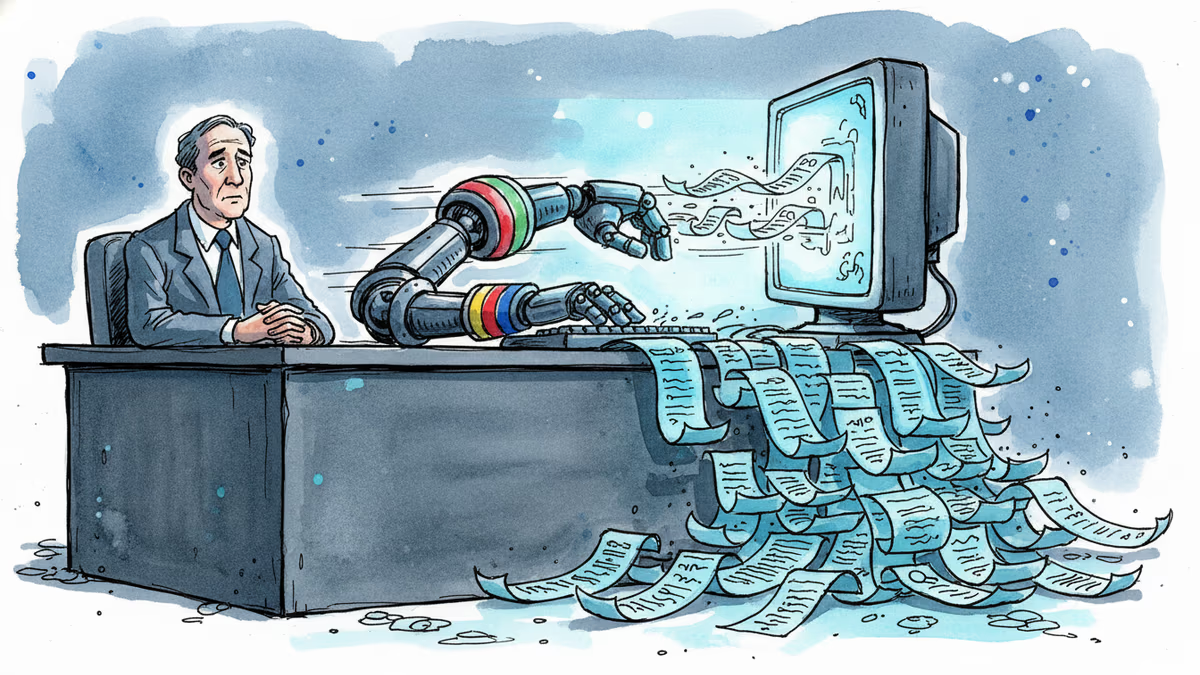
Google is building AI agents that search the web proactively, without user prompting. That's not just a product update — it's a fundamental shift in who controls the information you receive.

OpenAI has reorganized for the second time in a month, merging ChatGPT and Codex into a single agentic platform under president Greg Brockman's unified product leadership.

Google unveiled the 'Googlebook' platform to replace Chromebook and ChromeOS—but revealed zero hardware specs. What's the strategy, and what does it mean for users, manufacturers, and the education market?
In a post-Google I/O interview, Sundar Pichai acknowledged flawed search results, real AI anxiety, and an AGI timeline that makes the label irrelevant. Here's what he said — and what it means.
Google is building AI agents that search the web proactively, without user prompting. That's not just a product update — it's a fundamental shift in who controls the information you receive.
OpenAI has reorganized for the second time in a month, merging ChatGPT and Codex into a single agentic platform under president Greg Brockman's unified product leadership.
Google unveiled the 'Googlebook' platform to replace Chromebook and ChromeOS—but revealed zero hardware specs. What's the strategy, and what does it mean for users, manufacturers, and the education market?
Thoughts
Share your thoughts on this article
Sign in to join the conversation