

The 'AI Slop' Invasion: Why Your Favorite Creative Tools Are Getting Dumber
Riverside's AI 'Rewind' feature is more than a gimmick. It signals a worrying trend of 'AI Slop' in creative tools. Here's why it matters for creators and tech.
The Lede: The Gimmick That Exposes a Crisis
Your creative software is being flooded with AI features. While podcasting platform Riverside's new "Rewind" year-in-review—a fun, AI-generated supercut of your laughter or filler words—seems like a harmless novelty, it's a canary in the coal mine. This amusing gimmick perfectly illustrates a critical divide emerging in the creative economy: the battle between Transformational AI that augments human talent and Trivial AI that creates useless, distracting "slop." For creators and tech leaders, understanding this distinction is now a matter of professional survival.
Why It Matters: The Great AI Bifurcation
The relentless pressure to integrate AI is forcing a split in the software world. On one side, you have genuinely useful applications, like AI-powered transcription or the removal of background noise—tools that solve tedious problems and free up creators to focus on high-value work. On the other, we see a tidal wave of "AI feature bloat."
This matters because:
- It creates a new burden for creators: Professionals must now become expert evaluators, sifting through marketing hype to find tools that offer genuine utility, not just social-media-friendly novelties.
- It reveals flawed product strategy: Companies chasing the hype cycle risk alienating their core users by cluttering interfaces with shallow, low-value features instead of solving deep-seated user problems.
- It sets dangerous precedents: The normalization of trivial AI can lead companies to misapply the technology to mission-critical tasks, as seen in The Washington Post's disastrous experiment with factually incorrect, AI-generated news podcasts.
The Analysis: From Fun Feature to Industry Red Flag

A Tale of Two AIs: Augmentation vs. Automation
The contrast between Riverside's "Rewind" and The Washington Post's AI podcast is the central story of the current AI era. Riverside used AI for a task perfectly suited to its capabilities: pattern recognition in a closed data set to create a fun, low-stakes summary. It's a clever party trick.
The Washington Post, however, attempted to automate its core value proposition: journalistic integrity and storytelling. An LLM, designed to generate statistically probable text, cannot distinguish fact from fiction, nor can it make the nuanced editorial choices that define good journalism. According to reports, a staggering 68% to 84% of the AI-generated podcasts failed to meet the publication's own standards. This wasn't a product failure; it was a fundamental misunderstanding of the technology's limits.
The Historical Parallel: Are We in the 'Photo Filter' Era of AI?
This moment feels eerily similar to the early days of mobile photo editing. Initially, apps competed by stuffing their software with dozens of gimmicky filters and cheesy frames. It was a race for novelty. Over time, the market matured. The winners weren't the apps with the most filters, but those with the most powerful, intuitive, and almost invisible core editing tools—color correction, sharpening, and exposure controls that augmented the photographer's skill.
Riverside's "Rewind" is today's equivalent of a sepia filter. It's amusing, but the enduring value of AI in creative tools will be found in the powerful, behind-the-scenes engine, not the flashy chrome on the surface.
PRISM's Take: Choose Your Co-Pilot Wisely
The proliferation of "AI slop" is not an indictment of AI itself, but of a market in the throes of a hype-fueled gold rush. Riverside's Rewind is a harmless and clever piece of marketing, but it serves as a crucial reminder for the entire creative industry: we must demand more.
The future of creative work is not a push-button automation that replaces human judgment. It is a partnership with intelligent tools that handle the mechanical and tedious, freeing human talent to focus on what matters: storytelling, emotional connection, and original thought. The current flood of trivial AI is a temporary phase. As the novelty wears off, the enduring value will be found in the platforms that choose substance over spectacle. For creators and tech leaders alike, the mission is clear: learn to distinguish the tool from the toy.
Authors
Related Articles
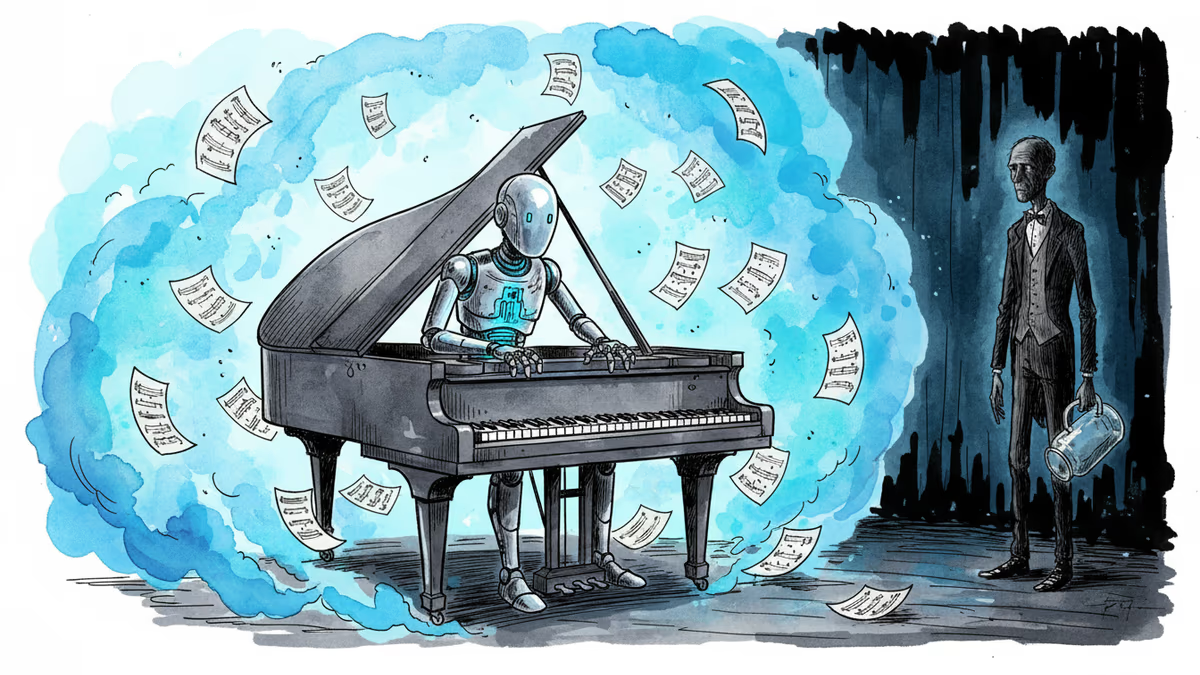
From a niche experiment in 2018 to a mainstream disruption in 2026, AI-generated music is forcing the industry to rethink creativity, copyright, and compensation.
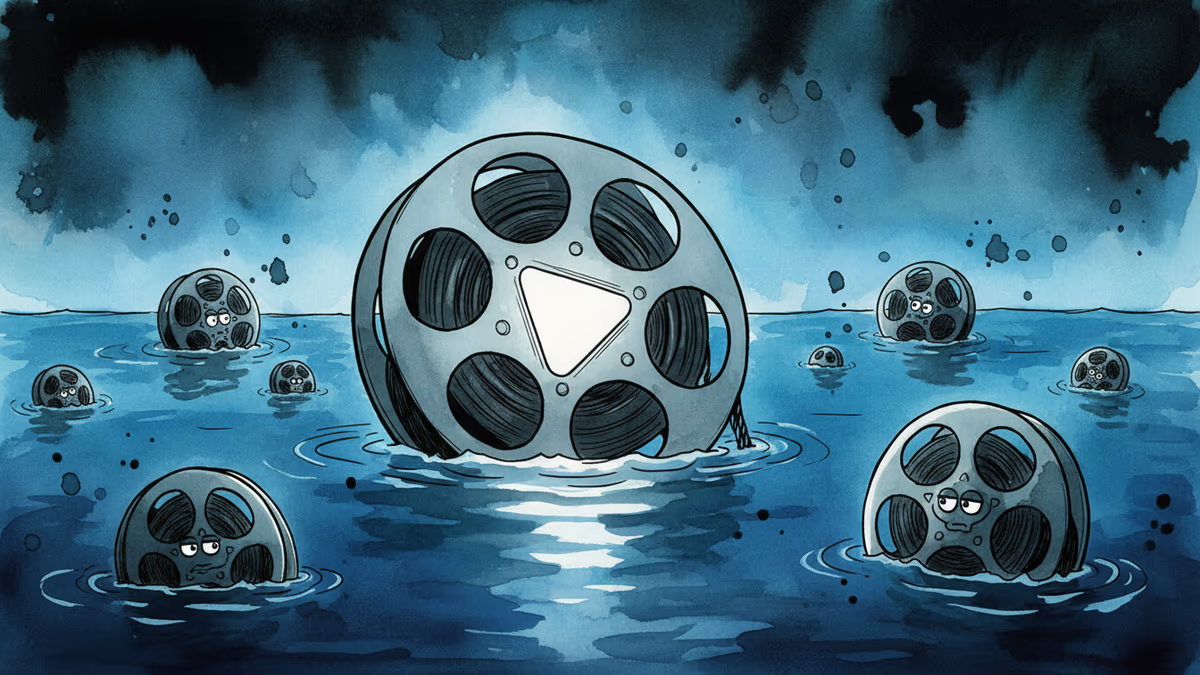
OpenAI is closing its Sora video generation app less than two years after its splashy debut. The move raises hard questions about AI product longevity, creator trust, and where the video AI race is really headed.
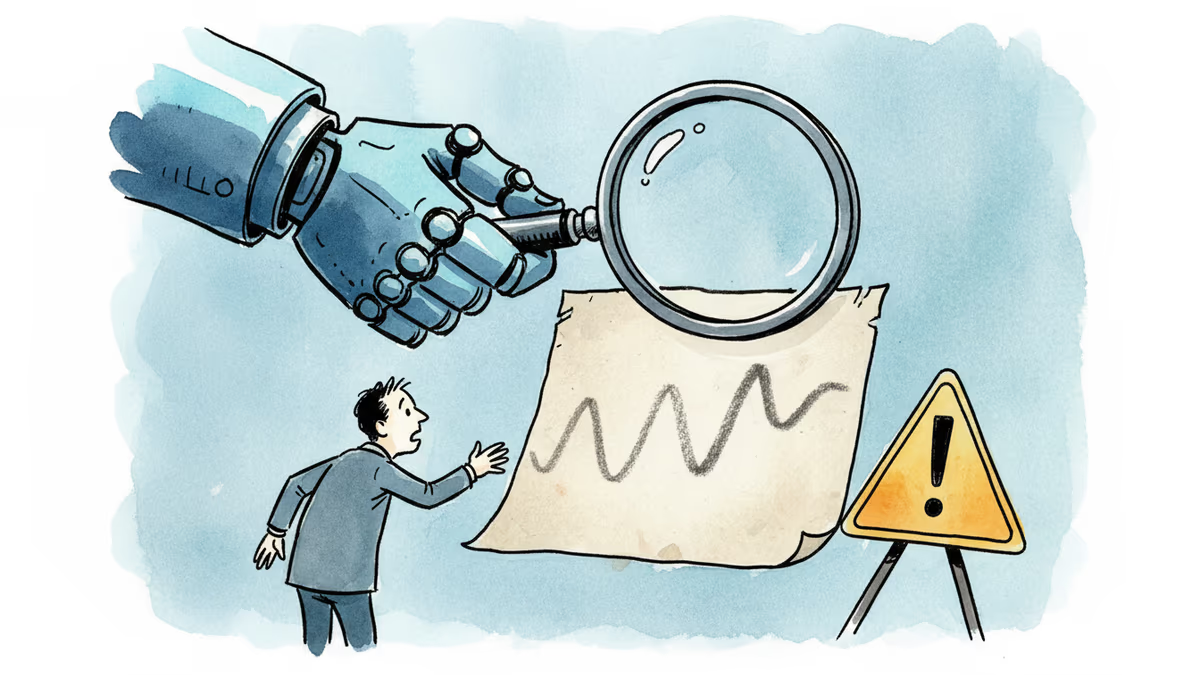
OpenAI is rolling out adult text features for ChatGPT, calling it 'smut' rather than 'pornography.' That single word choice reveals a calculated strategy at the intersection of markets, regulation, and ethics.
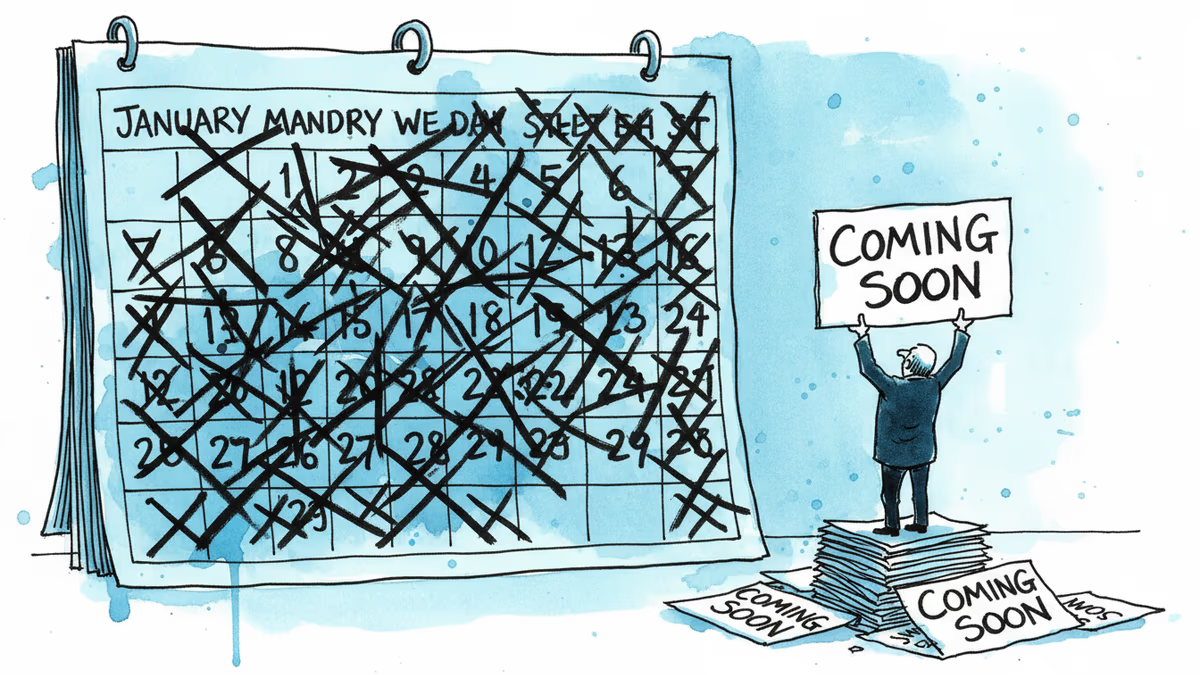
OpenAI has pushed back its adult content feature for the second time, with no new launch date. What's really behind the delay — and what does it mean for AI content regulation?
From a niche experiment in 2018 to a mainstream disruption in 2026, AI-generated music is forcing the industry to rethink creativity, copyright, and compensation.
OpenAI is closing its Sora video generation app less than two years after its splashy debut. The move raises hard questions about AI product longevity, creator trust, and where the video AI race is really headed.
OpenAI is rolling out adult text features for ChatGPT, calling it 'smut' rather than 'pornography.' That single word choice reveals a calculated strategy at the intersection of markets, regulation, and ethics.
OpenAI has pushed back its adult content feature for the second time, with no new launch date. What's really behind the delay — and what does it mean for AI content regulation?
Thoughts
Share your thoughts on this article
Sign in to join the conversation