
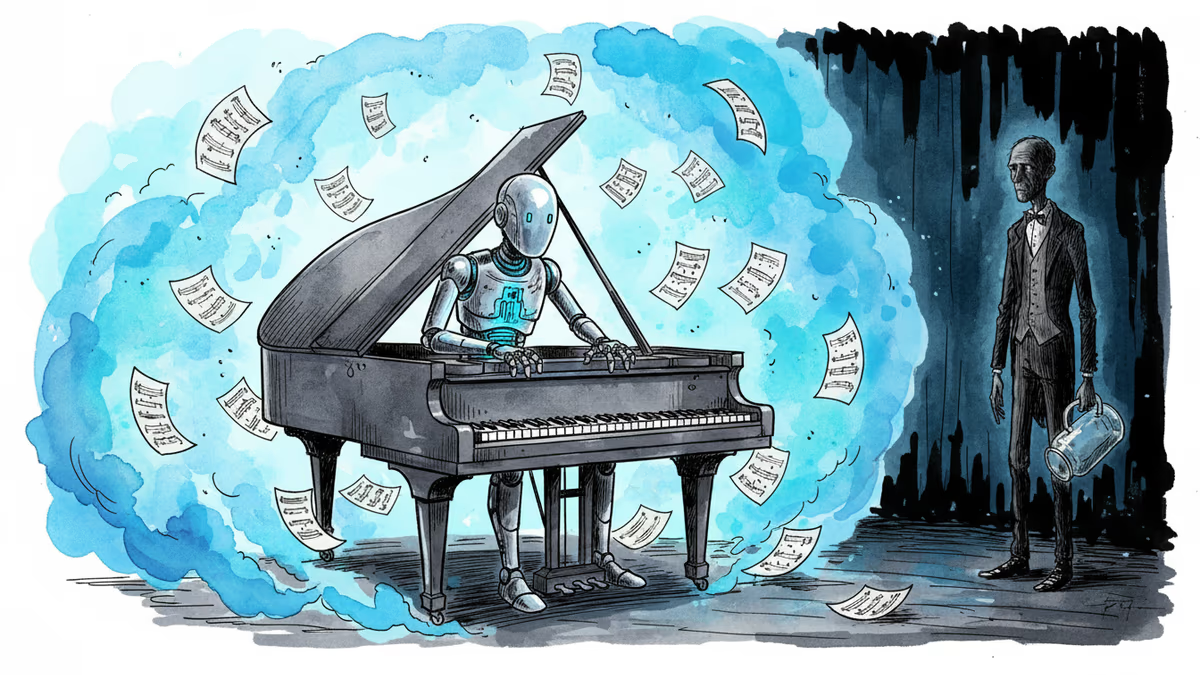
AI Didn't Kill Music. It Just Changed Who Gets Paid.
From a niche experiment in 2018 to a mainstream disruption in 2026, AI-generated music is forcing the industry to rethink creativity, copyright, and compensation.
In 2018, Taryn Southern released an album made with significant AI assistance. Most people called it a curiosity. A few called it the future. Almost nobody called it a threat.
They do now.
From Fringe Experiment to Chart Pressure
When Southern's I AM AI dropped alongside Holly Herndon's Proto a year later, both albums were filed under "avant-garde experiment" and largely ignored by mainstream listeners. The tools they used — Google's Magenta, custom-trained models — required technical fluency that kept casual creators out of the game. AI music was a conversation for academics and futurists, not A&R executives.
That barrier is gone. Services like Suno and Udio now let anyone generate a polished, genre-specific track from a text prompt in under 30 seconds. No producer. No instrument. No vocal training required. The creative bottleneck that once protected professional musicians has been quietly removed — not by a single dramatic announcement, but by a steady accumulation of tools that kept getting cheaper and better.
The result is a music ecosystem where the supply of content is, for the first time, effectively unlimited.
Three Groups, Three Very Different Futures

For streaming platforms and tech companies, the math is almost too good. If AI can generate infinite content at near-zero cost, the leverage in negotiations with major labels shifts dramatically. Spotify has already acknowledged a surge in AI-generated tracks on its platform. The more AI music fills the library, the less any single label's catalog becomes indispensable.
For working musicians and composers, the threat is concrete. It's not just philosophical. Universal Music Group, Sony Music, and Warner Music sued Suno and Udio in 2023 for training their models on copyrighted recordings without consent. The cases are still unresolved. Meanwhile, sync licensing — the revenue stream from placing songs in ads, films, and TV — is already being undercut by AI tools that produce "good enough" background music for a fraction of the cost.
For listeners, the picture is more ambiguous. Research suggests people rate AI-generated music favorably when they don't know its origin — and less favorably when they do. That gap between perceived and actual quality reveals something interesting: the value of music isn't purely sonic. It's also relational. Knowing a human struggled to make something changes how we receive it.
The Copyright Question Nobody Has Answered
The legal architecture around AI music remains genuinely unresolved. Current copyright law in the US and EU generally requires human authorship for protection. That means AI-generated tracks may not be copyrightable at all — which creates a strange situation where the output of a billion-dollar industry could exist in a permanent public domain.
At the same time, the question of whether training AI on existing music constitutes infringement is still being litigated. The outcomes of the Suno and Udio cases will likely set the precedent for how AI companies can use human-created work going forward. It's not an overstatement to say those rulings could reshape the economics of the entire creative industry — not just music.
The EU's AI Act, which began phasing in during 2024, requires AI systems to disclose when content is AI-generated. Whether that disclosure requirement translates into meaningful consumer behavior change is another question entirely.
This content is AI-generated based on source articles. While we strive for accuracy, errors may occur. We recommend verifying with the original source.
Related Articles
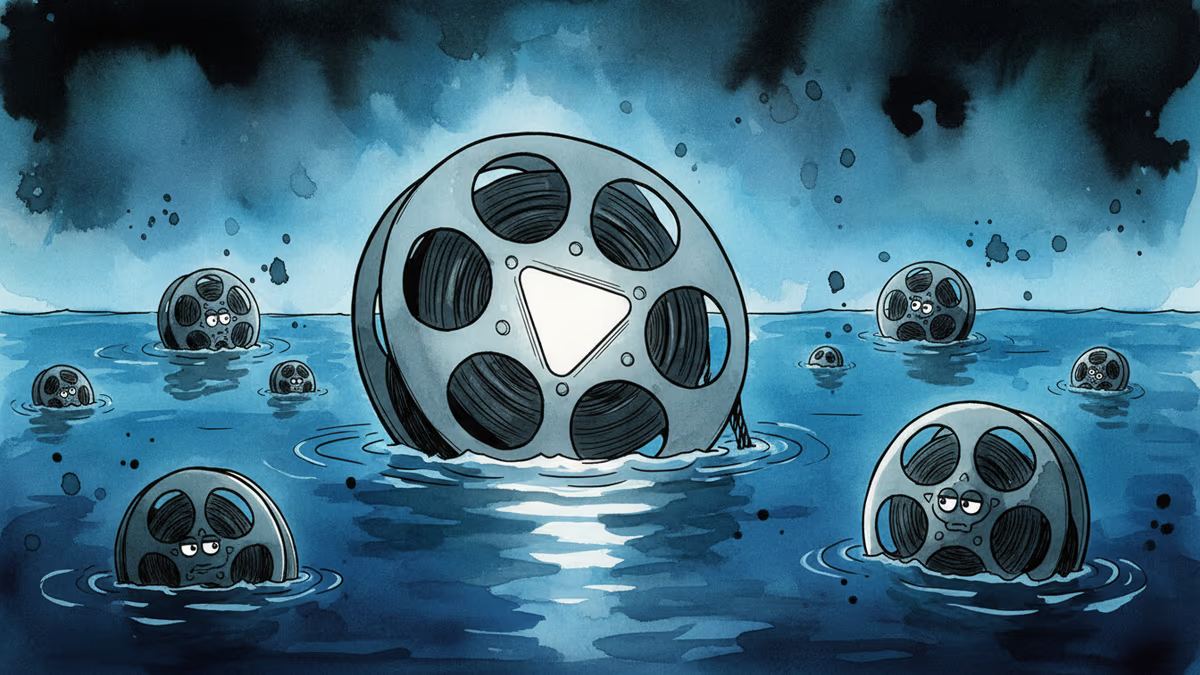
OpenAI is closing its Sora video generation app less than two years after its splashy debut. The move raises hard questions about AI product longevity, creator trust, and where the video AI race is really headed.
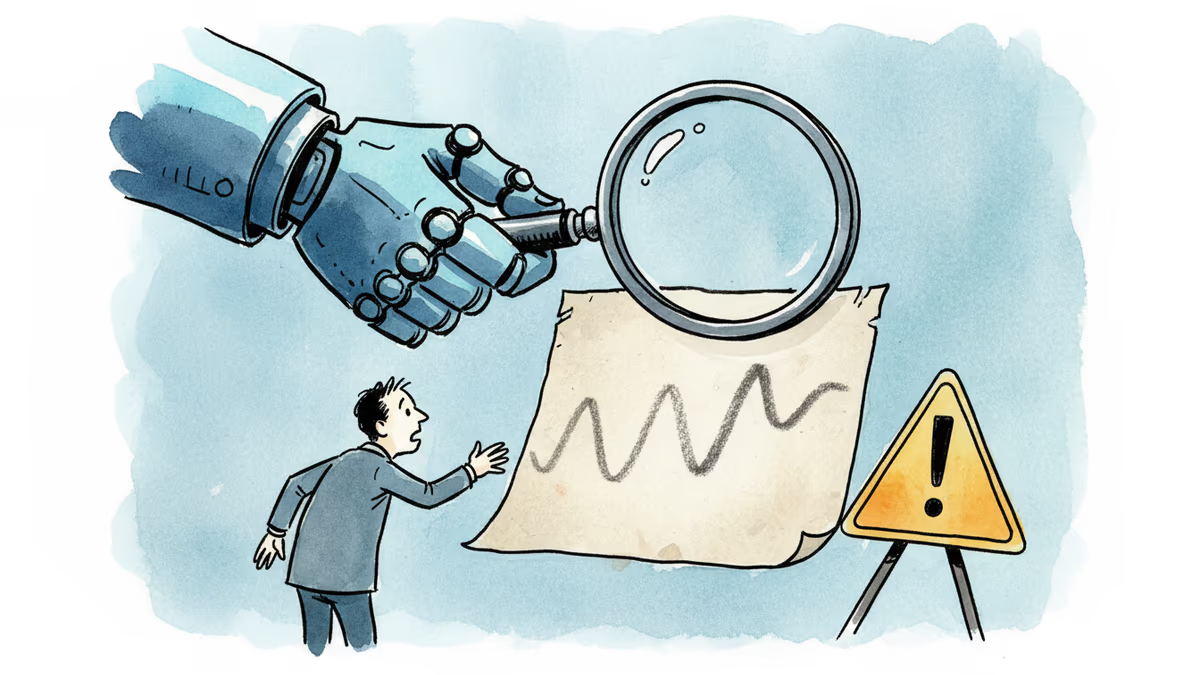
OpenAI is rolling out adult text features for ChatGPT, calling it 'smut' rather than 'pornography.' That single word choice reveals a calculated strategy at the intersection of markets, regulation, and ethics.
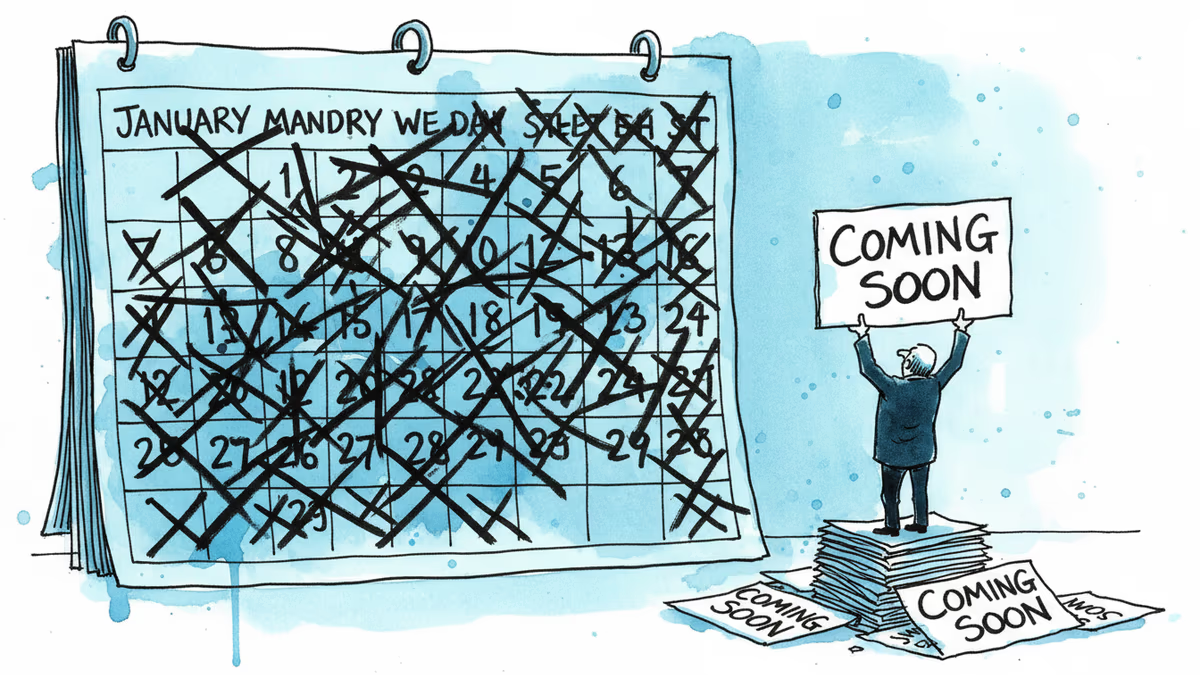
OpenAI has pushed back its adult content feature for the second time, with no new launch date. What's really behind the delay — and what does it mean for AI content regulation?
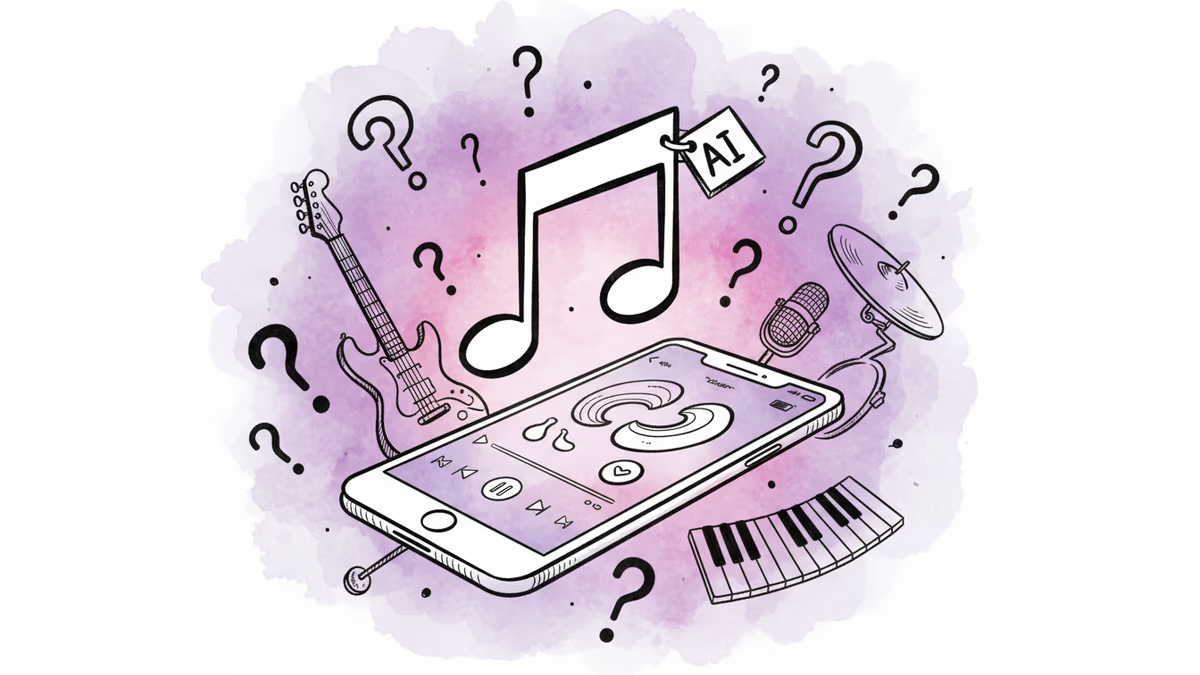
Apple Music introduces optional AI transparency tags for music content, sparking debate about self-regulation versus detection in the streaming era.
OpenAI is closing its Sora video generation app less than two years after its splashy debut. The move raises hard questions about AI product longevity, creator trust, and where the video AI race is really headed.
OpenAI is rolling out adult text features for ChatGPT, calling it 'smut' rather than 'pornography.' That single word choice reveals a calculated strategy at the intersection of markets, regulation, and ethics.
OpenAI has pushed back its adult content feature for the second time, with no new launch date. What's really behind the delay — and what does it mean for AI content regulation?
Apple Music introduces optional AI transparency tags for music content, sparking debate about self-regulation versus detection in the streaming era.
Thoughts
Share your thoughts on this article
Sign in to join the conversation