
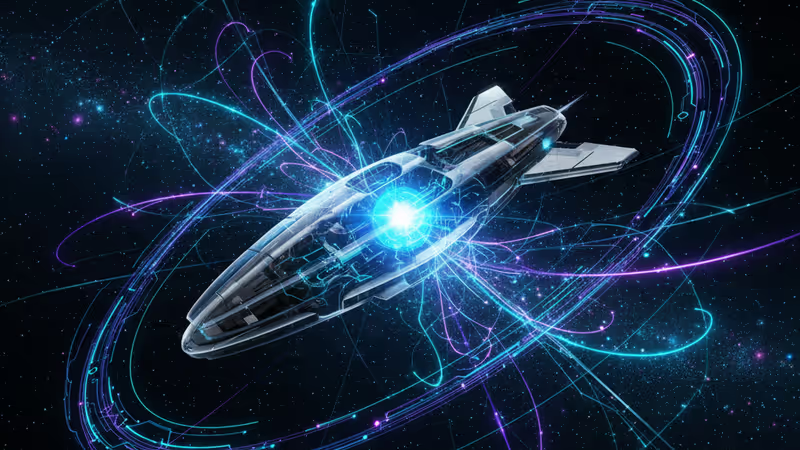
A $100,000 Prize and the Future of War: 7 Space and Defense Startups Redefining the Frontier
Discover 7 innovative startups from TechCrunch Startup Battlefield 200 redefining space and defense. From propellantless propulsion to GPS-free AI navigation, the future of the frontier is here.
The line between space exploration and defense is blurring as technology accelerates. Every year, TechCrunch's Startup Battlefield filters thousands of applicants down to the top 200 contenders, with the ultimate winner taking home $100,000. This year's cohort highlights a shift from traditional hardware to intelligent, fuel-efficient, and data-driven systems designed for the harshest environments.
Next-Gen Propulsion: Ditching Fuel and Wings
In the mobility sector, Airbility and Astrum Drive Aerospace are pushing physical boundaries. Airbility is developing a 2-seat manned electric vertical take-off and landing (eVTOL) aircraft using unique distributed electric fan-jet propulsion. Meanwhile, Astrum Drive has patented a propellantless, electricity-only space propulsion system. According to the company, this could eliminate the need for onboard fuel, drastically extending spacecraft lifespans and enabling deep-space exploration at a fraction of the current cost.
Securing the High Ground with Fintech and AI

Operational stability is as vital as hardware. Charter Space offers a fintech-style risk analysis platform specifically for spacecraft, aiming to use insurability to unlock new credit forms for the industry. On the maintenance front, Endox provides AI systems that assist the U.S. military in inspecting and maintaining complex equipment. By combining proprietary data capture with robotics, they're ensuring that critical defense assets stay operational longer.
Intelligent Edge: Navigation and Communication
Software is the new armor in modern conflict. Hance uses AI neural networks to enhance real-time audio in noisy military environments. For machines, Skylark Labs has created self-learning AI that processes information quickly at the edge. Perhaps most notably, Skyline Nav AI has built navigation software that doesn't rely on GPS. It recognizes scenes through AI, making it a critical tool against GPS jamming technologies without the need for expensive GPUs.
Authors
Related Articles

Samsung and SK unveiled a chip and AI investment package worth thousands of trillions of won on June 29. The headline number swings wildly by outlet, but the real contest isn't capital — it's water and power.

Viral videos show 2026 graduates jeering executives who praise AI at commencement ceremonies. It's not just rudeness — it's a signal about who pays for technological optimism.

Filipino virtual assistants using AI to ghost-manage LinkedIn profiles for executives is now a structured industry. 30 comments a day, fake engagement rings, and a platform struggling to tell real from fabricated.

Two commencement speakers learned the hard way that AI enthusiasm doesn't land well with today's graduates. The backlash reveals a widening gap between tech optimism and Gen Z's economic reality.
Samsung and SK unveiled a chip and AI investment package worth thousands of trillions of won on June 29. The headline number swings wildly by outlet, but the real contest isn't capital — it's water and power.
Viral videos show 2026 graduates jeering executives who praise AI at commencement ceremonies. It's not just rudeness — it's a signal about who pays for technological optimism.
Filipino virtual assistants using AI to ghost-manage LinkedIn profiles for executives is now a structured industry. 30 comments a day, fake engagement rings, and a platform struggling to tell real from fabricated.
Two commencement speakers learned the hard way that AI enthusiasm doesn't land well with today's graduates. The backlash reveals a widening gap between tech optimism and Gen Z's economic reality.
Thoughts
Share your thoughts on this article
Sign in to join the conversation