
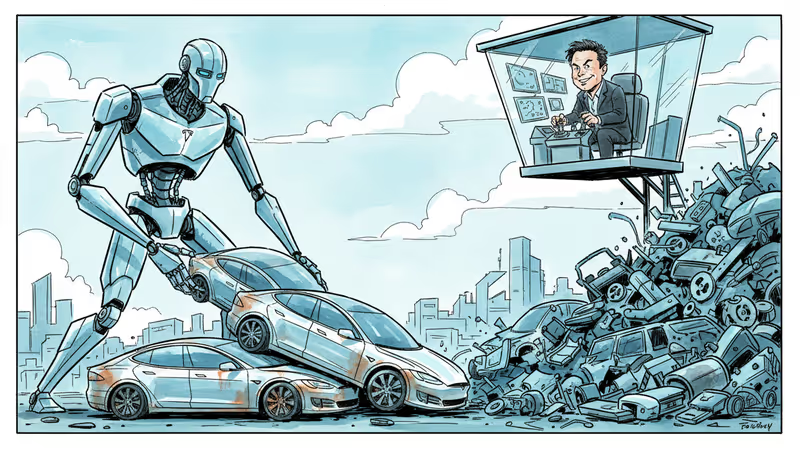
Tesla Abandons Cars for Robots - A $1 Trillion Bet
Tesla discontinues Model S and X to focus on humanoid robot mass production. The company's radical pivot from cars to AI robotics raises questions about its future.
The moment Tesla officially stopped being a car company arrived last night. During the quarterly earnings call, Elon Musk and his team delivered a bombshell: they're killing off the Model S and Model X - the company's original flagship EVs - to make room for mass production of humanoid robots.
From Four Wheels to Two Legs
This isn't just product line pruning. The Model S, in production since 2012, and the Model X, launched in 2015, were the vehicles that established Tesla as the premium electric vehicle pioneer. These weren't just cars; they were statements that electric could be luxurious, fast, and desirable.
But the numbers tell a different story. Tesla's automotive sales dropped 1.1% year-over-year in Q4 2024, while the company has been pouring resources into its Optimus humanoid robot project. Musk has been increasingly vocal about wanting investors to see Tesla as an AI and robotics company rather than an automaker.
"The robot market will be vastly larger than the car market," Musk declared during the call, justifying the strategic pivot that many analysts are calling either visionary or reckless.
The Market's Cold Shoulder

Wall Street's reaction has been mixed at best. The Model S and Model X, despite lower volumes, were Tesla's highest-margin vehicles and crucial for maintaining brand prestige. Discontinuing them removes a significant revenue stream for what remains largely a prototype robot.
Optimus has shown promise in demonstrations, but it's still years away from commercial viability. Industry experts estimate 3-5 years before meaningful production, during which Tesla risks ceding more ground to traditional automakers who are rapidly electrifying their fleets.
The timing raises eyebrows. Tesla faces intensifying competition from BYD, Mercedes, BMW, and others in the luxury EV space. Walking away from proven products to chase an uncertain future seems counterintuitive to many investors.
The Bigger Robotics Race
Yet Musk's bet isn't happening in isolation. Boston Dynamics, Honda, and numerous startups are racing toward commercially viable humanoid robots. The potential market is enormous - from manufacturing and logistics to elderly care and domestic assistance.
Tesla's advantage lies in its manufacturing expertise and AI capabilities developed for autonomous driving. The same neural networks that process road conditions could theoretically help robots navigate homes and workplaces. But translating automotive AI to bipedal robotics presents entirely different challenges.
The company's vertical integration - from chips to software to manufacturing - could prove crucial if robots become the next consumer technology category. However, that's still a massive "if."
Authors
Related Articles
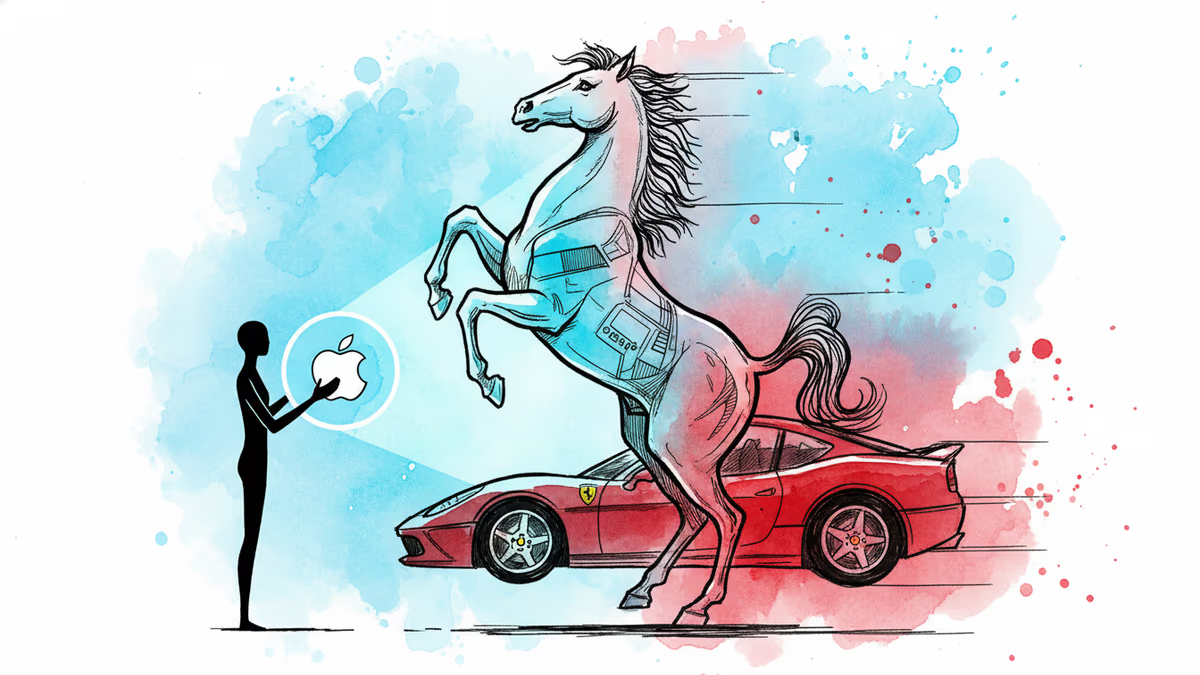
The Ferrari Luce is finally here — 1,000 hp, a 122 kWh battery, and an interior designed by the team behind the iPhone. But the real story is what Ferrari risked to build it.
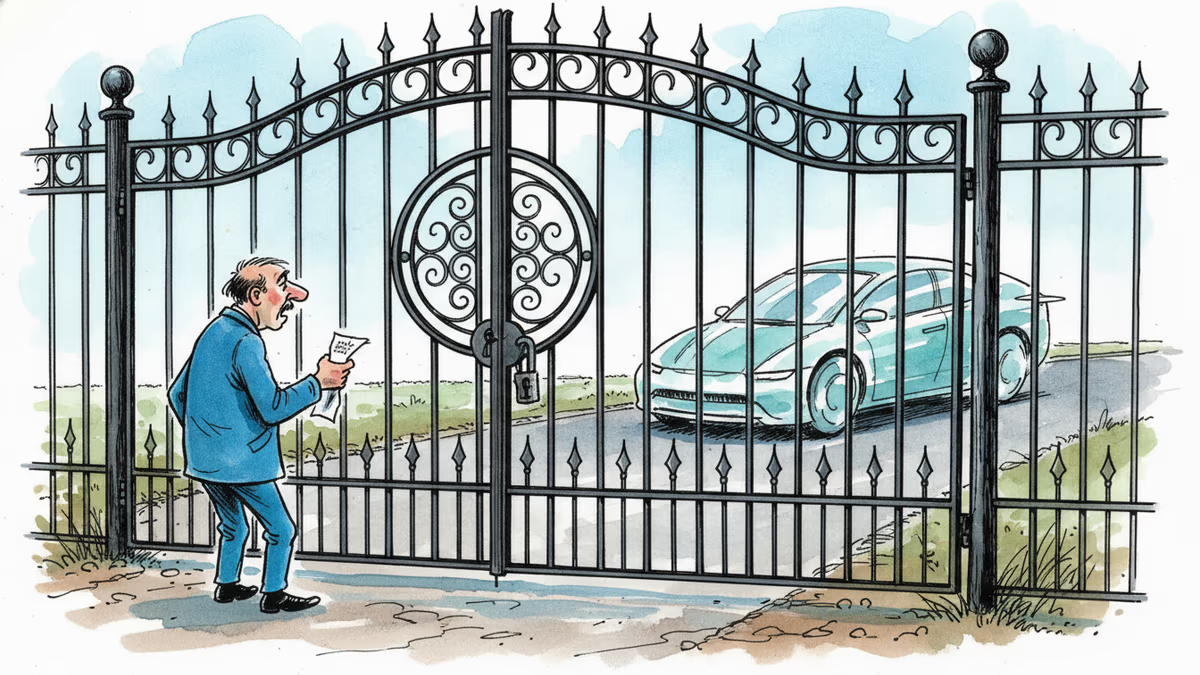
Elon Musk confirmed on Tesla's Q1 2026 earnings call that Hardware 3 vehicles will never receive unsupervised Full Self-Driving — locking out millions who paid for the feature.
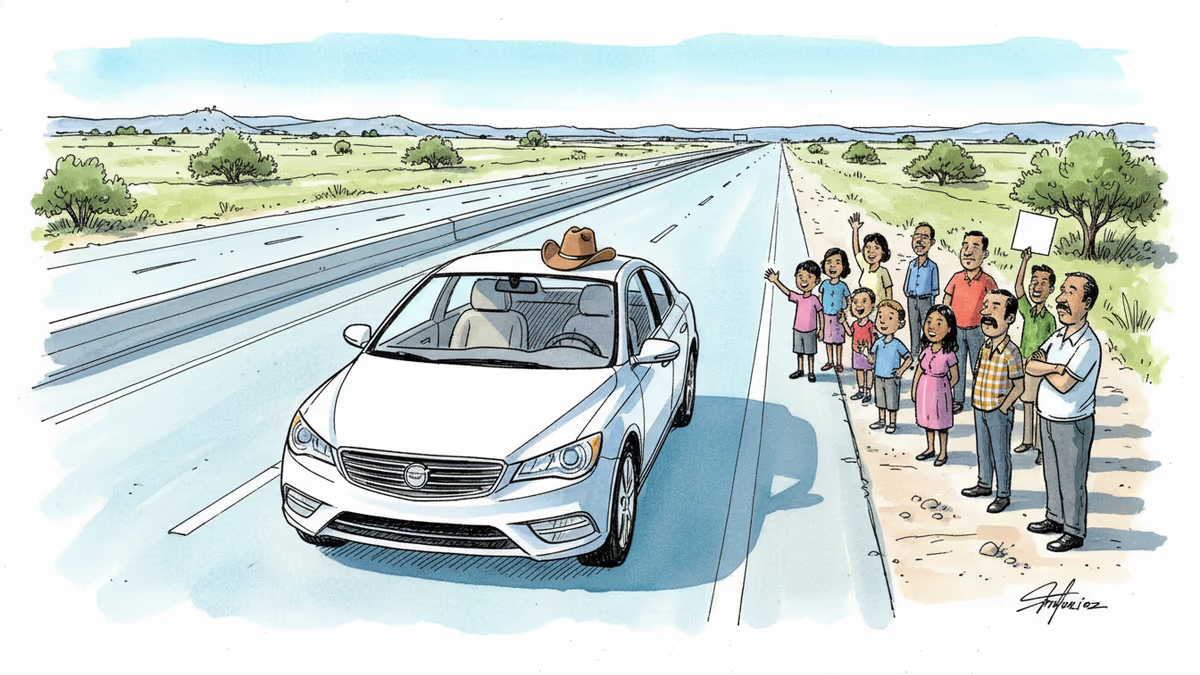
Tesla expanded its driverless robotaxi to Dallas and Houston, even after reporting 14 crashes in Austin. What does this tell us about how autonomous vehicles actually get built?
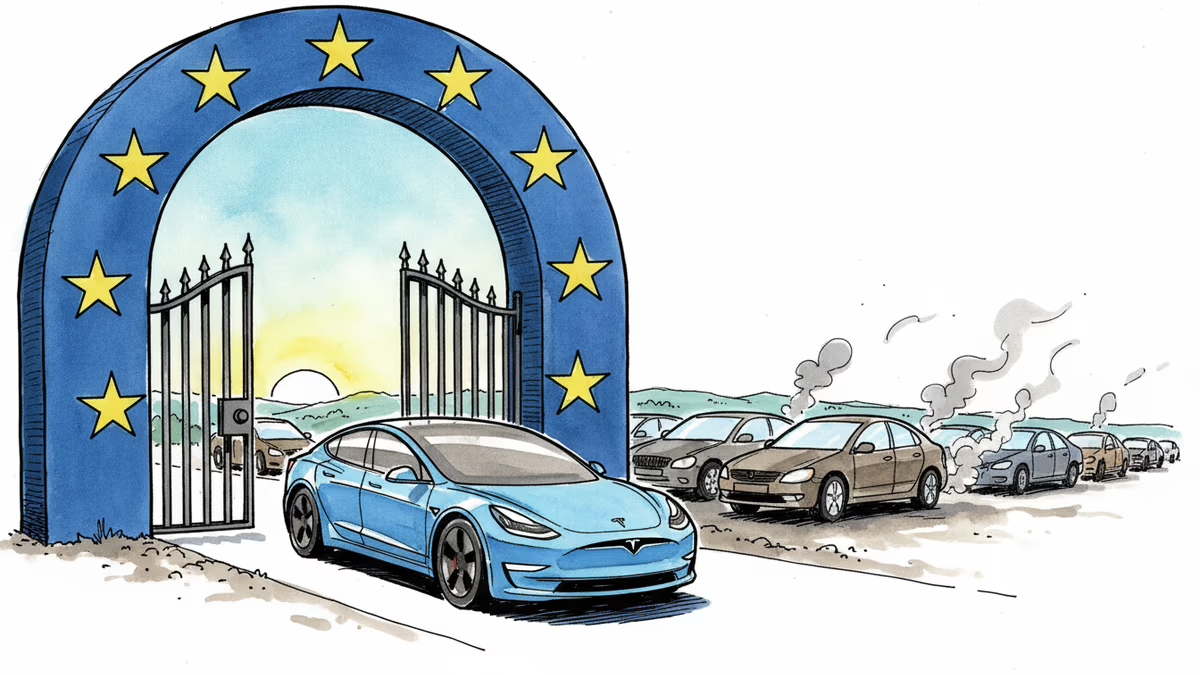
The Netherlands became the first European country to officially approve Tesla's FSD Supervised. With EU's type-approval framework, this could ripple across 27 member states fast.
The Ferrari Luce is finally here — 1,000 hp, a 122 kWh battery, and an interior designed by the team behind the iPhone. But the real story is what Ferrari risked to build it.
Elon Musk confirmed on Tesla's Q1 2026 earnings call that Hardware 3 vehicles will never receive unsupervised Full Self-Driving — locking out millions who paid for the feature.
Tesla expanded its driverless robotaxi to Dallas and Houston, even after reporting 14 crashes in Austin. What does this tell us about how autonomous vehicles actually get built?
The Netherlands became the first European country to officially approve Tesla's FSD Supervised. With EU's type-approval framework, this could ripple across 27 member states fast.
Thoughts
Share your thoughts on this article
Sign in to join the conversation