
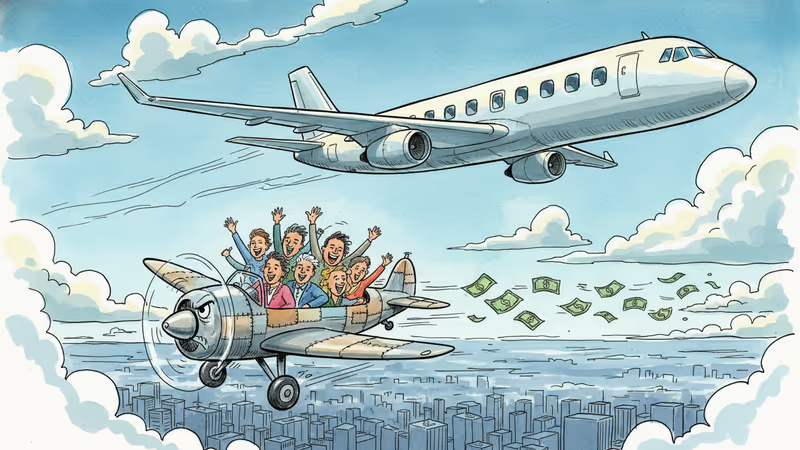
Tesla's Robotaxis Are Winning With Price, Not Technology
Tesla's robotaxis aren't fully driverless, but they're undercutting Uber and Lyft on price. Can a cost-focused strategy reshape the mobility market even without perfect tech?
Tesla's robotaxis aren't really robotaxis in the traditional sense. They still need safety monitors with kill switches, ready to intervene when things go wrong. But Elon Musk's company is disrupting the market anyway—not through superior technology, but through aggressive pricing.
A new analysis from Obi, an app that tracks real-time pricing across rideshare services, reveals Tesla's strategy: undercut the competition on cost. This follow-up to last year's Waymo-focused report now includes Tesla's service, comparing prices and pickup times against traditional players like Uber and Lyft.
The Price War Nobody Saw Coming
Tesla's approach flips conventional wisdom on its head. While companies like Waymo focus on perfecting fully autonomous technology, Tesla is betting that "good enough" autonomy at a lower price point can capture market share first.
This strategy taps into a fundamental consumer reality: people care about their wallets as much as cutting-edge tech. In an era of inflation and economic uncertainty, a cheaper ride—even with a human backup—might be more appealing than a fully autonomous one at premium prices.
But here's the catch: Tesla's service isn't truly driverless. It's more like Uber with extra sensors and marketing flair. So why are consumers choosing it?
The "Good Enough" Revolution

Tesla's pricing strategy reflects a broader trend in tech: the "good enough" product that wins through accessibility rather than perfection. Think of how Netflix initially offered lower-quality streaming compared to DVDs, or how early smartphones couldn't match laptops for productivity—but won through convenience and cost.
The question is whether this approach works in mobility, where safety isn't negotiable. Unlike social media or entertainment apps, transportation mistakes can be fatal. Tesla is essentially asking consumers to accept a trade-off: lower prices for higher (though still minimal) risk.
What This Means for the Industry
Tesla's price-first strategy could reshape how we think about autonomous vehicle deployment. Instead of waiting for perfect technology, companies might launch "supervised autonomous" services that gradually reduce human oversight as systems improve.
This has implications beyond Tesla. Uber and Lyft now face pressure to either match prices or justify their premium through superior service. Meanwhile, fully autonomous competitors like Waymo must decide whether to lower prices and sacrifice margins, or maintain premium positioning while Tesla captures price-sensitive customers.
For investors, this creates a new dynamic. The autonomous vehicle market might not be winner-takes-all based on technology alone. Market share could go to whoever finds the right balance between capability, safety, and affordability.
The Regulatory Wild Card
There's another player in this game: regulators. Tesla's approach of marketing "supervised autonomy" as robotaxis while requiring human oversight exists in a gray area. As these services scale, regulators will need to decide what constitutes false advertising versus innovative marketing.
The outcome could determine whether Tesla's strategy is brilliant positioning or regulatory overreach waiting to happen.
Authors
Related Articles
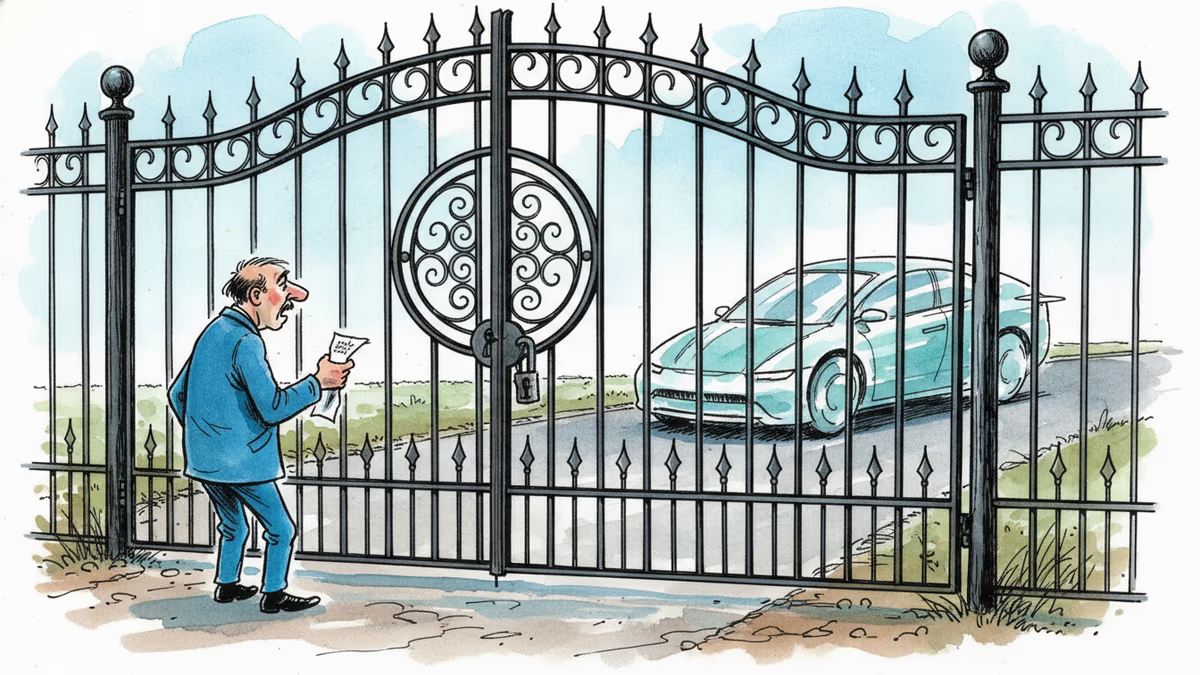
Elon Musk confirmed on Tesla's Q1 2026 earnings call that Hardware 3 vehicles will never receive unsupervised Full Self-Driving — locking out millions who paid for the feature.
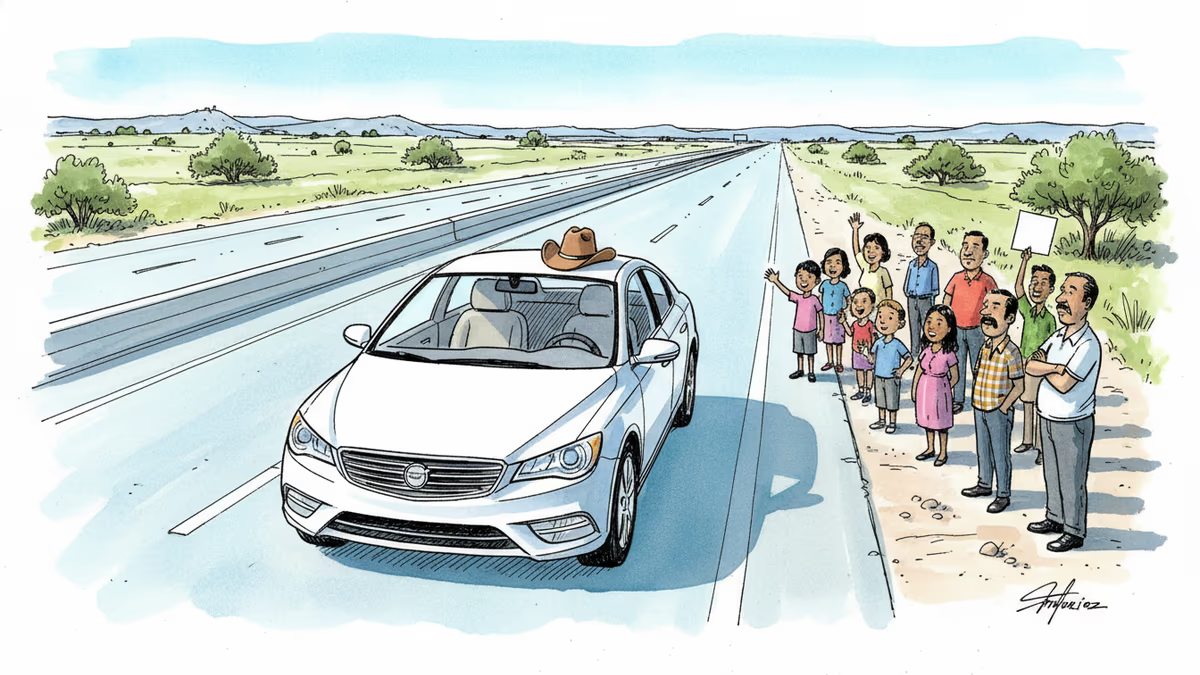
Tesla expanded its driverless robotaxi to Dallas and Houston, even after reporting 14 crashes in Austin. What does this tell us about how autonomous vehicles actually get built?
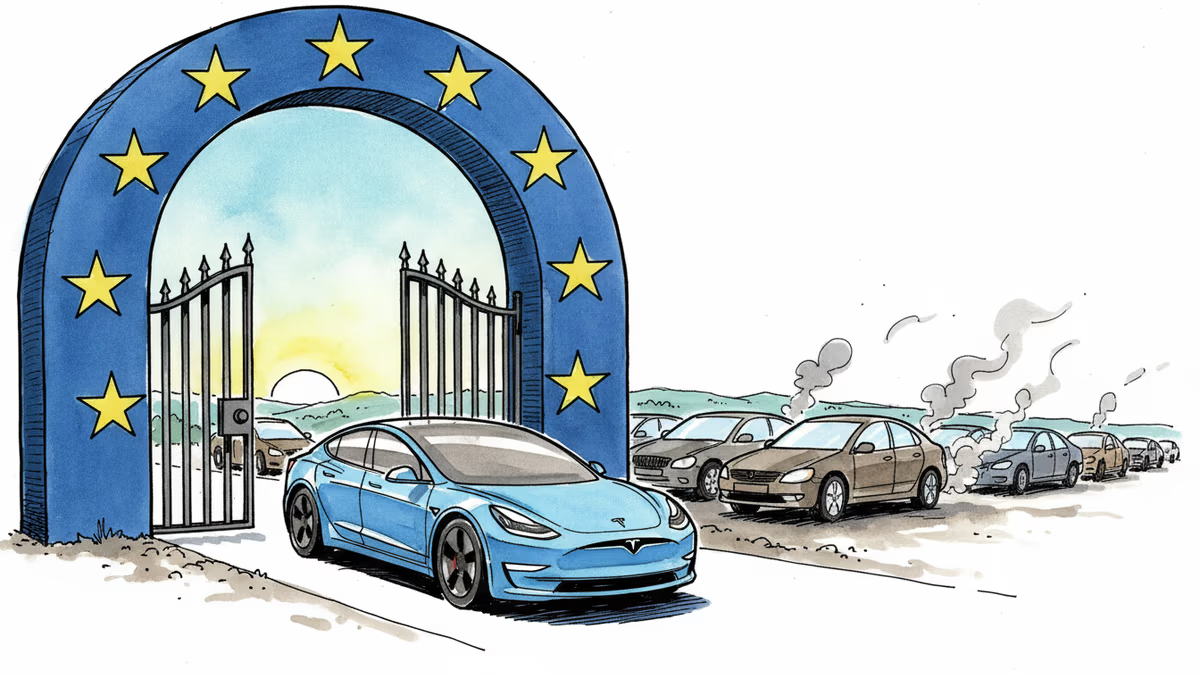
The Netherlands became the first European country to officially approve Tesla's FSD Supervised. With EU's type-approval framework, this could ripple across 27 member states fast.
Tesla's Austin gigafactory shed 4,685 workers in 2025—a 22% drop—even as its global headcount grew. What does this tell us about the future of EV manufacturing?
Elon Musk confirmed on Tesla's Q1 2026 earnings call that Hardware 3 vehicles will never receive unsupervised Full Self-Driving — locking out millions who paid for the feature.
Tesla expanded its driverless robotaxi to Dallas and Houston, even after reporting 14 crashes in Austin. What does this tell us about how autonomous vehicles actually get built?
The Netherlands became the first European country to officially approve Tesla's FSD Supervised. With EU's type-approval framework, this could ripple across 27 member states fast.
Tesla's Austin gigafactory shed 4,685 workers in 2025—a 22% drop—even as its global headcount grew. What does this tell us about the future of EV manufacturing?
Thoughts
Share your thoughts on this article
Sign in to join the conversation