
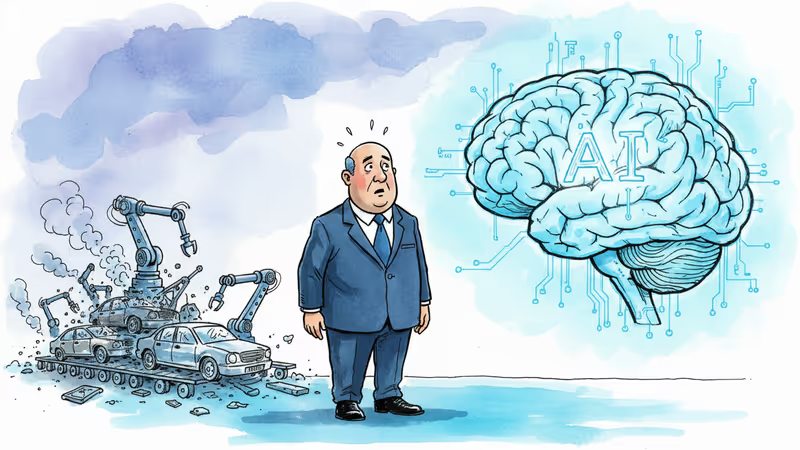
Tesla Shrinks Model Lineup as Musk's Self-Driving Dreams Override Car Business
Tesla reports first-ever revenue decline alongside profit drop, announcing further model lineup cuts as CEO Elon Musk prioritizes autonomous driving over traditional car manufacturing.
For the first time in Tesla's history, the company reported declining revenues. Profits nearly halved in 2025, and now the already tiny model lineup is getting even smaller. The announcement came during yesterday's investor call, marking a pivotal moment for the world's most valuable automaker.
When Car Companies Stop Caring About Cars
Elon Musk has grown visibly bored with the "prosaic business of running a profitable car company," as observers have noted. His attention shifted years ago from manufacturing vehicles to chasing the autonomous driving dream, inspired by splashy headlines from Google's spinoff Waymo. The promise was intoxicating: cars that would become appreciating assets, earning money for their owners at night while Tesla collected hefty intermediary fees.
But Silicon Valley's definition of "sexy" doesn't always align with business fundamentals. While other EV startups struggled to achieve even a fraction of Tesla's market valuation, Musk was already mentally three steps ahead, envisioning a world of robotaxis and ride-hailing dominance.
The Reality Check
The numbers tell a sobering story. Tesla's troubles stem from multiple sources: Musk's controversial political activities have alienated customers, while the aging model lineup raises questions about safety and reliability. The company that once disrupted the entire automotive industry now finds itself caught between yesterday's promises and tomorrow's uncertainties.

Meanwhile, traditional automakers like Ford and GM have quietly improved their EV offerings, and Chinese competitors like BYD have gained significant market share. Tesla's first-mover advantage is eroding faster than its battery capacity on a cold day.
The Autonomous Driving Mirage
Musk's pivot to autonomous driving made strategic sense on paper. Why sell cars once when you can monetize them continuously through ride-sharing? The vision of Tesla owners earning passive income while sleeping was compelling enough to keep investors believing, even as deadlines came and went.
But self-driving technology has proven more elusive than anticipated. While Waymo operates limited robotaxi services in select cities, true Level 5 autonomy remains years away. Tesla's Full Self-Driving feature, despite its name, still requires constant human supervision.
Market Implications
Tesla's struggles create opportunities for competitors. Traditional automakers are investing billions in EV infrastructure, while new players like Rivian and Lucid Motors target specific market segments Tesla has neglected. The question isn't whether Tesla will survive—it's whether it can maintain its premium valuation while shrinking its core business.
For investors, Tesla's transformation from car company to AI/robotics play represents both risk and opportunity. The company's $800 billion market cap still reflects future potential more than present performance.
Authors
Related Articles
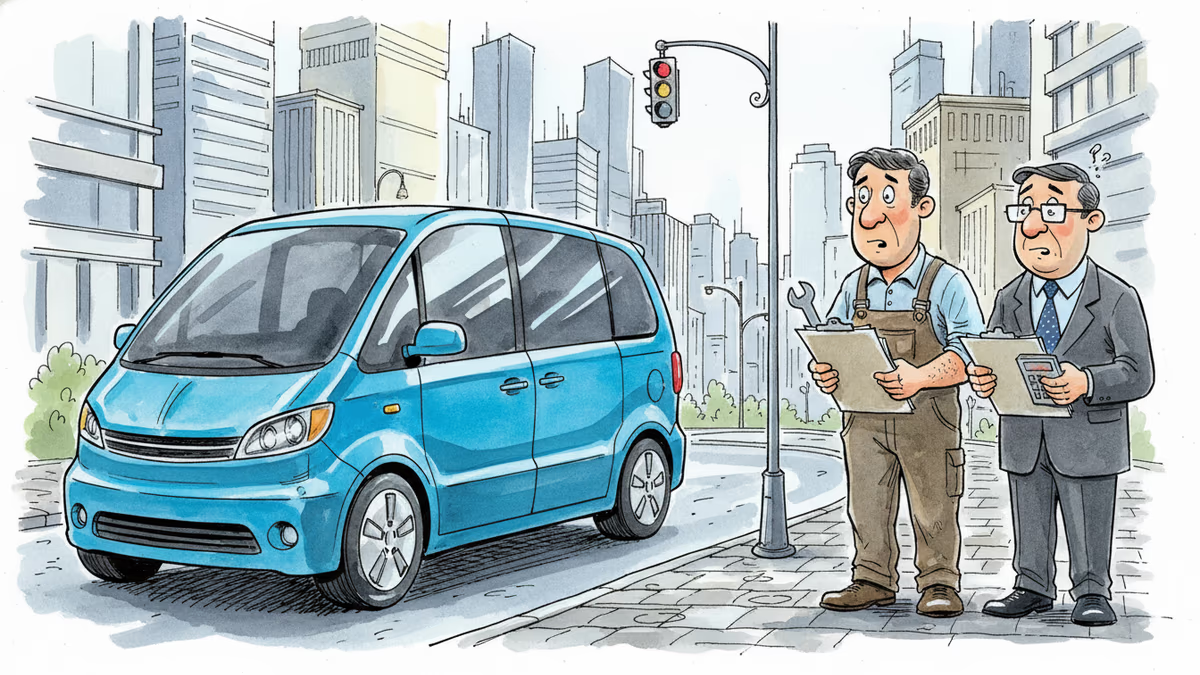
Waymo's new Ojai robotaxi isn't just a vehicle upgrade. It's the company's most serious attempt yet at cracking the cost problem that has kept autonomous vehicles from scaling. Here's what's really at stake.
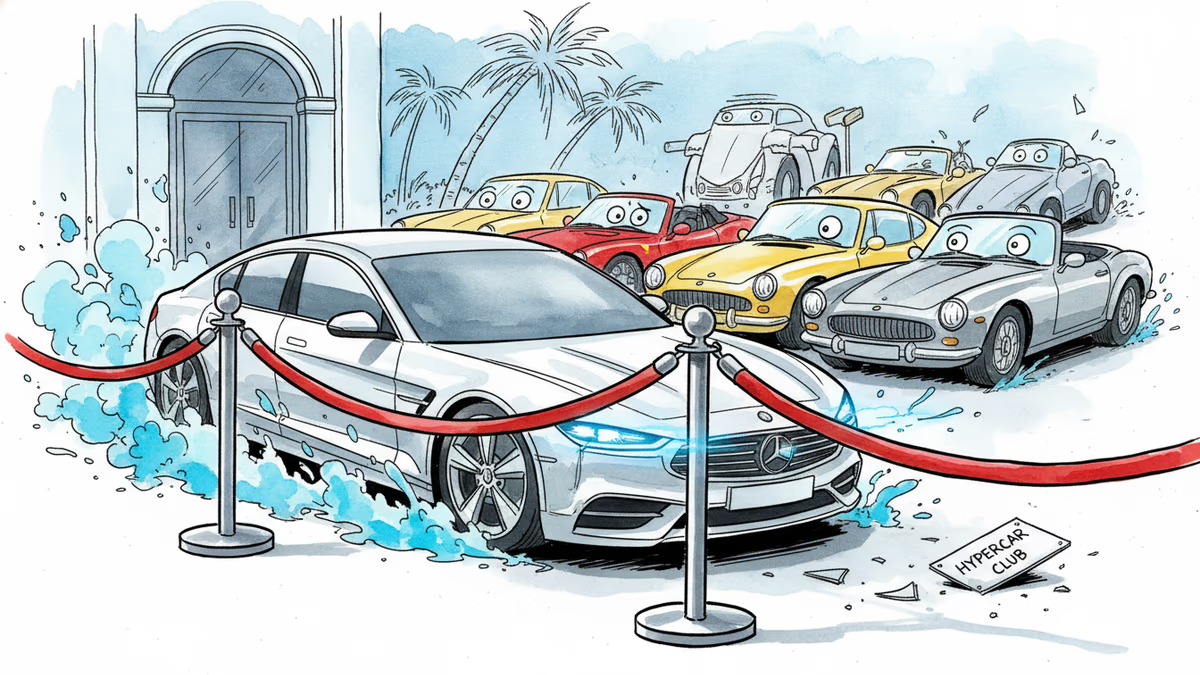
Mercedes-AMG's new GT 4-door coupe packs three YASA axial flux motors producing 1,153 hp and 1,475 lb-ft of torque. Here's what it means for the EV performance race—and who actually wins.
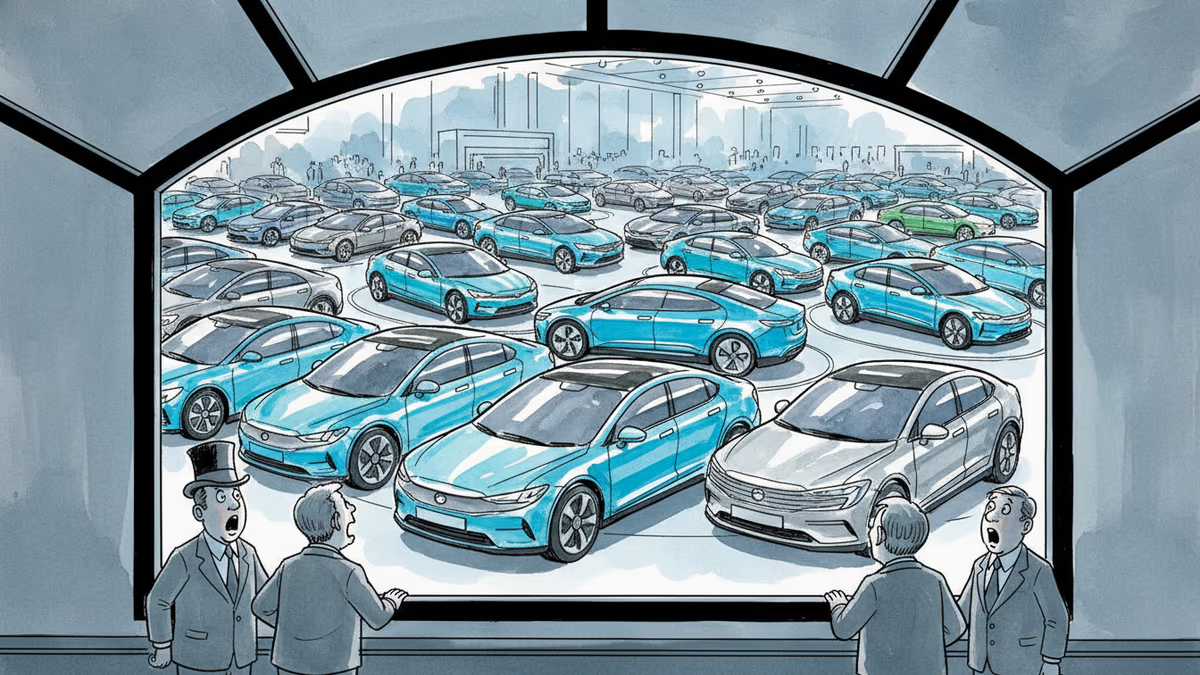
Auto China 2026 set records with 1,451 vehicles and 181 world premieres. But the real story isn't the size—it's how Chinese automakers stopped competing on price and started competing on brains.
Expiring leases will flood the US used car market with over a million electric vehicles by 2028. Could this do what subsidies couldn't — make EVs genuinely affordable?
Waymo's new Ojai robotaxi isn't just a vehicle upgrade. It's the company's most serious attempt yet at cracking the cost problem that has kept autonomous vehicles from scaling. Here's what's really at stake.
Mercedes-AMG's new GT 4-door coupe packs three YASA axial flux motors producing 1,153 hp and 1,475 lb-ft of torque. Here's what it means for the EV performance race—and who actually wins.
Auto China 2026 set records with 1,451 vehicles and 181 world premieres. But the real story isn't the size—it's how Chinese automakers stopped competing on price and started competing on brains.
Expiring leases will flood the US used car market with over a million electric vehicles by 2028. Could this do what subsidies couldn't — make EVs genuinely affordable?
Thoughts
Share your thoughts on this article
Sign in to join the conversation