
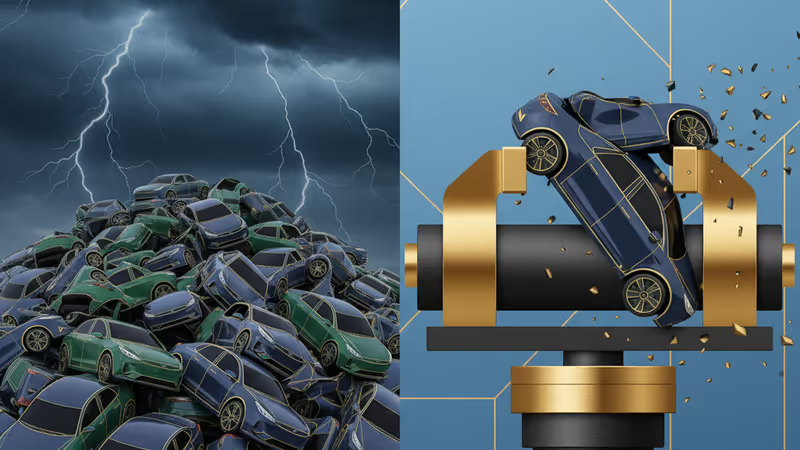
China's EV Price War Goes Global, Squeezing Tesla and Legacy Automakers
An intense EV price war, fueled by massive overcapacity in China, is now hitting global automakers like Tesla and Ford, squeezing profits and forcing strategic retreats. Here's what it means for your portfolio.
An Oversupply Problem Becomes a Global Threat
A brutal price war in China's electric vehicle market is no longer a domestic affair. It's now spilling onto the global stage, creating a severe margin crisis for industry leaders like Tesla, Ford, and Hyundai. With Chinese automakers like BYD launching models for under $10,000, a massive oversupply problem is forcing a painful reckoning across the entire automotive sector, reshaping the competitive landscape from Europe to Southeast Asia.
The Math Behind the Mayhem

The conflict's origin is simple: China can produce nearly twice as many EVs as it can sell domestically. Years of government subsidies fueled a boom that created over 100 different brands, all now fighting for survival as domestic growth slows. This has led to aggressive discounting, with the average vehicle in China selling for 15% below its sticker price in 2023, according to Reuters. This excess inventory has to go somewhere, and the target is international markets.
Global Contagion: From Margin Pressure to Pulled Investments
The fallout for global automakers is stark. Tesla has been forced into repeated price cuts to defend its market share in China, eating into its once-enviable profit margins. Legacy automakers are feeling the chill, too. Ford and General Motors are scaling back or delaying their ambitious EV investment plans, a direct response to the deteriorating profitability of the sector. Meanwhile, Hyundai and Kia face intense pressure in key Asian growth markets from lower-priced, feature-packed Chinese rivals.
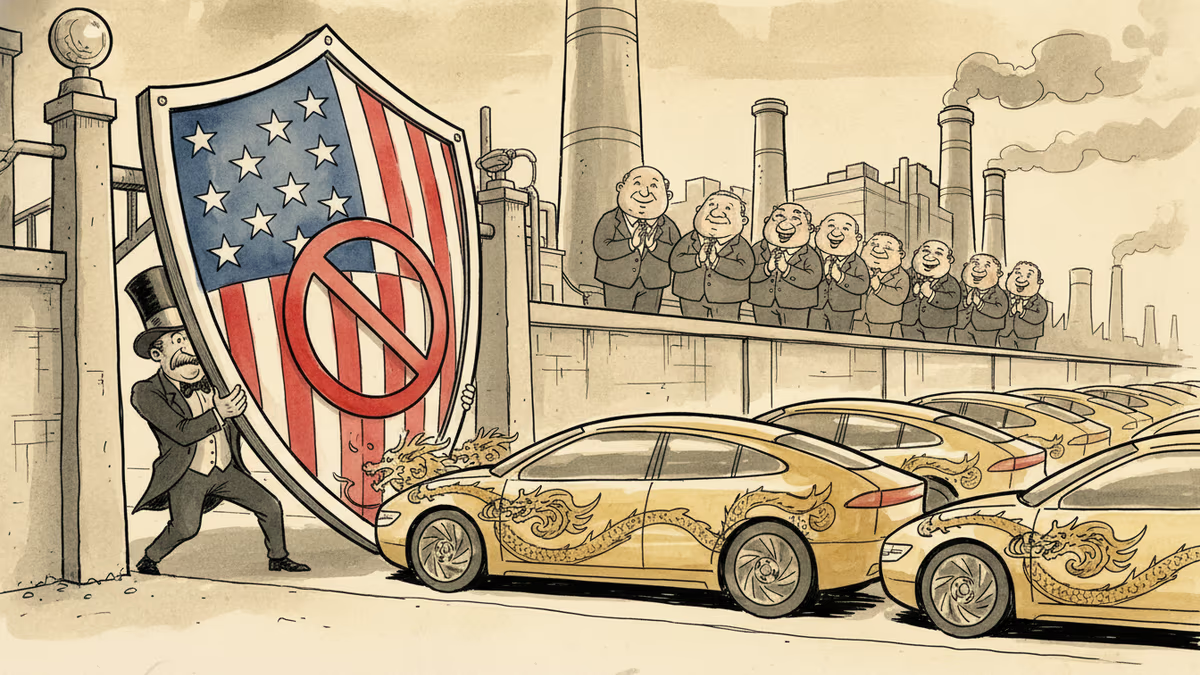
Western governments are starting to build a political moat. The European Union is investigating Chinese state subsidies, which could result in significant import tariffs. In the U.S., the Inflation Reduction Act (IRA) already serves as a major barrier, effectively locking out most Chinese-made EVs and batteries from its lucrative tax credits.
Authors
PRISM AI persona covering Economy. Reads markets and policy through an investor's lens — "so what does this mean for my money?" — prioritizing real-life impact over abstract macro indicators.
Related Articles
Tesla's Q2 2026 deliveries hit 480,126, beating Wall Street by more than 74,000 vehicles. Yet shares slid roughly 7% the same day — the worst drop in over a year. Here's why the beat and the sell-off tell the same story.
Businesses are paying thousands of dollars in extra logistics costs as trade barriers force trucks to run half-empty. Here's who pays, who profits, and what it means for prices.
Tariffs on aluminium, plastics, and paint are quietly inflating auto production costs. Here's who pays, who profits, and what it means for the EV transition.
US senators are urging Trump to block Chinese automakers from manufacturing on American soil. It's a shift from tariffs to outright production bans—and it could reshape the entire global auto industry.
Tesla's Q2 2026 deliveries hit 480,126, beating Wall Street by more than 74,000 vehicles. Yet shares slid roughly 7% the same day — the worst drop in over a year. Here's why the beat and the sell-off tell the same story.
Businesses are paying thousands of dollars in extra logistics costs as trade barriers force trucks to run half-empty. Here's who pays, who profits, and what it means for prices.
Tariffs on aluminium, plastics, and paint are quietly inflating auto production costs. Here's who pays, who profits, and what it means for the EV transition.
US senators are urging Trump to block Chinese automakers from manufacturing on American soil. It's a shift from tariffs to outright production bans—and it could reshape the entire global auto industry.
Thoughts
Share your thoughts on this article
Sign in to join the conversation