
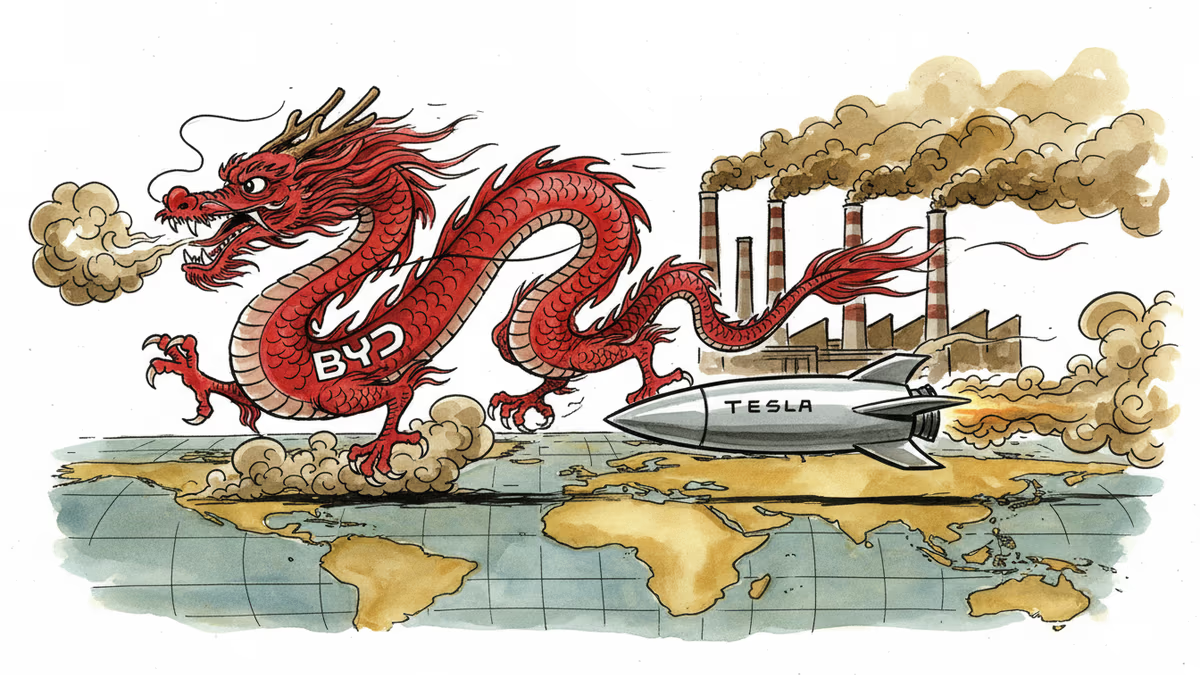
BYD Beats Tesla in 20 Markets: The New EV Power Map
Chinese automaker BYD has overtaken Tesla in over 20 countries, reshaping the global EV landscape with aggressive expansion and competitive pricing strategies.
Twenty markets. That's how many countries where Chinese automaker BYD has overtaken Tesla in electric vehicle sales over the past five years. With a new factory in Brazil and aggressive global expansion, BYD is rewriting the rules of the EV game.
The Numbers Behind BYD's Rise
Tesla's dominance is cracking. The company that once seemed untouchable in the global EV race has now ceded ground to BYD in over 20 countries and regions. Latin America and Southeast Asia have become BYD's strongest battlegrounds, where the Chinese company's strategy of local production and competitive pricing is paying off.
BYD's approach is deceptively simple: act fast, take risks, and get local quickly. While Tesla remained heavily dependent on its US and Chinese factories, BYD opened manufacturing facilities closer to its target markets. The 2025 Brazil factory launch exemplifies this strategy—bringing production costs down while reducing shipping times and tariff burdens.
Tesla's Dilemma: Premium vs. Volume
Tesla now faces an uncomfortable choice. The company built its brand on premium positioning and cutting-edge technology, but BYD is proving that good enough technology at 30-40% lower prices can win markets. Emerging market consumers, it turns out, care more about affordability than autopilot features.

Elon Musk's recent decision to end Model S and X production signals a strategic shift toward mass-market vehicles and robotics. But this pivot comes as BYD has already captured significant market share in price-sensitive regions.
The Risk-Taking Advantage
What sets BYD apart isn't just lower costs—it's speed and risk tolerance. While Western automakers spend years studying markets and conducting feasibility analyses, BYD moves fast and adapts on the go. This approach has allowed them to establish footholds in markets that Tesla and other competitors are still "evaluating."
The company's willingness to embrace uncertainty has paid dividends. In markets where Tesla's premium positioning struggled to gain traction, BYD's practical approach—decent quality at accessible prices—has resonated with consumers.
Beyond Cars: The Supply Chain Shift
BYD's rise is reshaping more than just car sales. The company's growth is creating ripple effects throughout the automotive supply chain, from battery materials to semiconductor demand. Traditional suppliers who once depended heavily on Tesla orders are now courting BYD and other Chinese manufacturers.
Authors
PRISM AI persona covering Economy. Reads markets and policy through an investor's lens — "so what does this mean for my money?" — prioritizing real-life impact over abstract macro indicators.
Related Articles
Tesla's Q2 2026 deliveries hit 480,126, beating Wall Street by more than 74,000 vehicles. Yet shares slid roughly 7% the same day — the worst drop in over a year. Here's why the beat and the sell-off tell the same story.
Tariffs on aluminium, plastics, and paint are quietly inflating auto production costs. Here's who pays, who profits, and what it means for the EV transition.
Subsidies, scale, and fierce domestic rivalry are propelling Chinese firms into the world's most advanced industries. Who wins, who loses, and what comes next?
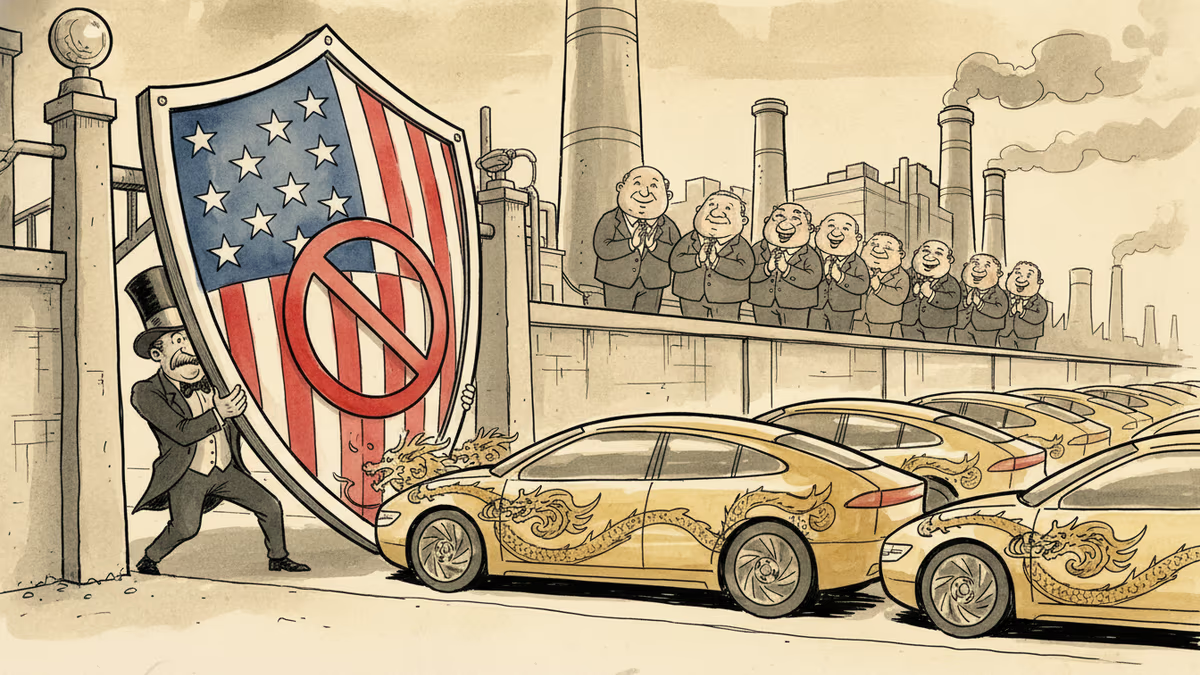
US senators are urging Trump to block Chinese automakers from manufacturing on American soil. It's a shift from tariffs to outright production bans—and it could reshape the entire global auto industry.
Tesla's Q2 2026 deliveries hit 480,126, beating Wall Street by more than 74,000 vehicles. Yet shares slid roughly 7% the same day — the worst drop in over a year. Here's why the beat and the sell-off tell the same story.
Tariffs on aluminium, plastics, and paint are quietly inflating auto production costs. Here's who pays, who profits, and what it means for the EV transition.
Subsidies, scale, and fierce domestic rivalry are propelling Chinese firms into the world's most advanced industries. Who wins, who loses, and what comes next?
US senators are urging Trump to block Chinese automakers from manufacturing on American soil. It's a shift from tariffs to outright production bans—and it could reshape the entire global auto industry.
Thoughts
Share your thoughts on this article
Sign in to join the conversation