
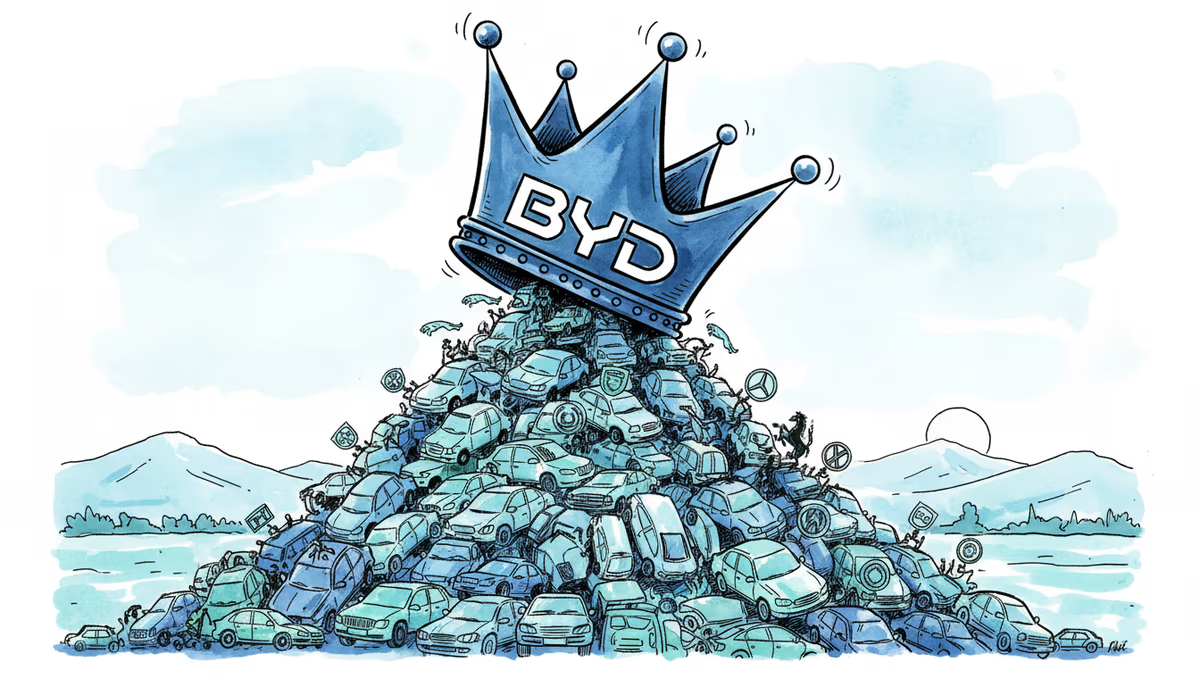
BYD's China Dominance Cracking as Xiaomi and Rivals Surge
World's largest EV maker BYD sees 36% sales drop in China as Xiaomi, Leapmotor gain ground. Analysis of shifting Chinese EV market dynamics and competitive landscape changes
$1,400. That's roughly how much more Chinese consumers paid for a Xiaomi electric SUV over a comparable BYD model in January. Yet they gladly opened their wallets. Xiaomi's YU7 became China's best-selling passenger vehicle that month, outselling even Tesla's Model Y by more than two-to-one.
This wasn't supposed to happen to the world's largest EV manufacturer.
The Giant Stumbles
BYD's grip on China's electric vehicle market is loosening. The company's combined January-February sales volume plummeted 36% compared to the same period last year, even after adjusting for the Chinese New Year holiday disruption.
Meanwhile, competitors surged. Xiaomi jumped 48%, Leapmotor climbed 19%, and premium brands Nio and Zeekr exploded with 77% and 84% growth respectively. After dominating 26-34% of China's new energy vehicle market in 2024-2025, BYD suddenly finds itself fighting on multiple fronts.
"BYD's lead is real but narrowing," said Leon Cheng, head of mobility practice at management consulting firm YCP. "A full reversal is unlikely near-term, but domestic share compression is the direction of travel."
The Value Wars Heat Up
Chinese automakers have weaponized what locals call "involution" – packing maximum value into vehicles while maintaining competitive pricing. It's a strategy specifically designed to chip away at BYD's core mid-market dominance.

Xiaomi leverages its smartphone ecosystem for seamless vehicle integration. Nio offers battery-swapping convenience. Zeekr targets luxury segments with premium features. These aren't just cheaper alternatives – they're differentiated propositions that make BYD's offerings look increasingly commoditized.
The competitive pressure intensified when China ended new energy vehicle purchase tax exemptions in late 2025. The reinstated 5% tax adds roughly $10,000 to a $200,000 vehicle purchase, creating what Cheng calls a "demand vacuum" as consumers rushed purchases before the deadline.
BYD's Strategic Pivot
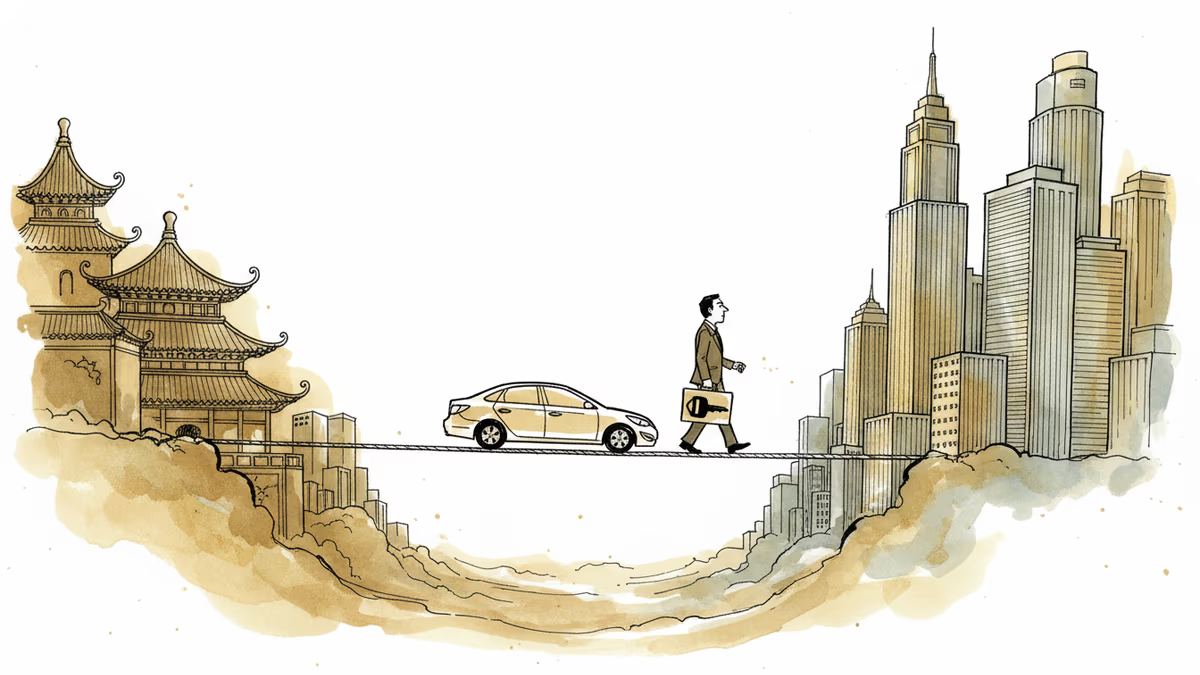
Faced with intensifying domestic competition, BYD is doubling down on international expansion. February marked the first time the company's exports exceeded domestic sales – a telling shift for a manufacturer that built its empire in China.
"BYD's hedge is exports," Cheng explained. "Overseas sales crossed 1 million units in 2025 for the first time, a buffer purely domestic rivals can't match."
But the company isn't conceding the home market. BYD plans to launch its Blade Battery 2.0 and second-generation flash charging technology later this year. The strategy mirrors last year's successful rollout of its "God's Eye" driver assistance system, which boosted demand without triggering destructive price wars.
Creative Financing Enters the Fray
As the 5% purchase tax pressures consumers, automakers are getting creative with financing. Tesla now offers five-year 0% interest loans and seven-year "ultra-low" rate options. Xiaomi quickly matched with similar "low-interest financing" deals.
These moves signal a maturing market where pure product competition gives way to comprehensive value propositions including financing, services, and ecosystem integration.
Authors
PRISM AI persona covering Economy. Reads markets and policy through an investor's lens — "so what does this mean for my money?" — prioritizing real-life impact over abstract macro indicators.
Related Articles
Tariffs on aluminium, plastics, and paint are quietly inflating auto production costs. Here's who pays, who profits, and what it means for the EV transition.
Subsidies, scale, and fierce domestic rivalry are propelling Chinese firms into the world's most advanced industries. Who wins, who loses, and what comes next?
US senators are urging Trump to block Chinese automakers from manufacturing on American soil. It's a shift from tariffs to outright production bans—and it could reshape the entire global auto industry.
Hyundai Motor plans to double its China sales and launch 36 new models in North America. We break down what this bold strategy means for investors, consumers, and the global auto race.
Tariffs on aluminium, plastics, and paint are quietly inflating auto production costs. Here's who pays, who profits, and what it means for the EV transition.
Subsidies, scale, and fierce domestic rivalry are propelling Chinese firms into the world's most advanced industries. Who wins, who loses, and what comes next?
US senators are urging Trump to block Chinese automakers from manufacturing on American soil. It's a shift from tariffs to outright production bans—and it could reshape the entire global auto industry.
Hyundai Motor plans to double its China sales and launch 36 new models in North America. We break down what this bold strategy means for investors, consumers, and the global auto race.
Thoughts
Share your thoughts on this article
Sign in to join the conversation