
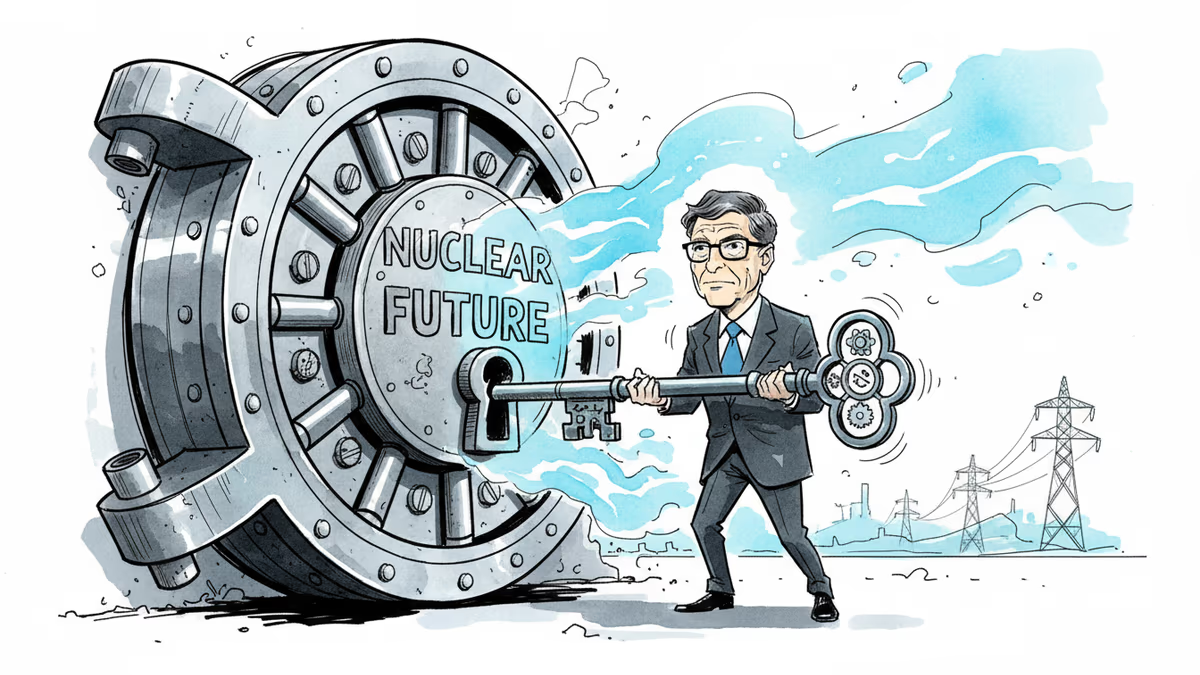
Bill Gates Just Cracked Open Nuclear Power's Decade-Long Freeze
The US approves its first nuclear reactor construction in nearly a decade. Can TerraPower's radical sodium-cooled design reshape America's energy future?
The Decade-Long Wait Just Ended
Wednesday marked a watershed moment for American nuclear energy. The Nuclear Regulatory Commission issued its first construction approval in nearly a decade, greenlighting a project that could redefine how we think about nuclear power.
The lucky recipient? TerraPower, the company backed by Bill Gates, which plans to build something radically different in Kemmerer, Wyoming. This isn't your grandfather's nuclear reactor—it's sodium-cooled, integrates energy storage, and promises to solve problems that have plagued nuclear energy for decades.
Why Sodium Changes Everything
TerraPower's "Natrium" reactor, developed with GE Hitachi, breaks from 70 years of water-cooled nuclear tradition. Instead of high-pressure steam that can explode catastrophically, liquid sodium remains stable at atmospheric pressure.
The trade-off? Sodium is violently reactive with air and water. It's like swapping one type of risk for another—but potentially a more manageable one. The reactor also uses fast neutrons, which can consume isotopes that would otherwise become radioactive waste in traditional designs.
This isn't just engineering innovation—it's waste reduction. America's nuclear waste problem, with 90,000 tons stored across the country, could find a partial solution in reactors that eat their own leftovers.

The Storage Game-Changer
Here's where TerraPower gets really interesting: built-in energy storage. While solar and wind struggle with intermittency, Natrium can store excess heat and ramp up electricity production when demand peaks.
This positions nuclear not as renewable energy's competitor, but as its perfect partner. When the sun doesn't shine and wind doesn't blow, stored nuclear heat fills the gap. It's a solution to the grid stability problem that has utilities executives losing sleep.
The Regulatory Reality Check
Construction approval doesn't guarantee operational approval—that's a separate, equally rigorous process. The NRC will scrutinize every component, every safety system, every emergency procedure. TerraPower still faces years of regulatory hurdles.
But the approval signals something bigger: American regulators are willing to embrace nuclear innovation after decades of stagnation. Since the 2012 approval of Vogtle units in Georgia (still under construction), the industry has been frozen in bureaucratic amber.
What This Means for Energy Markets
Investors are watching closely. Nuclear stocks jumped on the news, but the real impact won't be felt for years. If Natrium proves successful, it could trigger a wave of next-generation nuclear projects across the country.
Utilities are particularly interested in the dual-use capability—baseload power plus grid storage in one package. That's a value proposition that could make nuclear competitive with natural gas, especially as carbon pricing becomes more widespread.
Authors
Related Articles
NRC approves first nuclear reactor in a decade. TerraPower's sodium-cooled design could reshape energy, but faces steep cost challenges.
TerraPower receives groundbreaking approval to build America's first next-generation nuclear plant, targeting 2030 completion as AI data centers strain the grid
Michigan takes a different approach to climate litigation, accusing oil giants of antitrust violations to suppress clean energy competition
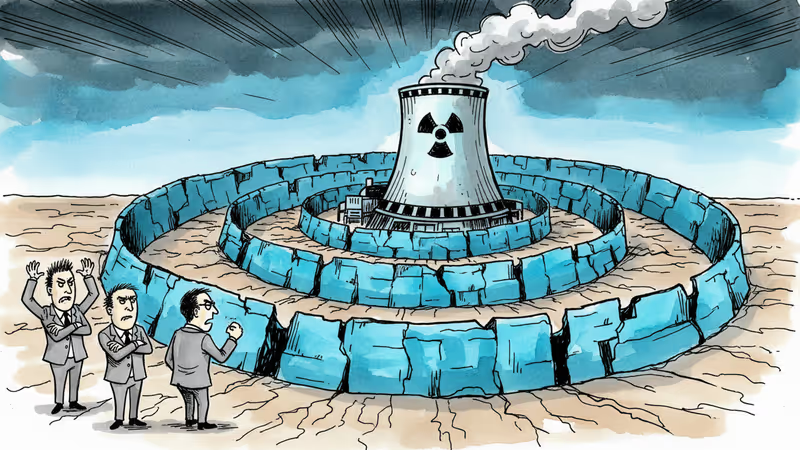
HALEU fuel monopoly, safety deregulation concerns, and persistent cost challenges reveal the gap between nuclear ambitions and reality.
NRC approves first nuclear reactor in a decade. TerraPower's sodium-cooled design could reshape energy, but faces steep cost challenges.
TerraPower receives groundbreaking approval to build America's first next-generation nuclear plant, targeting 2030 completion as AI data centers strain the grid
Michigan takes a different approach to climate litigation, accusing oil giants of antitrust violations to suppress clean energy competition
HALEU fuel monopoly, safety deregulation concerns, and persistent cost challenges reveal the gap between nuclear ambitions and reality.
Thoughts
Share your thoughts on this article
Sign in to join the conversation