
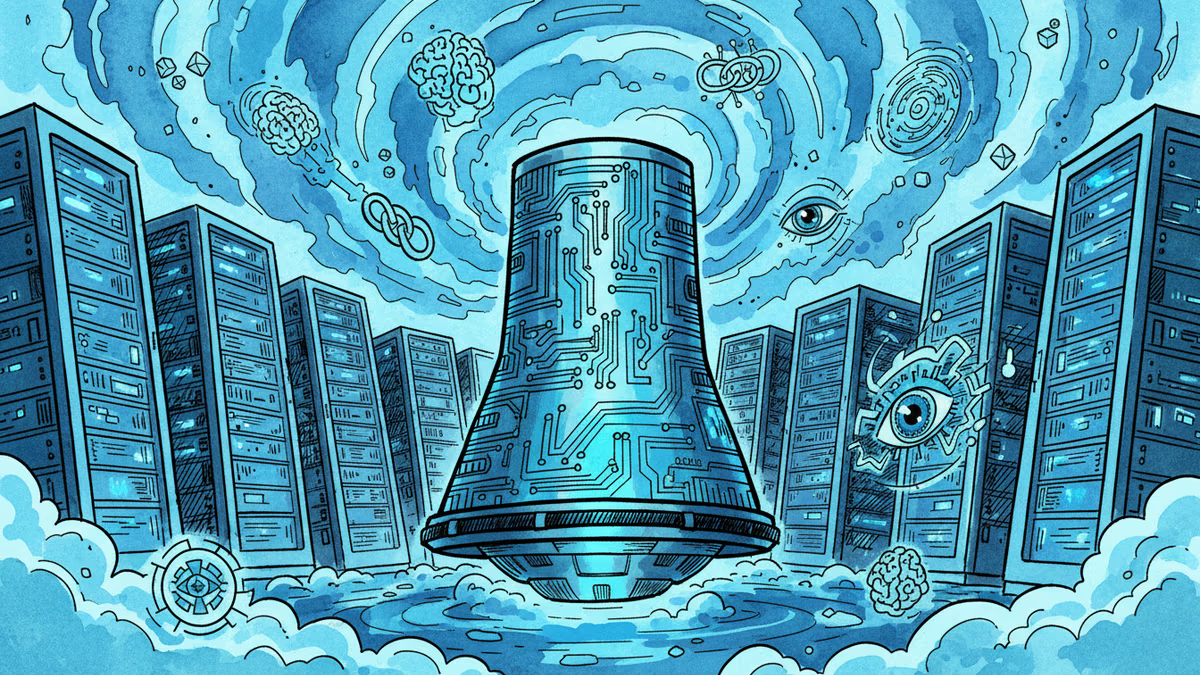
Bill Gates' Nuclear Startup Gets First Advanced Reactor Permit in a Decade
TerraPower receives groundbreaking approval to build America's first next-generation nuclear plant, targeting 2030 completion as AI data centers strain the grid
Ten years. That's how long America waited for someone to break ground on a new nuclear reactor. Now Bill Gates' TerraPower has done exactly that, securing the first federal permit for a next-generation nuclear plant that could reshape how we power the AI revolution.
Breaking the Nuclear Drought
The Nuclear Regulatory Commission's approval of TerraPower's Wyoming facility marks a watershed moment. This isn't just another power plant—it's the first commercial-scale advanced reactor to receive federal blessing, ending America's decade-long nuclear construction hiatus.
Construction began in June 2024, with 2030 targeted for completion. But here's what makes this different: TerraPower's sodium-cooled fast reactor uses liquid sodium instead of water for cooling. The result? Smaller footprint, enhanced safety features, and half the construction time of traditional reactors.
The AI Power Crunch

Timing couldn't be better. Google, Microsoft, and Amazon are scrambling to secure reliable power for their AI data centers, each consuming electricity equivalent to entire cities. Traditional renewables, while important, can't match the 24/7 reliability that AI workloads demand.
TerraPower isn't alone in this race. Companies like NuScale, X-energy, and Kairos Power are all developing small modular reactors (SMRs) with backing from major tech firms. The message is clear: the AI boom needs nuclear power.
The Regulatory Reality Check
Yet questions remain. The NRC approval process for advanced reactors is still evolving, and TerraPower's design represents uncharted territory. Critics point to cost overruns in traditional nuclear projects—Georgia's Vogtle expansion ballooned to $35 billion, more than double initial estimates.
Environmental groups remain divided. Some see advanced nuclear as essential for carbon reduction, while others worry about waste storage and safety risks. The Wyoming plant will serve as a real-world test case for these competing visions.
Authors
Related Articles
NRC approves first nuclear reactor in a decade. TerraPower's sodium-cooled design could reshape energy, but faces steep cost challenges.
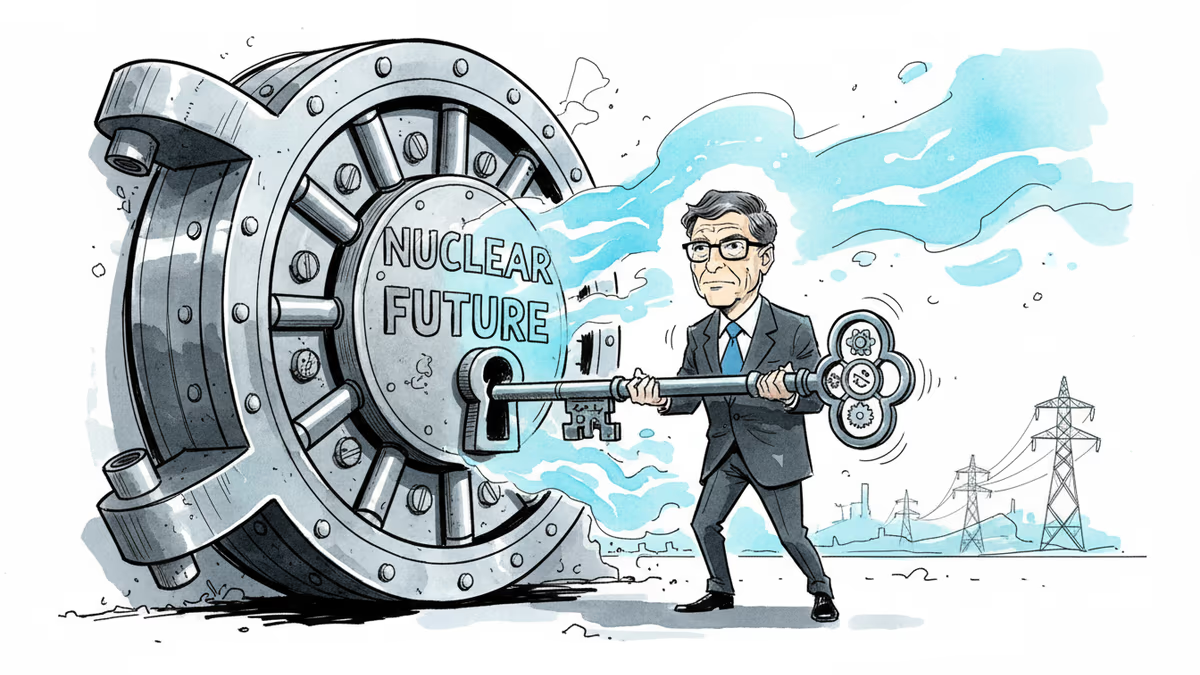
The US approves its first nuclear reactor construction in nearly a decade. Can TerraPower's radical sodium-cooled design reshape America's energy future?
HALEU fuel monopoly, safety deregulation concerns, and persistent cost challenges reveal the gap between nuclear ambitions and reality.
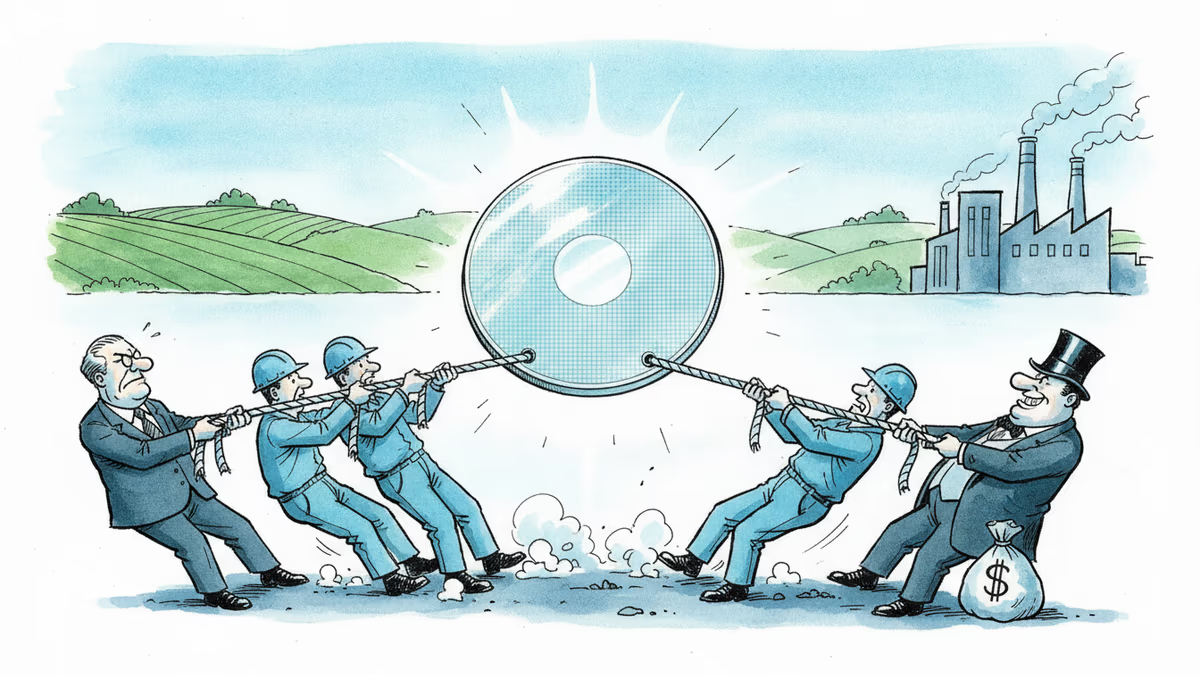
Samsung Electronics' union branch revealed that 84% of survey respondents oppose the government's roughly $290 billion (₩400 trillion) semiconductor megaproject in Gwangju. Government, management, the union and shareholders are all reading the same national project in sharply different ways.
NRC approves first nuclear reactor in a decade. TerraPower's sodium-cooled design could reshape energy, but faces steep cost challenges.
The US approves its first nuclear reactor construction in nearly a decade. Can TerraPower's radical sodium-cooled design reshape America's energy future?
HALEU fuel monopoly, safety deregulation concerns, and persistent cost challenges reveal the gap between nuclear ambitions and reality.
Samsung Electronics' union branch revealed that 84% of survey respondents oppose the government's roughly $290 billion (₩400 trillion) semiconductor megaproject in Gwangju. Government, management, the union and shareholders are all reading the same national project in sharply different ways.
Thoughts
Share your thoughts on this article
Sign in to join the conversation