
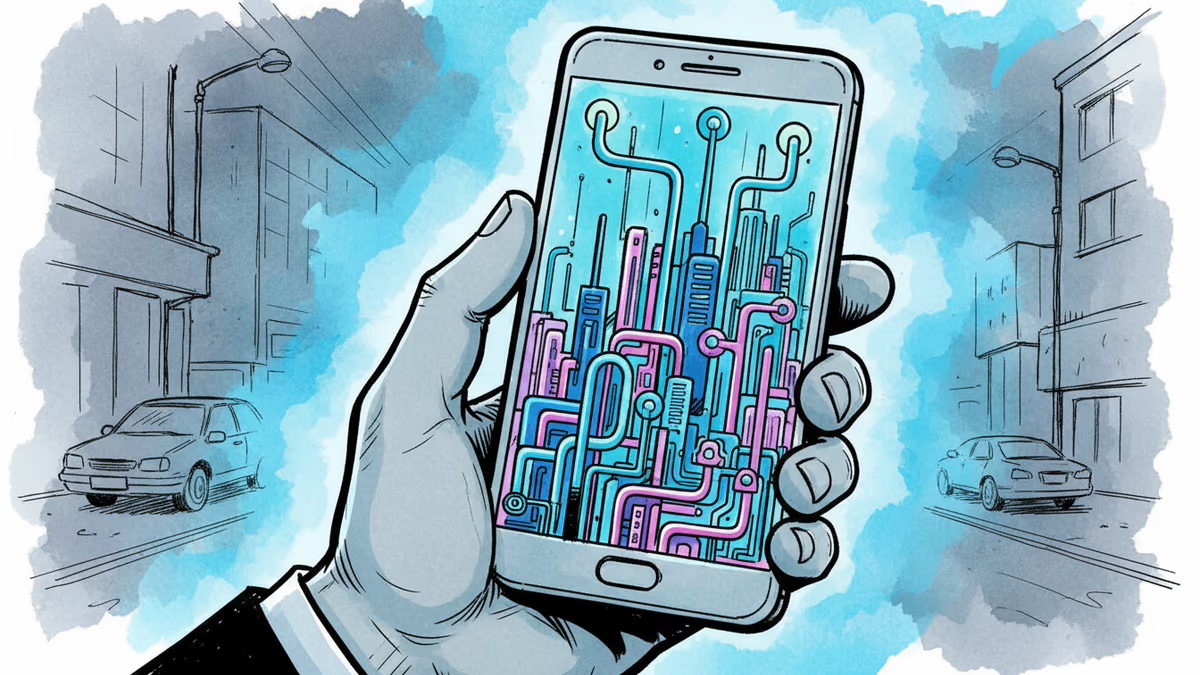
When Smartphones Meet Neon Signs
Tecno unveils smartphone concepts with real neon lighting and E Ink color-changing backs. Moving beyond simple aesthetics, these designs raise questions about the future of mobile personalization.
Imagine pulling out your phone and having it glow like a Times Square neon sign. Tecno's latest Pova Neon concept isn't just another RGB light show—it's actual neon technology crammed into a smartphone.
The Chinese manufacturer claims their device uses "ionized inert gas lighting technology," the same principle that makes those iconic neon signs buzz and glow in shop windows. This isn't LED trickery or OLED magic. It's real neon, miniaturized for your pocket.
Two Approaches to Color Revolution
Tecno's double reveal showcases two distinct philosophies. The Pova Neon goes for spectacle—genuine neon tubes embedded in the phone's rear, promising that authentic neon glow that's impossible to replicate with conventional lighting.
Meanwhile, the AI EInk takes a more subtle approach. Electronic ink technology covers the back panel, letting users change colors on demand. The killer feature? Point your camera at any object, and the phone's back mimics that exact color. Red rose becomes red phone. Blue sky becomes blue phone.
It's personalization taken to its logical extreme, but raises immediate questions about practicality.
The Battery Reality Check

Here's where physics crashes the party. Traditional neon signs aren't exactly known for energy efficiency, and smartphone batteries are already stretched thin. How long can a 2,000mAh battery power both your apps and a miniature neon display?
E Ink offers better prospects—the technology famously sips power, which is why e-readers last weeks on a single charge. But color E Ink still suffers from slow refresh rates and limited vibrancy compared to conventional displays.
Industry insiders are skeptical. "It's technically impressive, but commercially questionable," notes one mobile analyst who requested anonymity. "Consumers say they want unique designs, but they vote with their wallets for battery life and durability."
Beyond the Gimmick Factor
Tecno operates primarily in emerging markets—Africa, Southeast Asia, parts of Latin America—where flashy features often matter more than flagship specs. These aren't markets where users obsess over benchmark scores or camera sensor sizes. They want phones that stand out, that make a statement.
But even accounting for different market preferences, these concepts feel more like technology demonstrations than shipping products. The engineering challenges alone—heat management, durability, regulatory approval for gas-filled components—would make any product manager nervous.
The Personalization Arms Race
Yet there's something bigger happening here. As smartphones commoditize, manufacturers are desperately searching for new differentiation vectors. We've seen foldables, rollables, and now color-changing backs. Each represents an attempt to make phones feel personal again in an increasingly homogeneous market.
Apple perfected minimalism. Samsung pushed display technology. Google bet on computational photography. Now smaller players like Tecno are exploring sensory experiences—phones that don't just look different, but actually behave differently.
Authors
Related Articles
Complete breakdown of iPhone 17 series with 5 models from $599-$1,199. Analysis of Apple's new Air model strategy and what it means for smartphone market competition.
iPhone 17E starts at $599 with 256GB storage and MagSafe compatibility. How Apple's budget push threatens Samsung and Chinese brands in the competitive mid-range market.
After 13 years, Finland's Jolla launches new smartphone with Linux-based OS, no Google services. 10,000 pre-orders signal growing demand for digital sovereignty in post-Trump tech landscape.
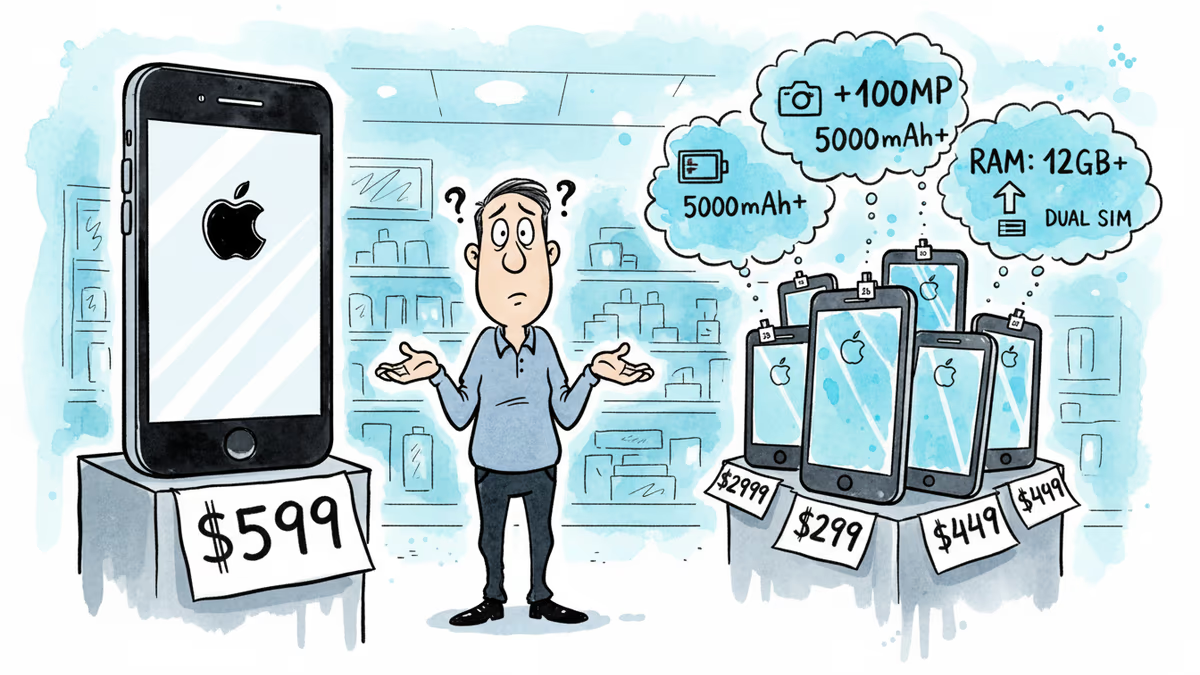
Apple launches iPhone 17e at $599 with MagSafe but keeps 60Hz display. Budget Android phones offer better specs for less. Who's this phone really for?
Complete breakdown of iPhone 17 series with 5 models from $599-$1,199. Analysis of Apple's new Air model strategy and what it means for smartphone market competition.
iPhone 17E starts at $599 with 256GB storage and MagSafe compatibility. How Apple's budget push threatens Samsung and Chinese brands in the competitive mid-range market.
After 13 years, Finland's Jolla launches new smartphone with Linux-based OS, no Google services. 10,000 pre-orders signal growing demand for digital sovereignty in post-Trump tech landscape.
Apple launches iPhone 17e at $599 with MagSafe but keeps 60Hz display. Budget Android phones offer better specs for less. Who's this phone really for?
Thoughts
Share your thoughts on this article
Sign in to join the conversation