
iPhone 17 Lineup Drops: Apple's 5-Model Strategy Explained
Complete breakdown of iPhone 17 series with 5 models from $599-$1,199. Analysis of Apple's new Air model strategy and what it means for smartphone market competition.
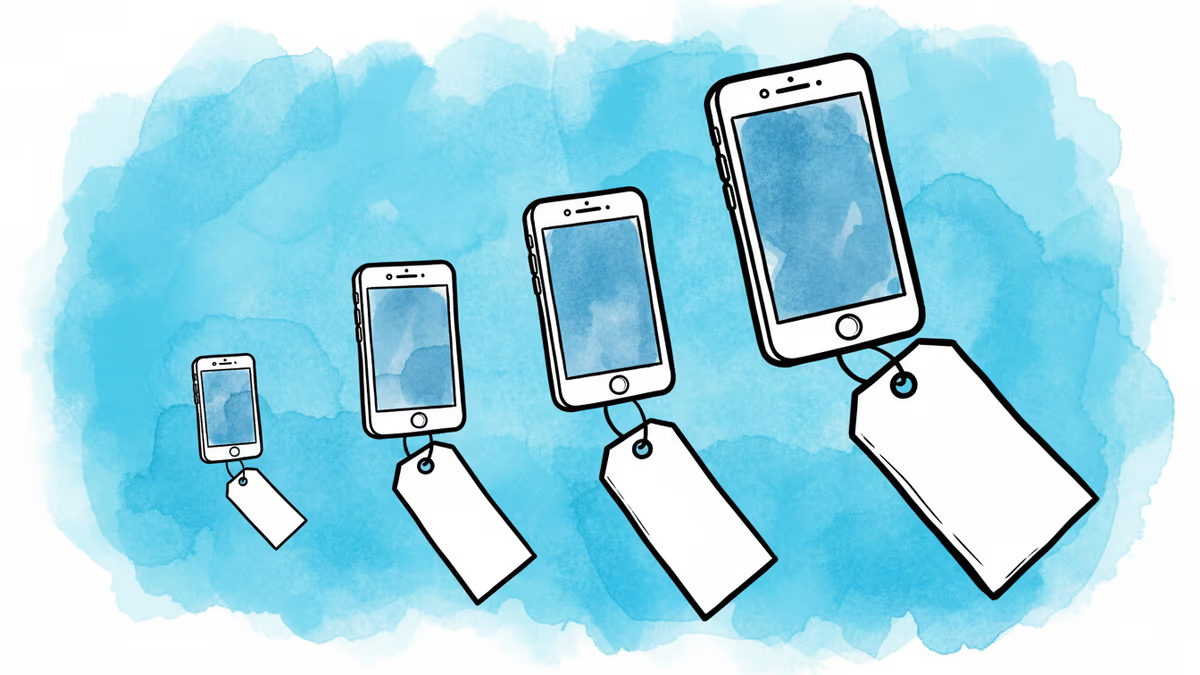
Five models. $599 to $1,199. Apple just dropped the most diverse iPhone lineup in company history, and the message is crystal clear: there's now an iPhone for every wallet and every lifestyle.
The standout? The iPhone Air at $999. It's the first iPhone without a number in its name since the original, and at 5.64mm thick and 165 grams, it's the thinnest, lightest iPhone ever made. Apple's betting that "Air" means something again—not just marketing fluff.
The Psychology of Five Choices
This isn't just about more options. It's about behavioral economics. Apple's created a perfect price ladder with $200 steps between each model:
- iPhone 17e ($599): The gateway drug
- iPhone 17 ($799): The sensible choice
- iPhone Air ($999): The lifestyle statement
- iPhone 17 Pro ($1,099): The professional tool
- iPhone 17 Pro Max ($1,199): The everything device
That $200 gap? It's small enough to justify "just one more step up" but large enough to protect margins. Classic Apple.
What Changed (And What Didn't)
Here's where it gets interesting. Apple finally brought 120Hz ProMotion to non-Pro models—except the 17e. Android phones have had high refresh rates in budget models for years, but Apple held back to protect Pro model sales.

Now they're using it as a differentiation tool against their own cheapest model rather than against competitors. The 17e's stuck at 60Hz while everything else gets the smooth scrolling experience.
The iPhone Air makes fascinating compromises. It keeps the 48MP main and ultrawide cameras but loses the telephoto lens. Apple's saying: "We'll make it impossibly thin, but photography stays premium."
Market Impact: The Squeeze Play
This lineup puts pressure on everyone. Samsung's Galaxy S series suddenly looks thick and heavy next to the Air. Google's Pixel lineup lacks this kind of price diversity. Chinese brands like Xiaomi and OnePlus face a new challenge: competing against a $599 iPhone that's actually good.
The enterprise angle matters too. IT departments now have clear iPhone tiers: 17e for basic users, 17 for standard employees, Air for executives who care about aesthetics, Pro models for power users.
Wireless carriers are scrambling to adjust their promotional strategies. How do you push the most expensive model when there are now four cheaper alternatives?
The Air Gamble
The iPhone Air represents Apple's biggest design risk in years. At 5.64mm, it's thinner than most people's comfort zone. Early hands-on reports suggest it feels "almost fragile" despite the titanium construction.
But Apple's counting on the Instagram factor. This phone is designed to be photographed, to be noticed, to start conversations. It's the anti-Pro Max—small, light, and unapologetically premium.
The question: Will buyers accept the trade-offs? No telephoto camera, smaller battery, potential durability concerns. Apple's betting that for enough people, being the thinnest phone in the room matters more than having the longest zoom.
Authors
Related Articles
After 15 years of fragmented mobile messaging, Apple and Google are rolling out end-to-end encrypted RCS messaging between iPhones and Android devices. Here's what changed, why it took so long, and what it means for your privacy.
Apple agreed to pay $250 million to settle claims it misled iPhone 16 buyers about Apple Intelligence features. What this means for consumers, Big Tech marketing, and the AI industry.
Apple quietly removed the entry-level $599 Mac Mini, raising the starting price to $799 — just one day after Tim Cook warned of chip supply constraints on the earnings call.
Apple names John Ternus, its hardware engineering chief, as the next CEO. The shift from operator to product person signals where Apple thinks its next decade of growth will come from — and raises real questions about what comes next.
After 15 years of fragmented mobile messaging, Apple and Google are rolling out end-to-end encrypted RCS messaging between iPhones and Android devices. Here's what changed, why it took so long, and what it means for your privacy.
Apple agreed to pay $250 million to settle claims it misled iPhone 16 buyers about Apple Intelligence features. What this means for consumers, Big Tech marketing, and the AI industry.
Apple quietly removed the entry-level $599 Mac Mini, raising the starting price to $799 — just one day after Tim Cook warned of chip supply constraints on the earnings call.
Apple names John Ternus, its hardware engineering chief, as the next CEO. The shift from operator to product person signals where Apple thinks its next decade of growth will come from — and raises real questions about what comes next.
Thoughts
Share your thoughts on this article
Sign in to join the conversation