
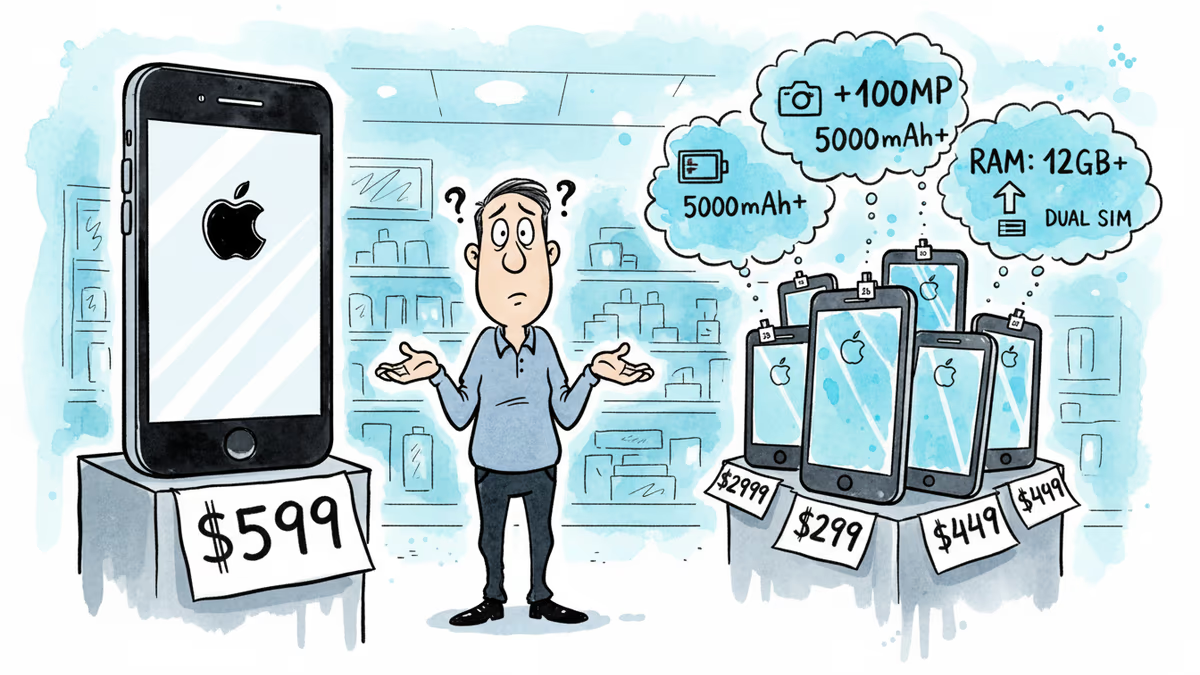
Apple's $599 Gamble: Is the iPhone 17e Worth It?
Apple launches iPhone 17e at $599 with MagSafe but keeps 60Hz display. Budget Android phones offer better specs for less. Who's this phone really for?
$599 Twice: Apple's Pricing Puzzle Continues
Apple just did it again. After the iPhone 16e was widely panned for questionable value at $599, the company has launched the iPhone 17e at... $599. The price stays the same, but Apple threw in one feature that was mysteriously missing before: MagSafe.
Announced via press release today ahead of Wednesday's "Special Apple Experience" in New York, the iPhone 17e opens for preorder immediately and hits stores March 11th. It's Apple's first major hardware launch of 2026, and it raises the same question as last year: who exactly is this phone for?
The Selective Upgrade Strategy
Apple's approach with the iPhone 17e reveals a calculated game of feature chess. What they included—and crucially, what they didn't—tells the whole story.
What's New:
- MagSafe wireless charging (15W)
- A19 chipset (minus one GPU core)
- 256GB base storage (up from 128GB)
- "Soft Pink" color option
- Faster C1X 5G modem
Still Missing:
- 120Hz ProMotion display (stuck at 60Hz)
- Dynamic Island (old-school notch remains)
- Ultra-wide or telephoto cameras
- Camera Control button
- Latest connectivity (Bluetooth 6, Wi-Fi 7)
The display situation is particularly puzzling. Budget Android phones costing $200 routinely offer 120Hz refresh rates, yet Apple's $599 device remains locked at 60Hz. No always-on display either.

The Competition Heats Up
Timing is everything in tech, and Apple's chosen an interesting moment. The iPhone 17e launches March 11th, just days after Google's Pixel 10a hits shelves on March 5th at $499. Samsung's Galaxy S25 FE, frequently discounted below $500, offers triple cameras and that coveted 120Hz display.
The math is simple: competitors offer more features for $100 less. Apple's betting that brand loyalty and ecosystem lock-in will overcome the spec sheet disadvantage.
The Ecosystem Trap Theory
Here's what Apple likely knows that we don't: conversion rates. Industry analysts suggest that 60-70% of iPhone "e" series buyers eventually upgrade to flagship models within two years. If true, the iPhone 17e isn't really competing with the Pixel 10a—it's competing with the urge to leave Apple's ecosystem entirely.
The MagSafe addition supports this theory. It's not just about wireless charging; it's about accessory investment. Once you've bought a few MagSafe chargers and cases, switching to Android becomes more expensive than just upgrading within Apple's lineup.
The Budget Buyer's Dilemma
For consumers, the iPhone 17e presents a classic trade-off scenario. You're paying a $100 premium for:
- Guaranteed 5+ years of iOS updates
- Seamless integration with other Apple devices
- Access to the MagSafe accessory ecosystem
- The A19 chipset (still faster than most Android competitors)
But you're sacrificing:
- A smoother 120Hz display experience
- Versatile camera systems
- Often superior hardware specs
- $100 that could go toward accessories or savings
Authors
Related Articles
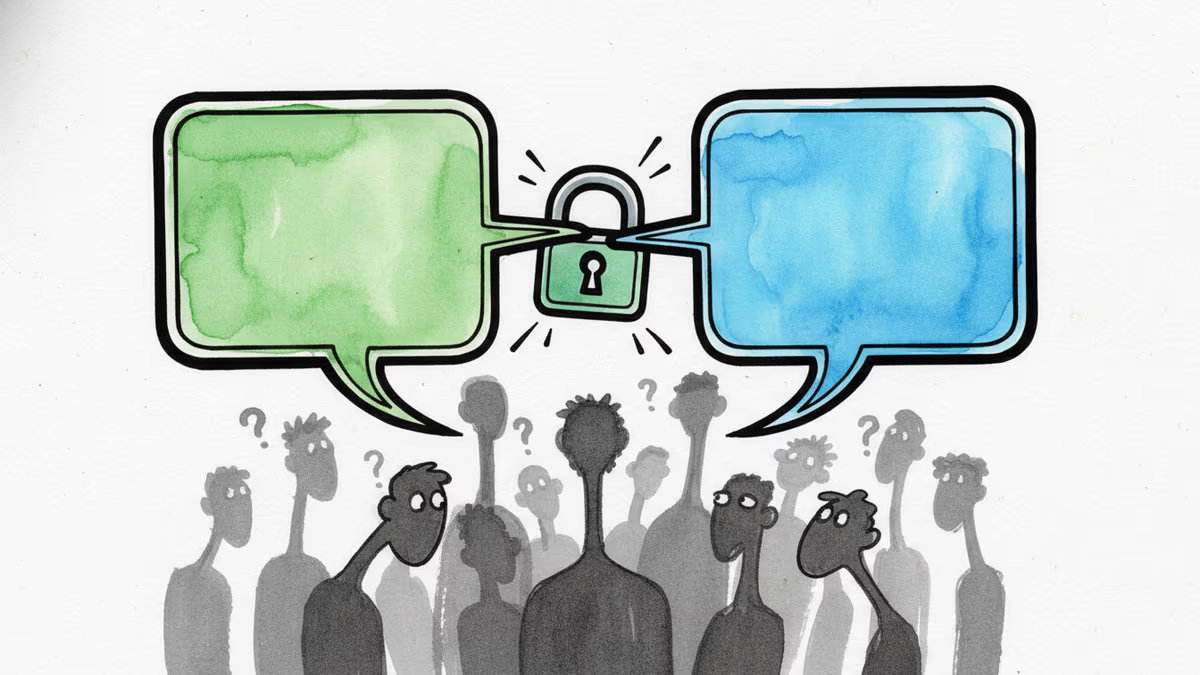
After 15 years of fragmented mobile messaging, Apple and Google are rolling out end-to-end encrypted RCS messaging between iPhones and Android devices. Here's what changed, why it took so long, and what it means for your privacy.
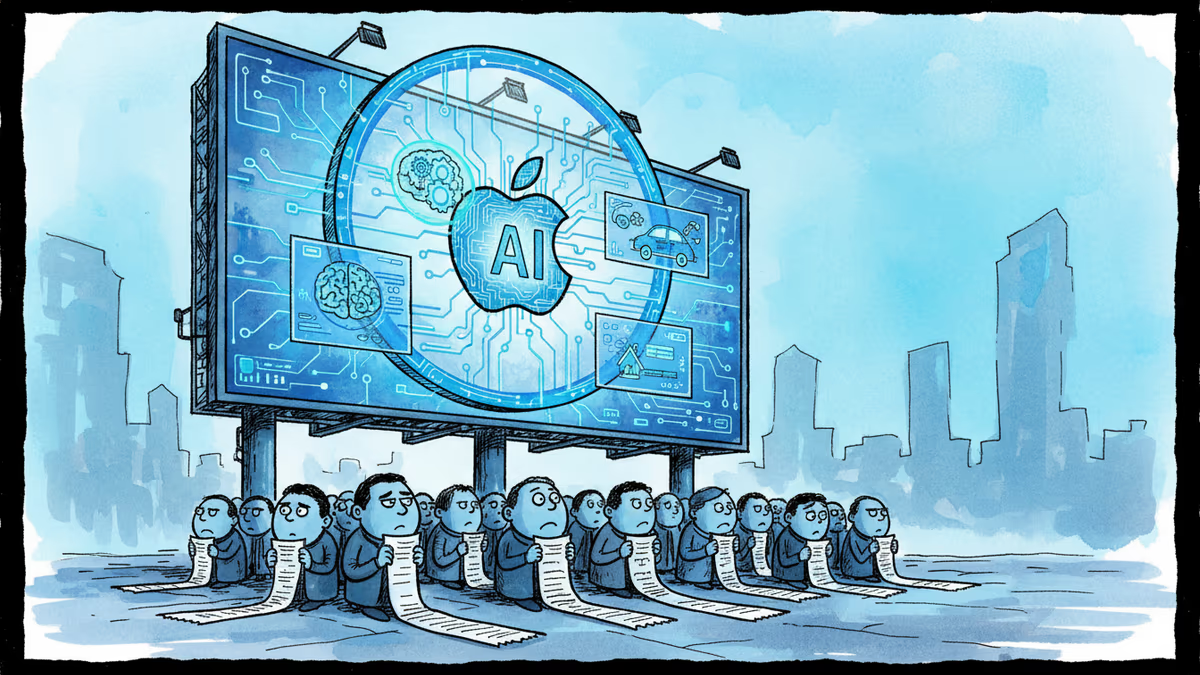
Apple agreed to pay $250 million to settle claims it misled iPhone 16 buyers about Apple Intelligence features. What this means for consumers, Big Tech marketing, and the AI industry.
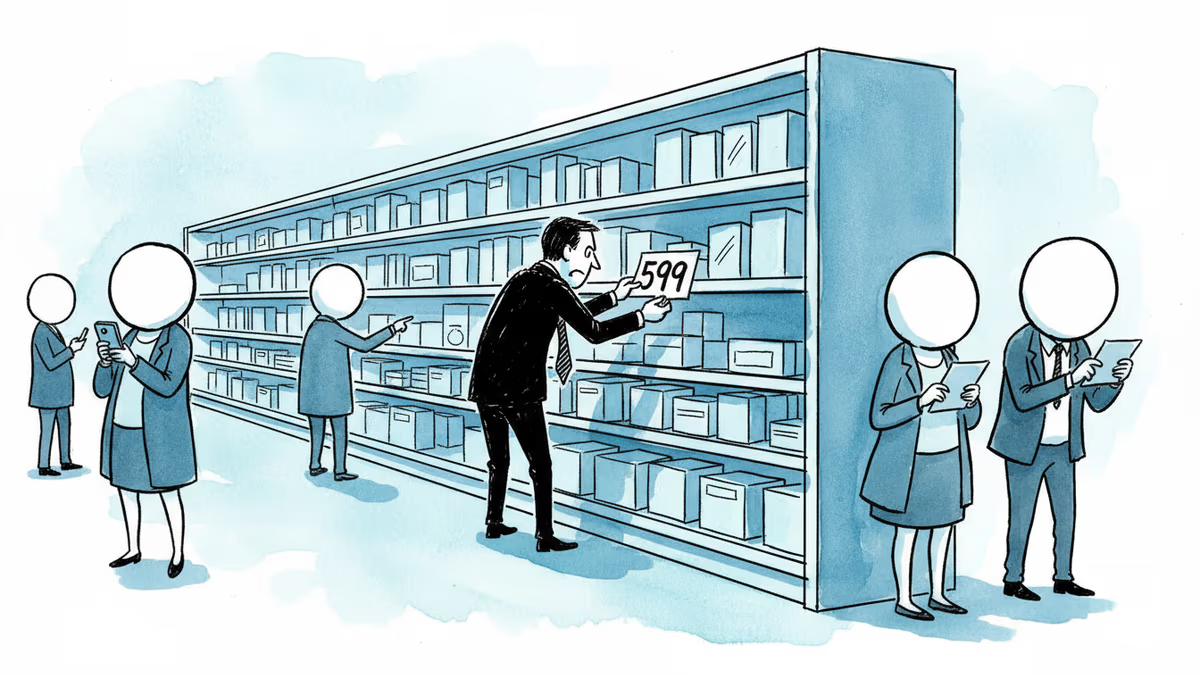
Apple quietly removed the entry-level $599 Mac Mini, raising the starting price to $799 — just one day after Tim Cook warned of chip supply constraints on the earnings call.

Apple names John Ternus, its hardware engineering chief, as the next CEO. The shift from operator to product person signals where Apple thinks its next decade of growth will come from — and raises real questions about what comes next.
After 15 years of fragmented mobile messaging, Apple and Google are rolling out end-to-end encrypted RCS messaging between iPhones and Android devices. Here's what changed, why it took so long, and what it means for your privacy.
Apple agreed to pay $250 million to settle claims it misled iPhone 16 buyers about Apple Intelligence features. What this means for consumers, Big Tech marketing, and the AI industry.
Apple quietly removed the entry-level $599 Mac Mini, raising the starting price to $799 — just one day after Tim Cook warned of chip supply constraints on the earnings call.
Apple names John Ternus, its hardware engineering chief, as the next CEO. The shift from operator to product person signals where Apple thinks its next decade of growth will come from — and raises real questions about what comes next.
Thoughts
Share your thoughts on this article
Sign in to join the conversation