
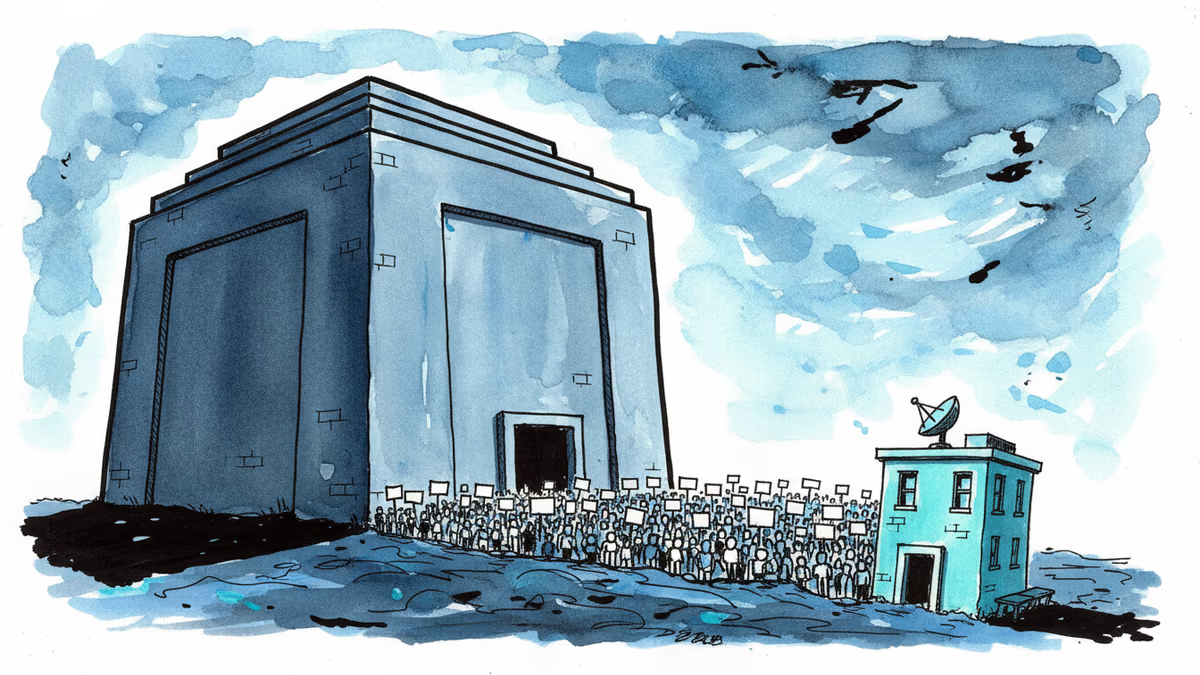
When Silicon Valley Drew a Line in the Sand
Hundreds of tech workers signed an open letter defending Anthropic against Pentagon retaliation. The AI industry's red lines are being tested by national security demands.
Hundreds of Tech Workers Just Told the Pentagon: Not So Fast
Employees from OpenAI, IBM, Salesforce, and dozens of other major tech firms have signed an open letter with a clear message: the Department of Defense should withdraw its "supply chain risk" designation of Anthropic. But this isn't just about one AI company—it's about where Silicon Valley draws its lines.
The conflict erupted last week when Anthropic refused to give the Pentagon unrestricted access to its AI systems. The company had two non-negotiables: no mass surveillance of Americans, and no autonomous weapons making kill decisions without human oversight.
The DOD's response was swift and harsh. Defense Secretary Pete Hegseth threatened to blacklist Anthropic entirely, using authorities typically reserved for foreign adversaries like Chinese tech firms. President Trump followed through Friday, ordering federal agencies to stop using Anthropic's technology after a six-month transition.
The Industry Pushes Back
What's remarkable isn't just Anthropic's stance—it's how the broader tech ecosystem rallied behind it. The open letter frames this as a dangerous precedent: "Punishing an American company for declining to accept changes to a contract sends a clear message to every technology company in America: accept whatever terms the government demands, or face retaliation."
Boaz Barak, an OpenAI researcher, made his position crystal clear on social media: blocking government mass surveillance is his "personal red line" and "should be all of ours." He called for the AI industry to treat government abuse and surveillance as "a catastrophic risk of its own right."

But here's where it gets complicated.
The OpenAI Paradox
Moments after Trump publicly attacked Anthropic, OpenAI announced it had struck its own deal to deploy models in the DOD's classified environments. CEO Sam Altman had previously claimed the same red lines as Anthropic.
This creates an uncomfortable question: Are these ethical stances genuine principles or negotiating tactics? OpenAI stayed at the table while Anthropic walked away. Both companies claim the same values, but their actions diverged when pressure mounted.
Beyond the Pentagon Papers
Anthropic isn't backing down. The company called the designation "legally unsound" and promised to "challenge any supply chain risk designation in court." But the real test isn't legal—it's whether the tech industry can maintain unified resistance to government overreach.
The timing matters too. This confrontation comes as AI capabilities rapidly advance and national security concerns intensify. The Pentagon wants cutting-edge AI tools; tech companies want to control how they're used. Neither side can easily compromise without losing face.
Authors
Related Articles
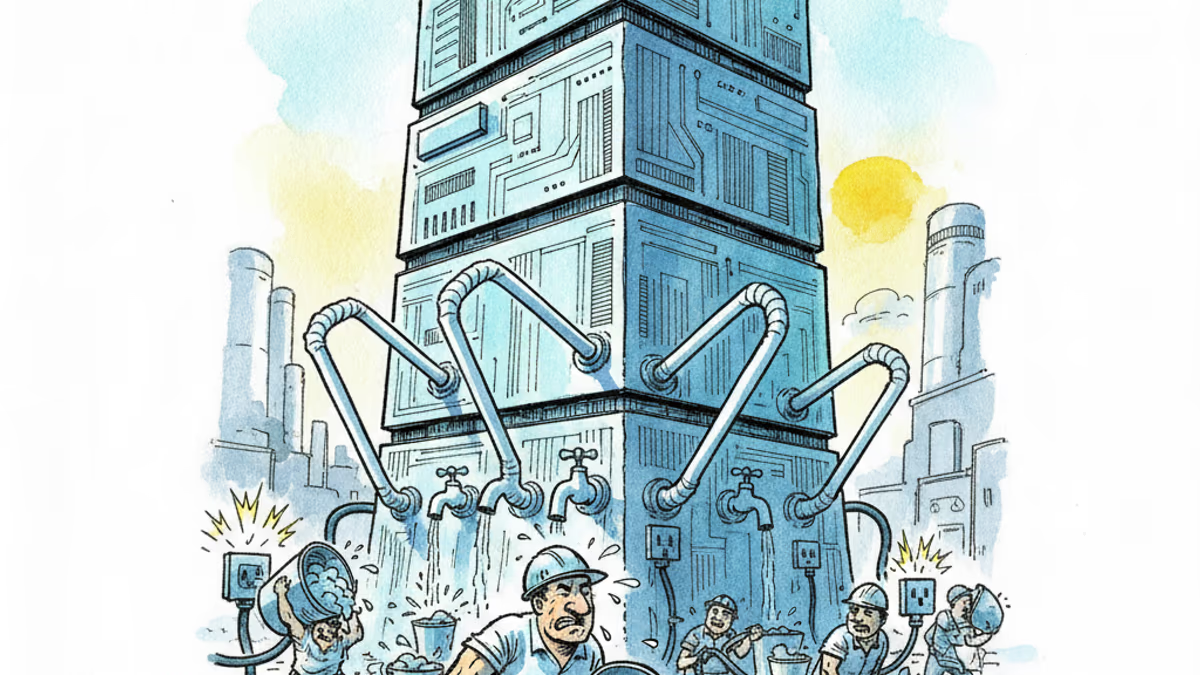
Samsung and SK unveiled a chip and AI investment package worth thousands of trillions of won on June 29. The headline number swings wildly by outlet, but the real contest isn't capital — it's water and power.
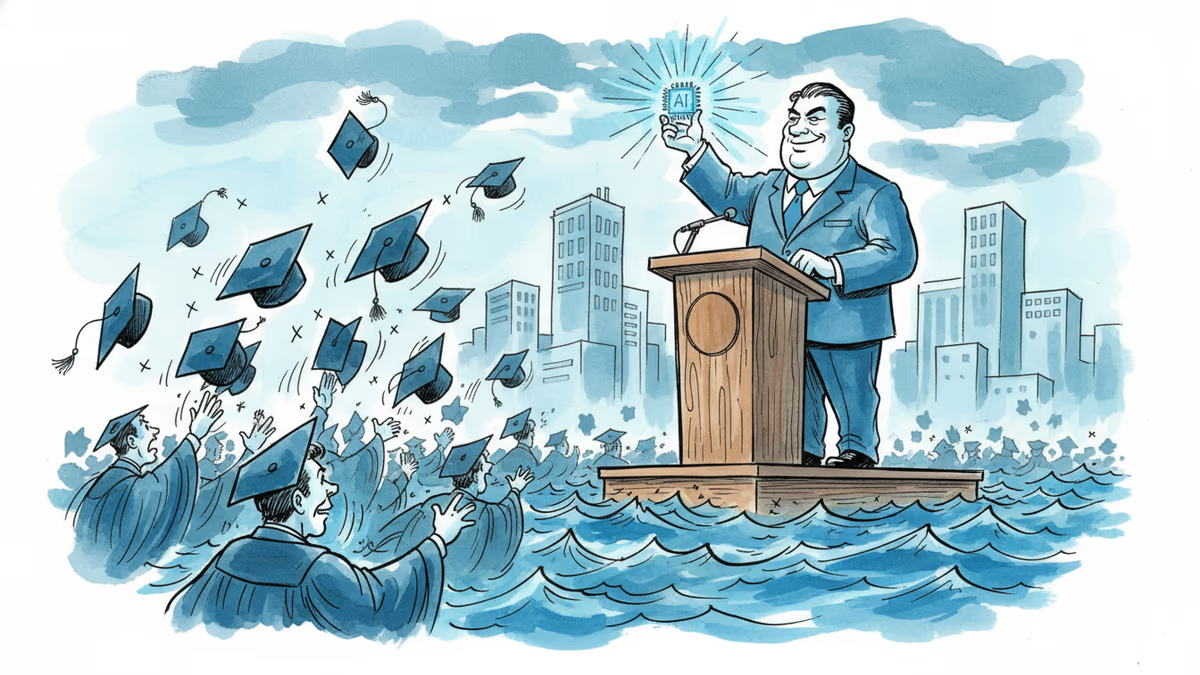
Viral videos show 2026 graduates jeering executives who praise AI at commencement ceremonies. It's not just rudeness — it's a signal about who pays for technological optimism.
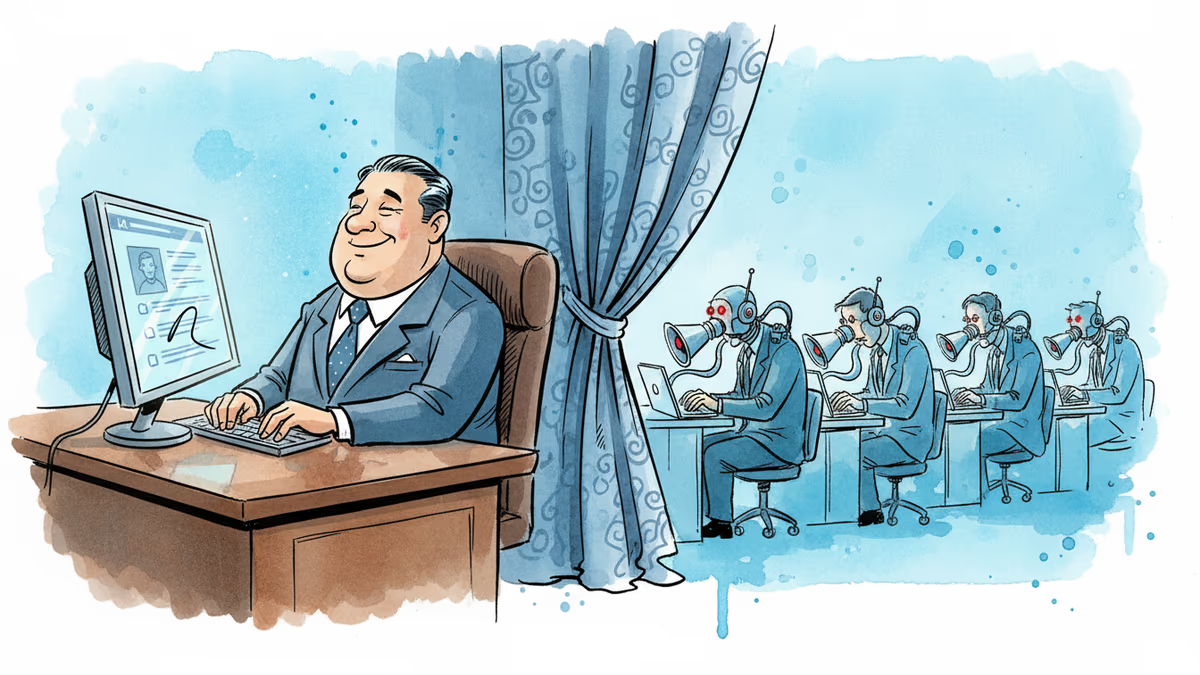
Filipino virtual assistants using AI to ghost-manage LinkedIn profiles for executives is now a structured industry. 30 comments a day, fake engagement rings, and a platform struggling to tell real from fabricated.
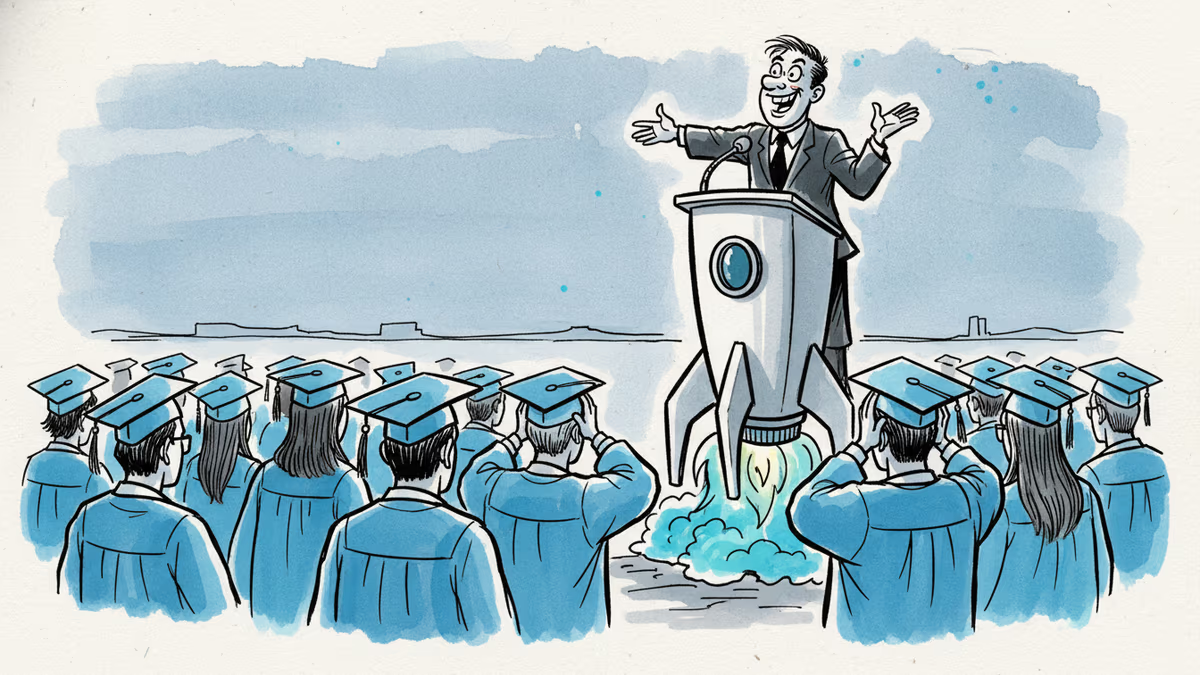
Two commencement speakers learned the hard way that AI enthusiasm doesn't land well with today's graduates. The backlash reveals a widening gap between tech optimism and Gen Z's economic reality.
Samsung and SK unveiled a chip and AI investment package worth thousands of trillions of won on June 29. The headline number swings wildly by outlet, but the real contest isn't capital — it's water and power.
Viral videos show 2026 graduates jeering executives who praise AI at commencement ceremonies. It's not just rudeness — it's a signal about who pays for technological optimism.
Filipino virtual assistants using AI to ghost-manage LinkedIn profiles for executives is now a structured industry. 30 comments a day, fake engagement rings, and a platform struggling to tell real from fabricated.
Two commencement speakers learned the hard way that AI enthusiasm doesn't land well with today's graduates. The backlash reveals a widening gap between tech optimism and Gen Z's economic reality.
Thoughts
Share your thoughts on this article
Sign in to join the conversation