
The Silicon Valley Names in Epstein's Final Files
DOJ releases 3.5 million pages of Epstein documents revealing extensive tech industry connections. What do these relationships tell us about power networks?
3.5 million pages. That's how much the Department of Justice has now released about Jeffrey Epstein's network, and the final tranche paints an uncomfortable picture for Silicon Valley's elite.
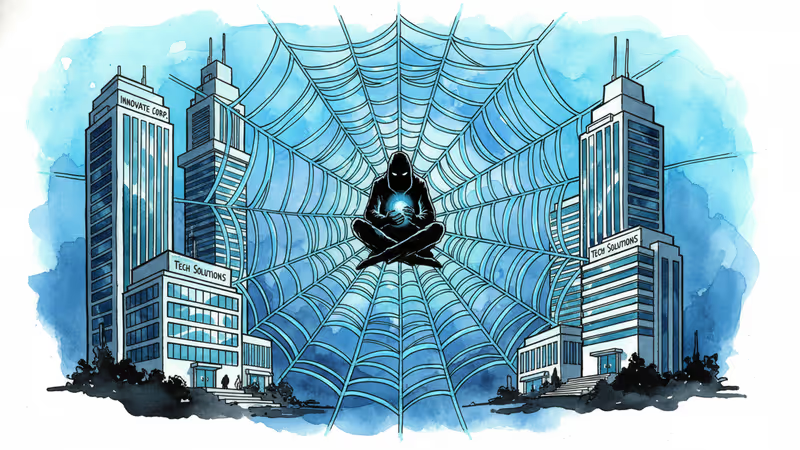
The documents, released under the Epstein Files Transparency Act, reveal something more troubling than individual misconduct: they show how deeply the convicted sex offender had woven himself into the fabric of the tech industry's power structure. From Bill Gates to Elon Musk, from Reid Hoffman to Peter Thiel, the files document a web of relationships that persisted even after Epstein's 2008 conviction for solicitation of prostitution involving minors.
The Numbers Tell a Story
Reid Hoffman, LinkedIn's founder, appears in 2,658 files—more than any other tech figure. The documents show him discussing visits not just to Epstein's infamous island, but also his New Mexico ranch and Manhattan townhouse. Scheduling emails reveal meetings that included former MIT Media Lab director Joi Ito, often framed around philanthropic activities.
Bill Gates follows closely with 2,592 mentions. Beyond the previously reported meetings, new details emerge: calendar alerts for lunches with both Epstein and Woody Allen, Skype calls, and photos found in Epstein's archive. Most disturbing are draft emails Epstein wrote to himself in 2013, making unsubstantiated claims about Gates—allegations a Gates spokesperson called "absolutely absurd and completely false."
Peter Thiel appears in 2,281 files, with correspondence showing a relationship that extended from 2014 to at least 2019. The exchanges reveal more than social meetings—Thiel sought Epstein's thoughts on the presidential race, while Epstein offered to help fund Thiel's secret lawsuit against Gawker. Their communications included references to using Signal, the encrypted messaging app.
Even Elon Musk, who once attacked Trump for Epstein connections, appears in 1,116 files. The documents show Musk helping Epstein explore solar installations for his Caribbean island and New Mexico ranch through his company SolarCity.
Why These Relationships Matter
The timing is crucial. These weren't youthful indiscretions or pre-conviction naivety. Many of these documented interactions occurred years after Epstein's 2008 guilty plea became public knowledge. The tech leaders involved weren't small-time entrepreneurs seeking connections—they were established billionaires with their own power networks.

What emerges isn't just individual poor judgment, but a pattern of how Silicon Valley's elite operated. The same industry that preaches transparency and disruption maintained relationships with a convicted sex offender, often justified through philanthropic cover stories.
The MIT Media Lab connection appears repeatedly throughout the files, serving as a seemingly respectable venue for these relationships. Hoffman has acknowledged his visits were tied to fundraising for the lab, while other tech figures used similar philanthropic justifications.
The Power Network Question
These documents raise uncomfortable questions about how Silicon Valley's power structure actually works. The same executives who make decisions affecting billions of users worldwide were embedded in a network centered around a convicted criminal.
Hoffman has since expressed remorse, writing in 2019 that he "helped to repair [Epstein's] reputation and perpetuate injustice." He's called for full transparency and prosecution of abusers. Gates has similarly acknowledged his regret about the meetings.
But the pattern suggests something systemic. These weren't isolated lapses in judgment—they represent how Silicon Valley's elite networked, shared information, and maintained influence. The files show Epstein positioning himself as a connector, someone who could facilitate introductions and provide advice on everything from business deals to political campaigns.
The Broader Implications
For an industry built on the promise of democratizing information and disrupting traditional power structures, these revelations are particularly damaging. Silicon Valley has long portrayed itself as different from Wall Street or Washington—more ethical, more forward-thinking, more accountable to users rather than traditional power brokers.
The Epstein files suggest a different reality: tech leaders operating within the same elite networks they claim to be disrupting. The same platforms that amplify calls for transparency and accountability were built by executives who maintained relationships with a convicted sex offender well into the 2010s.
The international implications are also significant. These tech leaders shape global digital infrastructure, influence regulatory discussions worldwide, and control platforms used by billions. Their judgment in personal relationships inevitably raises questions about their judgment in corporate governance.
Authors
Related Articles
Indian venture capital has quietly displaced Silicon Valley in its own backyard. Only one American VC made India's top 10 investor list last year. Here's why that matters beyond India.
After two weeks of witnesses calling him a liar, OpenAI CEO Sam Altman testified in his own defense, claiming Elon Musk tried to kill the company twice.

OpenAI CEO Sam Altman's San Francisco residence was attacked twice in three days — first a Molotov cocktail, then a shooting. What does this say about tech power, public anger, and the real-world risks facing AI leaders?
Grammarly rebranded as Superhuman, betting it can evolve from a spell-checker into a full AI productivity platform. But in a market dominated by Microsoft and Google, is there room for an independent player?
Indian venture capital has quietly displaced Silicon Valley in its own backyard. Only one American VC made India's top 10 investor list last year. Here's why that matters beyond India.
After two weeks of witnesses calling him a liar, OpenAI CEO Sam Altman testified in his own defense, claiming Elon Musk tried to kill the company twice.
OpenAI CEO Sam Altman's San Francisco residence was attacked twice in three days — first a Molotov cocktail, then a shooting. What does this say about tech power, public anger, and the real-world risks facing AI leaders?
Grammarly rebranded as Superhuman, betting it can evolve from a spell-checker into a full AI productivity platform. But in a market dominated by Microsoft and Google, is there room for an independent player?
Thoughts
Share your thoughts on this article
Sign in to join the conversation