
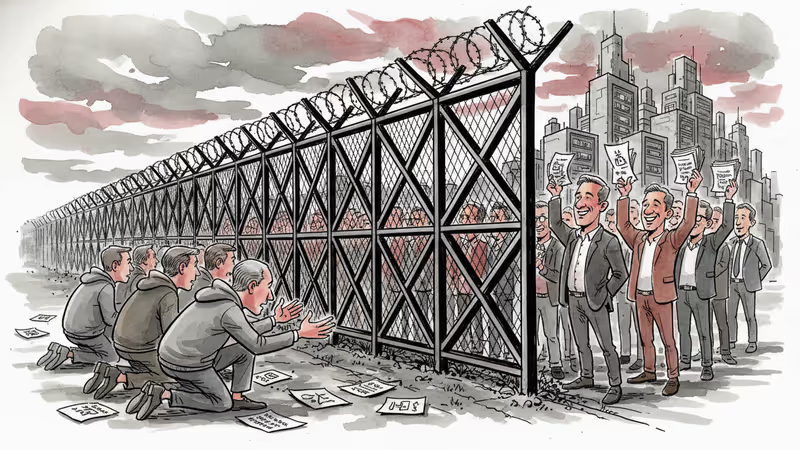
Silicon Valley's Power Players Face a Choice: Speak Up or Stay Silent
Reid Hoffman urges tech moguls to stop appeasing Trump after Border Patrol killings. The call exposes Silicon Valley's struggle between political neutrality and moral responsibility amid government dependencies.
Over 1,100 tech workers have signed a petition demanding their CEOs take a public stand. Yet most of those CEOs are still walking a careful tightrope, weighing moral responsibility against business interests.
LinkedIn co-founder Reid Hoffman delivered a blunt message to his Silicon Valley peers: "We can't bend the knee to Trump. We can't shrink away and hope the crisis fades. Hope without action is not a strategy—it's an invitation for Trump to trample whatever he can see, including our own business and security interests."
The Careful Dance of Tech Leadership
The killing of two American citizens by Border Patrol agents has exposed Silicon Valley's political fault lines. While venture capitalist Vinod Khosla called the administration "conscienceless," most tech CEOs have tried to thread the needle—expressing concern about the incidents while carefully distancing themselves from direct criticism of President Trump.
OpenAI's Sam Altman, Apple's Tim Cook, and Anthropic's Dario Amodei all voiced concerns in leaked internal memos. But they were quick to separate their opposition to these specific incidents from any broader critique of the administration. This distinction is exactly what Hoffman wants to eliminate.
Cook's actions perfectly illustrate this delicate balancing act. Hours after writing an internal memo saying he was "heartbroken" and calling for "de-escalation," he attended an exclusive screening of First Lady Melania Trump's documentary—right after ICE shot Alex Pretti, one of the American victims.
The Government Contract Dilemma

The hesitation isn't just about politics—it's about money. Most major tech companies depend heavily on federal contracts, favorable AI regulations, and tariff policies that affect their bottom lines. The stakes are enormous, running into billions of dollars in government business.
OpenAI learned this lesson the hard way last November when its CFO suggested the company wanted federal loan guarantees for better borrowing rates, only to quickly walk back the statement. The incident highlighted how intertwined tech companies have become with government financing and policy decisions.
This dependency creates what Hoffman calls a false choice. He argues that tech leaders have significant power "and sitting on that power is not good for business. It's also not neutrality. It's a choice."
The Employee Pressure Campaign
The petition from tech workers isn't just asking for statements. They want concrete action: calls to the White House demanding ICE leave U.S. cities, cancellation of all company contracts with ICE, and public condemnation of what they call "ICE's violence."
This bottom-up pressure creates a different dynamic than the top-down political calculations of executives. While leaders like Elon Musk and Keith Rabois remain vocal Trump supporters, many others find themselves caught between employee demands and business realities.
The Neutrality Myth
Hoffman's intervention challenges Silicon Valley's long-held belief in political neutrality. But as recent events show, neutrality itself has become a political position. When American citizens are killed by federal agents, staying silent sends its own message.
The tech industry's influence extends far beyond its products. These companies shape public discourse, influence elections through their platforms, and hold unprecedented power over information flow. In this context, the claim of political neutrality becomes increasingly hollow.
Authors
Related Articles
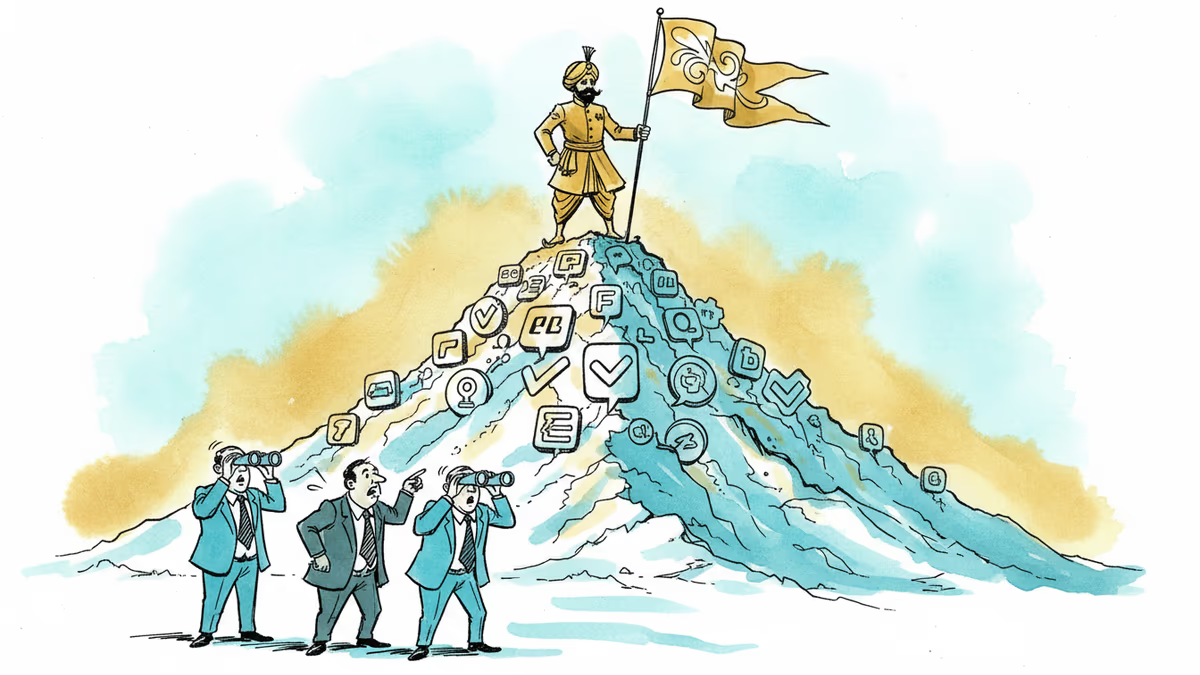
Indian venture capital has quietly displaced Silicon Valley in its own backyard. Only one American VC made India's top 10 investor list last year. Here's why that matters beyond India.
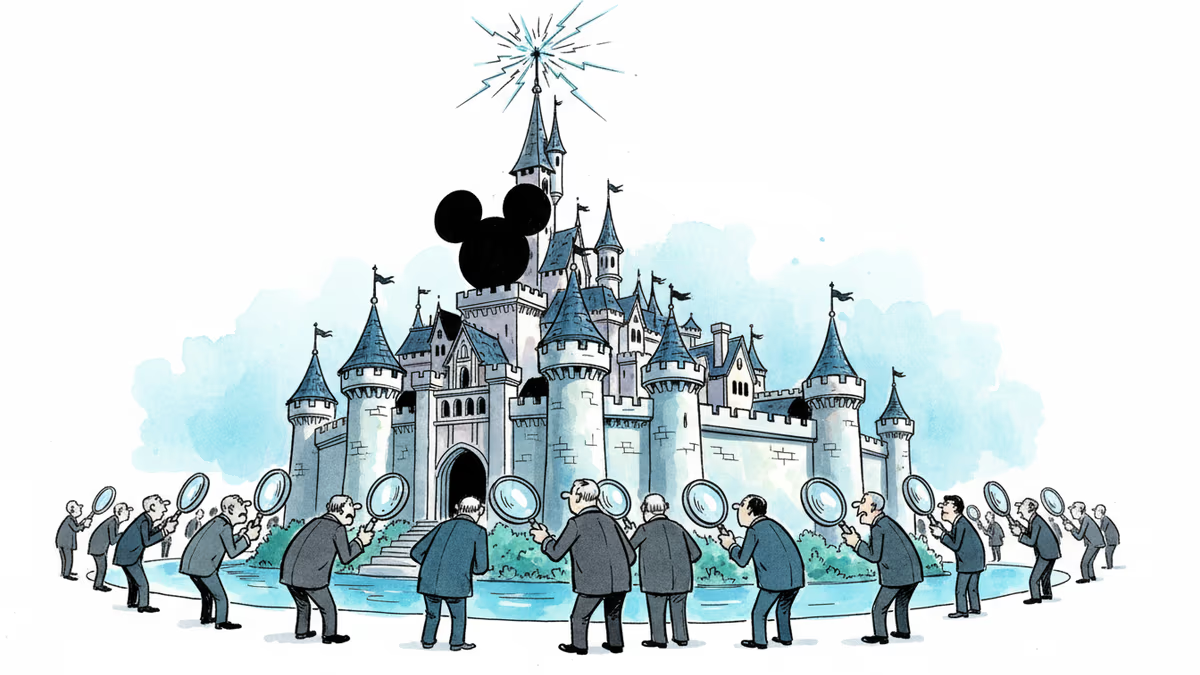
Josh D'Amaro took over Disney with a bold Disney Plus vision. Days later, he's in a First Amendment fight with the Trump administration over The View. What does this mean for media freedom?
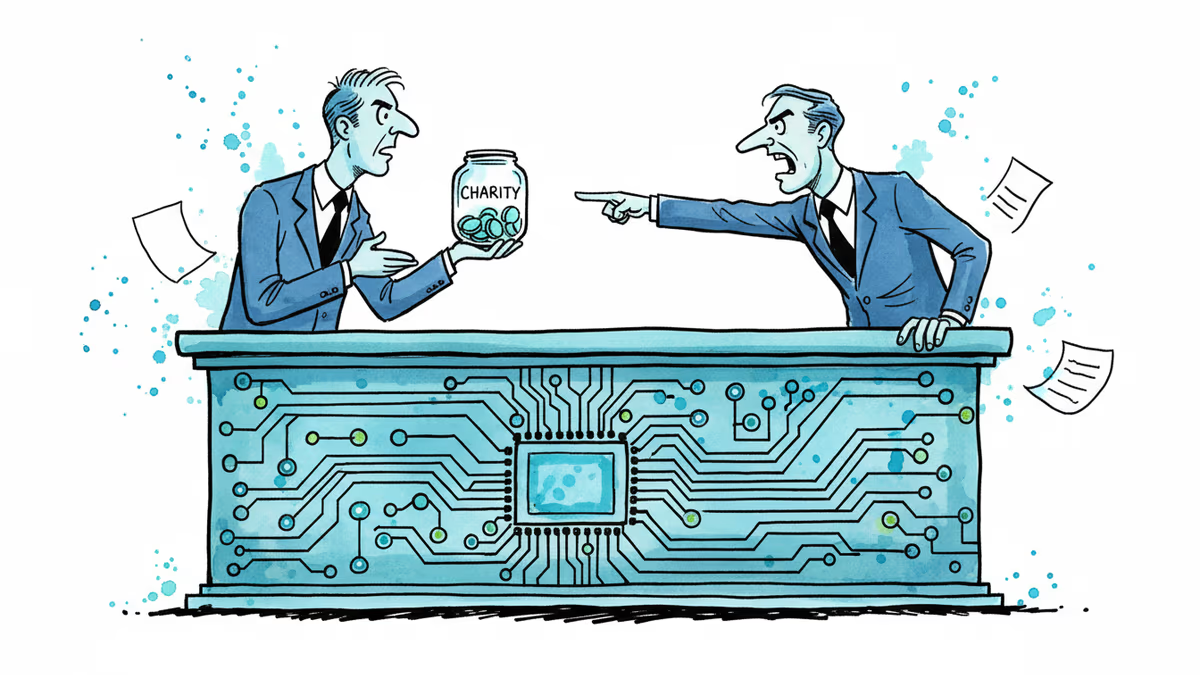
After two weeks of witnesses calling him a liar, OpenAI CEO Sam Altman testified in his own defense, claiming Elon Musk tried to kill the company twice.
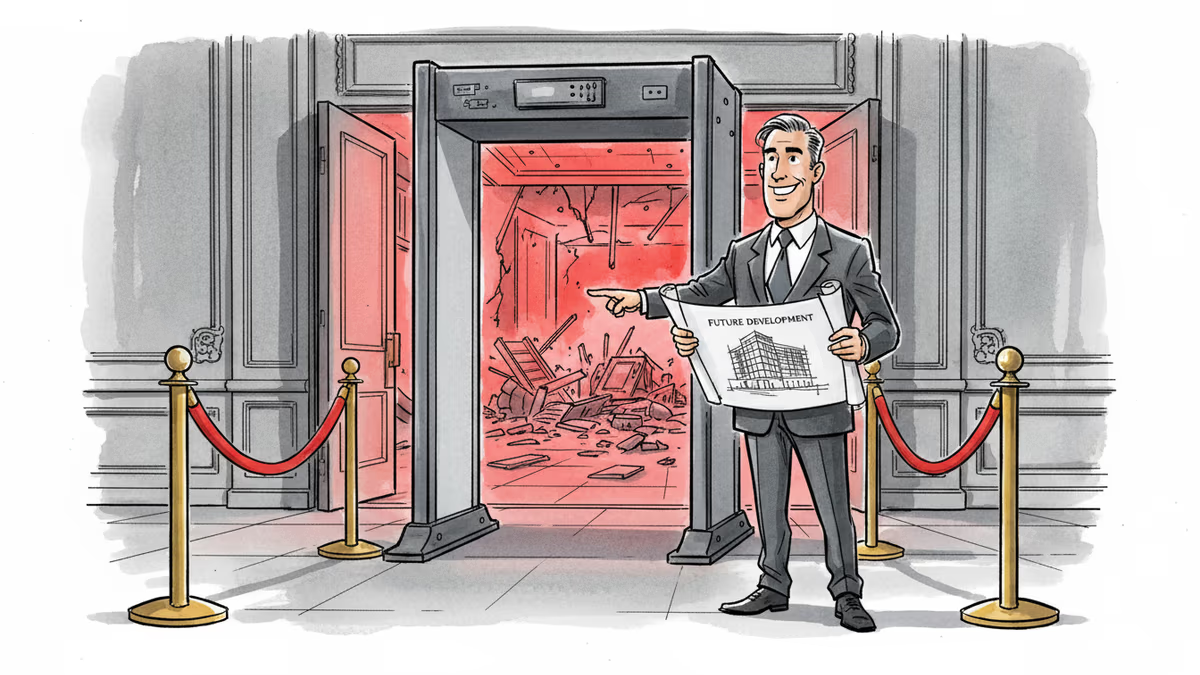
A gunman attacked a Secret Service checkpoint at the White House Correspondents' Dinner. Trump's first public reaction wasn't about security. It was about his $400M ballroom project.
Indian venture capital has quietly displaced Silicon Valley in its own backyard. Only one American VC made India's top 10 investor list last year. Here's why that matters beyond India.
Josh D'Amaro took over Disney with a bold Disney Plus vision. Days later, he's in a First Amendment fight with the Trump administration over The View. What does this mean for media freedom?
After two weeks of witnesses calling him a liar, OpenAI CEO Sam Altman testified in his own defense, claiming Elon Musk tried to kill the company twice.
A gunman attacked a Secret Service checkpoint at the White House Correspondents' Dinner. Trump's first public reaction wasn't about security. It was about his $400M ballroom project.
Thoughts
Share your thoughts on this article
Sign in to join the conversation