
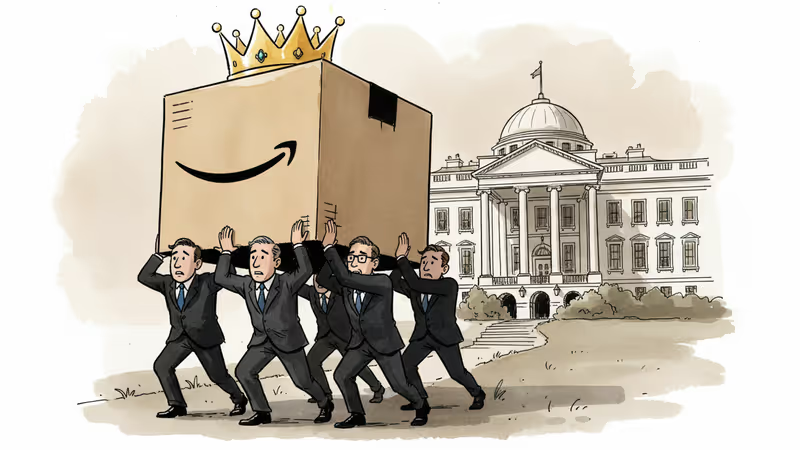
Amazon's $75M Melania Bet: Content Strategy or Political Insurance?
Amazon paid $75 million for Melania Trump's documentary. Is this a content play or a calculated move to curry favor with the new administration?
$75 million. That's what Amazon paid for a single documentary about Melania Trump – $40 million for production rights, $35 million for marketing. It's now among the most expensive documentaries ever made.
At last night's Washington premiere, director Brett Ratner defended the astronomical budget: "We spent more money on music in this than I did on Rush Hour." But industry insiders aren't buying the artistic justification. This looks less like content strategy and more like political insurance.
The Streaming Wars Get Political
Amazon Prime Video is fighting an uphill battle. With 200 million subscribers, it still trails Netflix's280 million. More importantly, it lacks cultural impact. While Netflix dominates conversations with hits like "Stranger Things" and "Wednesday," Amazon struggles for mindshare.
The Melania documentary could change that calculus. Timed perfectly with Trump's return to power, featuring one of America's most enigmatic figures, and backed by Amazon's unprecedented investment – it's already generating buzz.
But here's the uncomfortable question: Is Amazon paying for content or access?
Bezos's Calculated Gamble
Jeff Bezos and Donald Trump have history. During Trump's first term, Bezos's Washington Post was a fierce critic. Trump retaliated by attacking Amazon's tax practices and market dominance, even threatening to "go after" the company.

Now Trump's back, and Amazon needs federal contracts. Amazon Web Services competes for billions in government cloud deals. The Pentagon, CIA, and other agencies are major clients. A hostile relationship with the White House could cost Amazon dearly.
The Melania documentary investment suddenly looks like smart business – a $75 million olive branch to the First Family.
The New Rules of Streaming
This raises bigger questions about platform independence. Netflix has largely stayed politically neutral, focusing on global content. Disney+ leans into family values. Apple TV+ pursues prestige projects.
Amazon is choosing a different path: embracing political controversy as marketing strategy. It's risky but potentially brilliant. Both Trump supporters and critics will tune in, driving engagement either way.
The strategy reflects Amazon's unique position. Unlike pure-play streamers, Amazon has massive government business to protect. AWS generated $90 billion in revenue last year. Compared to that, $75 million for political goodwill looks like a bargain.
What This Means for Consumers
Viewers are caught in the middle. When platforms make politically charged content investments, subscribers effectively fund those choices through their monthly fees. Amazon Prime costs $139 annually – are members comfortable subsidizing what critics call "political propaganda"?
The documentary's reception will be telling. If it succeeds, expect more platforms to court political figures. If it flops, Amazon's rivals will note the risks of mixing entertainment with politics.
Either way, the streaming landscape is shifting. Content decisions increasingly reflect corporate political calculations, not just audience demand.
Authors
Related Articles
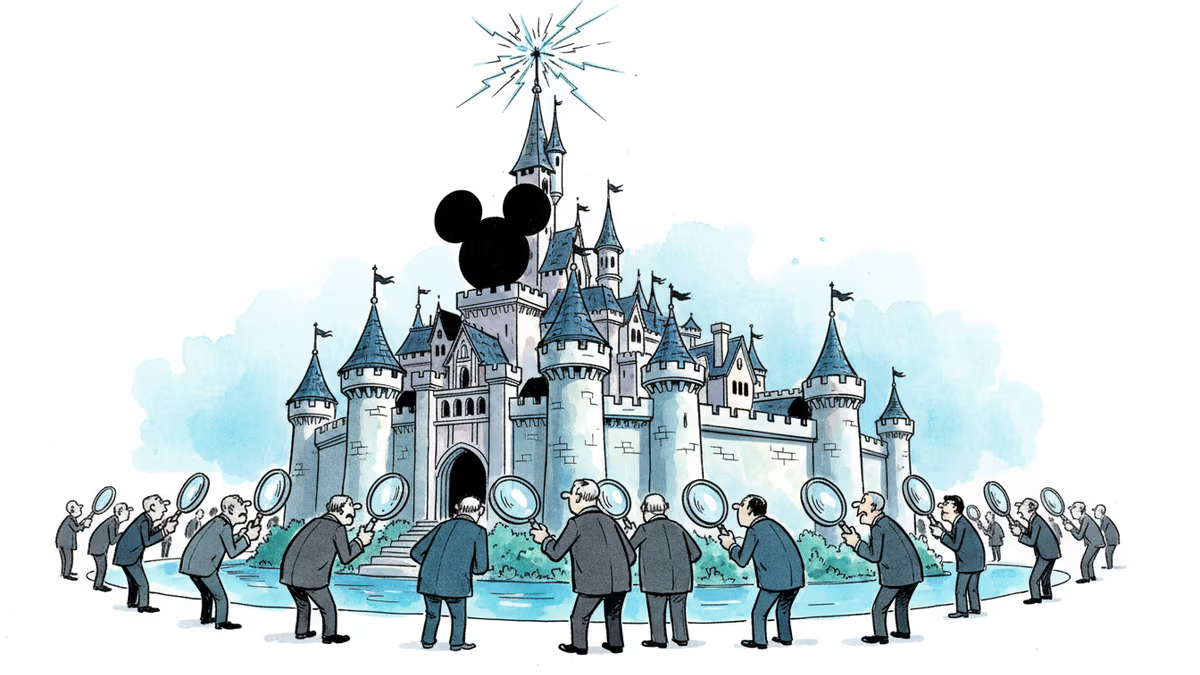
Josh D'Amaro took over Disney with a bold Disney Plus vision. Days later, he's in a First Amendment fight with the Trump administration over The View. What does this mean for media freedom?
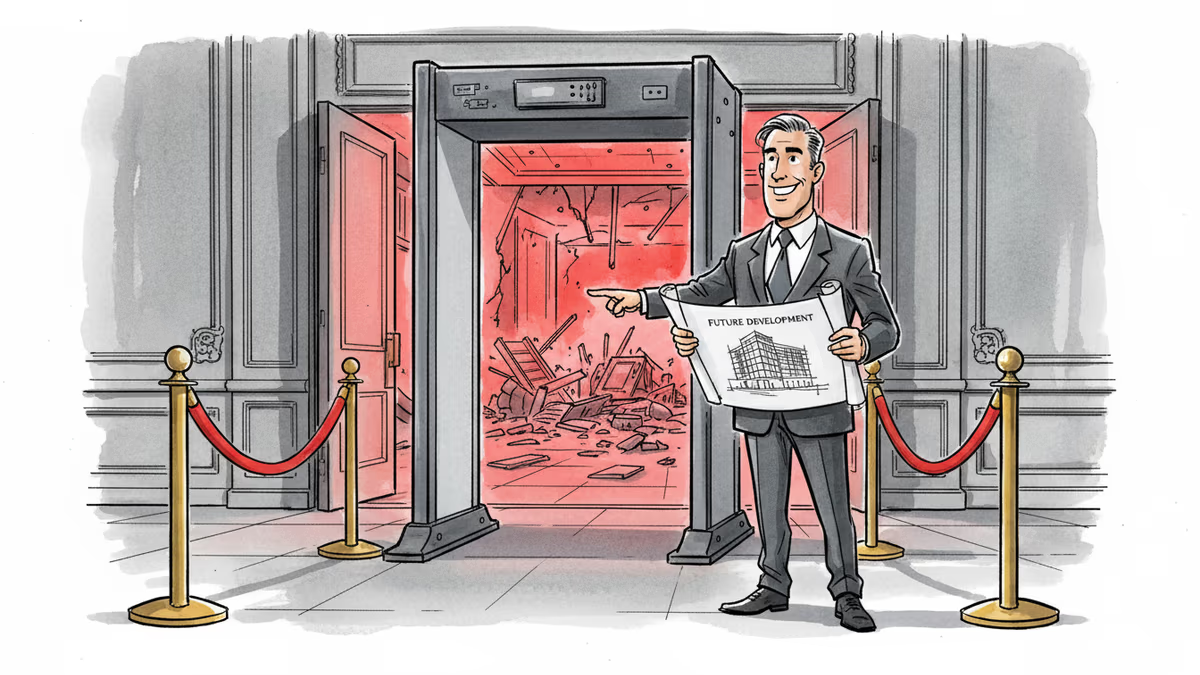
A gunman attacked a Secret Service checkpoint at the White House Correspondents' Dinner. Trump's first public reaction wasn't about security. It was about his $400M ballroom project.
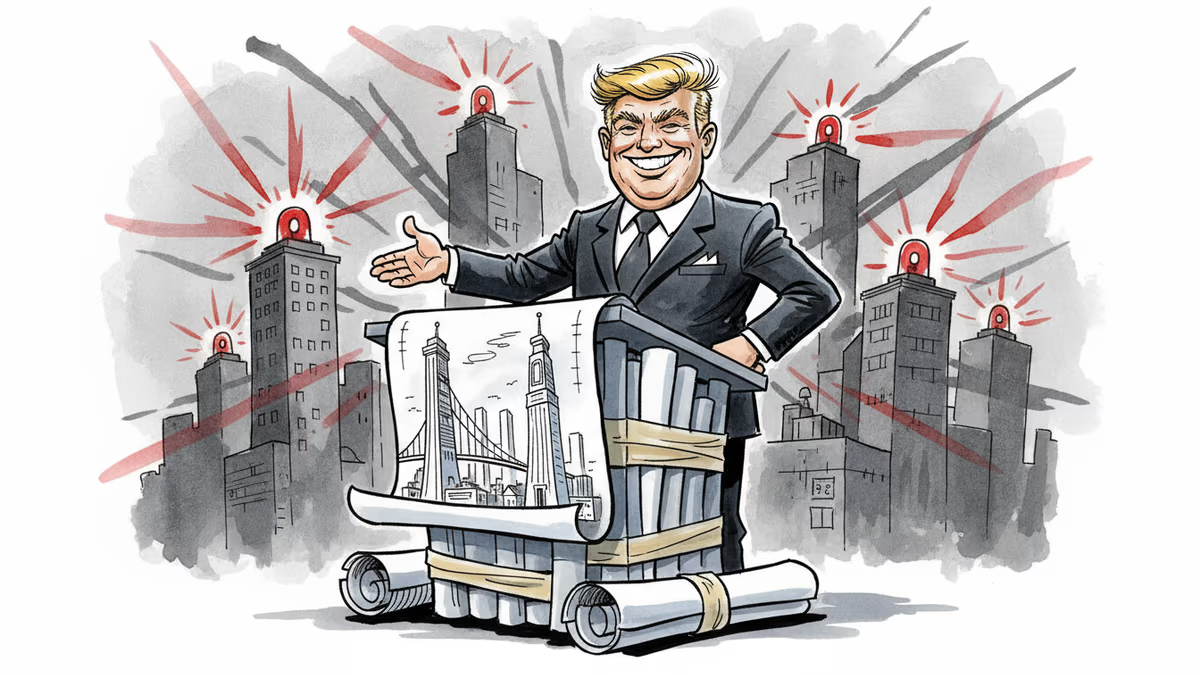
Hours after an armed suspect attempted to breach the White House Correspondents Dinner, Trump used the security scare to publicly defend his White House ballroom project. What does that tell us?
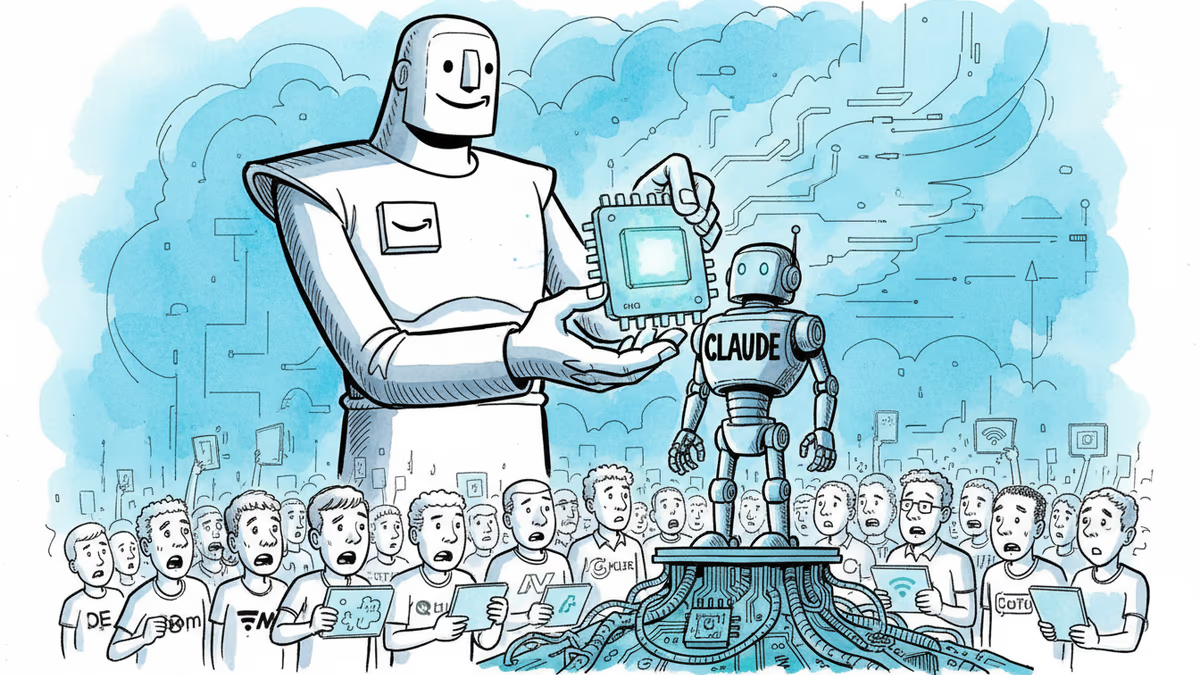
Amazon has poured an additional $5 billion into Anthropic, bringing its total stake to $13 billion—with up to $20 billion more on the table. Here's what the deal really signals about the AI infrastructure race.
Josh D'Amaro took over Disney with a bold Disney Plus vision. Days later, he's in a First Amendment fight with the Trump administration over The View. What does this mean for media freedom?
A gunman attacked a Secret Service checkpoint at the White House Correspondents' Dinner. Trump's first public reaction wasn't about security. It was about his $400M ballroom project.
Hours after an armed suspect attempted to breach the White House Correspondents Dinner, Trump used the security scare to publicly defend his White House ballroom project. What does that tell us?
Amazon has poured an additional $5 billion into Anthropic, bringing its total stake to $13 billion—with up to $20 billion more on the table. Here's what the deal really signals about the AI infrastructure race.
Thoughts
Share your thoughts on this article
Sign in to join the conversation