
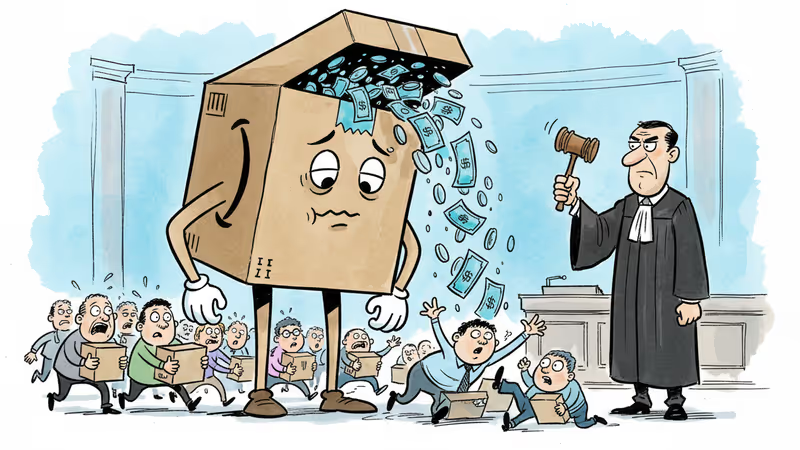
Amazon's $309M Settlement: When Returns Go Wrong
Amazon settles billion-dollar class action over refund failures. As consumers receive compensation, questions emerge about Big Tech accountability and the true cost of broken promises.
You returned the item. Your account was still charged. For countless Amazon customers, this maddening experience just became a $1 billion lesson in corporate accountability.
Amazon agreed Monday to pay $309.5 million into a consumer compensation fund as part of a class-action settlement over refund processing failures. Combined with $600 million already distributed or pending in refunds, the total settlement value exceeds $1 billion.
The Refund That Never Came
The 2023 lawsuit alleged that Amazon caused "substantial unjustified monetary losses" for customers who returned items but remained charged. It's a frustratingly simple problem with a surprisingly complex resolution.
Amazon's explanation reveals the scope: "Following an internal review in 2025, we identified a small subset of returns where we issued a refund without the payment completing, or where we could not verify that the correct item had been sent back to us." The company denied wrongdoing while acknowledging it began issuing make-good refunds in 2025.
But here's what makes this settlement particularly significant: it's not Amazon's first rodeo with consumer protection issues. Last year, the company paid $2.5 billion to settle FTC charges over Prime subscription practices—allegedly tricking users into signing up and making cancellation difficult.
Pattern Recognition

Two massive consumer settlements within a year suggests something deeper than isolated technical glitches. The $363 million in non-monetary relief Amazon agreed to provide—focused on improving return and refund processes—hints at systemic issues rather than simple oversights.
For consumers, this settlement represents more than money back. It's validation that their frustrating experiences with return policies weren't imaginary or unavoidable. The class-action mechanism proved powerful enough to force changes at one of the world's largest corporations.
For Amazon, the settlement math is telling. $1 billion sounds enormous, but it represents roughly what the company generates in revenue every few days. The question becomes: is this a meaningful deterrent or simply the cost of doing business?
The Broader E-commerce Reckoning
This case arrives as regulators worldwide scrutinize Big Tech's consumer practices more intensively. The European Union's Digital Services Act, various state-level privacy laws, and increased FTC enforcement signal a shift from innovation-first to consumer-protection-first regulatory philosophy.
Other e-commerce players are watching closely. Amazon's market dominance means its practices often become industry standards—both good and bad. When Amazon struggles with basic refund processing, it raises questions about the entire sector's operational maturity.
Consumer advocates see this settlement as precedent-setting. It demonstrates that even the most powerful tech companies face real consequences for failing to deliver on basic promises. The $309.5 million fund specifically benefits affected consumers, not just government coffers.
Amazon is currently accepting claims from impacted customers through the settlement process.
Authors
Related Articles
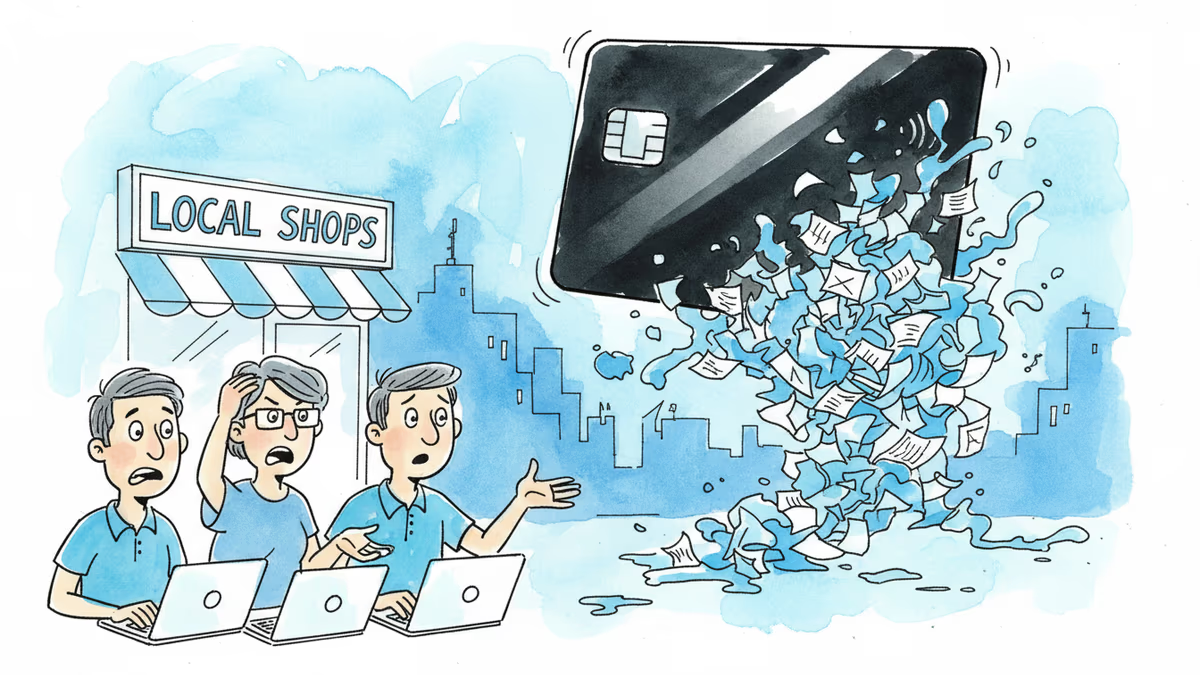
E-commerce fintech Parker filed for Chapter 7 bankruptcy on May 7, despite raising over $200M. The YC-backed startup's abrupt shutdown left small business customers scrambling—and exposed the fragility of vertical fintech models.
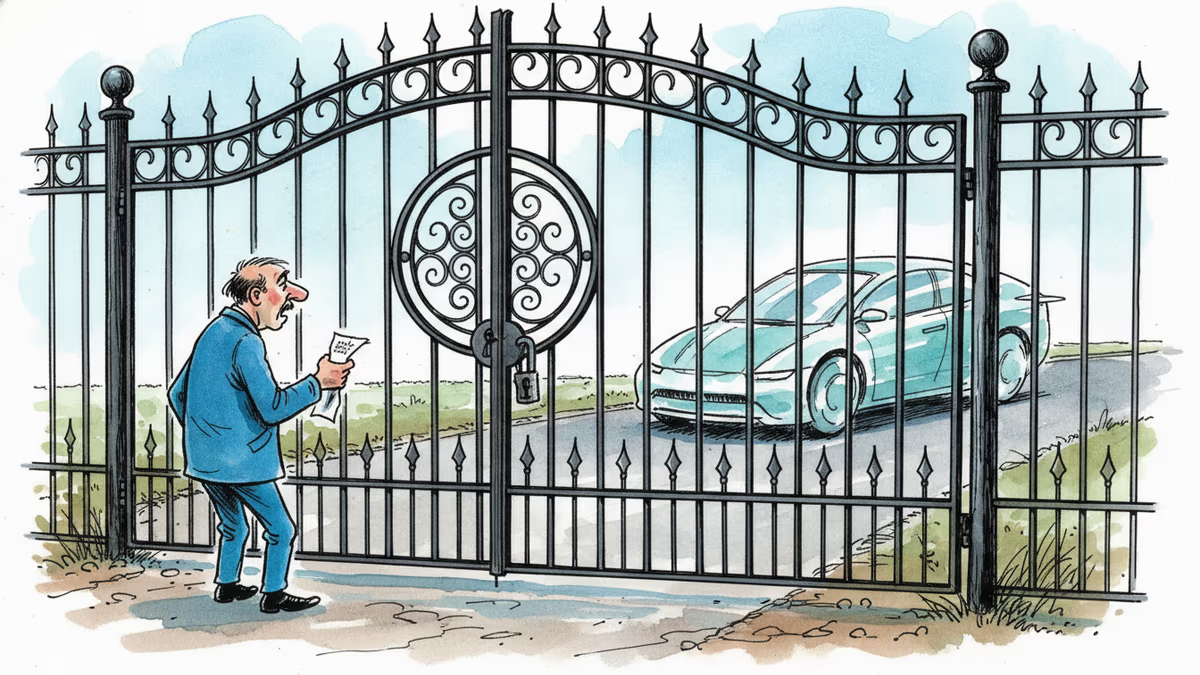
Elon Musk confirmed on Tesla's Q1 2026 earnings call that Hardware 3 vehicles will never receive unsupervised Full Self-Driving — locking out millions who paid for the feature.
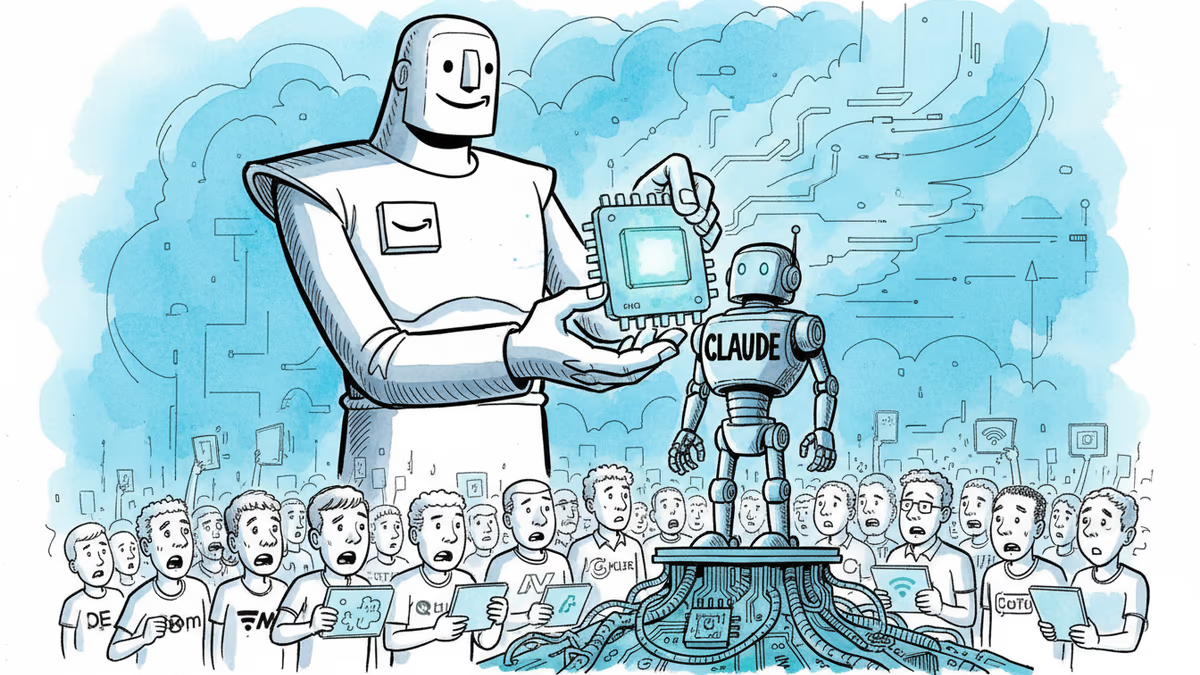
Amazon has poured an additional $5 billion into Anthropic, bringing its total stake to $13 billion—with up to $20 billion more on the table. Here's what the deal really signals about the AI infrastructure race.
Amazon's fresh $5B investment in Anthropic brings its total to $13B. But the real story is a $100B AWS spending pledge and a bet on Amazon's own AI chips over Nvidia.
E-commerce fintech Parker filed for Chapter 7 bankruptcy on May 7, despite raising over $200M. The YC-backed startup's abrupt shutdown left small business customers scrambling—and exposed the fragility of vertical fintech models.
Elon Musk confirmed on Tesla's Q1 2026 earnings call that Hardware 3 vehicles will never receive unsupervised Full Self-Driving — locking out millions who paid for the feature.
Amazon has poured an additional $5 billion into Anthropic, bringing its total stake to $13 billion—with up to $20 billion more on the table. Here's what the deal really signals about the AI infrastructure race.
Amazon's fresh $5B investment in Anthropic brings its total to $13B. But the real story is a $100B AWS spending pledge and a bet on Amazon's own AI chips over Nvidia.
Thoughts
Share your thoughts on this article
Sign in to join the conversation