
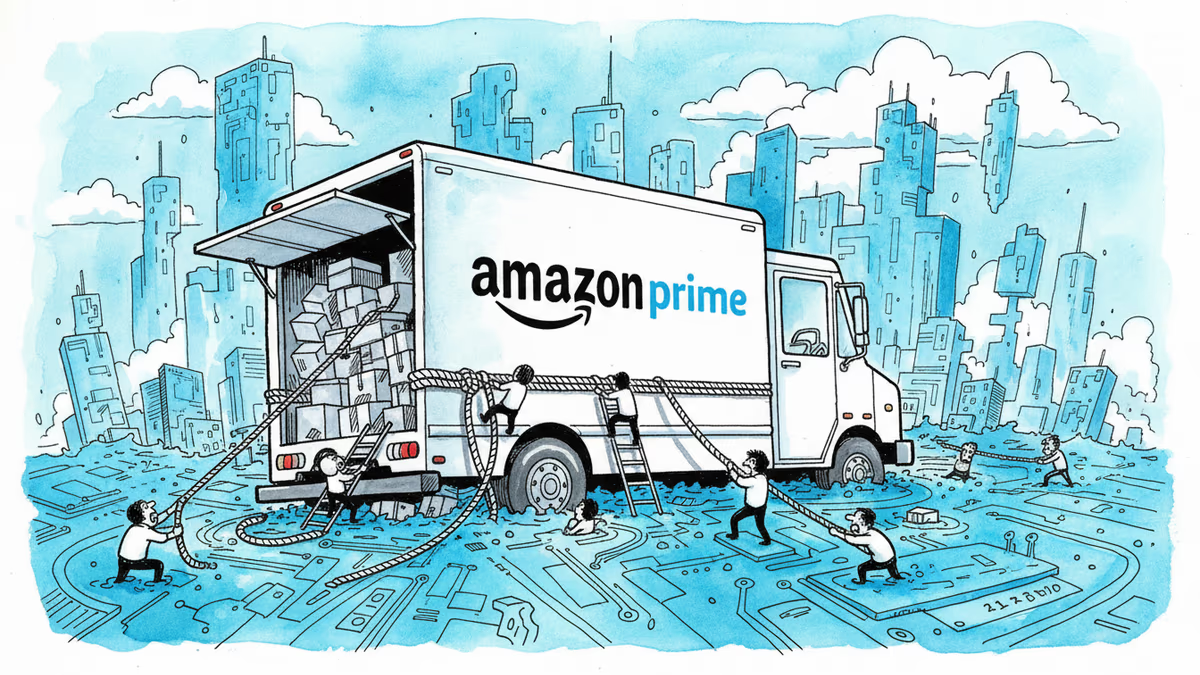
When Amazon Went Dark: The Hidden Cost of Convenience
Amazon's massive outage revealed how deeply we depend on a single company's ecosystem. More than a shopping glitch, it exposed modern society's digital vulnerabilities
2 hours and 47 minutes. That's how long Amazon disappeared from the world.
This afternoon, millions of people worldwide shared the same frustrating experience. Amazon's shopping pages wouldn't load, Amazon Music playlists vanished, and checkout buttons led nowhere but "Sorry, something went wrong" error messages. Downdetector recorded tens of thousands of outage reports, while social media erupted with Amazon-related complaints.
What looked like a simple technical glitch revealed something far more significant: we're more dependent on Amazon's ecosystem than we ever realized.
The invisible web came undone
It wasn't just Amazon's shopping site that stumbled. The ripple effects spread through countless services built on Amazon Web Services (AWS). Netflix experienced partial functionality issues, startup apps went offline, and even some banking services faced delays.
"Our entire customer base dropped by 30% during the outage," said a CTO at a logistics startup. "We never imagined Amazon's problems would become our revenue problem."
This exposed the hidden architecture of our digital economy. While we think we're using diverse services, we're actually depending on a handful of massive infrastructures.
Consumer reactions: from rage to realization
Initial responses were predictably angry. "Refund my Prime membership!" and "I had important orders!" flooded social platforms. But as hours passed, a different conversation emerged.

"Trying to spend a day without Amazon is harder than I thought," read one tweet that garnered over 10,000 retweets. Another user wrote, "Looking for alternatives made me realize how convenient Amazon really was."
Interestingly, some consumers used the downtime to explore other platforms. One major retailer reported 200% higher new user registrations during the outage window.
Businesses caught naked
The most panicked were companies dependent on Amazon's infrastructure. Startups relying primarily on AWS found themselves helpless. "We should have implemented multi-cloud strategy years ago," admitted one e-commerce CEO. "Cost concerns kept pushing it down our priority list."
Meanwhile, companies with diversified strategies found unexpected opportunities. A gaming platform using multiple cloud providers saw 40% increased traffic as users migrated from affected services.
The old wisdom "don't put all your eggs in one basket" proved remarkably relevant in the digital age.
The regulatory question looms
This outage will likely fuel ongoing debates about big tech's market dominance. When a single company's technical problems can disrupt millions of businesses and consumers globally, regulators take notice.
"Today's incident demonstrates why we need stronger digital infrastructure resilience requirements," said a European digital policy expert. The Federal Trade Commission has already been scrutinizing Amazon's market power, and incidents like this provide ammunition for stricter oversight.
But regulation raises its own questions: How do you govern global digital infrastructure without stifling innovation?
Authors
Related Articles
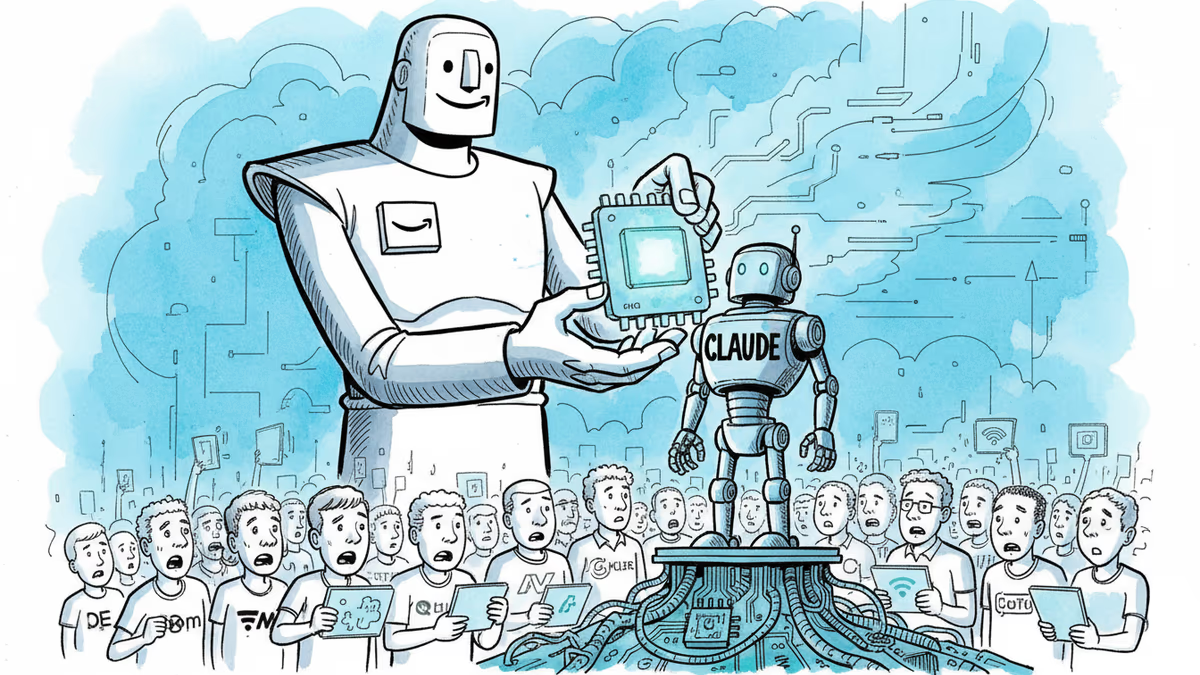
Amazon has poured an additional $5 billion into Anthropic, bringing its total stake to $13 billion—with up to $20 billion more on the table. Here's what the deal really signals about the AI infrastructure race.
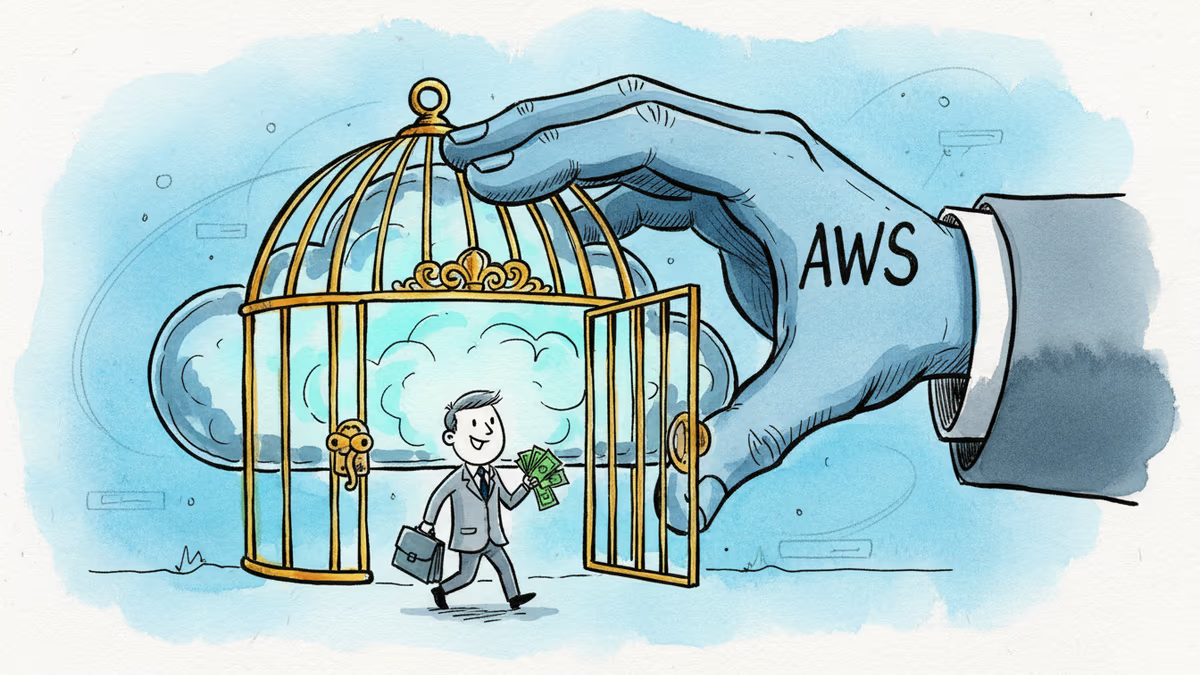
Amazon's fresh $5B investment in Anthropic brings its total to $13B. But the real story is a $100B AWS spending pledge and a bet on Amazon's own AI chips over Nvidia.
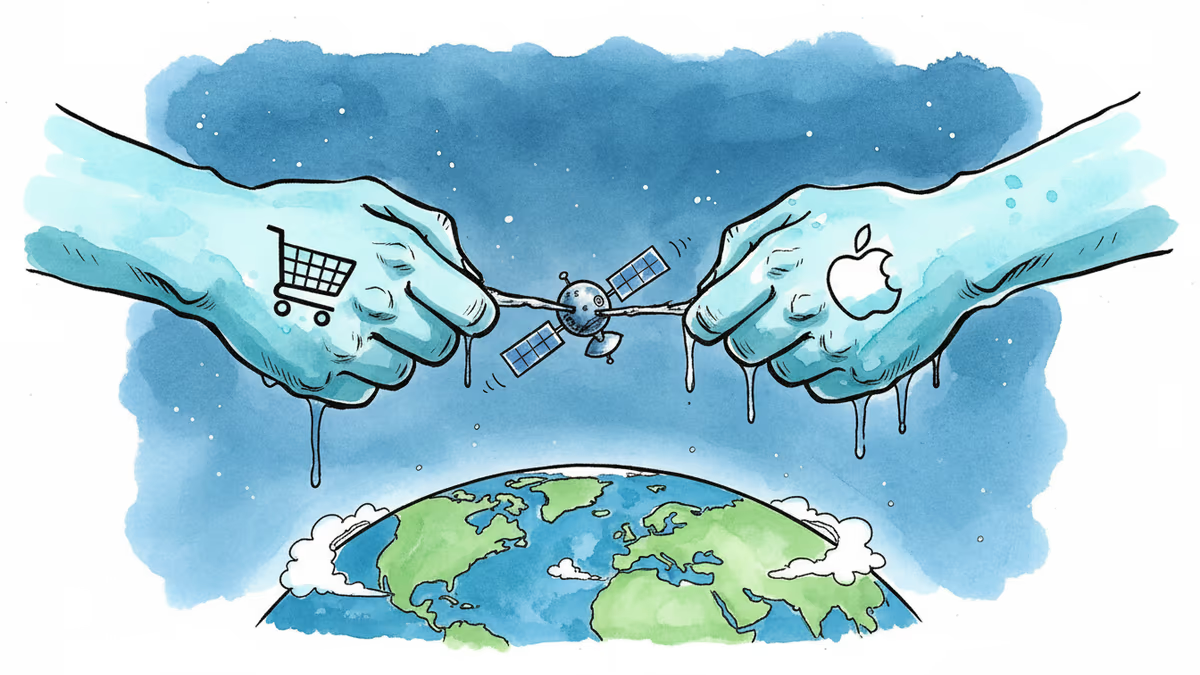
Amazon is in talks to acquire Globalstar, the satellite telecom firm that powers Apple's emergency SOS feature. A 20% Apple stake is complicating everything — and the stakes go beyond one deal.
Amazon's Big Spring Sale runs through March 31st with record-low prices on robot vacuums, headphones, and smart home gear — but the real story is why it's happening now.
Amazon has poured an additional $5 billion into Anthropic, bringing its total stake to $13 billion—with up to $20 billion more on the table. Here's what the deal really signals about the AI infrastructure race.
Amazon's fresh $5B investment in Anthropic brings its total to $13B. But the real story is a $100B AWS spending pledge and a bet on Amazon's own AI chips over Nvidia.
Amazon is in talks to acquire Globalstar, the satellite telecom firm that powers Apple's emergency SOS feature. A 20% Apple stake is complicating everything — and the stakes go beyond one deal.
Amazon's Big Spring Sale runs through March 31st with record-low prices on robot vacuums, headphones, and smart home gear — but the real story is why it's happening now.
Thoughts
Share your thoughts on this article
Sign in to join the conversation