
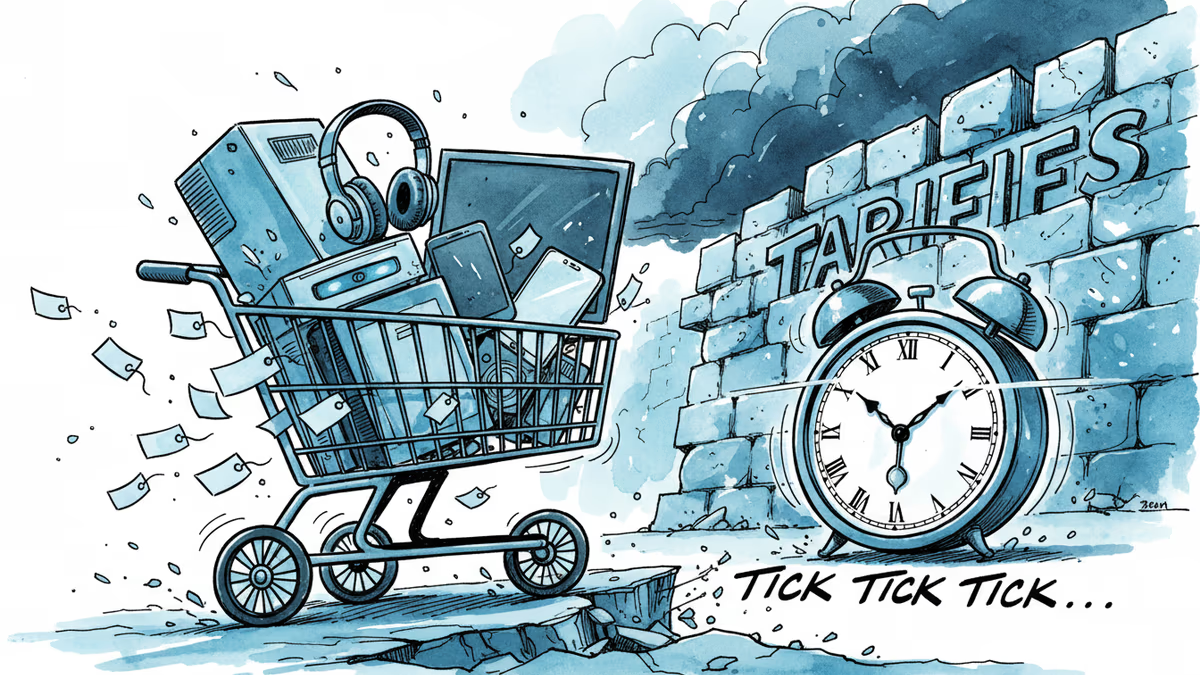
Amazon's Spring Sale Is Also a Tariff Warning
Amazon's Big Spring Sale runs through March 31st with record-low prices on robot vacuums, headphones, and smart home gear — but the real story is why it's happening now.
This Sale Comes With a Warning Label
March has never been a big shopping month. No holidays, no back-to-school rush — just a quiet stretch between Valentine's Day and summer. So when Amazon kicks off its third annual Big Spring Sale, running through March 31st, the timing alone is worth a raised eyebrow.
This year, Amazon isn't just pitching spring savings. The company explicitly framed this sale as a chance to "bypass some tariff-induced pain" — a direct acknowledgment that prices on electronics could climb if proposed tariff hikes on Chinese goods move forward. Whether that's a genuine consumer heads-up or a clever urgency play, it's working. Shoppers are paying attention.
The deals themselves are real, if uneven. Most don't touch Black Friday territory, but a handful of categories — robot vacuums especially — are hitting all-time lows. Here's what's actually worth your time.
The Deals That Are Genuinely Good
Robot vacuums are the standout category. The Ecovacs Deebot X8 Pro Omni dropped from $1,099 to $599 — a $500 discount that matches its lowest price ever. Its sibling, the X9 Pro Omni, landed at $679 ($621 off), also an all-time low. The Roborock S8 MaxV Ultra, long considered a benchmark for premium robot vacuums, is at $849.99 ($550 off), the best price of the year. These aren't marginal discounts — they're the kind of cuts that change the math on whether to buy.
Headphones tell a mixed story. The Sony WH-1000XM5 sits at $298 ($100 off), which sounds good until you remember it dipped to $205 a few months ago. The Beats Studio Pro, however, is a genuine standout at $159.99 — down from $349.99, more than half off. AirPods Pro 3 hit $199, and if you're on a budget, Sony's WF-C510 earbuds are at an all-time low of $48.

**Smart home gear is mostly an Amazon ecosystem push. The Echo Show 8 (2025) is $139.99 and the Echo Show 11 is $169.99** — solid prices for capable devices that double as smart home hubs with Matter, Thread, and Zigbee support. Just be clear-eyed about what you're buying into: more Echo devices means more Alexa data, more behavioral tracking, and deeper lock-in to Amazon's platform.
Charging accessories are quietly useful. The Ugreen 145W 3-port power bank (25,000mAh) is at its all-time low of $65.64 and can charge a 16-inch MacBook Pro to over 50 percent in 30 minutes. The Anker Nano 45W charger with a smart display is $27.99. Small purchases, but the kind that quietly make daily life easier.
You Don't Have to Shop at Amazon
One underreported fact about this sale: most of the best deals are available at Best Buy, Target, and Walmart at identical prices. The Echo Show 8, Sonos Move 2, Beats Studio Pro, AirPods Pro 3 — all matchable elsewhere. You don't need a Prime subscription to access these prices.
This matters for a reason beyond convenience. Amazon's retail dominance is partly built on the perception that its prices are uniquely low. Events like this reinforce that perception, even when the reality is that the whole industry is moving in lockstep. Shopping around takes two minutes and costs nothing.
The Tariff Angle: Real Concern or Marketing?
Here's where it gets interesting. Amazon's framing of this sale as a tariff hedge isn't entirely wrong. Electronics manufacturing is heavily concentrated in China, and any significant tariff escalation would push prices up on exactly the categories on sale here — robot vacuums, smart home devices, audio gear. Consumers who buy now could genuinely be ahead of a price increase.
But the framing also serves Amazon perfectly. Urgency drives purchases. "Buy before it gets more expensive" is one of the oldest retail tricks, and it's especially effective when the threat — tariffs — is real but uncertain in timing and magnitude. The honest answer is that nobody knows exactly when or how much prices will rise. Amazon doesn't know either.
What's clear is that the broader trade environment is already shaping consumer behavior. Retailers are pulling forward demand, manufacturers are adjusting supply chains, and shoppers are making decisions based on geopolitical forecasts they're not really equipped to make.
Authors
Related Articles
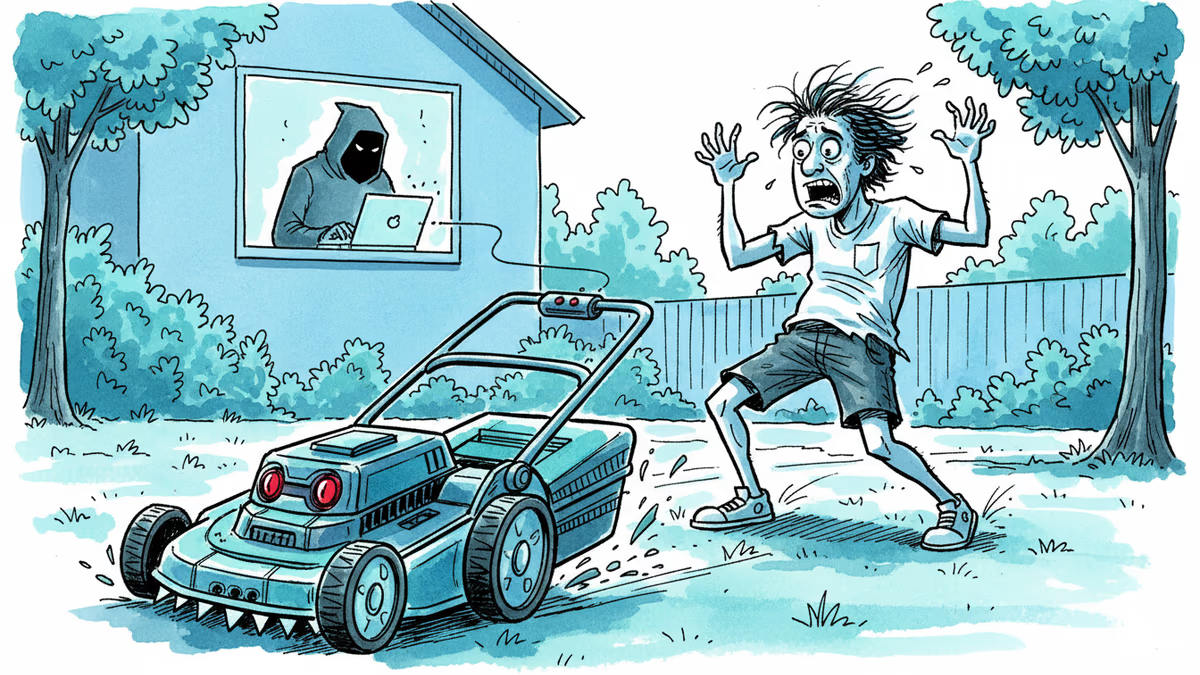
Yarbo's robot lawn mowers had critical security flaws exposing GPS, Wi-Fi passwords, and emails. The company confirmed the findings and cut remote access. But the real issue runs deeper than one brand.
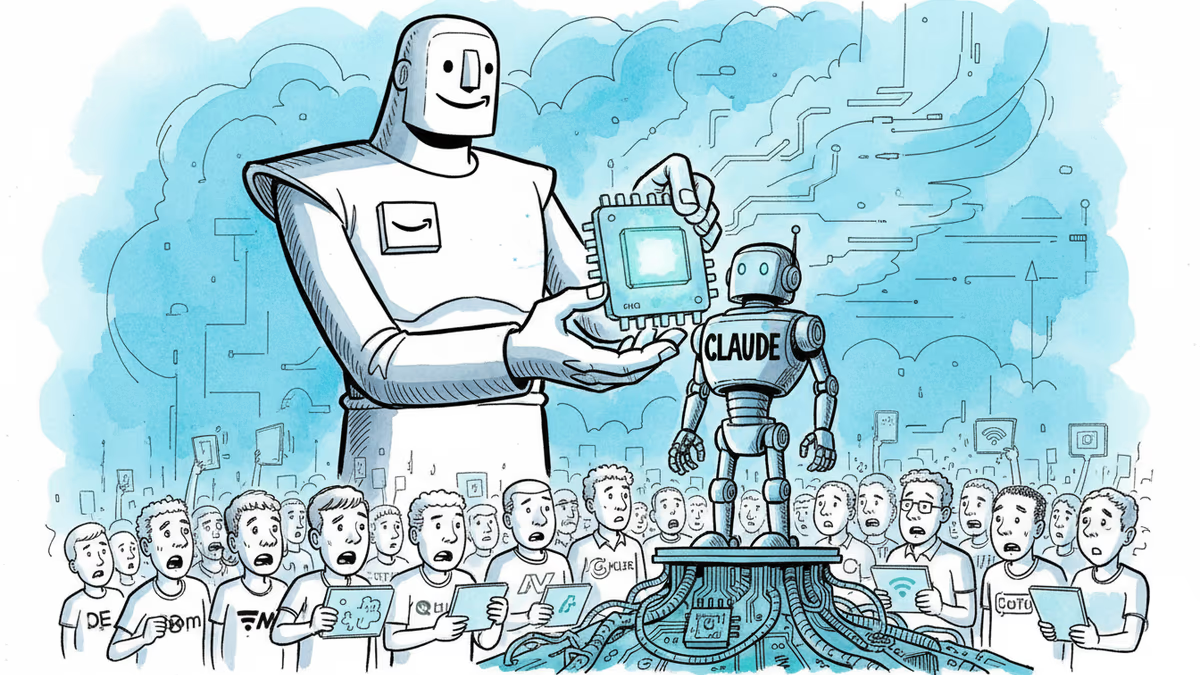
Amazon has poured an additional $5 billion into Anthropic, bringing its total stake to $13 billion—with up to $20 billion more on the table. Here's what the deal really signals about the AI infrastructure race.
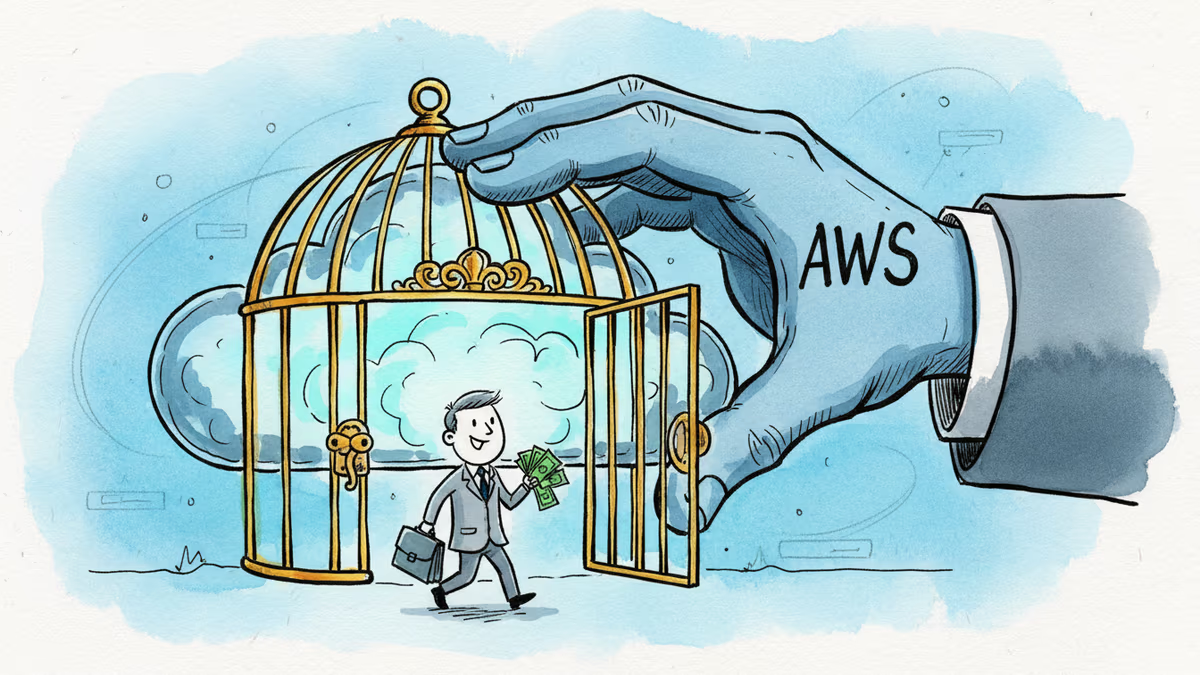
Amazon's fresh $5B investment in Anthropic brings its total to $13B. But the real story is a $100B AWS spending pledge and a bet on Amazon's own AI chips over Nvidia.
Amazon is in talks to acquire Globalstar, the satellite telecom firm that powers Apple's emergency SOS feature. A 20% Apple stake is complicating everything — and the stakes go beyond one deal.
Yarbo's robot lawn mowers had critical security flaws exposing GPS, Wi-Fi passwords, and emails. The company confirmed the findings and cut remote access. But the real issue runs deeper than one brand.
Amazon has poured an additional $5 billion into Anthropic, bringing its total stake to $13 billion—with up to $20 billion more on the table. Here's what the deal really signals about the AI infrastructure race.
Amazon's fresh $5B investment in Anthropic brings its total to $13B. But the real story is a $100B AWS spending pledge and a bet on Amazon's own AI chips over Nvidia.
Amazon is in talks to acquire Globalstar, the satellite telecom firm that powers Apple's emergency SOS feature. A 20% Apple stake is complicating everything — and the stakes go beyond one deal.
Thoughts
Share your thoughts on this article
Sign in to join the conversation