
Tech Workers Break Their Silence on Trump's ICE Raids
Over 1,000 tech employees sign letter demanding executives oppose ICE operations, marking a shift from industry's recent political silence
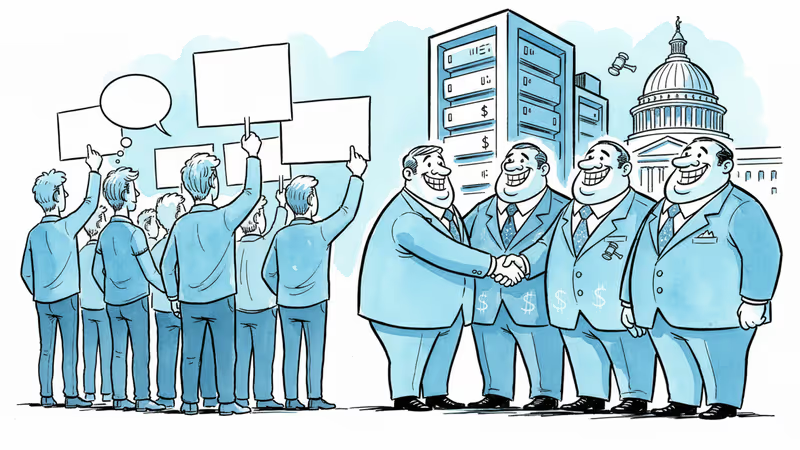
The tech industry's political awakening is happening from the bottom up. While Silicon Valley executives attend private White House screenings and kiss rings at Mar-a-Lago, over 1,000 tech employees have signed an open letter demanding their bosses take a stand against Immigration and Customs Enforcement operations in American cities.
The ICEout.tech movement launched after federal agents shot and killed ICU nurse Renee Nicole Good earlier this month, followed by the killing of Alex Pretti in Minneapolis. The letter, signed by workers from major tech companies and startups alike, asks executives to use their influence to demand ICE agents leave American cities, cancel company contracts with the agency, and speak publicly about what they call "ICE's violent and deadly tactics."
This grassroots uprising feels almost revolutionary in today's tech landscape—a stark contrast to the industry's muted response to the second Trump administration compared to the vocal opposition during his first term.
The Great Power Shift
The difference between Trump 1.0 and Trump 2.0 in Silicon Valley isn't just about changed political winds—it's about a fundamental power realignment within tech companies themselves.
"Until about 2021, retaining employees was a top business priority," explains Lisa Conn, cofounder of Gatheround and an early signatory of the ICEout.tech letter. "Talent was considered the most precious resource, and companies couldn't hire fast enough. Layoffs hadn't really happened—it was considered bad leadership and a failure as a CEO to lay people off."
That dynamic shifted dramatically as the economy cooled and mass layoffs swept through tech. Coinbase CEO Brian Armstrong led the charge, becoming one of the first to institute layoffs while declaring there should be "no talk about politics in the workplace." The message was clear: employee voices no longer carried the same weight.

Pete Warden, CEO of Moonshine AI and former engineer at Apple and Google, sees another factor at play: fear of retaliation. "If you are a tech CEO with a large company and you do not kiss the ring, you are gonna be targeted," he notes. "You are gonna have the power of the federal government used against you in a vindictive way."
When Business Meets Moral Crisis
The ICEout.tech movement represents something deeper than workplace activism—it's a collision between economic pragmatism and moral urgency. Conn frames the issue in stark business terms: "When the government starts killing people on the streets and then denying or reframing what is clearly documented, capital starts to flee. Talent leaves, and it will take decades to recover from a situation like this."
This economic argument may prove more persuasive than moral appeals alone. Tech companies depend on global talent pools, and their workers are among the most mobile in the world. The threat of brain drain—engineers, designers, and entrepreneurs simply choosing to work elsewhere—represents a tangible business risk that executives can quantify.
Some prominent leaders have begun to speak out. Anthropic heads Dario and Daniela Amodei, OpenAI CEO Sam Altman, and Apple CEO Tim Cook have all criticized ICE's tactics this week. But their statements came only after sustained pressure and mounting public attention.
The Psychology of Corporate Silence
Why the dramatic shift from the tech industry that once proudly opposed travel bans and family separations? Conn offers a nuanced view: "At some point the company becomes their ideology. And protecting the company, keeping the company safe, succeeding, protecting employees, shareholders, investors—that is the prevailing motivator."
The calculation has simply changed. In 2017, opposing Trump's policies aligned with both employee sentiment and public relations benefits. Today, the political winds blow differently, and executives face a more vindictive administration willing to weaponize federal power against corporate critics.
But Conn suggests this calculus may be shifting again: "Maybe that was true two weeks ago, but I actually don't think that's necessarily true anymore." The growing employee pressure, combined with potential talent flight and international reputation damage, may tip the scales back toward corporate activism.
Authors
Related Articles
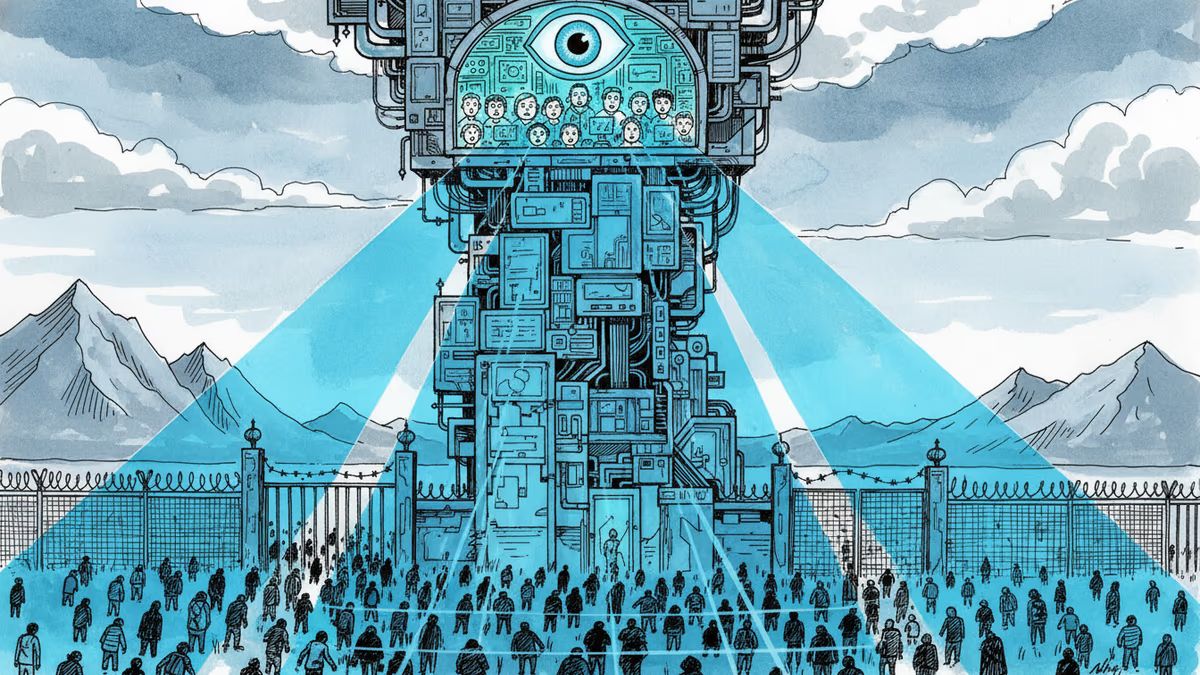
Palantir has become the tech backbone of Trump's immigration enforcement. Former employees are calling it a 'descent into fascism.' What happens when the people who build surveillance tools start asking uncomfortable questions?
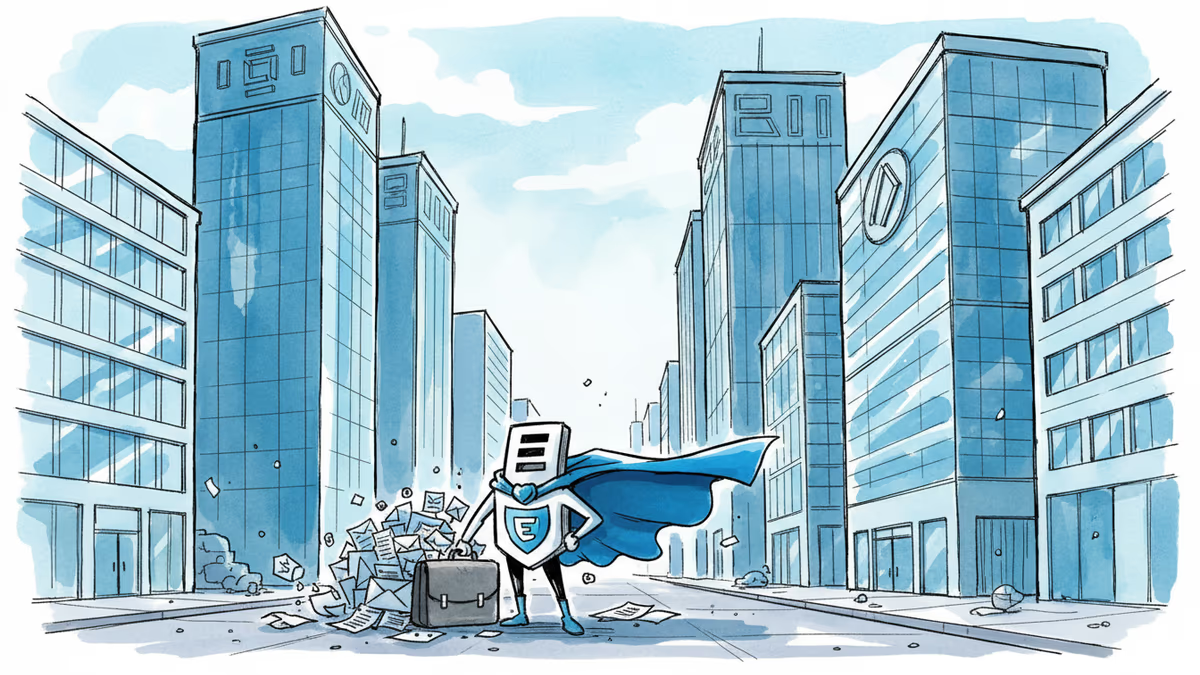
Grammarly rebranded as Superhuman, betting it can evolve from a spell-checker into a full AI productivity platform. But in a market dominated by Microsoft and Google, is there room for an independent player?
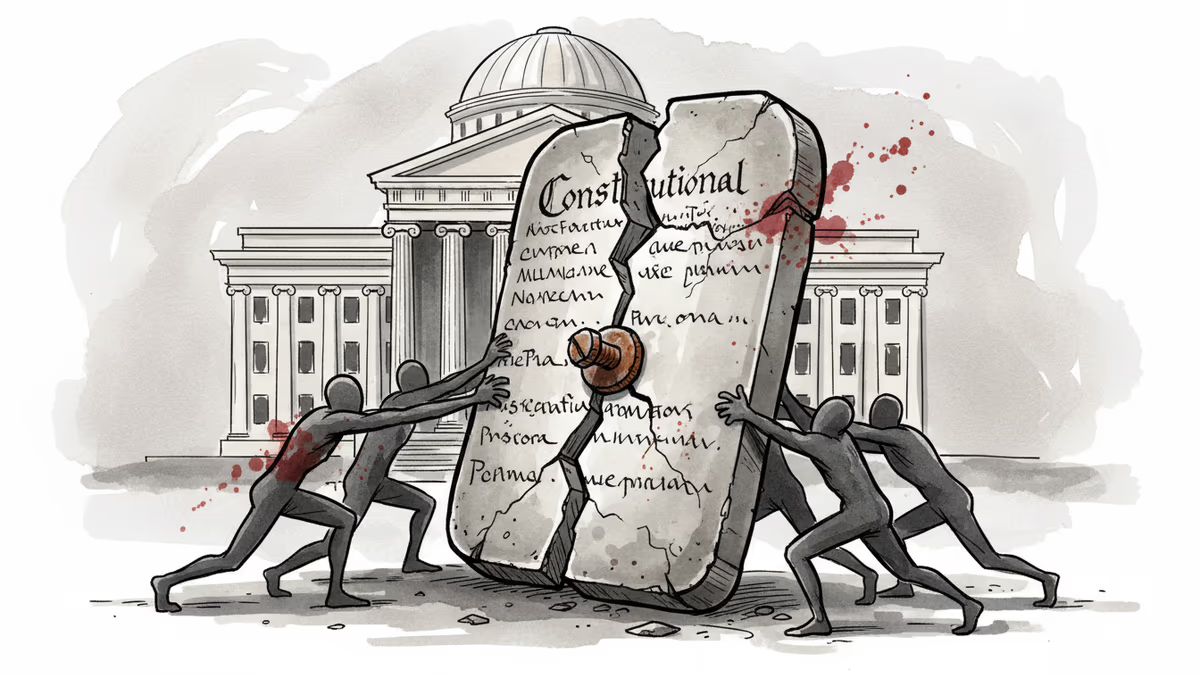
The Supreme Court heard arguments over Trump's birthright citizenship order. The justices seemed skeptical—but the fact that this case made it to the highest court signals something bigger.

ICE agents have been deployed to 14 US airports, officially to fill TSA staffing gaps during the government shutdown. But the line between security assistance and immigration enforcement is blurring fast.
Palantir has become the tech backbone of Trump's immigration enforcement. Former employees are calling it a 'descent into fascism.' What happens when the people who build surveillance tools start asking uncomfortable questions?
Grammarly rebranded as Superhuman, betting it can evolve from a spell-checker into a full AI productivity platform. But in a market dominated by Microsoft and Google, is there room for an independent player?
The Supreme Court heard arguments over Trump's birthright citizenship order. The justices seemed skeptical—but the fact that this case made it to the highest court signals something bigger.
ICE agents have been deployed to 14 US airports, officially to fill TSA staffing gaps during the government shutdown. But the line between security assistance and immigration enforcement is blurring fast.
Thoughts
Share your thoughts on this article
Sign in to join the conversation