
America's AI-Generated Resistance Videos Go Viral
Millions are watching AI-created videos of people fighting back against ICE raids. But these digital fantasies raise questions about truth, resistance, and reality.
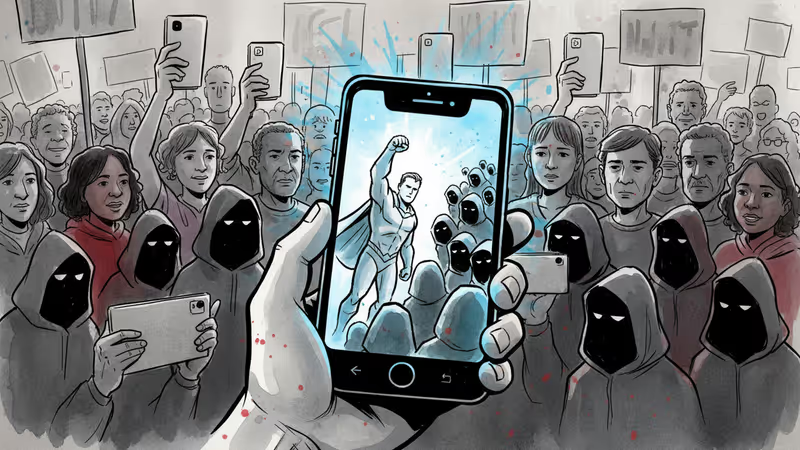
A New York school principal waves a baseball bat at masked ICE agents, declaring "Let me show you why they call me bat girl." A restaurant server flings hot noodles at dining officers. A shop owner flexes her Fourth Amendment rights against warrantless searches. The crowds cheer. The resistance wins.
None of it actually happened.
These AI-generated videos, racking up millions of views across Facebook and Instagram, represent a new form of digital resistance emerging as the Trump administration's immigration crackdown intensifies. They offer something reality hasn't: justice without bloodshed, accountability that actually matters.
When Reality Becomes Unbearable
The timing isn't coincidental. Since January 7, when 37-year-old mother Renee Nicole Good was fatally shot by ICE agents in Minneapolis, over 1,000 anti-ICE AI videos have flooded social media. Days later, Alex Pretti, a 37-year-old Veterans Affairs ICU nurse, met the same fate. Both were unarmed US citizens.
The account Mike Wayne has become the genre's most prolific creator, uploading videos that read like digital counter-narratives. ICE agents take perp walks. Officers get slapped by Latina women. A priest shoves masked officials from his church, announcing: "I don't know what god you worship, maybe an orange one, but my god is love."
One video—ICE agents fighting white tailgaters at a sporting event—garnered 11 million views in under 72 hours. The surreal scene resonates because it imagines the unimaginable: consequences for federal overreach.
The Double-Edged Sword of Digital Fantasy
Nicholas Arter, founder of AI consultancy AI for the Culture, sees parallels to social media's early democratizing power. "Over the last decade, social media gave voice to people who lacked access to traditional media. With AI, we're seeing similar patterns—people using available tools to articulate emotions, fears, or resistance."

But these cathartic fantasies carry risks. Joshua Tucker, co-director of NYU's Center for Social Media, AI, and Politics, warns that the flood of AI content could create "a general perception that you just can't trust videos anymore," making it harder to verify actual evidence.
This concern proved prescient when real footage of Pretti confronting ICE officers surfaced on January 13. Instagram and YouTube commenters immediately labeled it AI-generated. Pretti's family had to confirm to The New York Times that it was genuine.
The Politics of Artificial Hope
The Trump administration has weaponized AI manipulation too. Last week, the White House posted an altered photo of civil rights attorney Nekima Levy Armstrong after her arrest at a peaceful demonstration, describing her as a "far-left agitator."
With 73% of marketers using AI for personalized content and over 50% of new web articles now AI-generated, the line between authentic resistance and manufactured narrative continues to blur.
Filmmaker Willonious Hatcher offers a different lens: "The oppressed have always built what they could not find. These videos aren't delusion—they're diagnosis. A people doesn't dream this loudly of fighting back unless they've learned the systems meant to protect them will not."
The Permission to Punish
Yet there's danger in videos that predominantly show people of color confronting authority. As protesters face "domestic terrorist" labels, AI content could provide justification for state violence.
"That confusion can lead individuals to feel justified in taking actions based on narratives that aren't grounded in reality," Arter warns. "The real danger lies not just in the content itself, but in how it's interpreted and acted upon."
Hatcher sees a darker pattern: "America has always been eager to punish the dreamer rather than confront the conditions that made dreaming necessary. These videos will become the excuse—not because they justify force, but because justification was never the point. The point is permission."
Authors
Related Articles
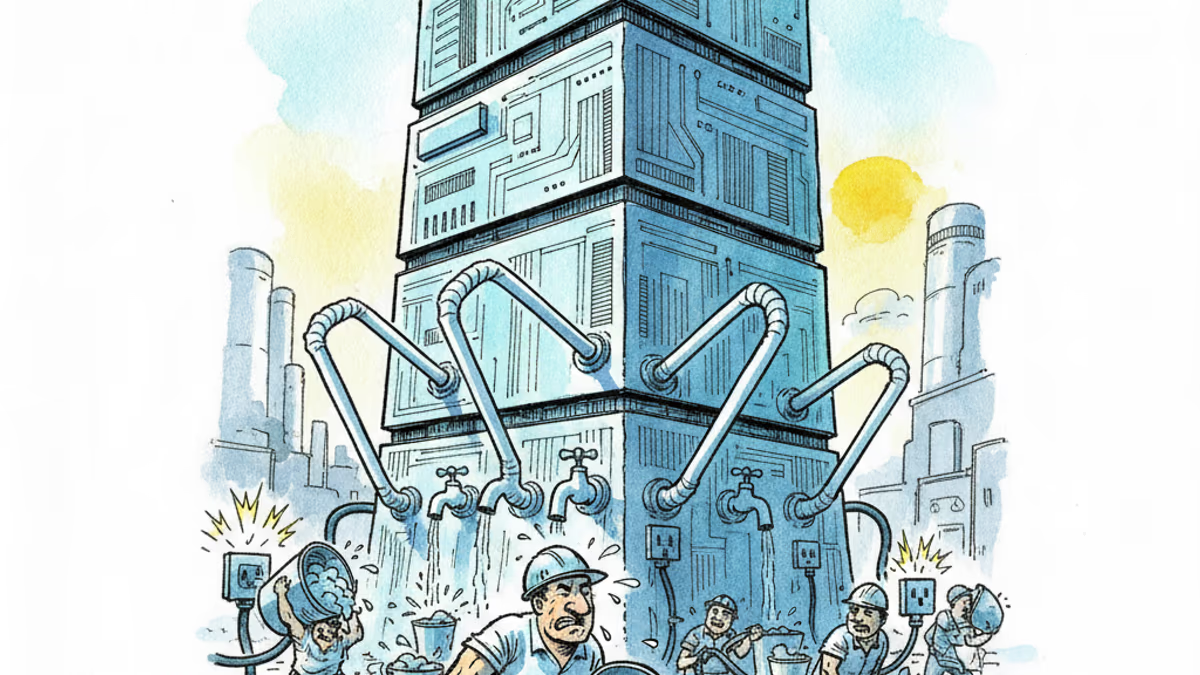
Samsung and SK unveiled a chip and AI investment package worth thousands of trillions of won on June 29. The headline number swings wildly by outlet, but the real contest isn't capital — it's water and power.
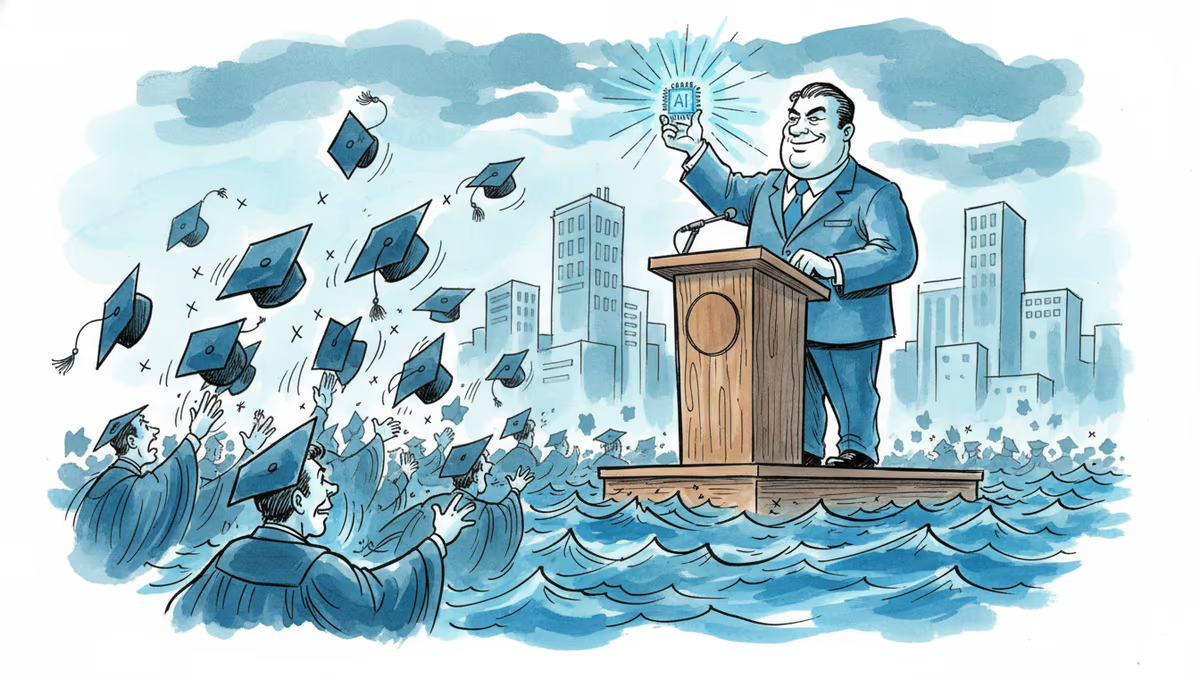
Viral videos show 2026 graduates jeering executives who praise AI at commencement ceremonies. It's not just rudeness — it's a signal about who pays for technological optimism.

Filipino virtual assistants using AI to ghost-manage LinkedIn profiles for executives is now a structured industry. 30 comments a day, fake engagement rings, and a platform struggling to tell real from fabricated.
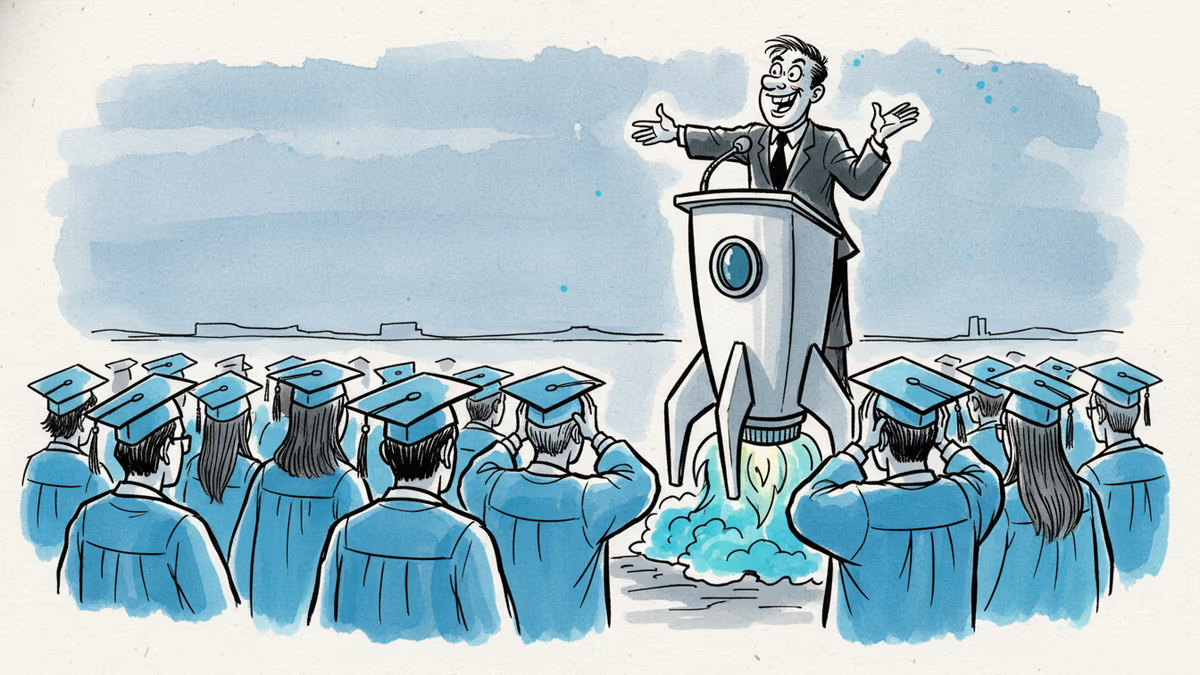
Two commencement speakers learned the hard way that AI enthusiasm doesn't land well with today's graduates. The backlash reveals a widening gap between tech optimism and Gen Z's economic reality.
Samsung and SK unveiled a chip and AI investment package worth thousands of trillions of won on June 29. The headline number swings wildly by outlet, but the real contest isn't capital — it's water and power.
Viral videos show 2026 graduates jeering executives who praise AI at commencement ceremonies. It's not just rudeness — it's a signal about who pays for technological optimism.
Filipino virtual assistants using AI to ghost-manage LinkedIn profiles for executives is now a structured industry. 30 comments a day, fake engagement rings, and a platform struggling to tell real from fabricated.
Two commencement speakers learned the hard way that AI enthusiasm doesn't land well with today's graduates. The backlash reveals a widening gap between tech optimism and Gen Z's economic reality.
Thoughts
Share your thoughts on this article
Sign in to join the conversation