
When Immigration Enforcement Goes Full Call of Duty
A war veteran's analysis reveals ICE agents are cosplaying as combat forces with dangerous tactics learned from movies and video games, not military training.
Six and a half weeks. That's how long ICE officers train before hitting the streets with enough firepower to invade a small country.
A war veteran who spent years in Iraq and Afghanistan has been watching Immigration and Customs Enforcement operations with growing alarm—not because of their mission, but because of how badly they're executing it. Writing under a pseudonym out of fear of Trump administration retaliation, this veteran breaks down ICE tactics through a military lens and finds them dangerously amateur.
The analysis is damning: ICE agents are playing dress-up as combat soldiers while violating nearly every principle of effective military operations.
Geared Up Like Rambo, Trained Like Mall Cops
Real soldiers match their equipment to their mission. Jungle warfare requires different gear than urban combat. Counterinsurgency operations often call for "dressing down" to build trust with locals rather than showing up like an invading army.
ICE agents do the opposite. They arrive at routine arrests wearing ballistic helmets, bullet-resistant plate carriers, and weapons loaded with optics, silencers, and attachments that would make actual infantry soldiers laugh. "The more weight on the weapon makes it less effective in a firefight," the veteran notes.
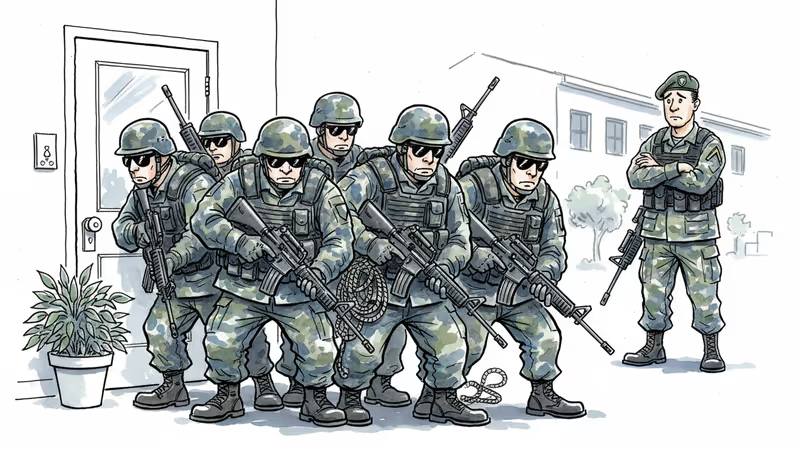
Their tactical formations are even worse. ICE agents bunch up in doorways and cluster around targets—positioning that would get real soldiers killed in combat. They "stack" on doors using close-quarters combat formations designed for hostile environments, not civil law enforcement.
The veteran's assessment is brutal: "Rather than resembling any type of recognizable urban warfare formation, ICE agents' tactics often seem to be modeled off what they've seen in movies or imbibed via TV shows or video games."
Twenty Years of Lessons, Completely Ignored

The wars in Iraq and Afghanistan taught hard lessons about escalation and de-escalation. Units learned that unnecessary violence creates more enemies, while measured responses reduce casualties on all sides. Smart tactics preserved civilian lives, which in turn meant fewer families joining insurgent groups.
ICE operations ignore these lessons entirely. Instead of de-escalating, they ramp up intimidation and assault. They've killed two unarmed American citizens and regularly brandish weapons at people who pose no violent threat.
One Maine sheriff called their approach "bush-league policing." Videos show agents smashing windows randomly, abandoning running vehicles on roadsides, and turning on bystanders for no tactical reason.
Strategy of Chaos or Just Bad Leadership?
Military strategy combines tactics (ways) and resources (means) to achieve specific ends. If the Trump administration wants to increase deportations while maintaining public support, current ICE tactics are counterproductive.
But there's a darker possibility. The veteran identifies ICE's approach as potentially following a "strategy of control"—tactics used by authoritarian regimes like China and Russia. This strategy deliberately uses terror tactics to provoke violent resistance, then uses that resistance to justify brutal crackdowns and expanded definitions of terrorism.
Stephen Miller, White House deputy chief of staff for policy, has repeatedly urged ICE agents to escalate tactics and increase arrests. In October 2025, he told agents they had "federal immunity." Since then, ICE operations have become significantly more violent.
The War Came Home
The veteran's conclusion is personal and painful: "My generation spent its youth at war. We volunteered to do this... with the somehow implied belief that we could do some good. But as we watch the least effective and most morally objectionable of our tactics come home and be used amongst and against us, we are left with a profound feeling of betrayal."
This isn't just about immigration policy—it's about the militarization of civilian law enforcement using the worst lessons from two decades of war. Facial recognition systems that failed overseas, heavily armed convoys rolling through neighborhoods, late-night raids targeting "terrorist leaders" who turn out to be random civilians.
The surveillance state followed soldiers home in their duffel bags, and now it's deployed against American communities.
Authors
Related Articles
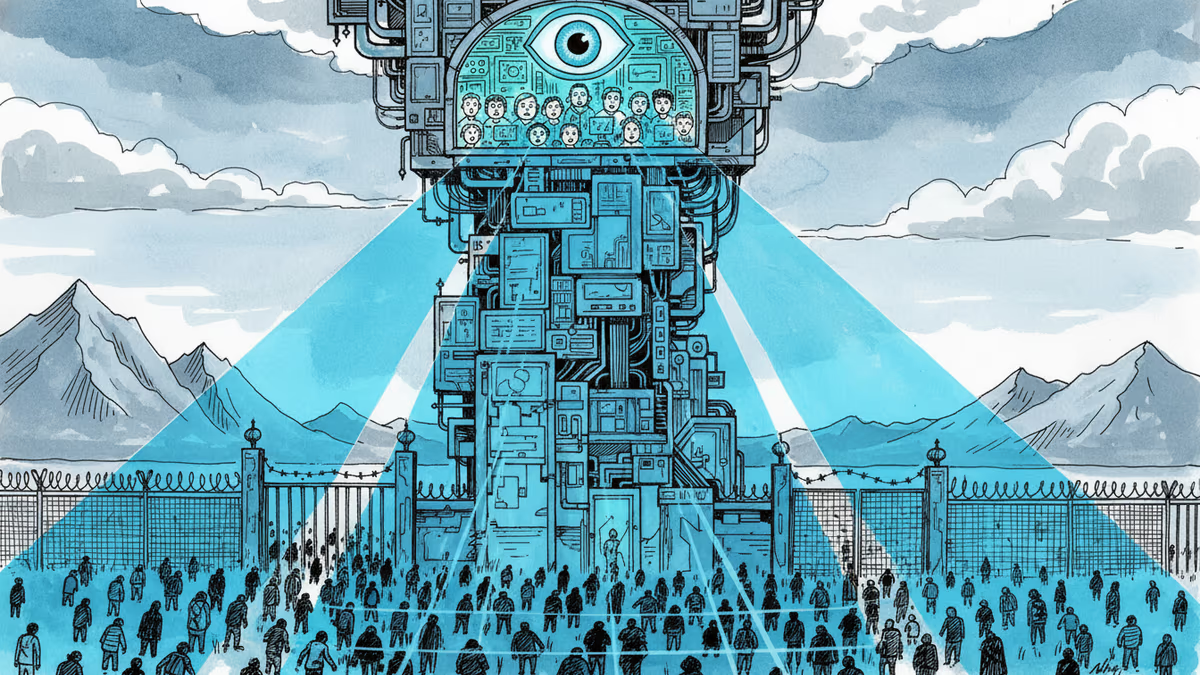
Palantir has become the tech backbone of Trump's immigration enforcement. Former employees are calling it a 'descent into fascism.' What happens when the people who build surveillance tools start asking uncomfortable questions?
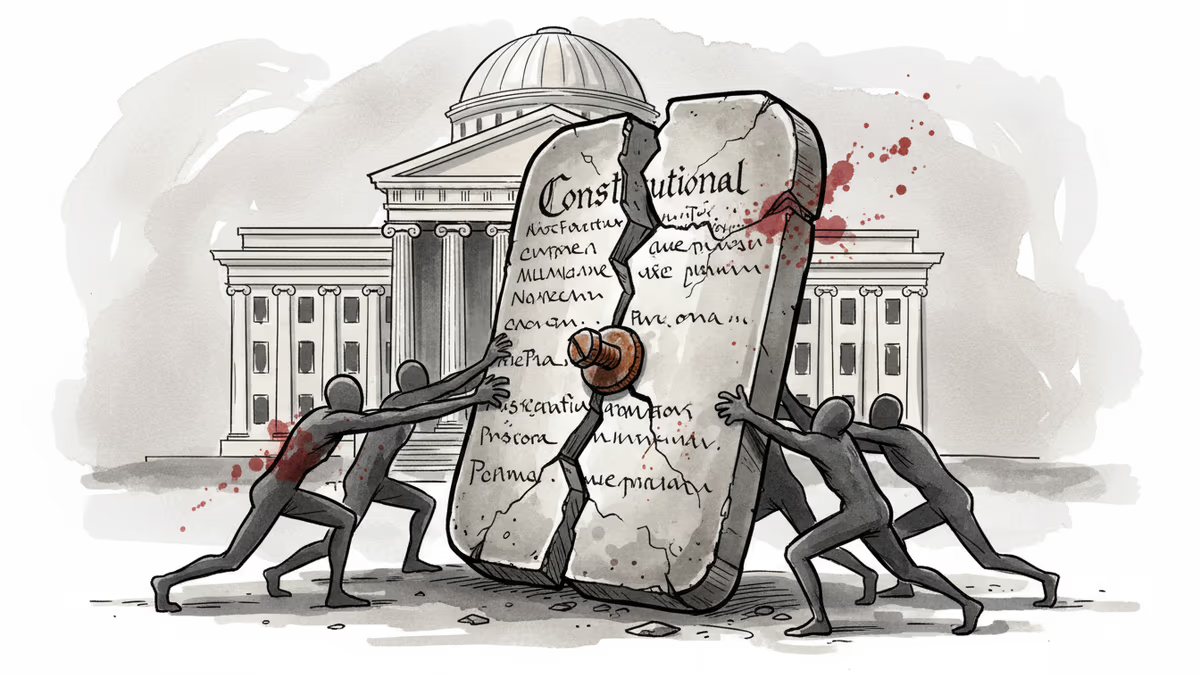
The Supreme Court heard arguments over Trump's birthright citizenship order. The justices seemed skeptical—but the fact that this case made it to the highest court signals something bigger.
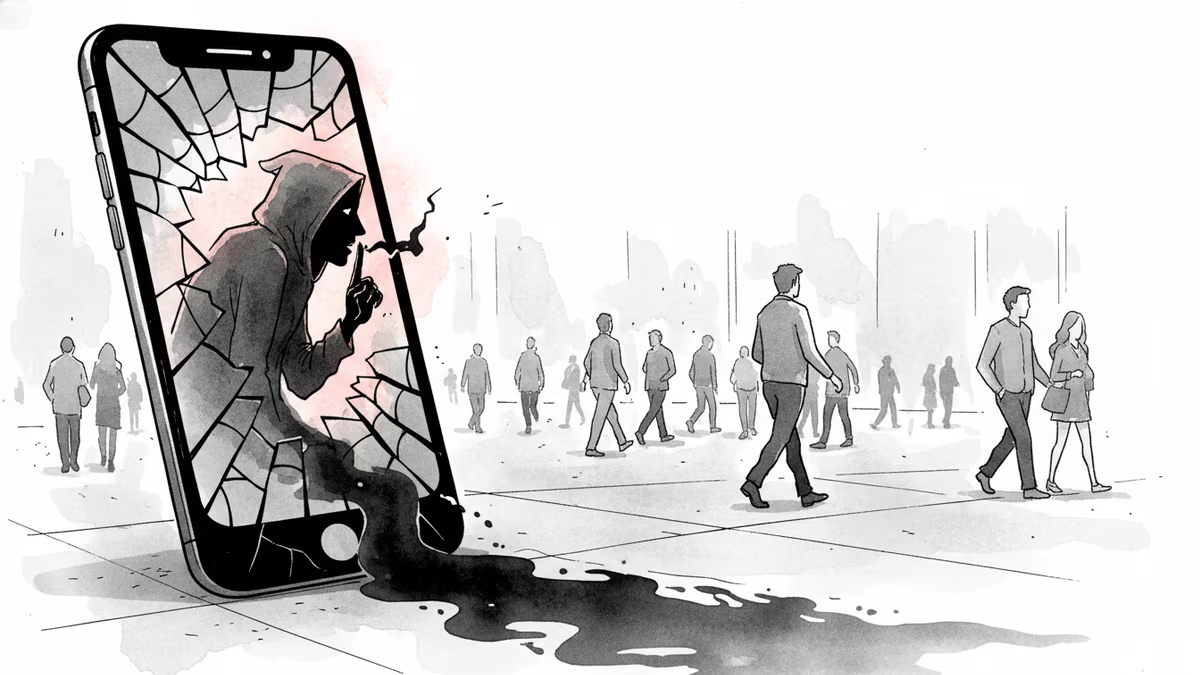
P3 Global Intel, which powers anonymous crime tip systems for law enforcement worldwide, suffered a major breach. The implications go far beyond a typical data leak.
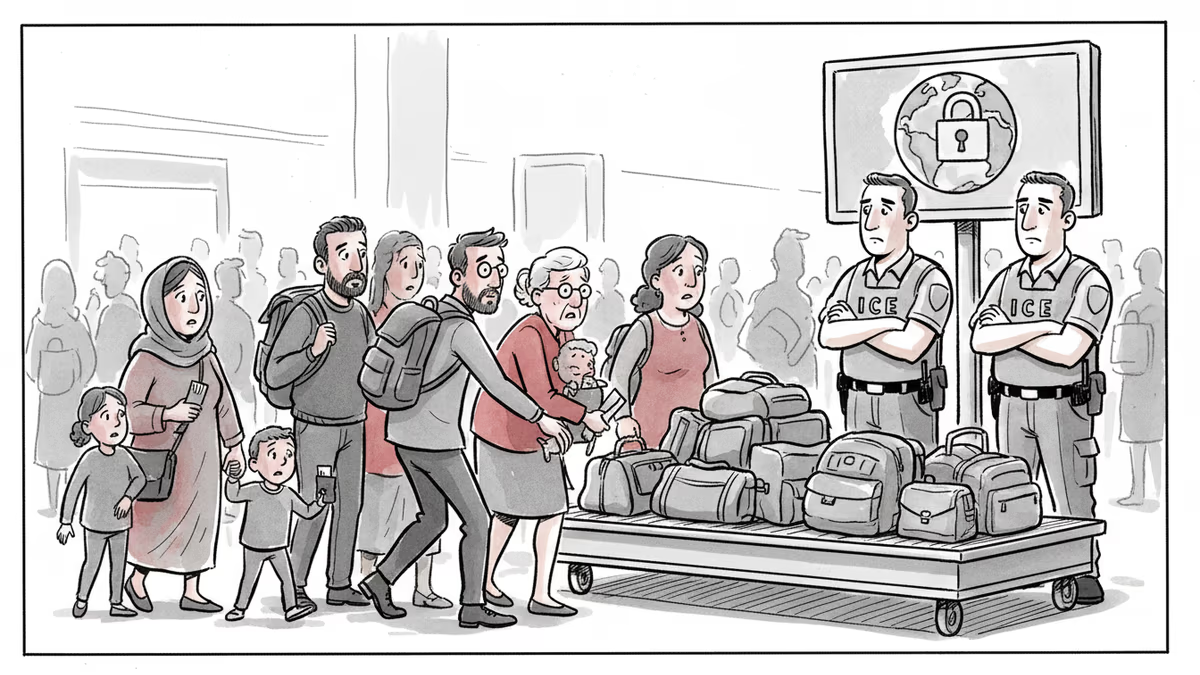
ICE agents have been deployed to 14 US airports, officially to fill TSA staffing gaps during the government shutdown. But the line between security assistance and immigration enforcement is blurring fast.
Palantir has become the tech backbone of Trump's immigration enforcement. Former employees are calling it a 'descent into fascism.' What happens when the people who build surveillance tools start asking uncomfortable questions?
The Supreme Court heard arguments over Trump's birthright citizenship order. The justices seemed skeptical—but the fact that this case made it to the highest court signals something bigger.
P3 Global Intel, which powers anonymous crime tip systems for law enforcement worldwide, suffered a major breach. The implications go far beyond a typical data leak.
ICE agents have been deployed to 14 US airports, officially to fill TSA staffing gaps during the government shutdown. But the line between security assistance and immigration enforcement is blurring fast.
Thoughts
Share your thoughts on this article
Sign in to join the conversation