
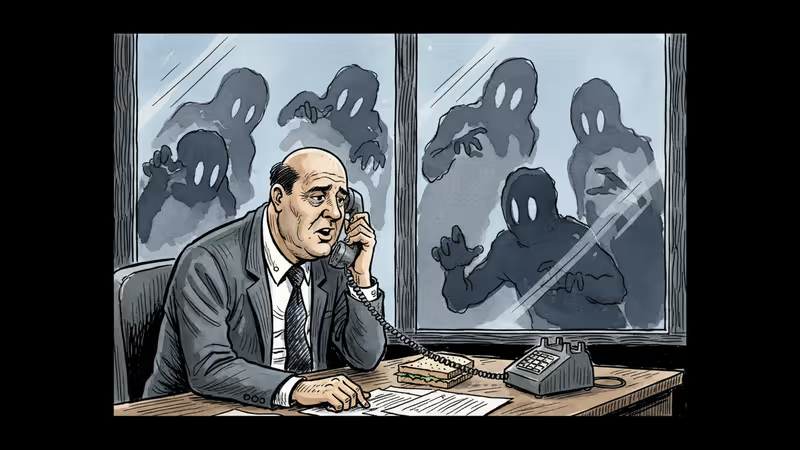
Microsoft Executive's Secret Advisor: The Epstein Connection
Emails reveal former Windows chief Steven Sinofsky sought Jeffrey Epstein's advice during his Microsoft exit, sharing confidential company information and paying for consultation services.
November 2012: One of Microsoft's most powerful executives suddenly left the company. Steven Sinofsky, the man who ran Windows, made a surprise exit that shocked the tech world. But newly released emails reveal he had a secret advisor guiding him through the process—one whose criminal past should have been a massive red flag.
Emails published by the Justice Department on Friday show that Sinofsky turned to Jeffrey Epstein for real-time advice as he negotiated his departure from Microsoft. He forwarded internal company emails to the convicted sex offender almost as they happened, paid him for his counsel, and even sought his help landing jobs at Apple or Samsung.
Real-Time Consultation, Real Problems
The email chains paint a disturbing picture of corporate decision-making. In July 2013, months after leaving Microsoft, Sinofsky forwarded a confidential email between Microsoft executives to Epstein. The message detailed internal company issues, according to The Verge's reporting.
This wasn't casual correspondence. The emails suggest Sinofsky treated Epstein as a paid consultant, compensating him for advice on navigating one of tech's highest-profile executive departures. Remember, this was happening while Epstein was a registered sex offender, having been convicted in 2008 for soliciting prostitution from a minor.

The timing matters. Sinofsky left Microsoft just as the company was launching Windows 8 and the Surface tablet—products he had championed. His sudden departure was attributed to conflicts with CEO Satya Nadella's predecessor, but these emails suggest he had outside counsel influencing his decisions.
The Judgment Question
What's most troubling isn't just that a Microsoft executive shared confidential information—it's the complete failure of judgment this represents. Sinofsky wasn't some mid-level manager; he was one of the most powerful people in tech, responsible for products used by hundreds of millions of people worldwide.
The emails raise uncomfortable questions about due diligence in executive circles. How many other tech leaders were in Epstein's orbit? What other confidential information might have been shared? And perhaps most importantly: if someone this senior could make such poor judgment calls about advisors, what does that say about corporate governance in Silicon Valley?
This isn't just about one executive's poor choices. It's about a culture where power and influence can override basic ethical considerations. When you're managing billions in revenue and millions of users' data, your choice of advisors becomes everyone's business.
Authors
Related Articles

GitHub confirmed hackers stole data from 3,800 internal repositories via a poisoned VS Code extension. Here's why developer tools are now the most dangerous attack surface in tech.
Emails revealed in the Musk v. Altman trial show Microsoft executives were deeply skeptical of OpenAI in 2017–2018. What actually changed their minds?
Xbox hardware revenue dropped 33% in Q1 2026, yet Microsoft posted $82.9B in total revenue. What this tells us about the future of gaming—and who actually loses.

Microsoft is letting Windows users delay updates indefinitely — 35 days at a time, as many times as they want. A long-overdue fix, or a security risk hiding in plain sight?
GitHub confirmed hackers stole data from 3,800 internal repositories via a poisoned VS Code extension. Here's why developer tools are now the most dangerous attack surface in tech.
Emails revealed in the Musk v. Altman trial show Microsoft executives were deeply skeptical of OpenAI in 2017–2018. What actually changed their minds?
Xbox hardware revenue dropped 33% in Q1 2026, yet Microsoft posted $82.9B in total revenue. What this tells us about the future of gaming—and who actually loses.
Microsoft is letting Windows users delay updates indefinitely — 35 days at a time, as many times as they want. A long-overdue fix, or a security risk hiding in plain sight?
Thoughts
Share your thoughts on this article
Sign in to join the conversation