
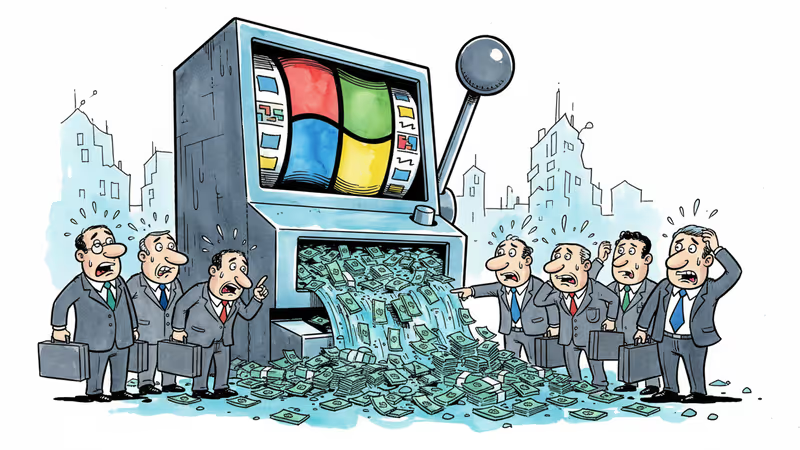
Microsoft's $88B AI Bet: Genius or Gamble?
Microsoft spent $88 billion on AI infrastructure last year, but investors are questioning if the massive investment will pay off as growth disappoints.
Microsoft just dropped $88.2 billion on AI infrastructure last year—nearly double their previous annual spending. Despite posting solid earnings with $81.3 billion in quarterly revenue, investors sent the stock tumbling. The question haunting Wall Street: Is this the smartest investment in tech history, or the most expensive mistake?
The Numbers Behind the Bet
Microsoft's financial report reads like a tale of two realities. Revenue climbed 17% to $81.3 billion, with net income surging 21% to $38.3 billion. Microsoft Cloud hit a record-breaking $50 billion in revenue. By any traditional measure, this should be cause for celebration.
Instead, investors are spooked. The company has already spent $72.4 billion on capital expenditures in just the first half of this fiscal year—approaching their entire previous year's spending. Most of this massive outlay is flowing into data centers designed to serve AI workloads, particularly for OpenAI, Anthropic, and enterprise customers hungry for generative AI capabilities.
UBS analyst Karl Keirstead captured the market's anxiety: "The fact that BOTH Azure and the M365 segments fell a bit short is the key negative we're hearing." When your two flagship cloud products underperform expectations while you're burning through billions, investors get nervous.
The AI Adoption Reality Check
CEO Satya Nadella spent much of the earnings call in what can only be described as damage control mode, rattling off AI adoption statistics with the enthusiasm of a startup founder pitching Series A investors. But the numbers tell a more nuanced story.
GitHub Copilot, the coding assistant, appears to be a genuine success with 4.7 million paid subscribers—a healthy 75% year-over-year growth. That's real money from real developers willing to pay for AI that demonstrably improves their productivity.

Microsoft 365 Copilot tells a different story. Despite being integrated into the world's most ubiquitous productivity suite, it has captured just 15 million paid seats out of 450 million total seats. That's roughly a 3% adoption rate among existing customers—hardly the revolutionary uptake you'd expect from a "must-have" AI tool.
Nadella also highlighted consumer Copilot usage growing "nearly 3x year-over-year," but conveniently omitted actual user numbers. In an era where companies love to trumpet every metric that makes them look good, such vagueness raises eyebrows.
The Infrastructure Gamble
Here's where Microsoft's strategy gets interesting—and risky. Nadella and CFO Amy Hood claim that demand for AI services "far outstrips data center supply," meaning all this new infrastructure is essentially pre-booked for its entire lifespan. If true, this positions Microsoft as the picks-and-shovels provider in the AI gold rush.
But this narrative requires believing that current AI enthusiasm will sustain for years, not months. It assumes enterprises will eventually embrace AI tools at scale, despite current lukewarm adoption rates. It bets that OpenAI and other AI labs will continue exponential growth in compute demand.
The healthcare AI agent Dragon Copilot offers a glimpse of what success might look like. Available to 100,000 medical providers, it documented 21 million patient encounters last quarter—a threefold increase. This suggests AI finds its strongest footing in specialized, high-value use cases where the productivity gains justify the costs.
The Competitive Context
Microsoft's massive spending spree isn't happening in isolation. Amazon, Google, and Meta are all racing to build AI infrastructure, creating a capital expenditure arms race that would make Cold War defense contractors blush. The winner will likely control the next decade of enterprise computing.
But there's a crucial difference: Microsoft has placed the biggest bet relative to their existing business. While Google can fund AI development from search advertising and Amazon from e-commerce profits, Microsoft is essentially betting their entire growth trajectory on AI adoption accelerating dramatically.
The company's enterprise relationships give them a unique advantage. Unlike consumer-focused AI companies that must build user bases from scratch, Microsoft already has 450 million paid Office users and millions of Azure customers. The challenge isn't reaching customers—it's convincing them that AI tools are worth the premium.
Authors
Related Articles

Snowflake's new $6 billion AWS contract is about more than cloud spending. It signals a shift in AI infrastructure—away from Nvidia GPUs and toward cheaper, homegrown chips for the agent era.

GitHub confirmed hackers stole data from 3,800 internal repositories via a poisoned VS Code extension. Here's why developer tools are now the most dangerous attack surface in tech.

Emails revealed in the Musk v. Altman trial show Microsoft executives were deeply skeptical of OpenAI in 2017–2018. What actually changed their minds?
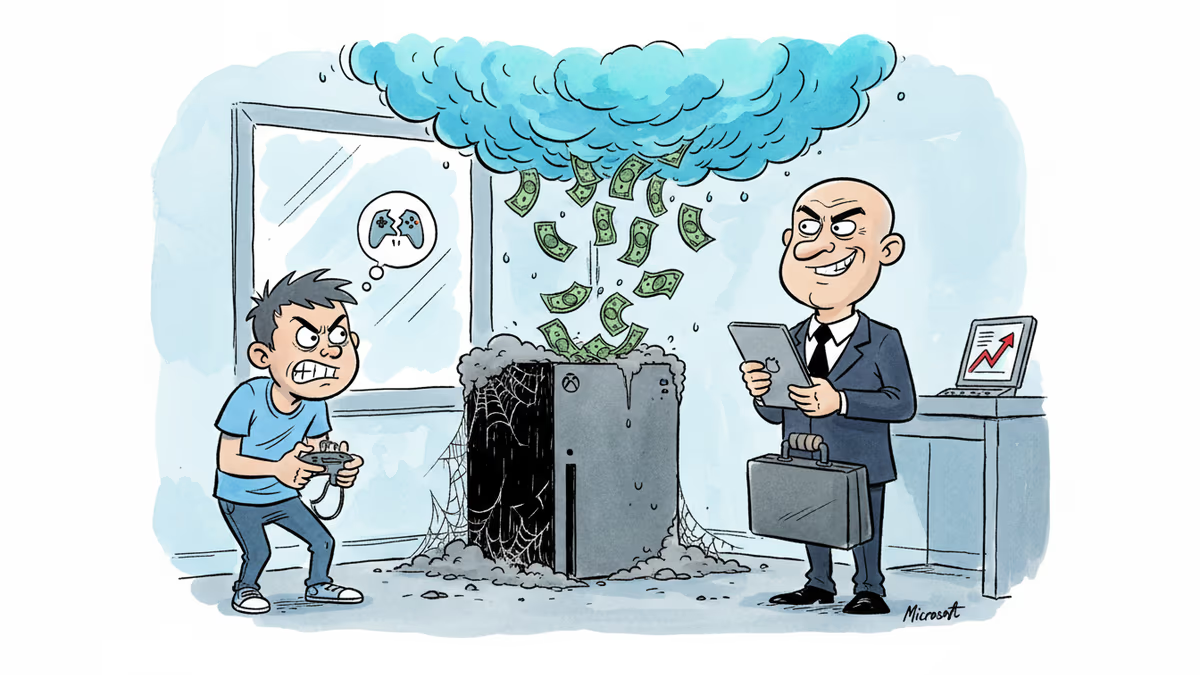
Xbox hardware revenue dropped 33% in Q1 2026, yet Microsoft posted $82.9B in total revenue. What this tells us about the future of gaming—and who actually loses.
Snowflake's new $6 billion AWS contract is about more than cloud spending. It signals a shift in AI infrastructure—away from Nvidia GPUs and toward cheaper, homegrown chips for the agent era.
GitHub confirmed hackers stole data from 3,800 internal repositories via a poisoned VS Code extension. Here's why developer tools are now the most dangerous attack surface in tech.
Emails revealed in the Musk v. Altman trial show Microsoft executives were deeply skeptical of OpenAI in 2017–2018. What actually changed their minds?
Xbox hardware revenue dropped 33% in Q1 2026, yet Microsoft posted $82.9B in total revenue. What this tells us about the future of gaming—and who actually loses.
Thoughts
Share your thoughts on this article
Sign in to join the conversation