
Xbox Just Broke the Console Playbook
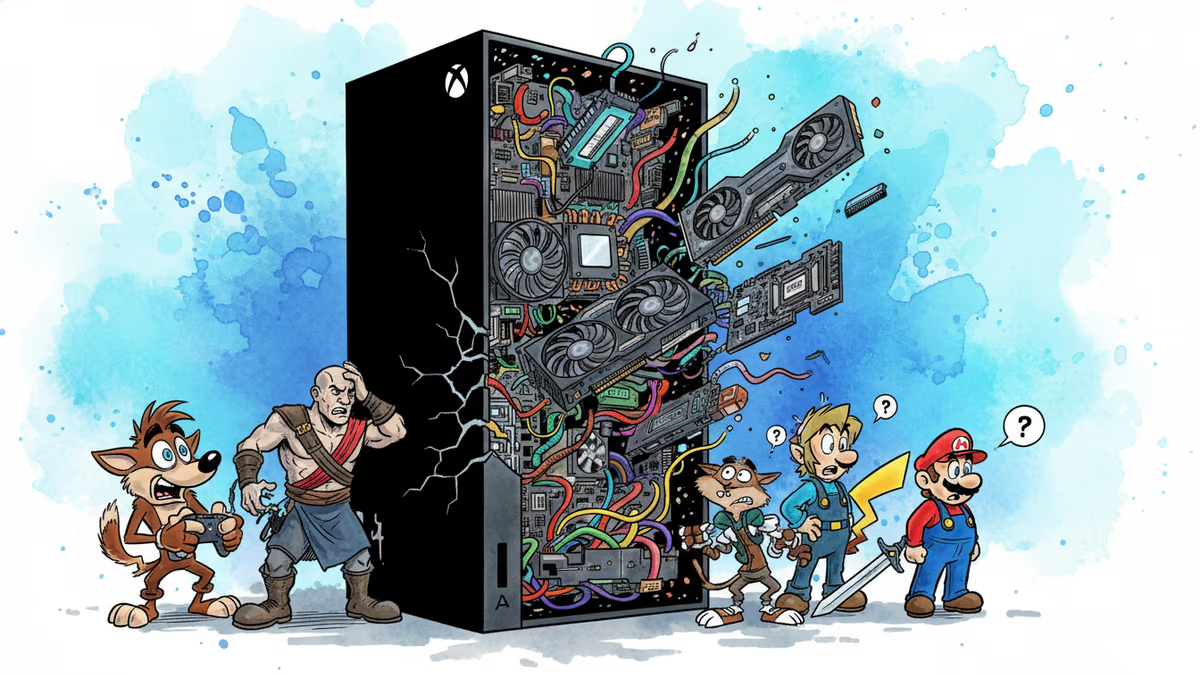
Microsoft's next-gen Xbox 'Project Helix' will play both Xbox and PC games. This isn't just a hardware upgrade—it's a fundamental shift in gaming strategy.
The console wars just got a plot twist. Microsoft's new gaming CEO Asha Sharma dropped a bombshell last month: the next-generation Xbox, codenamed 'Project Helix,' will play both Xbox and PC games.
"Great start to the morning with Team Xbox, where we talked about our commitment to the return of Xbox including Project Helix," Sharma posted on X. The promise? A console that will "lead in performance" while running games from both ecosystems.
Why This Changes Everything
This isn't your typical console generation bump. For 30 years, the gaming industry has operated on a simple principle: consoles play console games, PCs play PC games. Project Helix just threw that rulebook out the window.
The implications are staggering. Steam's massive library of 50,000+ games could potentially become accessible on a living room console. Indie developers who've been locked out of console development due to certification costs might suddenly have a pathway to TV screens worldwide.
Sony's Nightmare Scenario
While Microsoft talks openness, Sony doubles down on exclusivity. PlayStation's strategy relies heavily on must-have titles like Spider-Man and The Last of Us. But what happens when Xbox players can access not just Xbox exclusives, but also the entire PC gaming catalog?

Nintendo seems less threatened—their focus on unique hardware experiences and first-party franchises creates a different competitive moat. But Sony's premium console positioning suddenly looks more vulnerable.
The Developer Dilemma
Game developers face a fascinating paradox. On one hand, Project Helix could dramatically expand their potential audience. On the other, it might complicate development pipelines. Do you optimize for console hardware or PC flexibility? How do you handle different input methods, performance expectations, and user interfaces?
Smaller studios might rejoice—no more choosing between PC and console development. But AAA developers might face increased complexity in creating games that work seamlessly across both paradigms.
The Bigger Gaming Bet
Microsoft's move reflects a broader industry shift. Gaming is becoming less about hardware and more about services. Xbox Game Pass already demonstrated this philosophy—pay a subscription, play anywhere. Project Helix extends that logic to its natural conclusion.
This strategy could reshape how we think about gaming platforms entirely. Instead of buying into an ecosystem, you're buying into an experience that follows you across devices.
Authors
Related Articles

GitHub confirmed hackers stole data from 3,800 internal repositories via a poisoned VS Code extension. Here's why developer tools are now the most dangerous attack surface in tech.

Emails revealed in the Musk v. Altman trial show Microsoft executives were deeply skeptical of OpenAI in 2017–2018. What actually changed their minds?

Xbox hardware revenue dropped 33% in Q1 2026, yet Microsoft posted $82.9B in total revenue. What this tells us about the future of gaming—and who actually loses.
Microsoft is letting Windows users delay updates indefinitely — 35 days at a time, as many times as they want. A long-overdue fix, or a security risk hiding in plain sight?
GitHub confirmed hackers stole data from 3,800 internal repositories via a poisoned VS Code extension. Here's why developer tools are now the most dangerous attack surface in tech.
Emails revealed in the Musk v. Altman trial show Microsoft executives were deeply skeptical of OpenAI in 2017–2018. What actually changed their minds?
Xbox hardware revenue dropped 33% in Q1 2026, yet Microsoft posted $82.9B in total revenue. What this tells us about the future of gaming—and who actually loses.
Microsoft is letting Windows users delay updates indefinitely — 35 days at a time, as many times as they want. A long-overdue fix, or a security risk hiding in plain sight?
Thoughts
Share your thoughts on this article
Sign in to join the conversation