
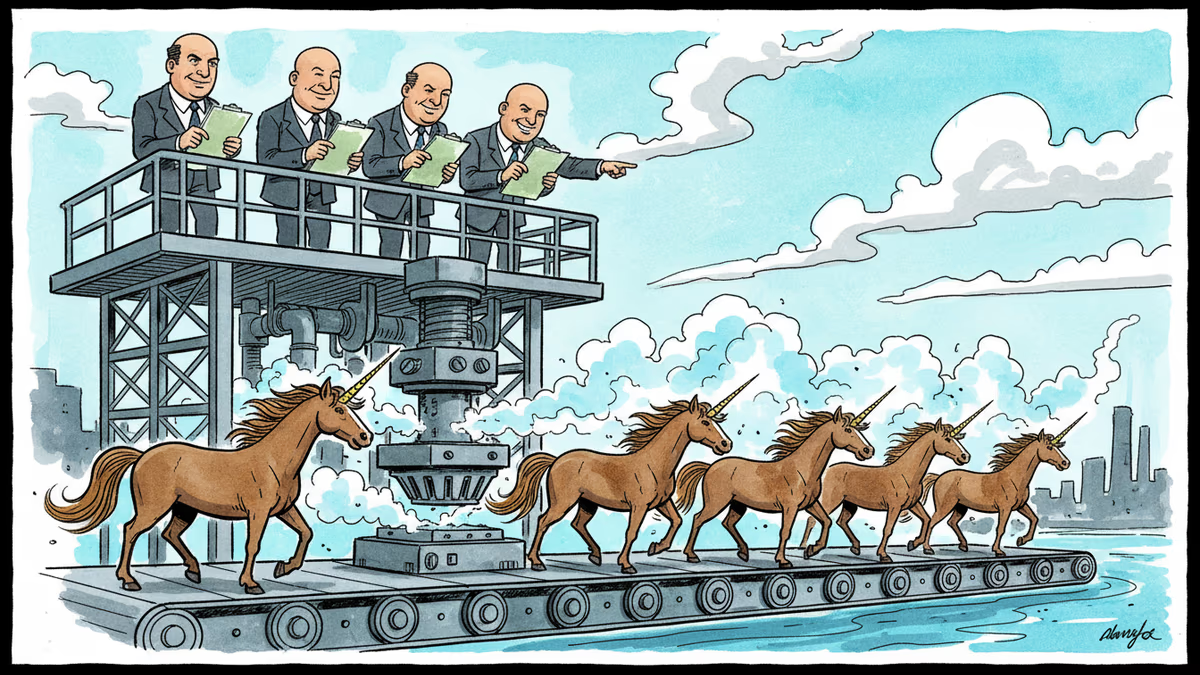
A New Unicorn Every Three Days
Over 30 startups hit unicorn status in just two months of 2026. AI is the catalyst, but healthcare, crypto, and robotics are quietly stealing the show.
In 2013, the word "unicorn" was coined to describe something almost mythological: a startup worth over a billion dollars. In the first two months of 2026, more than 30 of them were minted. That's roughly one every three days.
What Just Happened
TechCrunch, drawing on data from Crunchbase and PitchBook, has been tracking every VC-backed startup that crossed the $1 billion valuation threshold this year. The January and February cohort alone spans humanoid robots, psychiatric care platforms, crypto banks, AI coding assistants, home energy storage, and a company that helps patients navigate menopause.
The headline number belongs to Apptronik, a humanoid robotics company founded in 2016, which raised a $935 million Series A to reach a $5.3 billion valuation. One round. One number that would have been unthinkable for a robotics startup even three years ago.
Close behind is Humans&, an AI research lab focused on human-AI collaboration, which pulled in a $480 million seed round at a $4.5 billion valuation. Then there's Erebor Bank, founded in 2025 by Palmer Luckey (of Oculus fame), which raised a $635 million seed round — yes, seed — to build a bank specifically for crypto clients, landing a $4 billion valuation before most banks have even figured out how to spell "blockchain."
Flapping Airplanes, an AI research lab founded in 2025, raised $180 million in seed funding at a $1.5 billion valuation. Its public-facing product information: minimal. Its investor backing from Index Ventures and GV: very real.
It's Not Just an AI Story

The instinct is to read this list as an AI gold rush. And partly, it is. Positron (AI semiconductors), Fundamental (foundational models), Goodfire (AI interpretability tools), Code Metal (AI coding assistant), Arena (AI for executive decision-making), Profound (AI search optimization) — the AI-native companies are numerous and well-funded.
But the more interesting subplot is everything else.
Healthcare is the quiet winner of this cohort. Midi Health (menopause telemedicine), Iterative Health (GI medical research), Pomelo Care (virtual maternity care), Talkitary (psychiatric access), Garner (patient-doctor matching), and Solace (healthcare marketplace) — that's six healthcare unicorns in two months. The common thread: they're all attacking gaps in the US healthcare system that have existed for decades but are now being addressed at scale with software.
Crypto is back, quietly. TRM Labs (crypto fraud prevention), Rain (crypto wallets), Alpaca (crypto brokerage API), and Erebor Bank make four crypto-adjacent unicorns in the cohort — a signal that institutional appetite for the sector has returned, even if the retail frenzy of 2021 hasn't.
Bedrock Robotics, founded in 2024 by a former Waymo employee, is putting autonomous operation systems into construction equipment. It raised $270 million in Series B at $1.8 billion. Construction — one of the least digitized industries on earth — is suddenly a unicorn factory.
Three Tensions Worth Watching
The valuation-to-product gap is widening. When a company raises a $480 million seed round or achieves unicorn status with no public product, the valuation is essentially a bet on a team and a thesis. That's not inherently wrong — early-stage investing has always been about futures, not presents. But the scale of capital being deployed at pre-product stages is unprecedented, and it concentrates enormous risk in the hands of a small number of investors who control the narrative.
The healthcare opportunity is real, but so is the regulatory ceiling. The six healthcare unicorns in this cohort are all operating in a US system uniquely broken enough to make software-driven alternatives viable. Replicating these models in markets with universal healthcare or stricter telemedicine laws — Europe, Canada, most of Asia — is a fundamentally different challenge. The TAM assumptions baked into these valuations may be more US-specific than the pitch decks suggest.
The seed round has lost its meaning. When Erebor Bank raises $635 million in a seed round, the word "seed" is doing a lot of work. Historically, seed funding meant early-stage capital for unproven ideas. What's happening now is that "seed" is increasingly being used for what would previously have been called Series A or B — often with pre-negotiated terms, pre-existing relationships, and sometimes pre-existing revenue. The label matters because it shapes how the market reads risk.
Authors
Related Articles
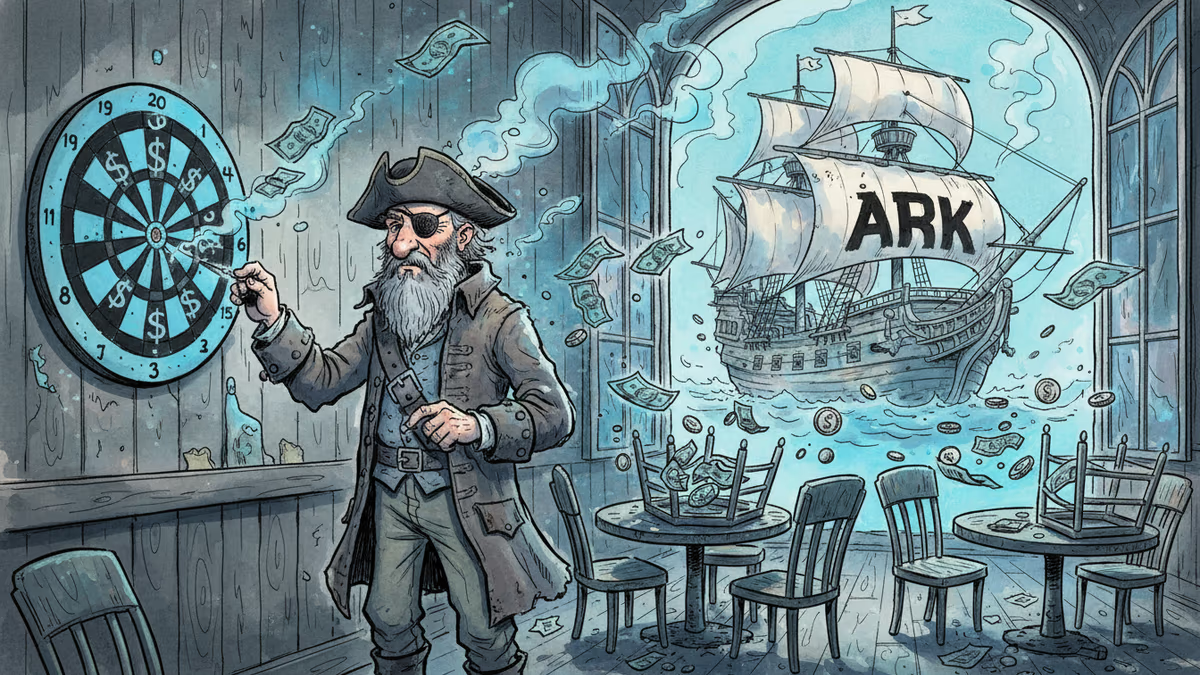
Lucra Sports CEO Dylan Robbins landed Cathie Wood's ARK Invest as a Series B lead without building AI. The story behind his unconventional fundraising playbook.
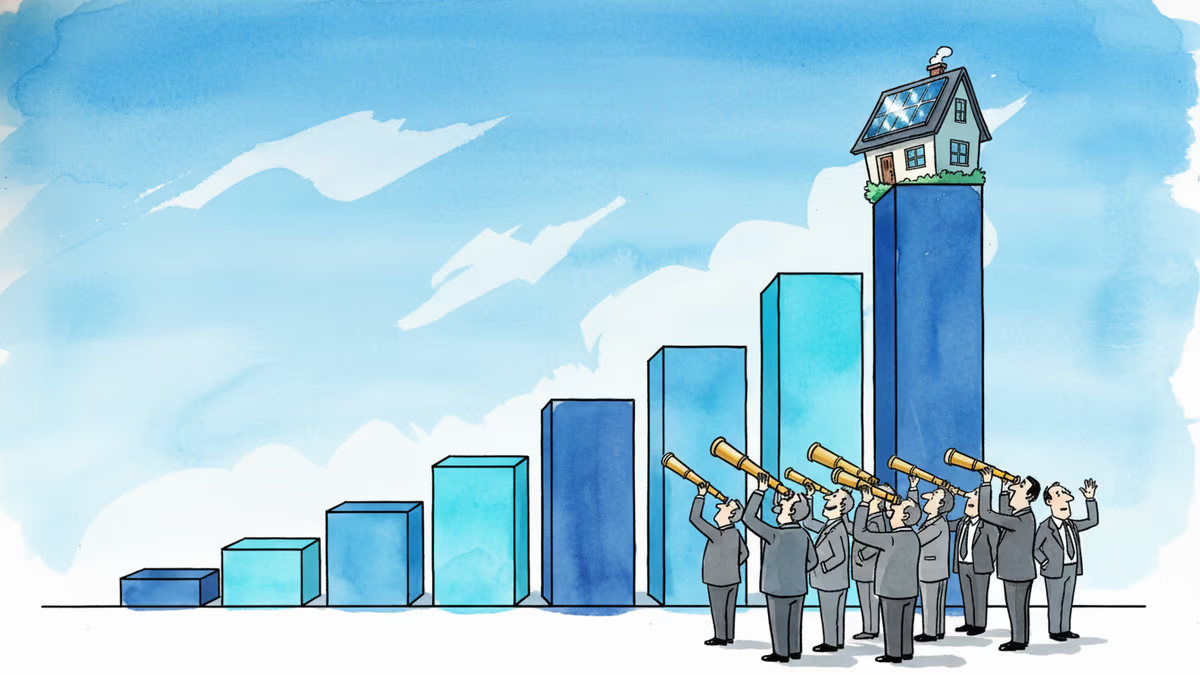
SolarSquare is raising $55-60M at a $450-500M valuation, more than doubling its worth in 18 months. Here's what's driving investor conviction in India's residential solar market.
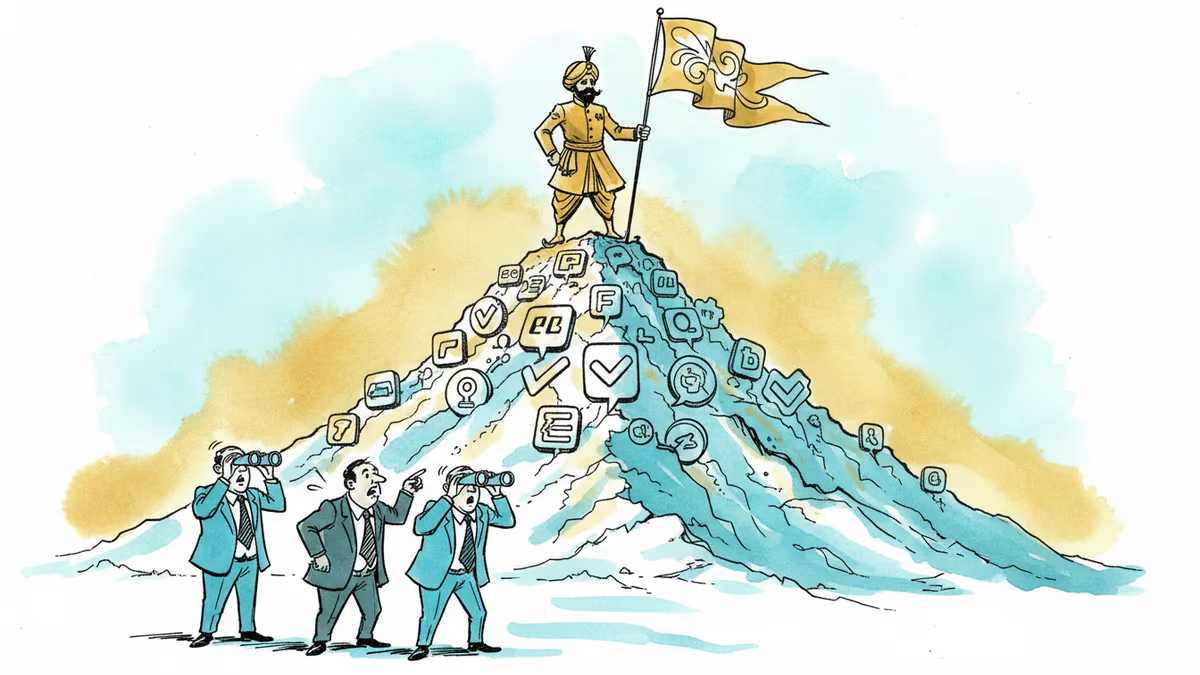
Indian venture capital has quietly displaced Silicon Valley in its own backyard. Only one American VC made India's top 10 investor list last year. Here's why that matters beyond India.
Cerebras Systems IPO yields a $5.3 billion return for Benchmark. Explore the 8.5-year journey from a reluctant first meeting to challenging Nvidia's AI dominance.
Lucra Sports CEO Dylan Robbins landed Cathie Wood's ARK Invest as a Series B lead without building AI. The story behind his unconventional fundraising playbook.
SolarSquare is raising $55-60M at a $450-500M valuation, more than doubling its worth in 18 months. Here's what's driving investor conviction in India's residential solar market.
Indian venture capital has quietly displaced Silicon Valley in its own backyard. Only one American VC made India's top 10 investor list last year. Here's why that matters beyond India.
Cerebras Systems IPO yields a $5.3 billion return for Benchmark. Explore the 8.5-year journey from a reluctant first meeting to challenging Nvidia's AI dominance.
Thoughts
Share your thoughts on this article
Sign in to join the conversation