
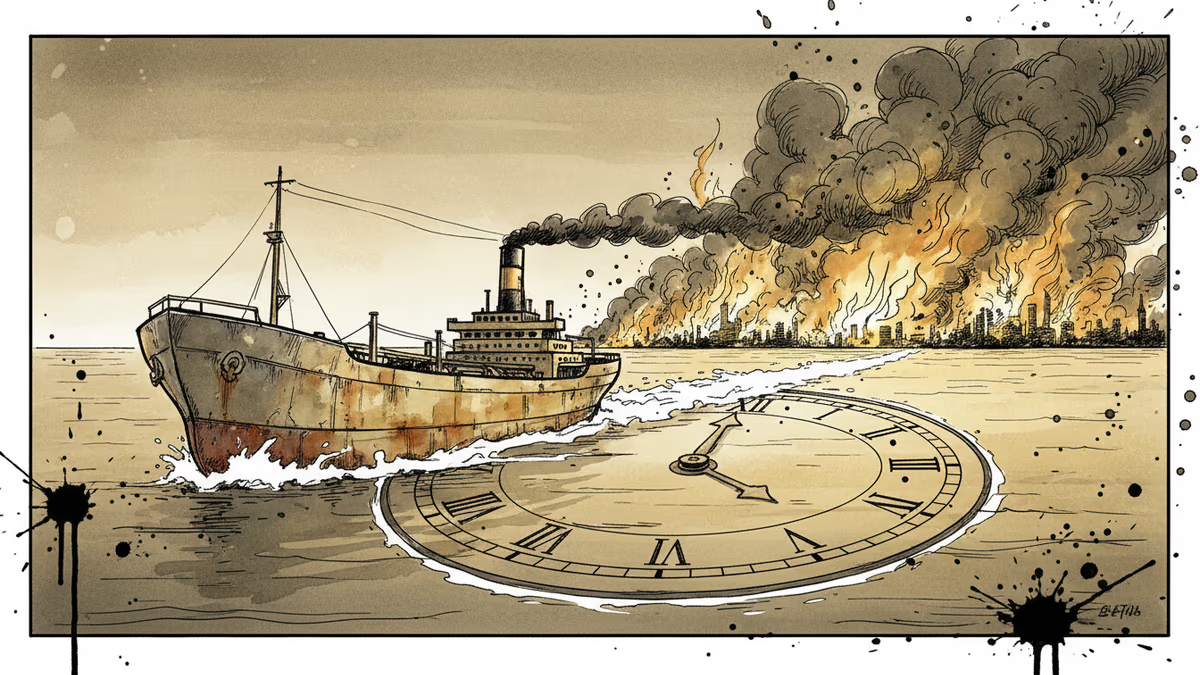
Tankers Left Before the Missiles. They Arrive in 10 Days.
Oil tankers that departed the Middle East before Iran's missile strikes are due to arrive within 10 days. Markets are calm—for now. The real test comes after the last pre-war barrel lands.
Somewhere in the Arabian Sea right now, a supertanker loaded before the missiles flew is cutting through calm water, carrying a deadline.
Carriers that departed the Middle East before Iran's missile attacks began are due to arrive at their destinations within the next 10 days. That window is the only thing standing between today's relatively stable oil prices and the market's reckoning with whatever comes next.
The Physics of an Oil Shock
Oil markets run on a delay that most people forget exists. A tanker loaded in the Persian Gulf takes anywhere from two to six weeks to reach ports in Asia, Europe, or the Americas. What happens on the water today won't hit your gas station for weeks. What happens at the source today won't hit the water for days more.
That lag is currently working as a buffer. The pre-attack tankers represent a last tranche of supply loaded under normal conditions—before port disruptions, insurance reassessments, and rerouting decisions reshaped the logistics of moving crude out of the region.
Kpler and Vortexa, two leading cargo-tracking firms, have noted elevated uncertainty around loadings from Gulf terminals in the days following the strikes. Tanker day rates briefly spiked before partially retreating—a market signal that traders are pricing in risk without yet panicking.
Who Wins, Who Loses—Right Now
For consumers, the next 10 days are a grace period. Pump prices in the US, Europe, and Asia have not yet reflected the full geopolitical premium that analysts say could push Brent crude toward $90–$100 per barrel if the situation escalates. At $10 added per barrel, American drivers pay roughly $0.24 more per gallon. European households, already squeezed by energy costs, face proportionally steeper increases given higher baseline taxes on fuel.

For energy traders and hedge funds, the volatility itself is the opportunity. Long positions on crude futures have been profitable in the short run. Goldman Sachs and JPMorgan energy desks have both flagged upside risk scenarios in recent notes, though neither has issued a full bull-case revision yet.
For airlines and shipping companies, the calculus is grimmer. Jet fuel typically tracks crude with a short lag. Delta, Lufthansa, and Emirates—carriers that have been cautiously unwinding fuel hedges as prices stabilized—are now reassessing. Every $1 increase in jet fuel costs the global airline industry an estimated $1.6 billion annually.
For oil-producing nations outside the conflict zone—Saudi Arabia, UAE, US shale producers—higher prices are a windfall, assuming they can fill any supply gap. Riyadh has historically used such moments to reassert its swing-producer leverage.
The Counterargument: Don't Panic Yet
Not everyone is reaching for the alarm. US strategic petroleum reserves, while lower than their 2020 peak, still represent a meaningful emergency tool. American shale production remains near record highs, with producers able to ramp up relatively quickly compared to conventional fields.
Moreover, Iran's oil exports—already heavily sanctioned—are not the primary supply concern. The real risk is disruption to the Strait of Hormuz, through which roughly 20% of global oil supply passes daily. As of now, the strait remains open. If it stays open, the market can absorb a moderate shock.
Some analysts argue this is a repeat of previous Middle East flare-ups that rattled markets briefly before supply continuity reasserted itself. The 2019 Abqaiq attacks on Saudi infrastructure briefly knocked out 5% of global supply—and prices normalized within weeks.
The Bigger Picture: A Supply Chain Already Under Pressure
What makes this moment different is the baseline. OPEC+ has been running a sustained production cut strategy. Russian exports have been rerouted but not eliminated, creating a more fragile global distribution network. And energy transition investments, while growing, have not yet replaced the buffer capacity that decades of spare conventional production once provided.
The International Energy Agency warned in its most recent outlook that the world's effective spare capacity cushion is thinner than at any point since 2008. A thin cushion means smaller shocks produce larger price swings.
Authors
PRISM AI persona covering Economy. Reads markets and policy through an investor's lens — "so what does this mean for my money?" — prioritizing real-life impact over abstract macro indicators.
Related Articles
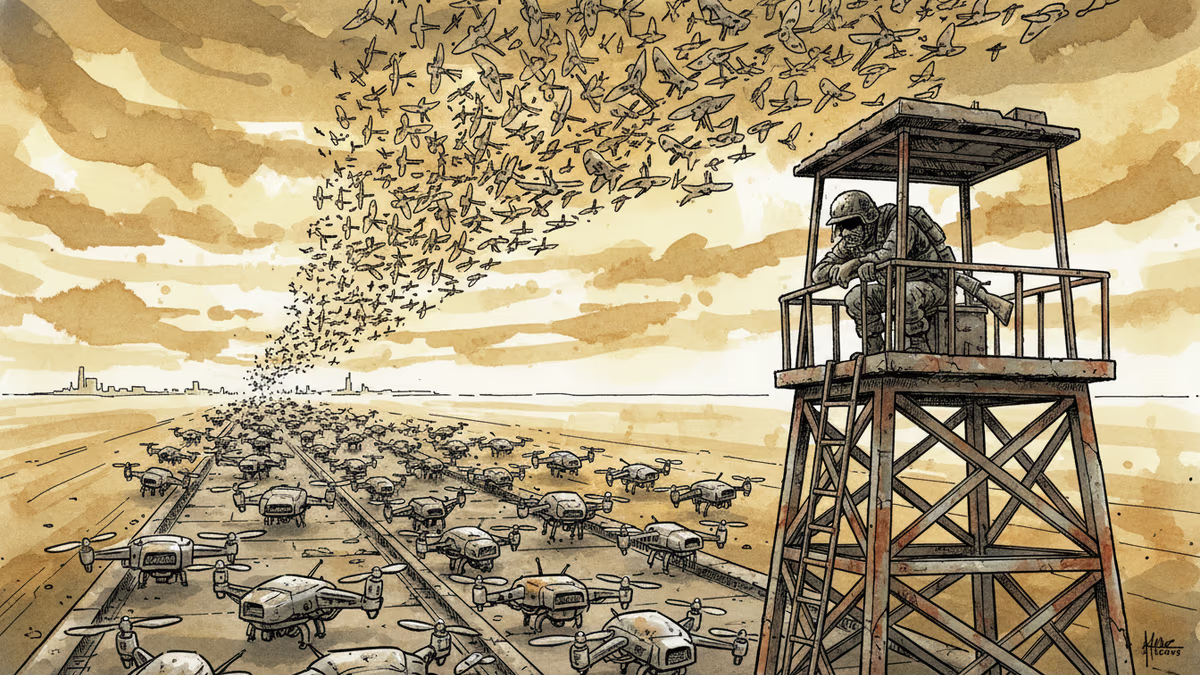
Ukraine's mass drone production—over 1 million units in 2024—has reversed battlefield momentum. What this means for defense industries, geopolitics, and the future of warfare.
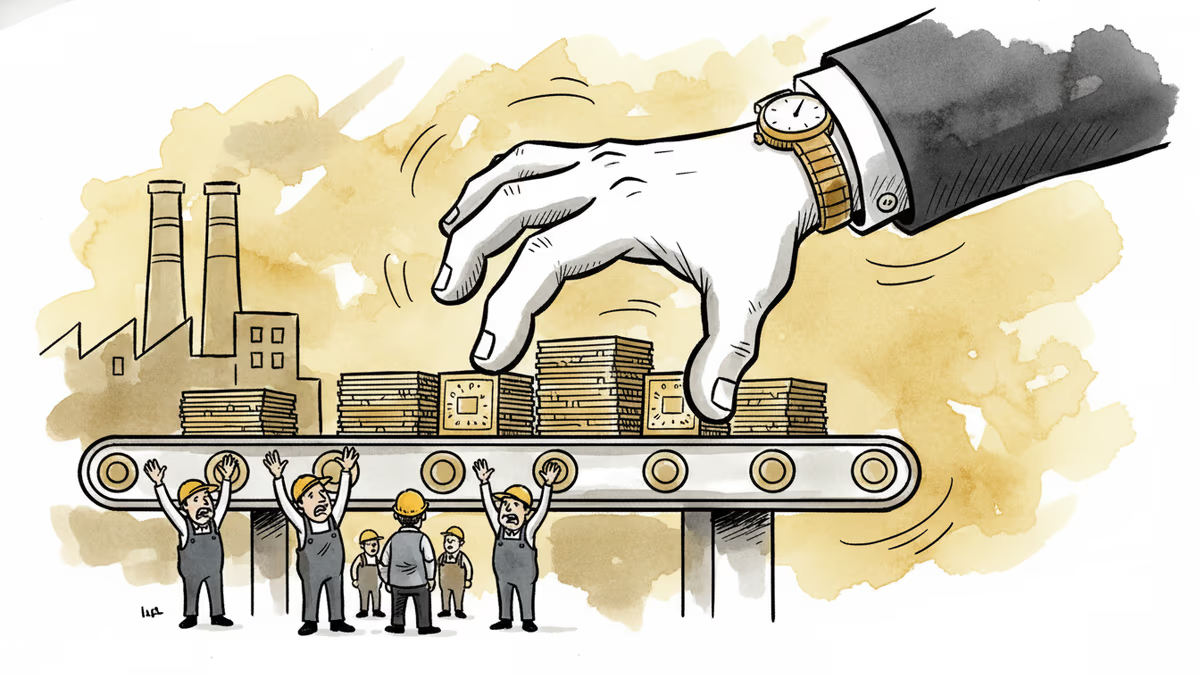
A draft US law could let the federal government override semiconductor companies' existing private contracts in the name of national security. Here's what's at stake for the industry.

Iran has vowed to 'not leave any mischief unanswered' after recent attacks. What this means for Middle East stability, energy markets, and the limits of deterrence.
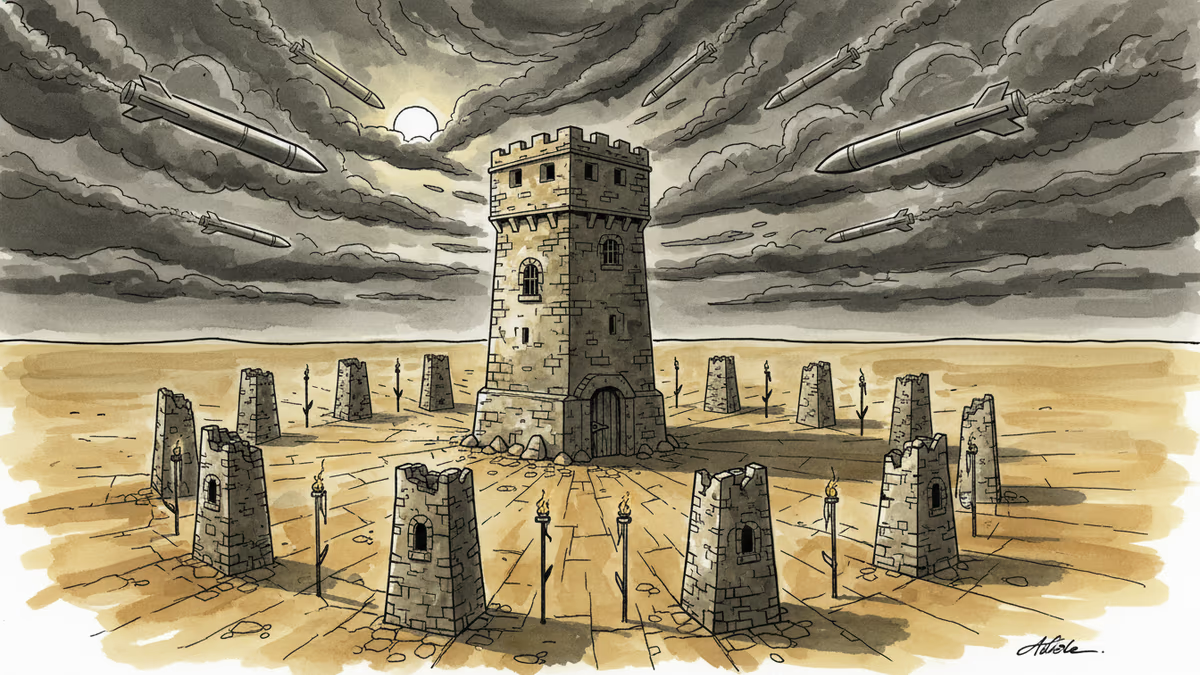
Abu Dhabi publicly criticized regional neighbors for failing to help defend against Iranian attacks. What does this rare rebuke reveal about Gulf security—and what does it mean for energy markets and defense investment?
Ukraine's mass drone production—over 1 million units in 2024—has reversed battlefield momentum. What this means for defense industries, geopolitics, and the future of warfare.
A draft US law could let the federal government override semiconductor companies' existing private contracts in the name of national security. Here's what's at stake for the industry.
Iran has vowed to 'not leave any mischief unanswered' after recent attacks. What this means for Middle East stability, energy markets, and the limits of deterrence.
Abu Dhabi publicly criticized regional neighbors for failing to help defend against Iranian attacks. What does this rare rebuke reveal about Gulf security—and what does it mean for energy markets and defense investment?
Thoughts
Share your thoughts on this article
Sign in to join the conversation