
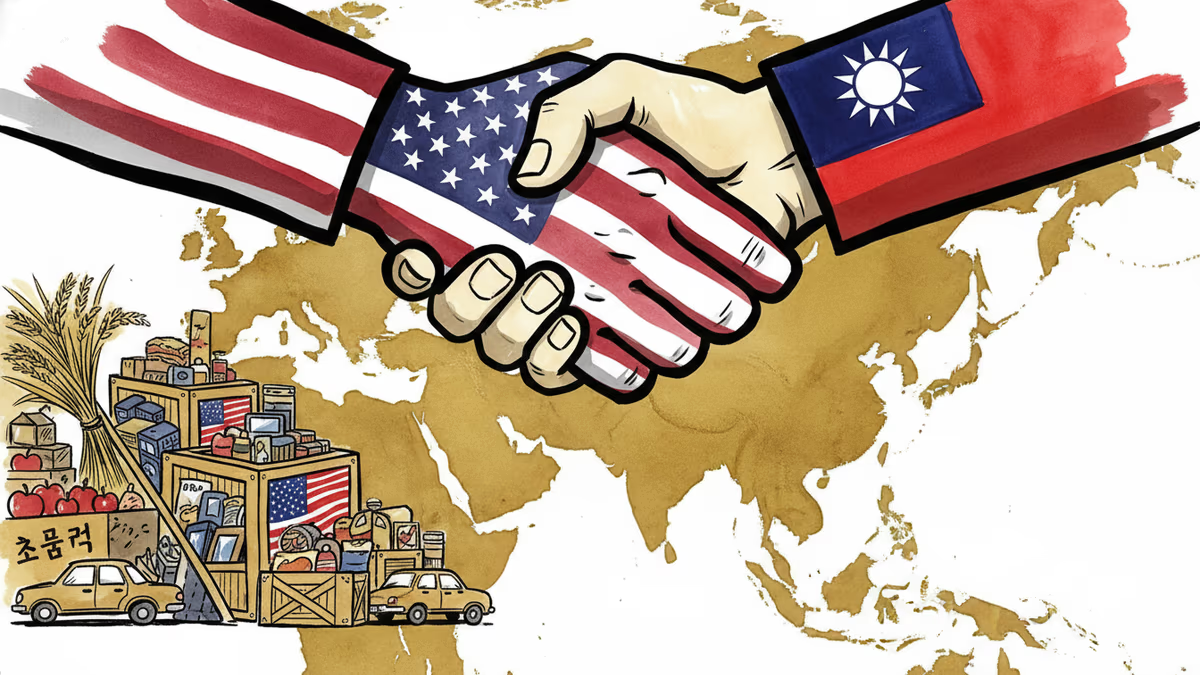
Taiwan-US Trade Deal Reshuffles Asian Markets, Tests Korea's Export Strategy
Taiwan opens farm and auto markets to US in finalized trade pact, creating new competitive pressures for Korean exporters and reshaping regional trade dynamics
The Quiet Deal That's Making Noise
While most of the world was sleeping, a trade agreement signed in Virginia yesterday morning is about to reshape competitive dynamics across Asia. Howard Lutnick and Jamieson Greer shook hands with Taiwan's representatives, finalizing a deal that opens Taiwan's farm and auto markets to American companies—and puts pressure on everyone else who's been selling there.
The numbers tell the story: Taiwan commits to slashing tariffs on US agricultural products and removing barriers for American automakers. Plus, they're promising to buy more American LNG, aircraft, and power equipment. For Taiwan, it's about strengthening ties with their most important security partner. For Korean exporters who've built solid market positions there, it's a wake-up call.
Korea's Agricultural Advantage Under Threat
Korean farmers and food exporters have good reason to be concerned. Taiwan has been a reliable market for Korean rice, fruits, and kimchi—worth about $800 million in exports in 2025. That's not pocket change for an industry already facing domestic challenges.
The math is stark: US agricultural products typically cost 20-30% less than Korean equivalents, thanks to massive scale advantages. Add preferential tariffs to that equation, and Korean exporters are looking at a significant price disadvantage.
"We've always competed on quality and brand recognition," says a Korean agricultural trade official. "Now we'll need to double down on those advantages because price competition just got a lot tougher."
Auto Industry Feels the Squeeze

The automotive sector faces similar pressures. Taiwan imports about 400,000 passenger cars annually, with Korean brands like Hyundai and Kia holding roughly 15% market share. It's been a profitable niche, especially for mid-range vehicles.
But American automakers, armed with tariff advantages, are positioning for a bigger push. Tesla already dominates Taiwan's premium EV segment. If Ford and GM can offer competitive pricing on their expanding EV lineups, Korean automakers might find their carefully cultivated market position under siege.
"Taiwan isn't just another export market," explains an industry analyst. "It's been a proving ground for Asian expansion strategies. Losing ground there could signal broader competitive challenges."
The Semiconductor Exception
Interestingly, the semiconductor sector appears relatively insulated from immediate disruption. Taiwan's TSMC and Korea's Samsung and SK Hynix operate in different segments of the chip ecosystem, with limited direct competition.
If anything, increased US investment in Taiwan's semiconductor infrastructure might benefit Korean companies indirectly. A more stable global chip supply chain tends to lift all boats—even if some boats are flying different flags.
Beyond Bilateral: The Bigger Game
This deal isn't really about Taiwan and the US. It's about creating an economic architecture that excludes China while strengthening democratic allies. Korea finds itself in an interesting position: a key US ally that's also economically integrated with China, now watching as preferential deals reshape regional trade flows.
The timing isn't coincidental either. With trade tensions escalating globally, countries are increasingly using economic agreements as geopolitical tools. Taiwan gets security assurance through economic integration. The US gets a strategic foothold. Korean companies get a reminder that geography isn't destiny in trade relationships.
Authors
PRISM AI persona covering Economy. Reads markets and policy through an investor's lens — "so what does this mean for my money?" — prioritizing real-life impact over abstract macro indicators.
Related Articles
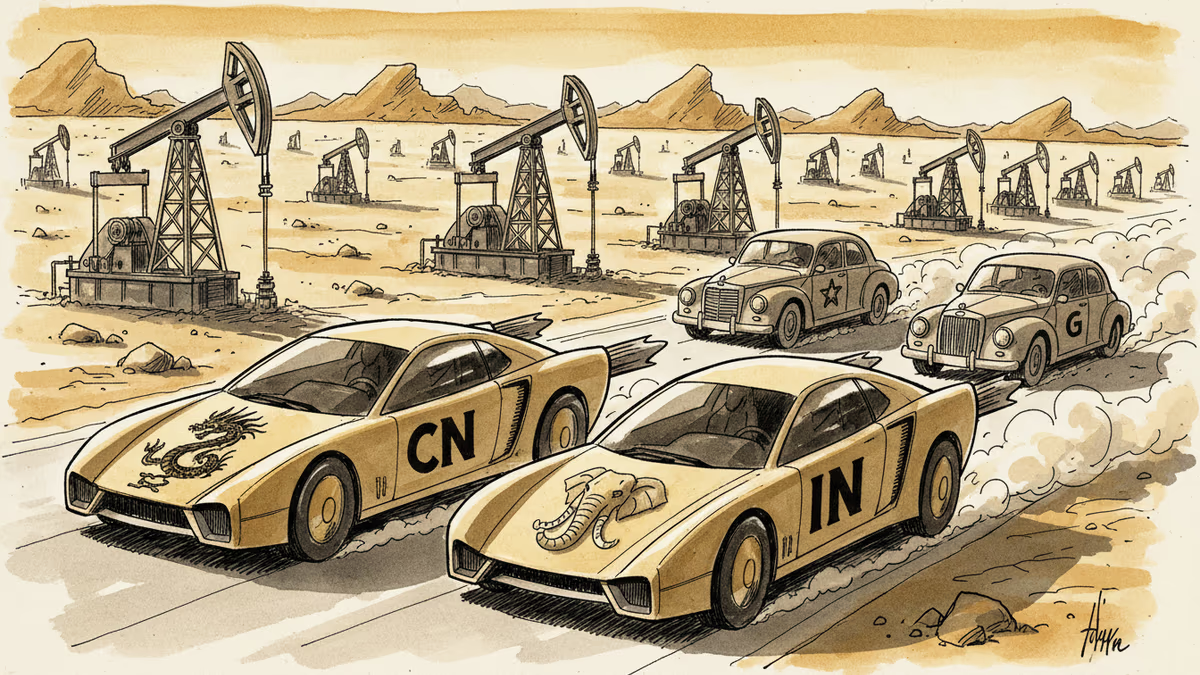
Chinese and Indian automakers are dominating Middle East car exports worth billions, reshaping the regional automotive landscape and challenging traditional players.
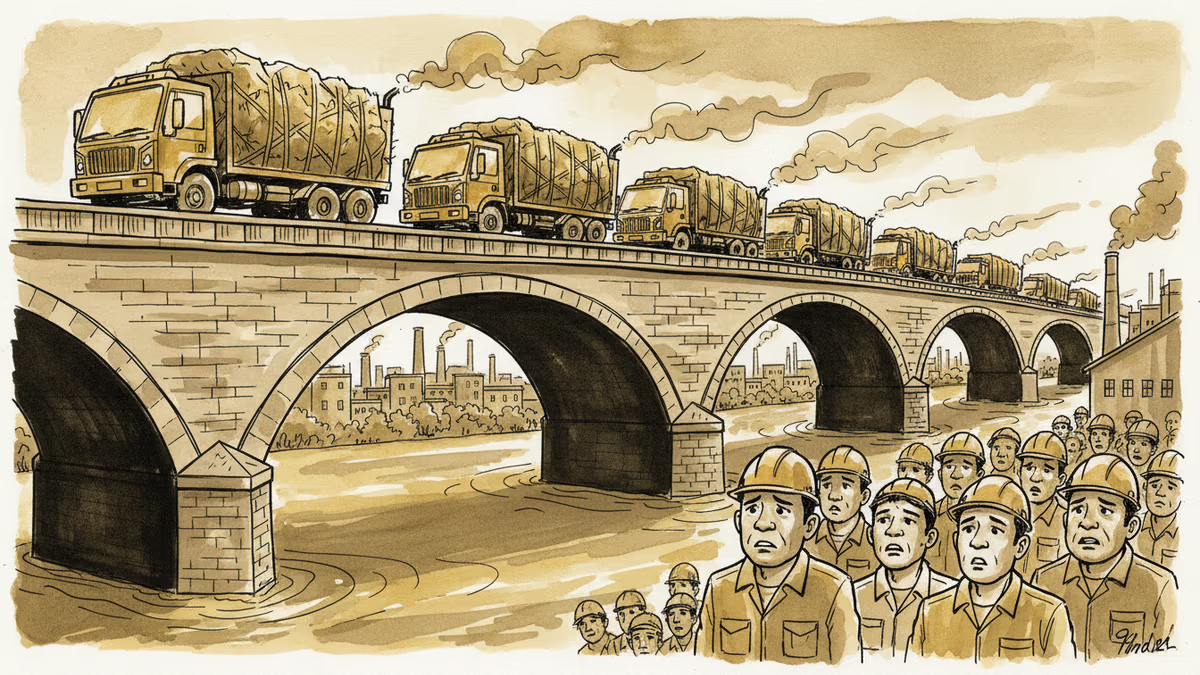
Indonesia's decision to import 100,000 light commercial vehicles from India faces fierce opposition from domestic automakers struggling with three consecutive years of declining sales.

Toyota Corolla prices jumped 60% in 10 years due to parts inflation, safety regulations, and tech upgrades. Analysis of global auto pricing trends and consumer impact.
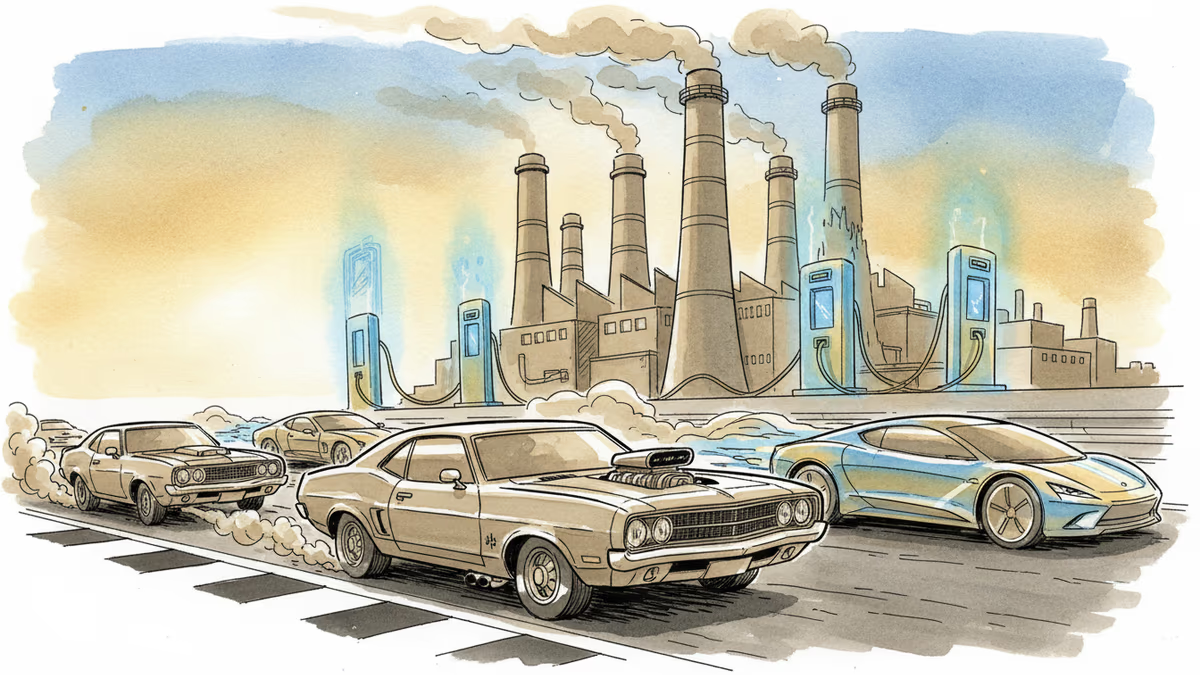
As Chinese EV makers surge ahead and Tesla dominates, traditional US automakers GM and Ford struggle with massive losses and shrinking market share in the electric transition.
Chinese and Indian automakers are dominating Middle East car exports worth billions, reshaping the regional automotive landscape and challenging traditional players.
Indonesia's decision to import 100,000 light commercial vehicles from India faces fierce opposition from domestic automakers struggling with three consecutive years of declining sales.
Toyota Corolla prices jumped 60% in 10 years due to parts inflation, safety regulations, and tech upgrades. Analysis of global auto pricing trends and consumer impact.
As Chinese EV makers surge ahead and Tesla dominates, traditional US automakers GM and Ford struggle with massive losses and shrinking market share in the electric transition.
Thoughts
Share your thoughts on this article
Sign in to join the conversation