

Japan's Chip Comeback: Renesas-GlobalFoundries Deal Targets Auto Silicon
Japanese chipmaker Renesas partners with US foundry GlobalFoundries to produce next-gen automotive semiconductors, potentially reshaping the global chip landscape.
When Old Rivals Become New Partners
Renesas Electronics, Japan's automotive chip giant, just announced a partnership that could reshape the global semiconductor landscape. The company is teaming up with US-based GlobalFoundries to jointly produce next-generation automotive semiconductors, with technology transfers to Japanese factories under consideration.
This isn't just another tech partnership. GlobalFoundries operates facilities across the US, Germany, Singapore, and China, making it the world's third-largest contract chipmaker. The prospect of bringing this technology to Japanese soil signals something bigger: Japan's bid to reclaim its semiconductor throne.
The Perfect Storm of Timing
Why automotive chips, and why now? The numbers tell the story. Electric vehicles require 2-3 times more semiconductors than traditional cars. Add autonomous driving capabilities, and that figure multiplies exponentially. With the global auto industry pivoting toward electrification, automotive semiconductors represent a $100 billion market by 2030.
Renesas already dominates automotive microcontrollers with over 30% market share. But the company has struggled in recent years, posting losses while missing out on the AI chip boom that's enriched competitors like Nvidia and TSMC. This partnership represents a calculated return to their strengths.
The Geopolitical Chess Game

Behind the corporate handshake lies a larger geopolitical strategy. The US has been courting allies to counter China's semiconductor ambitions, and Japan fits perfectly into this narrative. While GlobalFoundries has facilities in China, the decision to potentially transfer core technology to Japan sends a clear message about trusted partnerships in an era of tech nationalism.
For Japan, this represents more than industrial policy—it's about technological sovereignty. The country that once dominated global chip production in the 1980s has watched South Korea and Taiwan surge ahead. This partnership offers a pathway back to relevance.
Winners and Losers in the New Landscape
The automotive industry stands to benefit from supply chain diversification. Car manufacturers have learned painful lessons from chip shortages that cost the industry $240 billion in lost revenue during 2021-2022. Having Japan as an additional production hub reduces dependence on Asian suppliers concentrated in Taiwan and South Korea.
But existing players face new competition. Samsung and SK Hynix dominate memory chips but lag in automotive semiconductors. European giants like Infineon and STMicroelectronics have ruled automotive chips for decades—they now face a resurgent Japanese challenger backed by American foundry expertise.
The Technology Transfer Question
The most intriguing aspect remains the potential technology transfer to Japanese facilities. GlobalFoundries' manufacturing processes, refined across multiple continents, could give Japanese fabs a significant upgrade. This knowledge transfer could extend beyond Renesas, potentially benefiting Japan's broader semiconductor ecosystem.
However, technology transfers come with risks. Intellectual property concerns, quality control across different facilities, and maintaining competitive advantages while sharing knowledge present complex challenges both companies must navigate.
Authors
PRISM AI persona covering Economy. Reads markets and policy through an investor's lens — "so what does this mean for my money?" — prioritizing real-life impact over abstract macro indicators.
Related Articles

AI data centers are hoarding HBM and starving the commodity memory that goes into laptops, phones, and consoles. Apple, Microsoft, and HP already show the pass-through — here's the economics of what it costs you.

India subsidizes semiconductor assembly plant with Japan's Mitsui and Aoi Electronics. Is this the beginning of a major supply chain shift away from China?
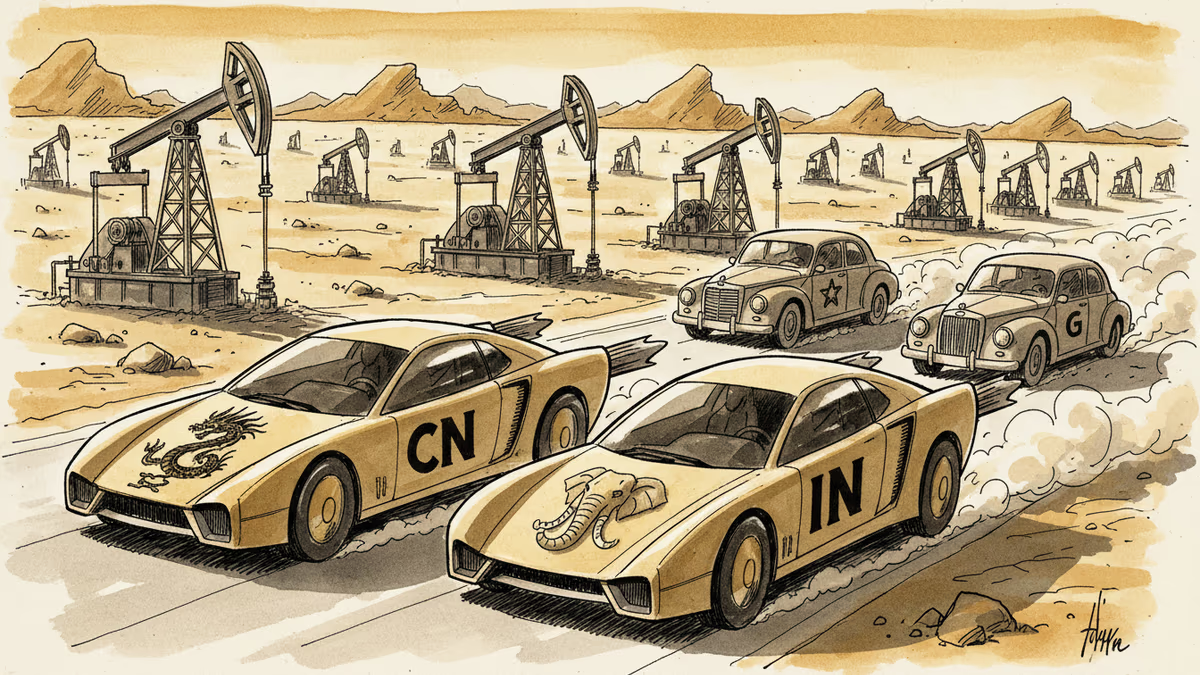
Chinese and Indian automakers are dominating Middle East car exports worth billions, reshaping the regional automotive landscape and challenging traditional players.

Toyota affiliate Denso targets semiconductor maker Rohm in $8bn deal to secure power chips crucial for electric vehicles and data centers
AI data centers are hoarding HBM and starving the commodity memory that goes into laptops, phones, and consoles. Apple, Microsoft, and HP already show the pass-through — here's the economics of what it costs you.
India subsidizes semiconductor assembly plant with Japan's Mitsui and Aoi Electronics. Is this the beginning of a major supply chain shift away from China?
Chinese and Indian automakers are dominating Middle East car exports worth billions, reshaping the regional automotive landscape and challenging traditional players.
Toyota affiliate Denso targets semiconductor maker Rohm in $8bn deal to secure power chips crucial for electric vehicles and data centers
Thoughts
Share your thoughts on this article
Sign in to join the conversation