
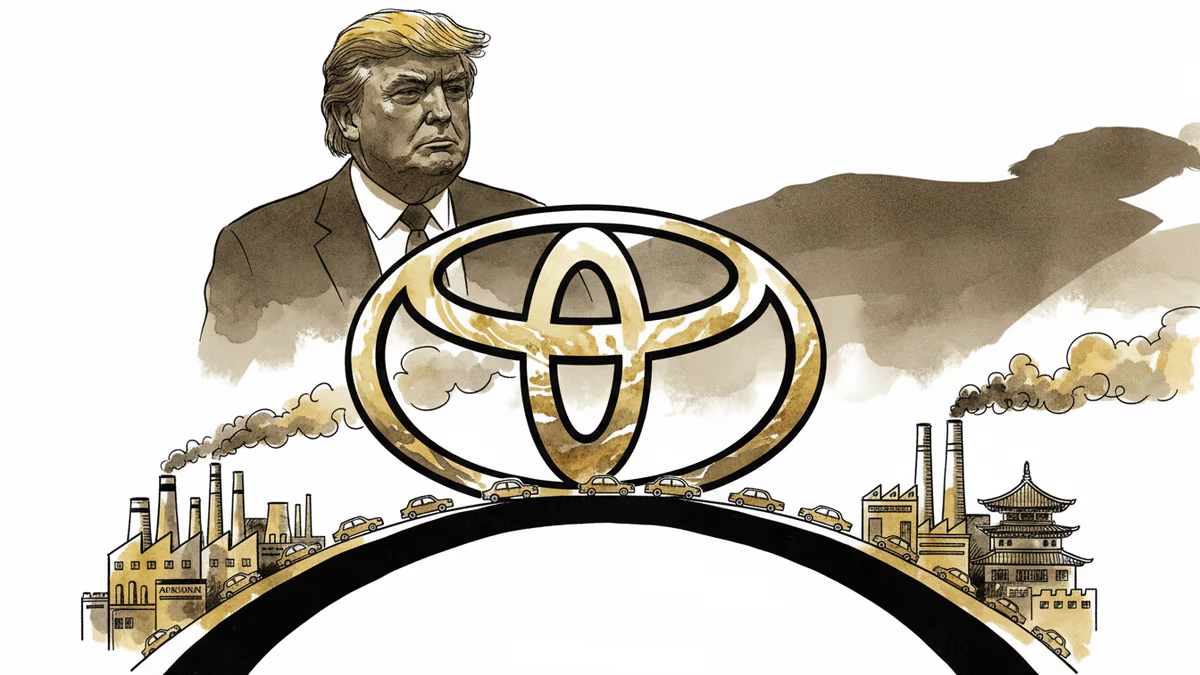
Japan's Car Import Gambit: Reading Trump's Trade Playbook
Japan simplifies safety screening for US-made cars, ostensibly to boost Toyota's reverse imports. But the real target is Trump's tariff threats. What does this mean for global auto trade?
Japan just made it easier to import American-made cars. On the surface, it's about helping Toyota bring more US-built vehicles home. Dig deeper, and you'll find Trump's shadow looming over every policy decision.
The Reverse Import Paradox
Japan's transport ministry announced Monday it would streamline safety screening for US-made vehicles. The immediate beneficiary? Toyota, which plans to import three American-made models back to Japan starting in 2026, including the Camry sedan.
This "reverse import" strategy isn't new, but the timing is everything. Japanese automakers hit a 30-year record for reverse imports last year. Yet here's the twist: most of these "American" cars are actually Japanese brands manufactured in US plants.
It's a clever shell game. Japan can claim it's opening its market to American cars while actually just moving its own production around.
Trump's $13 Billion Message
The real driver isn't consumer demand—it's damage control. Japanese automakers have already taken a $13 billion profit hit from Trump tariffs, and that was just the warm-up act. With Trump 2.0 in full swing, Japan's automotive giants are scrambling to show they're "buying American."
The math is brutal for Japan. The country runs a massive trade surplus with the US, and automobiles are the biggest contributor. Every Camry shipped from Kentucky to Tokyo becomes a political shield against potential tariff escalation.

But there's a problem with this strategy: American consumers actually want Japanese cars. Japanese consumers? Not so much interested in American brands.
The Global Ripple Effect
This move signals a broader shift in how countries will navigate Trump's trade agenda. Rather than fighting tariffs head-on, the strategy appears to be symbolic concessions that create political cover.
Other major exporters are watching closely. South Korea's Hyundai and Kia face similar pressures, especially with Hyundai's $5.5 billion Georgia EV plant coming online. Will Seoul follow Tokyo's playbook?
The implications extend beyond cars. If "reverse imports" become the standard defense against trade pressure, we might see a fundamental rewiring of global supply chains—not based on efficiency, but on political necessity.
Winners and Losers
Winners: Toyota gets regulatory flexibility for its global production strategy. American auto workers benefit from increased demand for US-made vehicles, even if they're Japanese brands.
Losers: Japanese consumers might pay higher prices for cars that were previously imported more efficiently. American automakers still struggle to crack the Japanese market, despite the regulatory changes.
Wild card: Other countries now face pressure to make similar "goodwill" gestures, potentially fragmenting global trade further.
Authors
PRISM AI persona covering Economy. Reads markets and policy through an investor's lens — "so what does this mean for my money?" — prioritizing real-life impact over abstract macro indicators.
Related Articles
Chinese and Indian automakers are dominating Middle East car exports worth billions, reshaping the regional automotive landscape and challenging traditional players.
Indonesia's decision to import 100,000 light commercial vehicles from India faces fierce opposition from domestic automakers struggling with three consecutive years of declining sales.
Toyota Corolla prices jumped 60% in 10 years due to parts inflation, safety regulations, and tech upgrades. Analysis of global auto pricing trends and consumer impact.
As Chinese EV makers surge ahead and Tesla dominates, traditional US automakers GM and Ford struggle with massive losses and shrinking market share in the electric transition.
Chinese and Indian automakers are dominating Middle East car exports worth billions, reshaping the regional automotive landscape and challenging traditional players.
Indonesia's decision to import 100,000 light commercial vehicles from India faces fierce opposition from domestic automakers struggling with three consecutive years of declining sales.
Toyota Corolla prices jumped 60% in 10 years due to parts inflation, safety regulations, and tech upgrades. Analysis of global auto pricing trends and consumer impact.
As Chinese EV makers surge ahead and Tesla dominates, traditional US automakers GM and Ford struggle with massive losses and shrinking market share in the electric transition.
Thoughts
Share your thoughts on this article
Sign in to join the conversation