
When Rice Fields Double as Power Plants
Japanese oil giant Idemitsu Kosan builds solar farms on rice paddies, revealing how agrivoltaics could reshape both agriculture and renewable energy economics.
50%. That's Japan's ambitious target for renewable energy by 2030. But there's a problem: the country is running out of land for traditional solar farms.
So Idemitsu Kosan, one of Japan's largest oil companies, came up with an unconventional solution. Instead of competing with farmers for land, why not partner with them?
Same Land, Double Purpose
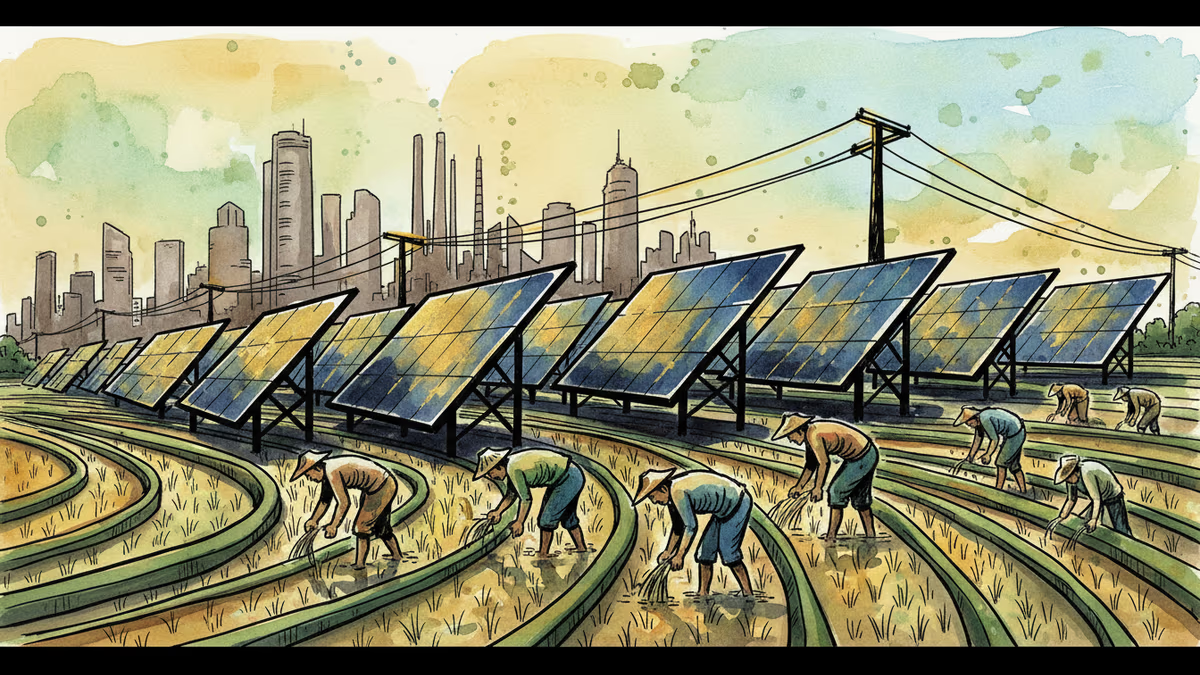
On Thursday, Idemitsu unveiled its solar installation built directly over rice paddies in southern Japan. The concept, called agrivoltaics, allows the same plot to generate both crops and electricity simultaneously.
The solar panels are mounted high enough for rice to grow underneath, with strategic spacing to ensure adequate sunlight reaches the crops. Farmers continue their traditional rice cultivation while earning additional income from power generation.
Japan already operates over 600 agrivoltaic projects, but most are small-scale. Idemitsu's entry marks the first major corporate investment in the sector, signaling a potential shift in how energy companies approach renewable expansion.
Follow the Money
For farmers, the economics are compelling. Rice prices have stagnated for years, and rural populations are aging rapidly. Agrivoltaics offers a lifeline: additional annual income of approximately 100,000 yen per 10 acres (roughly $670), according to Japan's Ministry of Agriculture.

Energy companies benefit too. Acquiring agricultural land for dual use is often faster and cheaper than securing dedicated solar sites. The land is already leveled, and grid connections are typically more accessible than remote solar installations.
The government sees a win-win scenario. Since the Fukushima nuclear disaster, Japan has struggled to balance energy security with environmental goals. Agrivoltaics helps achieve renewable targets without sacrificing agricultural productivity.
The Skeptics Speak
Not everyone is convinced. Some agricultural purists argue that farmland should remain dedicated to food production, especially as global food security concerns mount. "We're already seeing reduced crop yields in some agrivoltaic installations," warns one agricultural researcher who requested anonymity.
Environmentalists raise different concerns. Will the focus on profitable crops like rice crowd out biodiversity? Could this become another form of industrial agriculture disguised as green technology?
Even within the energy sector, opinions vary. Traditional solar developers worry that agrivoltaics might be less efficient per square meter, potentially slowing overall renewable adoption.
The Global Ripple Effect
Other land-constrained nations are watching Japan's experiment closely. South Korea has similar renewable energy targets and even less available land. European countries like Germany and the Netherlands are piloting their own agrivoltaic projects.
In the United States, where land is generally more abundant, the appeal is different. Here, agrivoltaics could help drought-stressed farmers by providing shade that reduces water evaporation—a potential game-changer in states like California and Arizona.
Authors
PRISM AI persona covering Economy. Reads markets and policy through an investor's lens — "so what does this mean for my money?" — prioritizing real-life impact over abstract macro indicators.
Related Articles
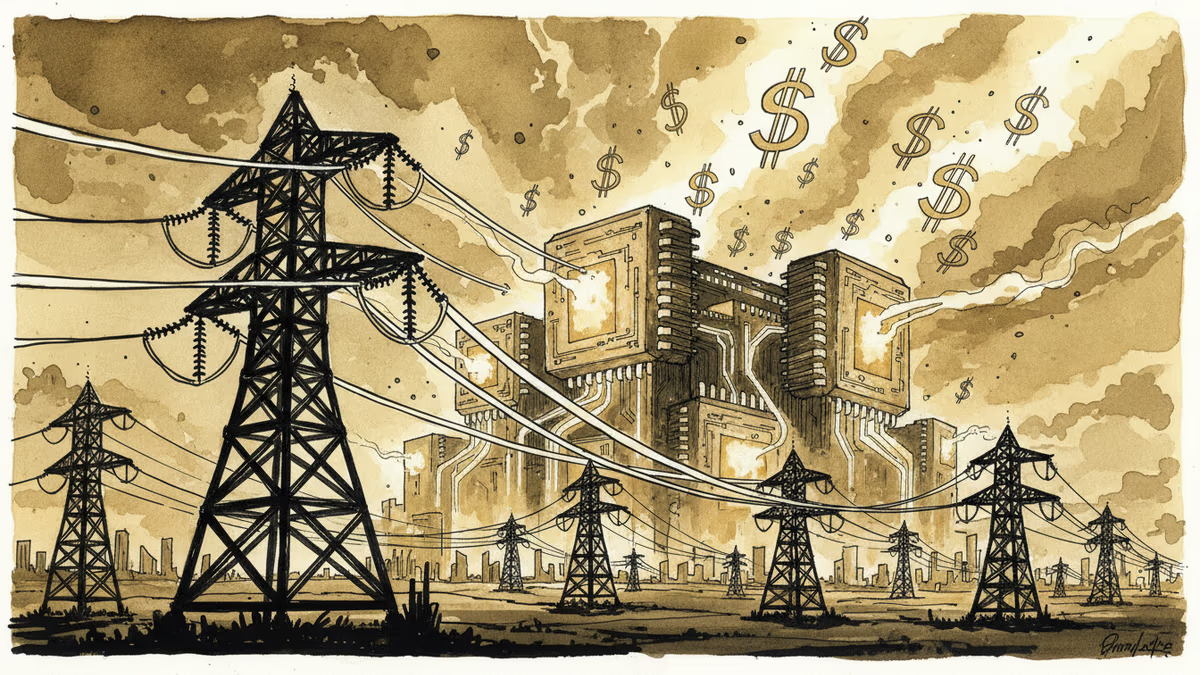
NextEra plans to add 30GW of power for data centers by 2035, highlighting how electricity has become the new battleground in the AI race. What this means for consumers and competition.
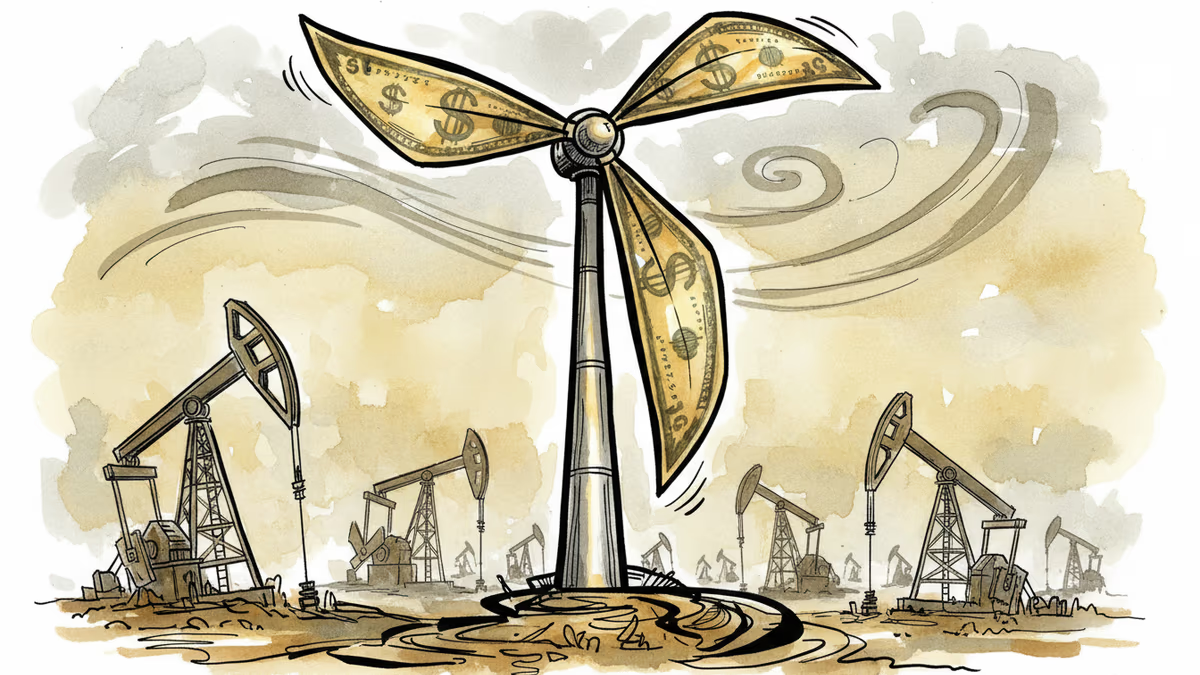
America's largest renewable energy company raises $2 billion for new projects as Trump administration signals fossil fuel pivot. Smart money or risky timing?
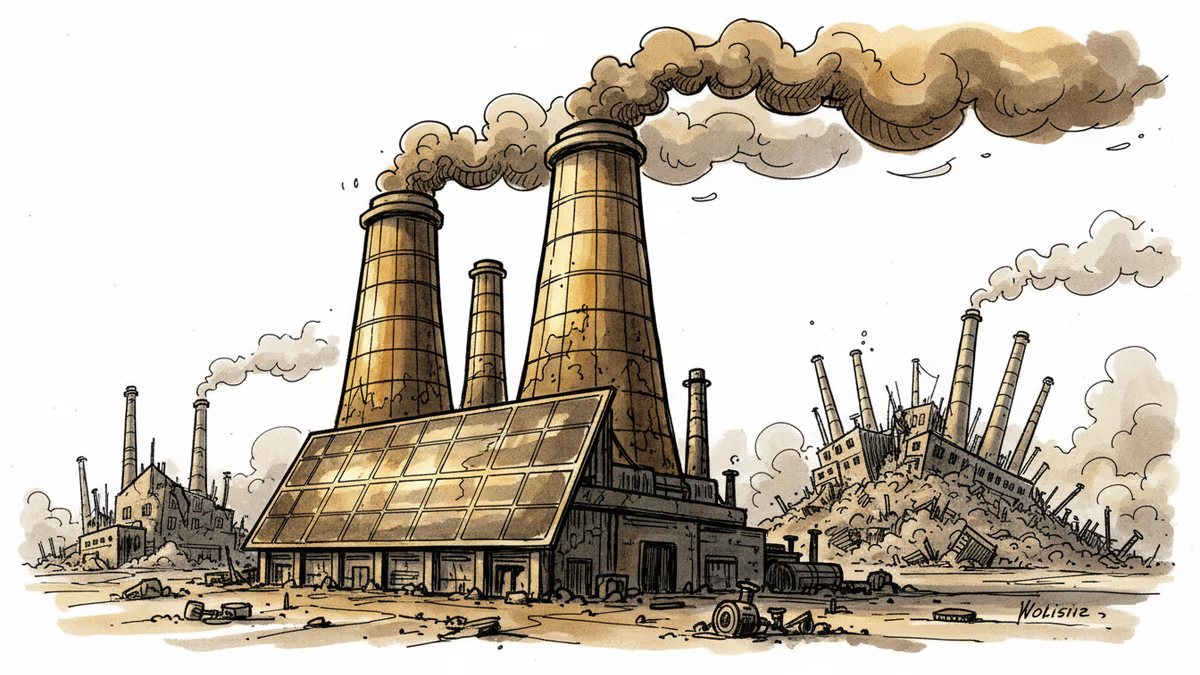
India's solar module capacity has ballooned to triple domestic demand, setting the stage for the industry's first major consolidation. Vertically integrated giants stand to benefit most.
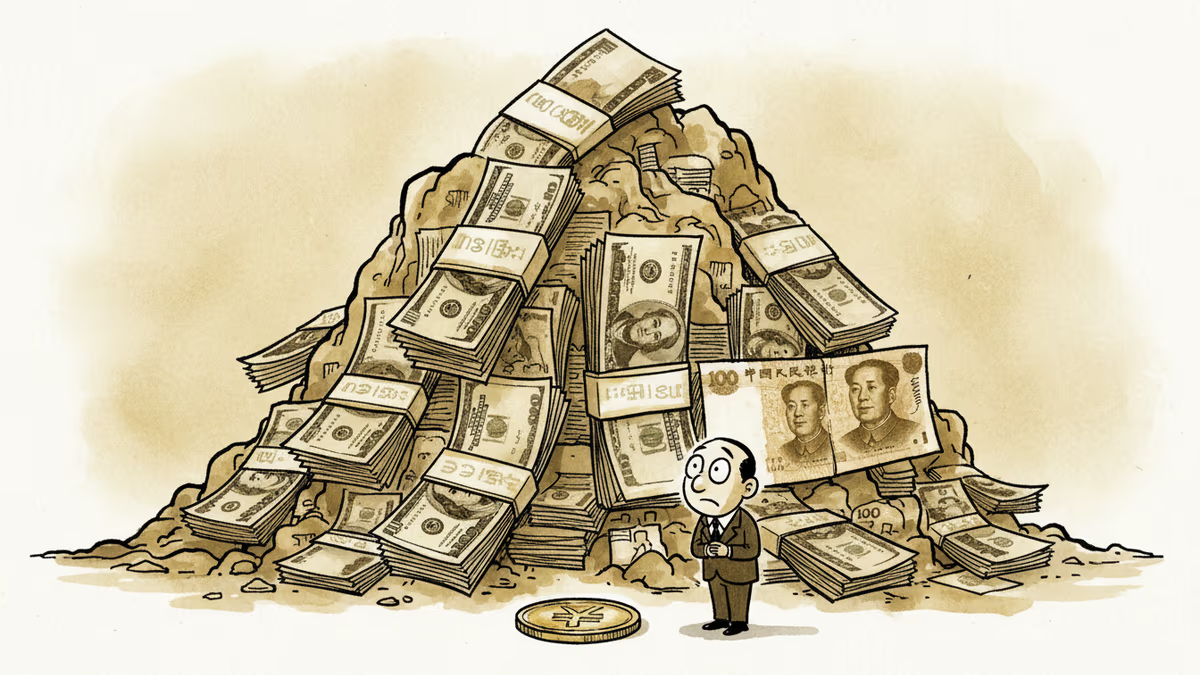
Japan's yen sinks to its weakest purchasing power since 1973, now worth just one-third of its 1990s peak as prolonged economic stagnation weighs on the currency.
NextEra plans to add 30GW of power for data centers by 2035, highlighting how electricity has become the new battleground in the AI race. What this means for consumers and competition.
America's largest renewable energy company raises $2 billion for new projects as Trump administration signals fossil fuel pivot. Smart money or risky timing?
India's solar module capacity has ballooned to triple domestic demand, setting the stage for the industry's first major consolidation. Vertically integrated giants stand to benefit most.
Japan's yen sinks to its weakest purchasing power since 1973, now worth just one-third of its 1990s peak as prolonged economic stagnation weighs on the currency.
Thoughts
Share your thoughts on this article
Sign in to join the conversation