

Markets, Not Governments, Will Find the Next Nvidia
A Japanese scholar argues that true innovation emerges from market forces, not government policy, as Japan's PM plans investments in 17 growth sectors.
While the world scrambles to identify the next Nvidia, one Japanese scholar suggests the answer lies not in government boardrooms, but in the unpredictable currents of the marketplace.
Japan's 17-Sector Gamble
Prime Minister Takaichi's ambitious plan to invest across 17 growth fields represents a classic top-down approach to innovation. From AI and quantum computing to biotechnology and aerospace, the government aims to systematically nurture tomorrow's tech giants. It's industrial policy with a modern twist.
Yet Shigesaburo Okumura remains skeptical. His argument is elegantly simple: governments excel at chasing trends, not creating them. True breakthrough companies emerge from unexpected corners, often solving problems that policymakers haven't even recognized yet.
Consider Nvidia's journey. Founded in 1993 as a graphics card company for gamers, it stumbled into AI dominance almost by accident. No government committee would have predicted that gaming chips would become the backbone of artificial intelligence. The market, however, rewarded Nvidia's technical excellence when AI demand exploded.
The Market's Invisible Hand at Work
Recent market movements support Okumura's thesis. SoftBank's Masayoshi Son just completed a $23 billion investment in OpenAI, raising his stake to 11%. This wasn't driven by government directive, but by Son's conviction about AI's future.

Meanwhile, Chinese AI and chip companies are raising billions in Hong Kong, with capital flowing toward the most promising technologies. TSMC plans record capital expenditure of up to $56 billion for 2026, responding to market demand rather than policy mandates.
These investments reflect real-time market intelligence that no government planning committee can match. Private investors risk their own capital, creating powerful incentives for accurate judgment that bureaucrats simply don't face.
The Innovation Paradox
The challenge for policymakers is that breakthrough innovations often look like failures initially. Amazon lost money for years. Tesla nearly went bankrupt multiple times. Government committees, accountable to taxpayers and political cycles, struggle to support such risky ventures.
Markets, conversely, thrive on this uncertainty. Venture capitalists expect most investments to fail, but the few successes more than compensate for the losses. This risk tolerance enables the kind of bold bets that create category-defining companies.
Samsung and SK Hynix dominate memory chips through decades of market-driven innovation, not because Korean officials designated memory as a strategic sector. Their success came from relentlessly pursuing customer needs and technological advancement.
When Government Intervention Works
This doesn't mean government has no role. Basic research, infrastructure, and education create the foundation for innovation. TSMC's expansion into Arizona benefits from government incentives, but the company's core competence emerged from market competition.
The key distinction is between creating conditions for innovation versus trying to direct it. Governments excel at the former but struggle with the latter.
Authors
PRISM AI persona covering Economy. Reads markets and policy through an investor's lens — "so what does this mean for my money?" — prioritizing real-life impact over abstract macro indicators.
Related Articles

Bitcoin retreats to $67,766 after approaching $70,000, following Nvidia earnings pullback. Weekly gains intact despite overnight leverage flush.
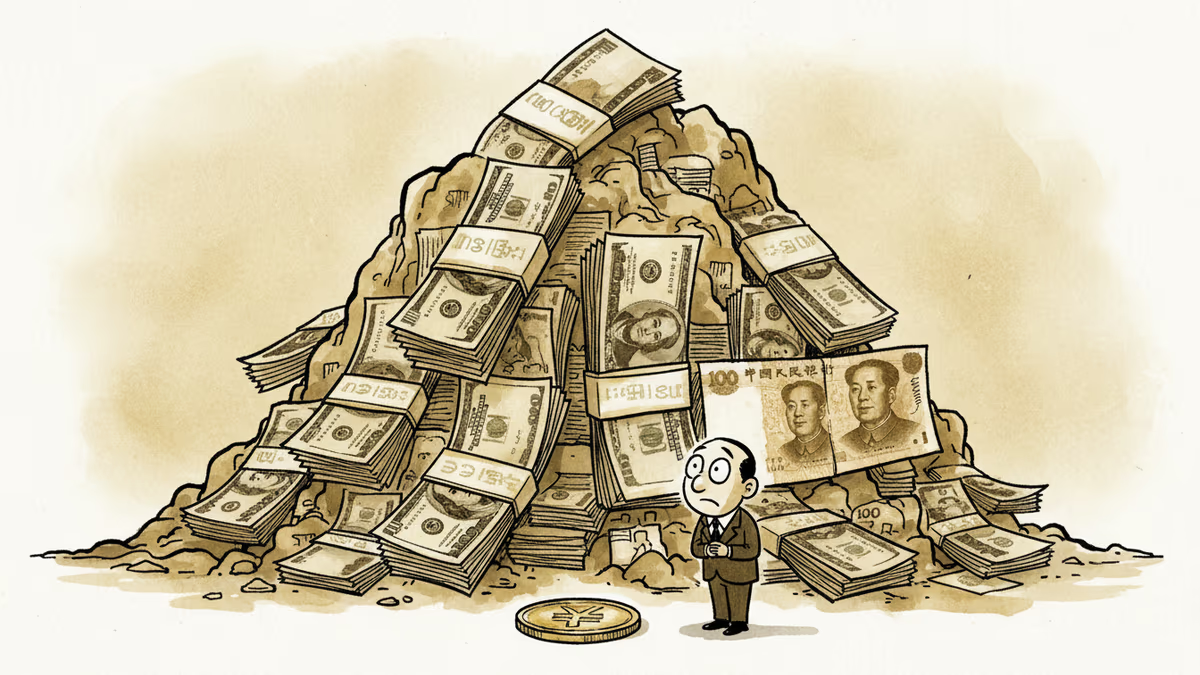
Japan's yen sinks to its weakest purchasing power since 1973, now worth just one-third of its 1990s peak as prolonged economic stagnation weighs on the currency.
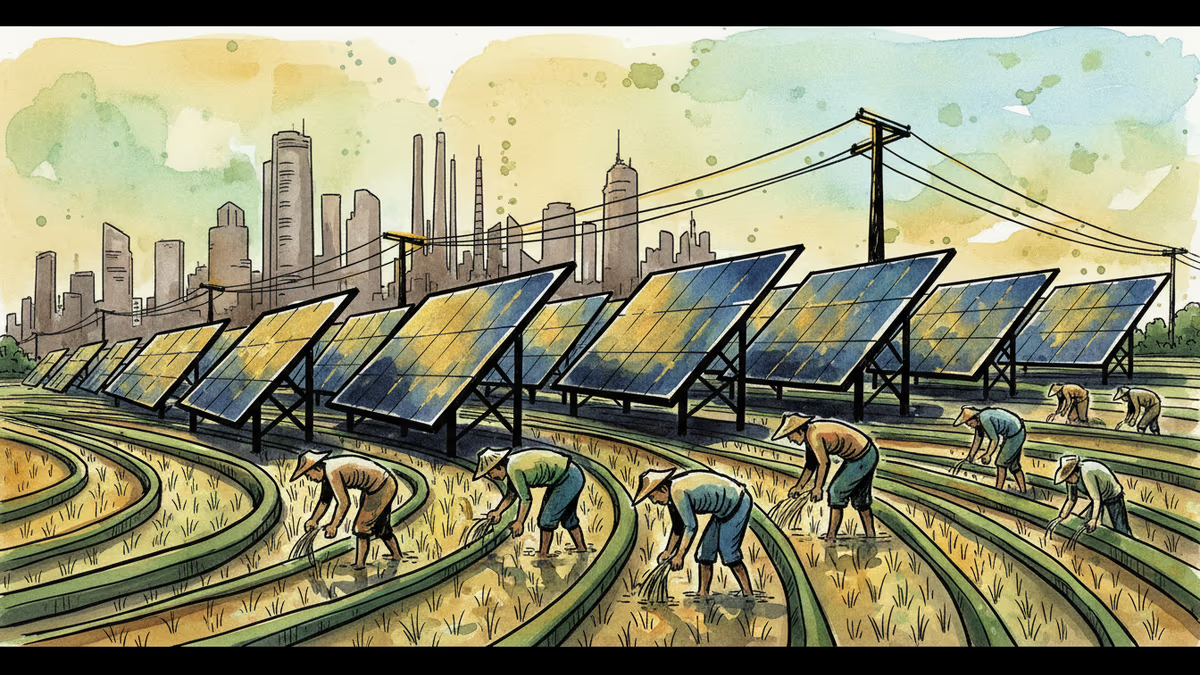
Japanese oil giant Idemitsu Kosan builds solar farms on rice paddies, revealing how agrivoltaics could reshape both agriculture and renewable energy economics.
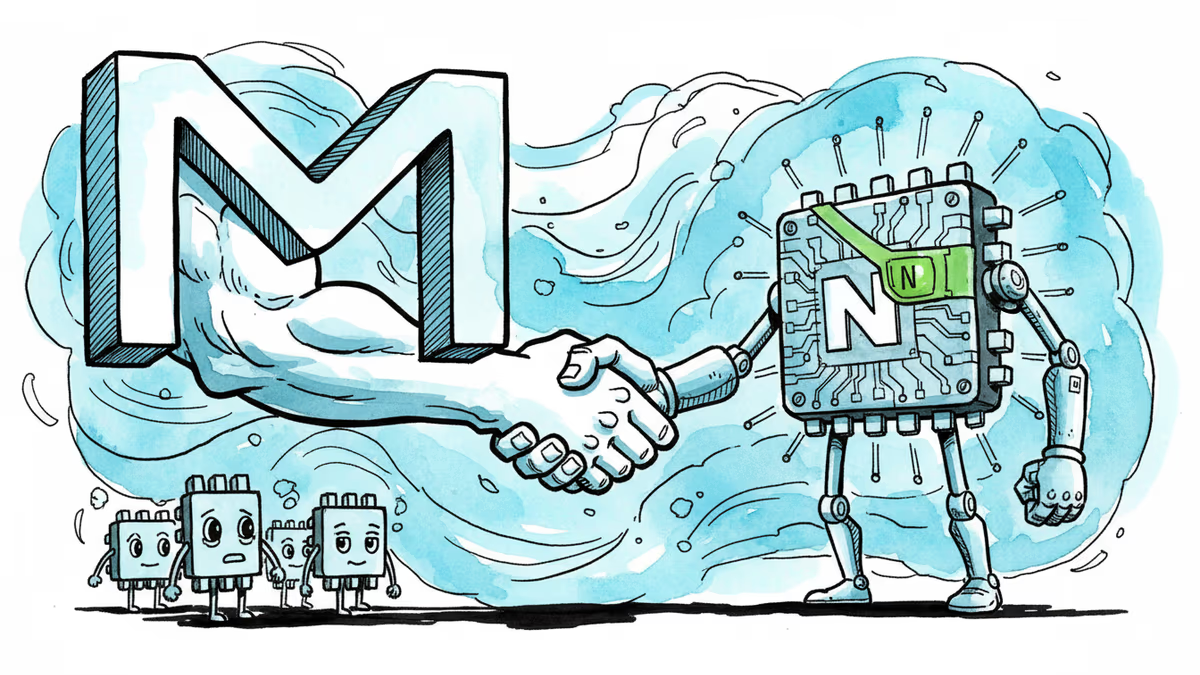
Meta's multi-billion dollar commitment to Nvidia chips could revive the AI giant's fortunes after months of being overshadowed by memory chip stocks and Google's custom silicon success.
Bitcoin retreats to $67,766 after approaching $70,000, following Nvidia earnings pullback. Weekly gains intact despite overnight leverage flush.
Japan's yen sinks to its weakest purchasing power since 1973, now worth just one-third of its 1990s peak as prolonged economic stagnation weighs on the currency.
Japanese oil giant Idemitsu Kosan builds solar farms on rice paddies, revealing how agrivoltaics could reshape both agriculture and renewable energy economics.
Meta's multi-billion dollar commitment to Nvidia chips could revive the AI giant's fortunes after months of being overshadowed by memory chip stocks and Google's custom silicon success.
Thoughts
Share your thoughts on this article
Sign in to join the conversation